Bathroom Buying Guides • Soaking Tubs • Editor-Tested Picks
Best Bathtubs: 6 Soaking Tubs Worth Building Your Bathroom Around
A freestanding tub can turn an ordinary bathroom into the calmest room in the house. We compared the most popular soaking, alcove, and whirlpool models to find the ones that actually deliver on comfort, cleaning, and everyday practicality.
Nothing in a home gets used the way a bathtub does. It is a plumbing fixture, a piece of furniture, a place to recover after a long day, and — in smaller homes especially — one of the loudest visual statements in the entire bathroom. Choose well and you will enjoy it for decades. Choose badly and you will notice the compromise every single evening.
That is exactly why we put this guide together. The phrase best bathtubs gets thrown around a lot, but most roundups treat every tub the same way, listing features nobody asked for while glossing over the things that actually decide whether you love a tub: how the backrest angles your spine, how deep the water really gets, whether the drain is where your plumbing already is, and how much effort it takes to keep the surface looking new.
We focused on six models that keep showing up in real bathrooms — two compact freestanding tubs, a full-length freestanding soaker, a wide-basin freestanding option, a classic alcove tub, and a whirlpool built for people who want moving water rather than still water. Each one serves a different household, and we are honest about that. There is no single winner for every bathroom, only a right tub for your room, your body, and your routine.

Before the reviews, we cover what separates a good tub from a great one, the differences between freestanding, alcove, drop-in, and whirlpool designs, how acrylic stacks up against cast iron and solid surface, and the practical questions about measurement, water heater capacity, installation, and cleaning that most buyers discover too late. If you just want the shortlist, the table below does the job in under a minute.
And if you enjoy the ritual side of bathing as much as the fixture itself, we have linked out to our guides on the best bath products, how to make a bath more relaxing, and building the best bath routine so you can turn a new tub into a genuine habit rather than an occasional treat.
Short on Time?
Browse today’s best-rated bathtubs across every style and budget.
Check Price on AmazonQuick Comparison: Our Top Picks
Every tub in this guide appears below with the details that matter most when you are choosing between them. Use it to narrow your shortlist, then read the full review for whichever option fits your bathroom.
| # | Image | Product | Key Specs | Verdict | Check Price |
|---|---|---|---|---|---|
| 1 | |
Top Pick WOODBRIDGE 67″ Acrylic Freestanding Soaking Tub Best Overall |
|
The one most people should buy first. | Check Price on Amazon |
| 2 |  |
FerdY Acrylic Freestanding Bathtub (Tahiti 55″) Best for Smaller Bathrooms |
|
Small-bathroom hero that still feels luxurious. | Check Price on Amazon |
| 3 |  |
Aqua Eden VTAP603622L 60″ Acrylic Alcove Tub Best for Standard Bathrooms |
|
The safest swap for a standard alcove. | Check Price on Amazon |
| 4 | |
Vanity Art 67 × 32″ White Acrylic Freestanding Bathtub Best for a Wide, Deep Soak |
|
A wide, generous basin for long soaks. | Check Price on Amazon |
| 5 | |
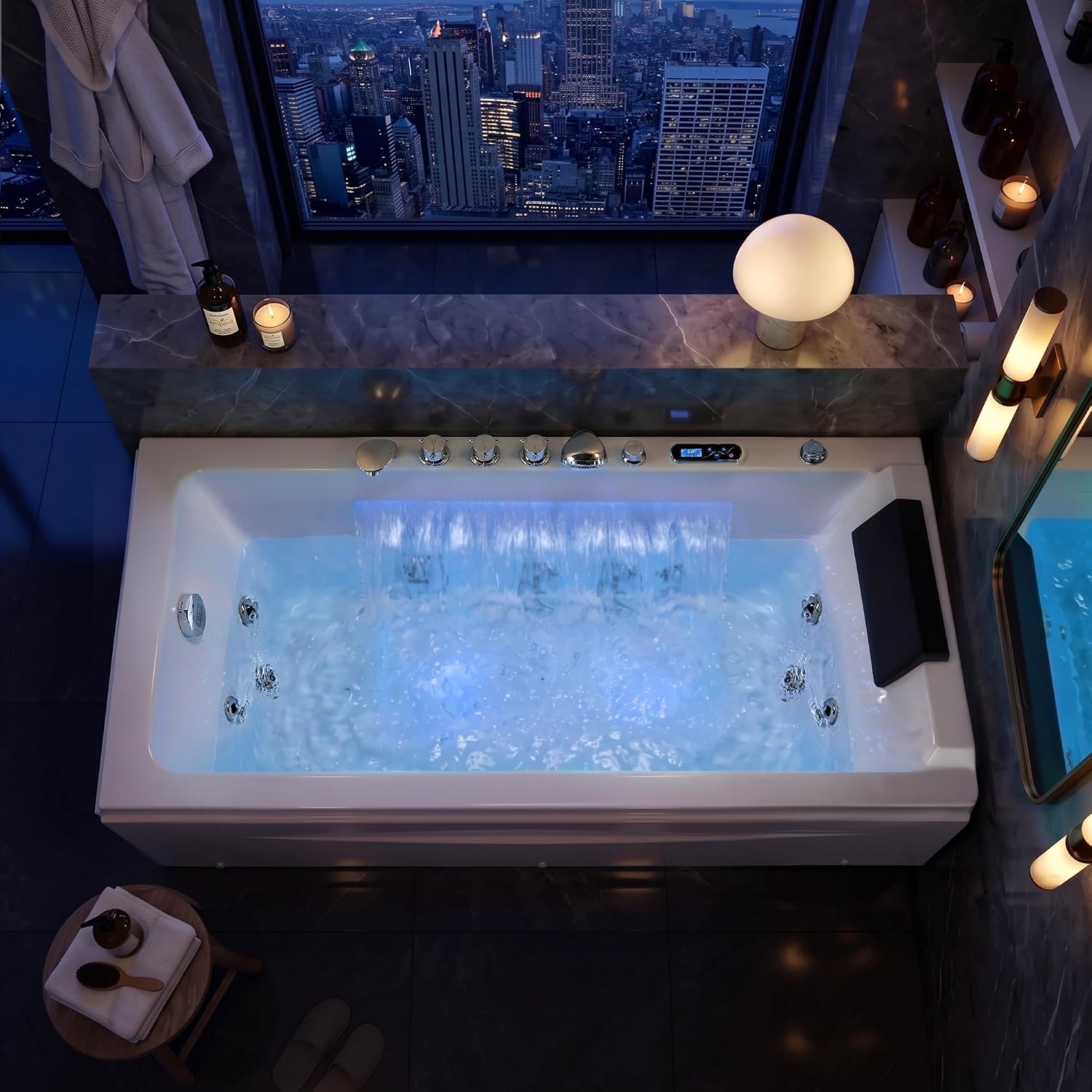
Empava Whirlpool Bathtub Best for Hydrotherapy |
|
When you want jets, not just water. | Check Price on Amazon |
| 6 |  |
Kohler Bathtub Best Brand-Name Choice |
|
Brand confidence with a refined finish. | Check Price on Amazon |
A quick note on accuracy: tub specifications change between listings and finishes, so we keep this guide focused on the details we can stand behind — format, material family, and the way each tub is designed to be used. Always confirm current dimensions, drain placement, and what is included on the product page before you order.
See Today’s Bathtub Deals
Compare live prices across freestanding, alcove, and whirlpool tubs.
Check Price on Amazon1. Why the Right Bathtub Changes the Way You Live at Home
People tend to shop for bathtubs the way they shop for appliances: by scanning a spec sheet and choosing the middle option. That approach works for a dishwasher. It rarely works for a tub, because a bathtub is one of the few fixtures in your home that you experience with your entire body, in a state of complete vulnerability, usually at the end of the day when you have the least patience for discomfort.
A tub that is two inches too shallow will disappoint you every evening without ever being obviously “broken.” A backrest set at the wrong angle will leave you propped up on one elbow. A rim that is too wide will strain your arms when you climb out. These are not dramatic failures, which is precisely why they matter — you live with them silently for years.
The bathroom has quietly become the wellness room
Over the past decade the bathroom has shifted from a purely functional space into the place many people go to decompress. That shift changed what buyers expect. A soaking tub is no longer just a vessel for getting clean; it is the anchor of a routine that might include warm water, Epsom salts, low light, and twenty uninterrupted minutes. If that sounds like your kind of evening, the tub you choose is the foundation of the whole experience.
There is also a more practical side. Water depth, heat retention, and shoulder coverage decide how long a soak actually stays comfortable. A tub that holds heat well keeps you in the water longer and wastes less hot water topping up. A tub with a smooth, non-porous interior is easier to rinse after a soak with oils or salts, which means you will use it more often instead of dreading the cleanup.
Comfort is a design problem, not a luxury
Ergonomics in a bathtub are mostly invisible in product photos. Slope, lumbar support, the curve of the basin, the height of the rim, and the position of the drain all influence whether you can fully extend your legs and let your head rest back. Taller users need length; users with knee or hip issues need a rim height they can step over safely and a floor that does not become slippery when wet.
Depth deserves particular attention. Many people buy a tub based on its outer length and then discover the water barely covers their chest. Soaking tubs are designed with deeper basins so your shoulders can sit under the waterline — that is the difference between a bath and a half-bath. It is worth comparing the interior soak depth rather than the overall height of the tub.
The visual weight of a tub
Freestanding tubs are sculptural. They read as a focal point and can make even a modest bathroom feel intentional and high-end. Alcove tubs, by contrast, sit within three walls and disappear into the architecture, which is exactly what many bathrooms need. Neither is objectively better; the right choice depends on whether you have floor space to spare and whether your plumbing is already configured for a specific layout.
Finally, there is the everyday reality of resale and durability. A clean, well-chosen tub photographs beautifully, shows well to buyers, and quietly signals that the bathroom was renovated with care. That does not mean you should choose a tub for someone else’s taste — but it does mean a sensible, comfortable tub is never a bad investment.
If you are weighing whether a bath is even worth the effort compared to a shower, we break the whole comparison down in bath vs shower. And once your tub is installed, how to make a bath comfortable covers the small upgrades — headrests, trays, lighting, water temperature — that turn a good tub into a genuinely restorative habit.
Ready to Upgrade Your Soak?
Browse soaking tubs designed for deep, comfortable bathing.
Check Price on Amazon2. How We Evaluate Bathtubs: The Criteria Behind These Picks
Every tub in this guide was judged against the same set of criteria. These are the questions we ask before a product earns a place on the list, and they double as a checklist you can use for any tub you are considering — including models we did not cover.
Material and surface quality
The shell material determines how warm the tub feels when you step in, how well it holds heat, how easily it resists staining, and how forgiving it is when you drop something on it. Acrylic is the most common choice in modern tubs for good reason: it is lightweight enough for upper-floor installation, naturally warmer to the touch than enameled steel, and repairable if it ever scratches. Cast iron and solid surface alternatives have their own strengths, which we cover in detail later in this guide.
Soak depth and interior geometry
We look at the inside of the basin, not just the outside. Is the backrest sloped enough to lean into? Is the floor of the tub textured or shaped to prevent sliding? Is the drain positioned so you are not sitting on it? Does the water level allow a real submerged soak? These are the details that decide whether a tub is comfortable after the novelty wears off.
Footprint and fit
A beautiful tub is useless if it will not clear the bathroom door or leave room for a toilet and a vanity. We consider how each tub’s format works in typical bathroom layouts — freestanding models need open floor and a faucet plan, alcove models need three walls and an existing drain location, and whirlpool models need access for plumbing and electrical.
Installation reality
Some tubs are straightforward weekend-friendly installs. Others need a plumber, a reinforced floor, or a dedicated circuit. We flag the general complexity of each format so you can budget realistically rather than being surprised halfway through the project.
Cleaning and long-term upkeep
Freestanding tubs leave exposed floor around them, which means more sweeping and mopping. Alcove tubs collect caulk lines and corners that need periodic attention. Whirlpool tubs add internal plumbing that must be flushed. We favor tubs whose surfaces rinse clean quickly and resist soap buildup, because a tub you hate cleaning is a tub you will stop using.
Value over headline price
We deliberately avoid quoting prices here, because they move constantly and vary by finish and seller. What we care about is whether a tub delivers the comfort and durability you would expect for its category. A modest acrylic freestanding tub that soaks beautifully is a better value than an expensive tub with an uncomfortable backrest.
For more on the accessories that make any tub work harder, see our guide to the best bath products.
3. Bathtub Types Explained: Freestanding, Alcove, Drop-In, and Whirlpool
Before comparing individual tubs, it helps to understand the categories. Most bathtub decisions come down to format first and model second, because format determines where the tub can physically live in your bathroom.
Freestanding tubs
Freestanding tubs stand on their own floor with no surrounding deck or walls. They are the most visually dramatic option and the easiest to clean underneath compared with built-in surrounds, though you do need clear floor space around them for access and cleaning. Faucets can be floor-mounted, wall-mounted, or attached to the tub depending on the design, so plan your plumbing early.
Within freestanding tubs there are two broad shapes: the classic slipper or rolled-rim style with a raised back, and the flat-bottomed modern silhouette with straight lines. Both soak well; the difference is aesthetic and ergonomic. Three of our picks — the WOODBRIDGE, the FerdY Tahiti, and the Vanity Art — fall into this category, and they suit very different rooms.
Alcove tubs
An alcove tub is installed between three walls, usually with a finished apron on the open side and a shower above. This is the most common layout in existing homes, which makes an alcove model the natural choice for a straightforward replacement. The trade-off is that the tub is visually boxed in and you cannot walk around it.
Drop-in and undermount tubs
Drop-in tubs sit inside a built deck, with the rim resting on the surround. Undermount tubs are installed beneath the deck for a seamless edge. Both require carpentry and a finished deck surface, which adds cost and complexity, but they allow for wide tiled ledges and a very polished look.
Whirlpool and air tubs
Whirlpool tubs use water jets to create a massage effect; air tubs use thousands of tiny bubbles. Both add pumps, plumbing, and sometimes electrical work, and both need periodic flushing to keep internal lines clean. The payoff is a hydrotherapy-style soak that plain water cannot replicate.
Which freestanding tub fits which room?
Here is a quick look at the three freestanding models in this guide and the rooms they suit best.
| # | Image | Product | Best Suited To | Check Price |
|---|---|---|---|---|
| 1 | |
Top Pick WOODBRIDGE 67″ Freestanding Best Overall |
|
Check Price on Amazon |
| 2 | |
FerdY Tahiti 55″ Best for Compact Spaces |
|
Check Price on Amazon |
| 3 | |
Vanity Art 67 × 32″ Best for a Roomy Basin |
|
Check Price on Amazon |
Once you know the format you need, the rest of the decision becomes much simpler: pick the length your room allows, the depth your body wants, and the material you are willing to maintain.
4. WOODBRIDGE 67″ Acrylic Freestanding Soaking Tub
WOODBRIDGE 67″ Acrylic Freestanding Soaking Tub
Best Overall — the tub we would choose first for a full-size primary bathroom.
The WOODBRIDGE 67-inch freestanding tub is the model we keep coming back to when people ask for a single recommendation. Its full length gives taller users room to stretch out, its acrylic construction keeps the surface comfortable against bare skin, and its silhouette is clean enough to anchor a bathroom without fighting the rest of the design. It is a tub built for the way people actually soak — long, deep, and unhurried.
Key Features
- Full-length freestanding design — the 67-inch format suits adults who want to extend their legs fully during a soak.
- Acrylic shell — a warm-to-the-touch surface that is lightweight, repairable, and straightforward to keep clean.
- Deep soaking geometry — the basin is shaped for a genuine submerged soak rather than a shallow wash.
- Contemporary styling — a smooth silhouette that works in modern, transitional, and spa-inspired bathrooms alike.
- Confirm before ordering — drain position, overflow configuration, and included fittings can vary by listing, so check the current product page.
What We Like
- Generous length that accommodates taller soakers comfortably
- Acrylic stays warmer underfoot and against the skin
- Sculptural look that instantly elevates the room
- Smooth interior that rinses clean after salt or oil soaks
- Works as both a functional tub and a visual centerpiece
Keep in Mind
- Needs open floor space on at least two sides
- Requires a faucet plan: floor, wall, or deck-mounted
- Large tubs use more hot water per soak
- Freestanding plumbing can add installation complexity
Who it is best for: Homeowners renovating a primary bathroom who want one tub that does everything well. If you have the floor space and you plan to soak regularly, this is the safest, most satisfying choice on the list.
WOODBRIDGE 67″ Freestanding Tub
Our top overall pick for a full-size soaking tub.
Check Price on Amazon5. FerdY Acrylic Freestanding Bathtub (Tahiti 55″)
FerdY Acrylic Freestanding Bathtub (Tahiti 55″)
Best for Smaller Bathrooms — the compact freestanding tub that does not feel compact.
Freestanding tubs have a reputation for demanding space, and the FerdY Tahiti is the answer to that problem. At 55 inches it fits where a full-size tub will not, yet it keeps the sculptural look and the deep, curved basin that make freestanding designs appealing in the first place. For apartments, ensuites, and secondary bathrooms, it is the standout.
Key Features
- Compact 55-inch length — designed for bathrooms where a full-size tub would crowd the layout.
- Acrylic construction — light enough for upper-floor installations and comfortable against the skin.
- Curved, embracing rim — the shape wraps around the bather for a cozy, cocoon-like soak.
- Freestanding styling — delivers the boutique-hotel look without requiring a large footprint.
- Check the listing — confirm drain placement and whether a faucet is included before purchasing.
What We Like
- Excellent fit for small and mid-size bathrooms
- Curved shape feels supportive and enclosed
- Acrylic surface is warm and easy to wipe down
- Modern silhouette that reads more expensive than it is
- Simple to position away from walls for cleaning access
Keep in Mind
- Shorter length may feel snug for very tall adults
- Compact tubs generally hold less water depth
- Still needs dedicated faucet plumbing
- Curved rims can make tray accessories less stable
Who it is best for: Anyone with a smaller bathroom who refuses to give up a freestanding tub. It is also a strong choice for a guest bathroom where you want a boutique feel without a full renovation.
FerdY Tahiti 55″ Freestanding Tub
Compact luxury for bathrooms where space is tight.
Check Price on Amazon6. Aqua Eden VTAP603622L 60″ Acrylic Alcove Tub
Aqua Eden VTAP603622L 60″ Acrylic Alcove Tub
Best for Standard Bathrooms — the practical replacement for a tub that is already there.
Most bathrooms are built around an alcove, and that is where the Aqua Eden earns its place. Designed to sit between three walls with a finished apron on the open side, it is the kind of tub that drops into an existing layout without rethinking the entire room. If your goal is a clean, reliable upgrade rather than a redesign, this is the format to look at.
Key Features
- Alcove format — installs against three walls, matching the most common bathroom layout in existing homes.
- Standard 60-inch length — the familiar footprint that fits most tub-and-shower openings.
- Acrylic shell with apron — lightweight, warm to the touch, and easy to wipe clean.
- Tub-and-shower friendly — suitable for combined bathing and showering setups.
- Verify the details — drain orientation and tile flange configuration should be confirmed on the current listing.
What We Like
- Matches standard bathroom rough-ins, minimizing remodeling work
- Apron front gives a finished look without a tiled surround
- Acrylic is forgiving, repairable, and comfortable underfoot
- Practical choice for families and everyday bathing
- Works well with a shower above for a single wet zone
Keep in Mind
- Three-wall installation limits placement flexibility
- Caulk lines and corners need routine cleaning
- Less of a visual statement than a freestanding tub
- Drain side must match your existing plumbing
Who it is best for: Homeowners doing a like-for-like replacement, landlords refreshing a rental, and anyone who wants a dependable tub-shower combination without moving plumbing.
Aqua Eden 60″ Alcove Tub
A straightforward upgrade for standard bathroom layouts.
Check Price on Amazon7. Vanity Art 67 × 32″ White Acrylic Freestanding Bathtub
Vanity Art 67 × 32″ White Acrylic Freestanding Bathtub
Best for a Wide, Deep Soak — made for people who want room to move.
Some baths are about depth. Others are about width. The Vanity Art 67 × 32-inch tub leans into the second one, offering a wide basin that lets you shift positions, bend your knees, and settle in without feeling boxed by the sides. In a bathroom with the floor space to show it off, it becomes the room’s centerpiece.
Key Features
- Wide 67 × 32-inch footprint — extra width gives the basin a spacious, uncramped feel.
- White acrylic finish — a bright, clean look that pairs with virtually any tile and vanity.
- Freestanding form — viewable from all sides and easy to clean around.
- Generous soaking basin — designed for long, relaxed immersion rather than quick rinses.
- Measure your room — the added width matters, so confirm clearances before ordering.
What We Like
- Wide basin feels luxurious and accommodating
- Bright white finish keeps the bathroom feeling airy
- Freestanding placement gives you layout flexibility
- Smooth acrylic surface resists staining and wipes clean
- Strong visual anchor for a modern bathroom design
Keep in Mind
- Wide footprint needs genuinely open floor space
- Wide tubs require more hot water to fill
- Heavy when full — check floor loading for upper stories
- Faucet and drain hardware usually sold separately
Who it is best for: Soakers who value elbow room and a generous basin over a slim profile. Ideal for a spacious primary bathroom with room to walk around the tub on all sides.
Vanity Art 67 × 32″ Freestanding Tub
A wide, roomy basin for long, comfortable soaks.
Check Price on Amazon8. Empava Whirlpool Bathtub
Empava Whirlpool Bathtub
Best for Hydrotherapy — when still water is not enough.
There is a category of bather who wants more than warm water. For anyone dealing with tight shoulders, tired legs, or the general tension that accumulates over a working week, a whirlpool tub changes the equation. The Empava whirlpool brings moving water and targeted massage into the home, turning a bath from a passive soak into an active recovery session.
Key Features
- Whirlpool jetted system — circulating water creates a massage effect across the back, legs, and feet.
- Hydrotherapy focus — designed for recovery, relaxation, and easing everyday muscle tension.
- Contemporary white finish — a clean look that sits comfortably in modern bathroom schemes.
- Deeper-than-average soak — jetted tubs generally favor immersion so the water reaches the jets properly.
- Plan the install — whirlpool tubs typically need pump access and, in some configurations, electrical work.
What We Like
- Massage-style soak that plain tubs cannot match
- Great for post-workout recovery and stiff muscles
- Turns the bathroom into a genuine home spa
- Warm, immersive bathing experience
- Feels indulgent without requiring a spa membership
Keep in Mind
- Internal lines need periodic flushing and cleaning
- Installation is more involved than a standard tub
- Pumps can add background noise
- Typically needs more space and plumbing planning
Who it is best for: Anyone who wants therapeutic, massage-style bathing at home — athletes, people with physically demanding jobs, and anyone who finds a still-water soak stops being relaxing after ten minutes. Pair it with the ideas in our guide to the best bath salts for muscle soreness for a genuine recovery routine.
Empava Whirlpool Bathtub
Bring massage-style hydrotherapy into your own bathroom.
Check Price on Amazon9. Kohler Bathtub
Kohler Bathtub
Best Brand-Name Choice — for buyers who want the reassurance of an established name.
For a lot of people, the bathtub decision comes down to trust. Kohler is one of the most recognized names in bathroom fixtures, and there is genuine comfort in buying a tub from a brand with a long history in the category and a broad support network behind it. This is the pick for buyers who value brand confidence and refined finishing as much as the soak itself.
Key Features
- Established bathroom brand — long-standing presence in the fixture market with wide recognition.
- Refined finishing — the kind of clean detailing that reads as premium in person.
- Contemporary styling — suited to modern and transitional bathroom designs.
- Everyday soaking focus — designed for regular use rather than occasional special occasions.
- Model specifics vary — Kohler offers many bathtub models, so confirm the exact dimensions and configuration on the listing.
What We Like
- Brand recognition that supports long-term confidence
- High-quality fit and finish typical of the manufacturer
- Clean design language that ages well
- Easy to coordinate with matching fixtures and faucets
- Strong choice for resale-conscious renovations
Keep in Mind
- Brand-name fixtures often sit at a premium
- Wide model range can make comparison confusing
- Lead times and availability vary by finish
- Verify exactly what is included with the listing
Who it is best for: Buyers who want the reassurance of a well-known brand, plan to coordinate fixtures across the bathroom, or are renovating with resale value in mind.
10. Acrylic, Cast Iron, or Stone Resin? Bathtub Materials Decoded
Material is the single most misunderstood part of bathtub shopping. It is also one of the most consequential, because it influences comfort, weight, noise, cleaning, and how the tub will look after five years of daily use.
Acrylic
Acrylic dominates the modern tub market for excellent reasons. It is a warm material — you do not get that cold shock when you lower yourself in — and it holds heat reasonably well, so your soak stays comfortable for longer. It is also light relative to its size, which makes upper-floor installation realistic, and it can be repaired if it ever scratches or chips.
The main consideration with acrylic is quality variation. Better acrylic tubs use reinforcement layers that keep the shell rigid and prevent flexing underfoot. Cheaper versions can feel thin. The tubs in this guide that use acrylic are chosen because the format suits the material well: freestanding shapes need lightness, and alcove aprons need a surface that is easy to keep clean.
Cast iron with enamel
Cast iron tubs are legendary for heat retention and durability. They are also extraordinarily heavy, which can rule them out for upper floors and older structures. Enamel is hard and glossy but can chip if something heavy is dropped on it. If you love the traditional look and your floor can take the weight, cast iron remains a wonderful choice.
Enameled steel
Steel tubs are lighter than cast iron and more affordable, but they lose heat faster and can sound hollow when filling. They suit budget-conscious alcove replacements more than long evening soaks.
Solid surface and stone resin
These premium composite materials offer a matte, stone-like finish with excellent heat retention and a substantial, high-quality feel. They are heavy and typically sit at the higher end of the market, but they deliver the closest thing to a sculptural, gallery-quality tub.
Material comparison at a glance
| Material | How It Feels | Upkeep | Best For |
|---|---|---|---|
| Acrylic | Warm, smooth, and light underfoot | Easy wiping; minor scratches can be polished | Freestanding and alcove tubs in most homes |
| Cast Iron / Enamel | Solid, dense, and excellent at holding heat | Low maintenance; enamel can chip if struck | Ground-floor bathrooms with strong flooring |
| Enameled Steel | Lighter and cooler than cast iron | Simple cleaning; can sound hollow when filling | Straightforward tub-and-shower replacements |
| Solid Surface / Stone | Matte, substantial, and superbly warm | Wipes clean; heavier to move and install | Design-led bathrooms and statement tubs |
Which material should you choose?
For most households, acrylic is the sensible answer: it balances comfort, weight, price, and maintenance better than anything else. Choose cast iron if heat retention is your obsession and your floor can support it. Choose solid surface if the tub is a design statement and budget is secondary. Choose enameled steel when you want a functional, affordable replacement.
Whatever material you pick, the way you treat it matters. Oils, salts, and bath products can leave residue on any surface if they are not rinsed away — our guide to the best organic bath salts covers formulas that dissolve cleanly, and how to clean a bathtub keeps the finish pristine.
Shop Acrylic & Composite Tubs
Compare materials, finishes, and formats side by side.
Check Price on Amazon11. The Complete Buying Guide: What to Measure, Check, and Ask Before You Order
Most bathtub disappointment comes from avoidable mistakes — the tub that will not fit through the door, the drain on the wrong side, the water heater that cannot fill the basin. This section is the checklist we wish every buyer had before clicking purchase.
Measure the room, not just the wall
Start with the exact space the tub will occupy, including the clearance you need around it. Freestanding tubs want breathing room on all sides; alcove tubs need a precise opening between three walls. Measure twice, and measure at floor level as well as at the height of the rim, since walls are rarely perfectly square.
Measure the route into the house
This is the mistake nobody thinks about until the delivery truck arrives. A freestanding tub must travel through your front door, down hallways, around corners, and through the bathroom doorway. Check the narrowest point on that path and compare it with the tub’s shipping dimensions.
Check your drain and overflow position
Drains are not universal. Left-hand, right-hand, and center configurations all exist, and a mismatch means moving plumbing. Take a photo of your existing setup and compare it carefully with the product listing before you commit.
Check your water heater capacity
Deep soaking tubs hold a lot of water. If your water heater is small, you may run lukewarm before the tub is full. As a general rule, the heater should comfortably exceed the tub’s usable water volume, so ask a plumber to confirm your setup if you are moving from a shallow tub to a deep one.
Think about floor loading
Water is heavy. A large tub full of water plus a bather places significant weight on the floor, particularly on upper stories or older joists. When in doubt, get a structural opinion before installing a heavy freestanding or solid-surface tub upstairs.
Plan the faucet early
Freestanding tubs need a faucet decision before anything else: floor-mounted fillers, wall-mounted spouts, or deck-mounted fixtures all have different plumbing implications. Making this choice after the tub arrives is how renovation timelines slip.
Consider the entrance and exit
Deep tubs have high rims. If anyone in the household has limited mobility, weigh the rim height carefully and consider grab bars or a transfer bench. Safety at the entry point matters more than any styling detail.
Match the tub to your actual routine
Be honest about how often you will soak. If baths are a weekly ritual, invest in comfort and depth. If you mostly shower and bathe occasionally, a well-designed alcove tub that doubles as a shower base may serve you better than a dramatic freestanding piece. Our comparison in bath vs shower helps you think this through.
And for the little things that make a tub feel finished — trays, pillows, candles, and the right soak — see how to make a bath comfortable.
12. Installation, Care, Cleaning, and Long-Term Safety
Buying the tub is the easy part. Keeping it beautiful and safe for years comes down to installation quality and a simple maintenance routine — neither of which takes much time once it becomes habit.
Installation basics
Always set the tub on a level surface and follow the manufacturer’s instructions for bedding and support. An unlevel tub drains poorly, stresses the shell, and can cause caulk to fail prematurely. Freestanding tubs need their plumbing connections planned and pressure-tested before the floor finish goes down, since access afterwards is limited.
Alcove tubs need careful attention to the tile flange and waterproofing at the wall junction. This is where most leaks begin, and it is worth having a professional handle it if you are not experienced with wet-area construction.
A maintenance routine that actually sticks
The simplest approach is a quick rinse after every soak. Warm water and a soft cloth remove the majority of residue from bath salts, oils, and soap before it has a chance to bond to the surface. Once a week, wipe the tub with a gentle non-abrasive cleaner, and once a month check the caulk lines and the drain for buildup.
Avoid abrasive pads, harsh scouring powders, and strong solvents — they dull the finish and create micro-scratches that trap dirt. For specific techniques, see our guides on the best bathtub cleaner, how to clean a bathtub, and how to remove soap scum without damaging the surface.
Keeping the bathroom itself healthy
Warm, humid bathrooms are prime territory for mold and mildew. Run the exhaust fan during and after bathing, wipe wet surfaces, and ventilate whenever possible. If you spot growth or persistent odors, how to get rid of bathroom mold and how to clean a shower drain cover the fixes, while how to deep clean a bathroom is the quarterly reset worth scheduling.
Whirlpool-specific care
Jetted tubs need internal flushing. Residue from oils and salts can accumulate inside the lines, so run a cleaning cycle with a suitable jet cleaner on a regular schedule and avoid adding undissolved products to the water. A little discipline here keeps the jets performing properly for years.
Safety first, always
Wet acrylic and enamel are slippery. Use a non-slip mat or choose a tub with a textured floor, install grab bars where needed, and keep the water temperature moderate — hot enough to relax, never hot enough to scald. If you bathe with children, supervise continuously and keep the water level low.
Some people need to take extra care. If you are pregnant, read can you take a hot bath while pregnant; if you have recently been tattooed, how long after a tattoo can you take a bath covers the safe timeline; and for postpartum or post-surgical comfort, sitz bath 101 explains the gentler alternative.
Keep Your Tub Looking New
Shop gentle bathtub cleaners and maintenance essentials.
Check Price on AmazonFrequently Asked Questions About Buying a Bathtub
What is the best bathtub material for most homes?
Acrylic is the best all-round choice for the majority of households. It is warm to the touch, relatively lightweight, resistant to staining, and simple to repair if it ever scratches. Cast iron and solid surface have clear advantages in heat retention and durability, but they are much heavier and usually more involved to install.
Are acrylic bathtubs durable enough for daily use?
Yes. Modern acrylic tubs are reinforced with fiberglass and resin layers that make the shell rigid and long-lasting. The surface can scratch if you use abrasive cleaners or drop sharp objects on it, but minor marks can usually be polished out, which is more than can be said for chipped enamel.
How do I know if a freestanding tub will fit my bathroom?
Measure the exact floor area where the tub will sit and leave comfortable clearance around every side — at least enough to walk around and clean. Then measure the route from your front door to the bathroom, including hallway widths and corners, to make sure the tub can physically be delivered.
What is the difference between a soaking tub and a whirlpool tub?
A soaking tub is a still-water tub designed for deep immersion. A whirlpool tub adds a pump and jets that circulate water for a massage effect. Whirlpools deliver hydrotherapy but require more installation work and periodic flushing of the internal lines.
Do I need a special faucet for a freestanding tub?
Usually yes. Freestanding tubs are commonly paired with a floor-mounted tub filler or a wall-mounted spout rather than a standard deck faucet. Decide this before installation, because the plumbing needs to be run in the right place before the finished floor goes down.
Will my water heater fill a deep soaking tub?
It depends on the heater’s capacity relative to the tub’s usable volume. Deep tubs can outpace a small or aging heater, leaving you topping up with lukewarm water. If you are moving from a shallow tub to a deep one, have a plumber check that your heater can keep up.
Are freestanding tubs harder to clean around?
Slightly. Because they stand on the floor, you need to clean the floor around and beneath them rather than just wiping a surround. In practice this takes a few extra minutes, and many people happily accept the trade-off for the sculptural look.
How often should I clean my bathtub?
Rinse it after every use and give it a proper wipe with a gentle cleaner once a week. A monthly check of the caulk lines, overflow, and drain prevents most problems before they start. Our full routine is covered in how to clean a bathtub.
Are whirlpool tubs high maintenance?
They require more care than a plain tub, mainly in the form of regular internal flushing to keep the jet lines clean. If you use oils, salts, or bubbles frequently, that maintenance matters more. Follow the manufacturer’s cleaning guidance and the jets will stay fresh.
Can I take a hot bath while pregnant?
Temperature control is the key issue during pregnancy, and hot baths require care. Read our guide on can you take a hot bath while pregnant and follow the advice of your own healthcare provider.
What is the safest way to get in and out of a deep tub?
Keep the rim height manageable, use a non-slip mat inside and outside the tub, and install a grab bar if anyone in the household has balance or mobility concerns. Entering and exiting is the highest-risk moment of any bath, so it is worth designing for.
Which tub is best for families with young children?
An alcove tub with a shower above is usually the most practical family option, since it handles both bathing and showering and has a lower entry height. Whatever tub you choose, keep water levels low and supervise children constantly — our guides to the best bath toys for 1-year-olds and how to sanitize bath toys cover the rest.
Still Deciding?
See every bathtub style, size, and finish currently available.
Check Price on AmazonConclusion: Which Bathtub Should You Buy?
After working through materials, formats, measurements, and the everyday realities of living with a tub, the decision usually narrows down to a single question: how do you want bathing to feel in your home?
If you want one tub that handles everything beautifully, the WOODBRIDGE 67″ Acrylic Freestanding Soaking Tub is our overall pick. Full length, deep enough for a real soak, and sculptural enough to anchor a bathroom, it is the model we recommend first whenever floor space allows.
For smaller bathrooms, the FerdY Tahiti 55″ delivers the freestanding look without demanding a large footprint. For straightforward replacements in existing bathrooms, the Aqua Eden 60″ Alcove Tub is the pragmatic, no-drama choice. If you want a wide, roomy basin and plenty of space to move, the Vanity Art 67 × 32″ is the tub for you. For people who want massage-style soaking rather than still water, the Empava Whirlpool Bathtub brings hydrotherapy home. And for buyers who want brand confidence and refined finishing, a Kohler tub is a decision you will feel good about for years.
Whichever direction you go, measure carefully, confirm the drain configuration, plan your faucet, and choose a material you are happy to maintain. Do those four things right and almost any tub on this list will serve you well.
Then make it a habit. The tub is only half of the experience — the rest comes from the ritual around it. Start with how to make a bath more relaxing, add the best bath salts for relaxation and sleep, and finish with bath bomb vs bath salt to work out what belongs in your water.
Find Your Perfect Bathtub Today
Browse our top picks and check the latest availability.
Check Price on Amazon