🌿 Sensitive Skin Guide · BathTales
Soak Without the Sting:
Best Bath Salts for Sensitive Skin
A dermatology-informed guide to mineral bath soaks that calm reactive skin, strengthen the barrier, and never trigger a flare-up.
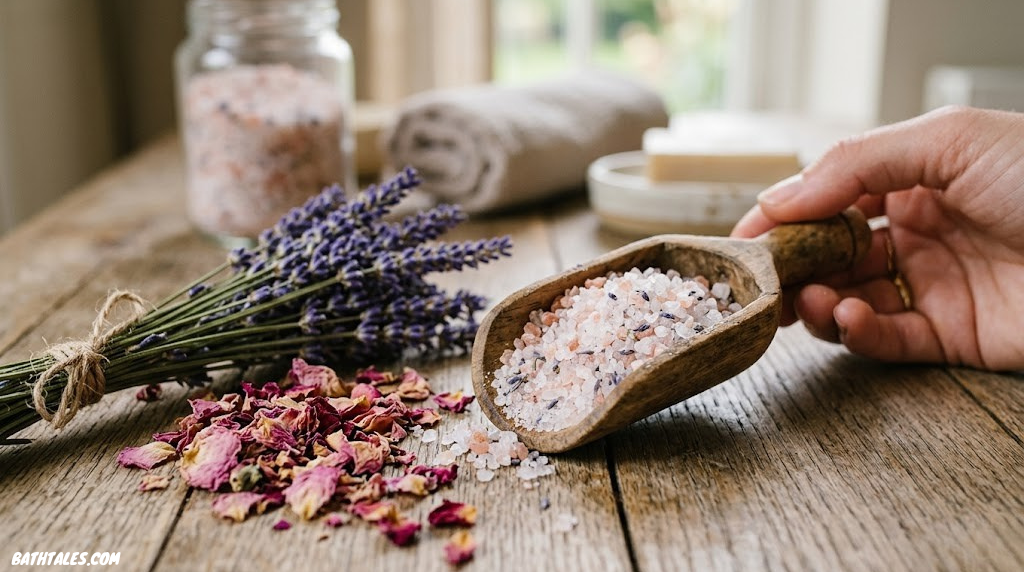
If your skin flares at the slightest provocation — a new soap, a change in weather, even a warm shower — finding a bath product that actually feels good can seem impossible. Bath salts, paradoxically, are one of the smartest tools sensitive skin has available, but only if you choose the right ones. The wrong formula, loaded with synthetic fragrances and artificial dyes, can turn a relaxing soak into a three-day itch. The right one? A fifteen-minute mineral bath that genuinely calms inflammation, reinforces your skin barrier, and leaves you softer than when you stepped in.
This guide exists to make that distinction simple. We’ll break down the science of why sensitive skin reacts the way it does, decode the ingredient lists you need to watch, and walk through our best picks — fragrance-free, dye-free, and dermatologist-recommended mineral soaks that reactive skin can actually tolerate. Whether you’re dealing with eczema, rosacea, contact dermatitis, or just skin that seems to have strong opinions about everything, there is a bath salt formula here for you.
Why Does Sensitive Skin React Differently in the Bath?
Sensitive skin is not a single condition — it’s a spectrum of reactivity that can stem from several distinct biological mechanisms. Understanding what’s happening under the surface helps explain why some bath salts heal while others cause misery.
The outer layer of skin, known as the stratum corneum, functions as a physical and chemical barrier between your body and the world. In people with sensitive skin, this barrier is often functionally compromised: the ceramide lipid layers that hold skin cells together are thinner or fewer in number, skin pH can skew alkaline (healthy skin sits between 4.5 and 5.5), and the network of nerve endings just beneath the surface tends to fire more readily, producing sensations of burning, itching, or stinging without any visible irritant.
When compromised skin is submerged in water — especially water that is too hot, too long, or loaded with irritating additives — several things happen simultaneously. The stratum corneum absorbs water and temporarily swells, disrupting the tight junction between cells. Surfactants and fragrances penetrate more deeply than they would on intact skin. The shift in local pH from bath products can disrupt the acid mantle, which is your skin’s first line of antimicrobial defense. Once you step out and the water evaporates, transepidermal water loss (TEWL) increases dramatically — leaving the barrier drier and more permeable than before your soak.
Key insight: Bath salts don’t hydrate skin directly — they support the skin’s ability to hydrate itself. Minerals like magnesium and potassium help normalize the barrier environment, reducing inflammation and TEWL so that the moisturizer you apply afterward locks in far more effectively.
What protective mineral soaks do is interrupt that cycle. Research on Dead Sea salt therapy — technically called balneotherapy — has shown reductions in skin roughness and inflammation markers after regular mineral soaking. The high magnesium content in Dead Sea salts in particular has been shown to improve skin hydration and reduce erythema (redness) in eczema patients over several weeks. For sensitive skin prone to eczema, this mechanism makes mineral baths genuinely therapeutic rather than simply cosmetic.
The critical caveat is formulation. A pure mineral salt with no additives works with sensitive skin. A mineral salt blend with synthetic fragrance, artificial colorants, or high concentrations of essential oils works against it — introducing the very irritants your barrier cannot handle.
What to Look for When Choosing Bath Salts for Sensitive Skin
Navigating the bath salt aisle — or its online equivalent — with sensitive skin requires a deliberate checklist. Pretty packaging and “natural” labeling mean very little. The ingredient list tells the whole story. Here’s what deserves your attention:
Mineral Base: The Salt Itself
Not all salts behave the same in water. The type of salt determines which minerals are present and in what ratios. For sensitive skin, the most studied and best-tolerated options are:
For a deeper look at how the two most popular options stack up, the guide on Dead Sea salt vs. Epsom salt breaks down the differences in mineral composition, therapeutic applications, and which conditions each performs best for.
Certifications and Purity Standards
For sensitive skin, purity is non-negotiable. Look for these markers on labels:
- USP-grade or pharmaceutical-grade — Epsom salt certified to this standard contains nothing but magnesium sulfate
- Dermatologist-tested or hypoallergenic — Not a guarantee, but a signal the brand has considered reactive skin
- Fragrance-free — Explicitly stated, not just “unscented” (unscented products may use masking fragrances)
- ECOCERT or COSMOS certified — Verifies organic origin and restricts certain synthetic additives
- No added colorants — FD&C dyes are common irritants; products should be natural salt color
- Minimal ingredient list — The shorter, the better for reactive skin
Added Botanicals: Proceed with Caution
Many bath salts include secondary ingredients like colloidal oatmeal, chamomile, or aloe vera — and while these can be beneficial, sensitive skin should introduce them one at a time. Colloidal oatmeal is the most universally tolerated; it has FDA approval as a skin protectant and is classified as a Category I OTC ingredient. Chamomile can trigger reactions in people with ragweed allergies. Aloe vera is generally safe in small concentrations. The safest approach for newly reactive skin is to start with a pure mineral base and add botanical blends only after confirming your skin’s tolerance.
Those looking to create a customized soak with specific calming botanicals may find the resource on best essential oils for bath salts useful — it covers which oils are gentler on reactive skin and what concentrations are considered safe.
Ingredients Sensitive Skin Should Never See in a Bath Salt
The “avoid” list is as important as the wish list. These are the ingredients most commonly responsible for bath-related flare-ups in people with reactive, sensitive, or condition-prone skin:
The single biggest trigger for contact dermatitis and skin sensitization. A product labeled “fragrance” or “parfum” can legally contain dozens of undisclosed chemical compounds, many of which are known allergens.
Common in scented bath salts and bath bombs. Coal-tar-derived colorants can cause contact dermatitis and are completely unnecessary in a functional bath salt.
A surfactant sometimes added to bath products for lathering. Known to disrupt the skin barrier, increase TEWL, and lower the tolerance threshold of already sensitive skin.
Preservatives like DMDM hydantoin, quaternium-15, imidazolidinyl urea, and diazolidinyl urea release small amounts of formaldehyde — a potent allergen and skin sensitizer.
Even “natural” oils like eucalyptus, peppermint, lemon, and cinnamon are potent irritants at therapeutic concentrations. Tea tree oil is a common allergen. If oils are present, they should be listed after salt in the ingredient order (indicating lower concentration).
Drying and barrier-disrupting. Occasionally appears in scented bath salt sprays or liquid mineral concentrates. Avoid any form of denatured alcohol in a soak product.
Small amounts are fine; large amounts (as in fizzing bath bombs) can shift bath water pH in ways that irritate already-compromised skin.
Some “exfoliating” bath salts include alpha- or beta-hydroxy acids. These are inappropriate for sensitive or reactive skin in a full-body soak — the systemic surface exposure is too large.
⚠️ Watch for “unscented” vs. “fragrance-free.” Unscented means no detectable smell — but masking fragrances may still be present to neutralize other chemical odors. Fragrance-free means no fragrance compounds have been added at all. For sensitive skin, always choose fragrance-free.
Bath Bombs vs. Bath Salts for Sensitive Skin: Which Is Actually Safer?
Bath bombs are visually appealing — they fizz, they color the water, they fill the room with scent. But for anyone with sensitive skin, the question of whether a bath bomb or a bath salt is the safer choice deserves a direct, honest answer: bath salts win, and it’s not close.
The fundamental difference lies in formulation complexity. A pure bath salt is typically one to three ingredients: the mineral salt itself, and perhaps a carrier oil or a trace amount of colloidal oatmeal. A bath bomb, by contrast, is a chemistry project. The fizzing reaction that makes bath bombs so visually satisfying comes from combining sodium bicarbonate (baking soda) with citric acid — and that chemical reaction produces carbon dioxide gas while simultaneously raising the pH of your bath water. For skin that already has a compromised acid mantle, this pH shift alone can cause irritation, dryness, and a tight, itchy sensation that lingers long after you drain the tub.
Beyond the base reaction, bath bombs almost universally contain additional ingredients that sensitive skin should avoid: synthetic fragrance compounds (often listed simply as “fragrance” or “parfum”), FD&C color dyes that stain the water, polysorbates and SLS for emulsification, cocoa butter or shea butter in quantities that can clog pores, and glitter — both biodegradable and plastic — that sits on skin and can cause mechanical irritation. Even “natural” bath bombs that use essential oil blends and plant-derived colorants introduce multiple potential allergens simultaneously, making it nearly impossible to identify which ingredient caused a reaction if one occurs.
Bath Salts (Pure Mineral)
- One to three ingredients typically
- No pH-shifting chemical reactions
- Minerals support the skin barrier directly
- No synthetic dyes or fragrances in pure forms
- Clinically studied for eczema and psoriasis
- Controlled mineral concentration
- No residue or mechanical irritants
Bath Bombs (Standard)
- 8–15+ ingredients on average
- Citric acid + baking soda shifts water pH
- Chemical reaction can irritate compromised skin
- Almost always contain synthetic fragrance
- Color dyes can trigger contact dermatitis
- Glitter and mica cause mechanical irritation
- Harder to isolate individual irritant triggers
If you enjoy the sensory experience of a bath bomb and are not dealing with a diagnosed skin condition, occasional use of a well-formulated, fragrance-free bath bomb may be tolerated. But for people managing eczema, rosacea, contact dermatitis, or chronic dryness, the risk-to-benefit ratio doesn’t favor bath bombs. Bath salts — particularly the pure, single-ingredient mineral soaks reviewed in this guide — deliver measurable skin benefits with virtually no irritation risk. For a complete comparison of both product categories including specific product recommendations, the bath bomb vs. bath salt guide covers every angle.
Similarly, if you have been considering a milk bath vs. a regular bath as an alternative for sensitive skin, milk baths using whole milk or colloidal oatmeal can be beneficial — the lactic acid in milk is a gentle exfoliant and the fats provide surface moisture. However, for people with dairy allergies or lactose sensitivity at the skin level, this approach carries its own risks. Mineral salt baths remain the most broadly tolerated option across the widest range of sensitive skin types.
The bottom line: Bath bombs prioritize aesthetics and fragrance. Bath salts prioritize mineral delivery and skin function. For sensitive skin, the choice should always favor function over fizz.
Best Salt Types for Sensitive Skin: A Side-by-Side Guide
Each mineral salt type has a different mineral fingerprint that produces different effects on skin. The following comparison can help you identify which base salt aligns best with your specific sensitivities and goals. You can also explore the complete breakdown of bath salts for every soak type for a broader view.
| Salt Type | Key Minerals | Best For | Sensitive Skin Rating | Clinical Evidence |
|---|---|---|---|---|
| Dead Sea Salt | Mg, K, Ca, Br, Zn | Eczema, psoriasis, rosacea, inflammatory dryness | ★★★★★ Excellent | ✓ Multiple RCTs |
| Epsom Salt (MgSO₄) | Mg, Sulfate | Itchy, irritated, or inflamed skin; general sensitive skin | ★★★★ Very Good | Limited formal trials |
| Himalayan Pink Salt | Na, Cl, trace minerals | General skin softening, mild dryness, gentle detox | ★★★★ Very Good | Minimal clinical data |
| Magnesium Flakes (MgCl₂) | Mg, Chloride | Eczema, psoriasis, magnesium deficiency, neuropathic itch | ★★★★★ Excellent | ✓ Emerging research |
| Coarse Sea Salt | Na, Cl, trace minerals | Mild exfoliation, general mineral top-up | ★★★ Good | Anecdotal |
| Table Salt (NaCl) | Na, Cl only | Not recommended — no mineral benefit | ★★ Caution | None |
Magnesium flakes deserve a special mention for those weighing options against traditional Epsom salt. The comprehensive guide on magnesium flakes vs. Epsom salt walks through the bioavailability differences and which format delivers more magnesium to irritated skin.
Best Bath Salts for Sensitive Skin: Our Top Picks
Every product below has been selected against a strict three-point criterion: free of synthetic fragrances, free of artificial dyes, and formulated with a pure mineral base that sensitive skin can tolerate. Whenever available, we’ve prioritized products with dermatologist endorsements or documented use by people with eczema, rosacea, or contact-sensitive skin.
Dr Teal’s Pure Epsom Salt — Unscented
Dr Teal’s Unscented Epsom Salt is about as clean as bath minerals get. It contains exactly one ingredient: pharmaceutical-grade magnesium sulfate. There are no fragrance compounds, no dyes, no botanical extracts that could trigger a reaction — just the pure mineral base that dermatologists and allergists most frequently recommend when patients ask about bath soaks. The grain size is medium-coarse, dissolving comfortably in warm water within a few minutes.
For people with sensitive skin who are new to mineral bathing, this is the ideal entry point precisely because of what it doesn’t contain. If your skin tolerates this, you know it’s the mineral itself that’s safe; any future reaction to a different product can then be traced to an additive. The value is outstanding — a large bag delivers dozens of soaks at a minimal cost per use.
Pros
- One ingredient only — pure MgSO₄
- USP pharmaceutical grade
- Zero fragrance, zero dye
- Excellent value for cost per soak
- Widely available
Cons
- No added minerals beyond magnesium
- Less “spa” experience
- Plastic packaging only

Dr Teal’s Pure Epsom Salt — Unscented
Pharmaceutical-grade · fragrance-free · zero additivesSky Organics Dead Sea Salt
Sky Organics has built a reputation for clean, minimally processed mineral salts, and their Dead Sea Salt delivers the full therapeutic mineral profile that makes Dead Sea balneotherapy so well-studied. The bag contains pure, unscented Dead Sea salt with no fragrance compounds or dye additions — just the raw mineral harvest from Israel’s saline lake, which carries an unusually high concentration of magnesium (approximately 31-35% of mineral content), potassium, calcium bromide, and zinc.
The grain size here is medium — coarser than fine-milled table salt but fine enough to dissolve fully in warm water in under five minutes, leaving no residue on the tub. For those managing eczema-prone skin, this is one of the closest commercial equivalents to the therapeutic soaks used in clinical studies. The guide on bath salts for eczema explores Dead Sea salt’s mechanism in detail, but the short version is that its unusually high magnesium content supports ceramide production and reduces the Staphylococcus aureus colonization that worsens eczema flares.
Pros
- Authentic Dead Sea mineral profile
- Completely fragrance-free and unscented
- No dyes or synthetic additives
- USDA organic certified sourcing
- Large bag — excellent value
Cons
- Slightly more expensive per pound than Epsom
- Can leave minor residue if tub is cold

Sky Organics Dead Sea Salt (5 lbs)
Unscented · USDA-certified · full mineral spectrumWestlab Dead Sea Mineral Salt
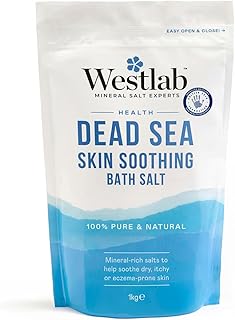
Westlab is a UK-based brand that has positioned itself firmly in the therapeutic mineral space rather than the lifestyle spa category. Their Dead Sea Salt is marketed directly to people with skin conditions, and the formulation reflects that focus: it’s unscented, completely additive-free, and the brand publishes independently verified mineral content data. For sensitive skin that has already failed with most mainstream bath products, Westlab is often the brand dermatologists and allergists point patients toward.
The salt dissolves smoothly and leaves bath water a very slightly milky appearance — a sign of mineral saturation that skin care professionals consider desirable. Westlab’s Dead Sea salt has received endorsements from the National Eczema Association and has been featured in several published case studies on psoriasis management at-home. This makes it one of the few bath salt products where the therapeutic claims are grounded in something more robust than marketing language. For a broader look at how different formulations compare for dry or reactive skin, see our comparison of the best bath salts for dry skin.
Pros
- Verified mineral content data published
- Endorsements from eczema organizations
- Zero fragrance, dye, or additive
- Suitable for children with skin conditions
Cons
- Higher price point
- May require online ordering (less retail availability)
Ancient Minerals Magnesium Bath Flakes
Ancient Minerals sits in a category above most bath salt brands because their magnesium chloride flakes are sourced from the Zechstein seabed — an ancient underground mineral deposit in the Netherlands that has been sealed from surface contamination for over 250 million years. This geological purity translates to a product with virtually no heavy metal content and an exceptionally consistent magnesium chloride concentration of around 47% by weight.
Magnesium chloride (MgCl₂) is distinct from Epsom salt (MgSO₄) in one important way: it is considered to have higher transdermal absorption efficiency. For sensitive skin that is also dealing with systemic magnesium deficiency — which has been linked to increased skin inflammation and barrier dysfunction — this distinction can make a meaningful difference. These flakes dissolve quickly, create very soft-feeling water, and contain absolutely nothing except magnesium chloride. No fragrance, no mineral dilution, no additives of any kind. For a detailed comparison of these two magnesium formats and which works better for inflamed skin, the guide on magnesium flakes vs. Epsom salt is comprehensive.
Pros
- Zechstein-source purity — minimal heavy metals
- High bioavailability MgCl₂
- Completely additive-free
- Very fast dissolving
- Endorsed by integrative dermatologists
Cons
- Premium pricing
- Requires more per bath than Epsom salt

Ancient Minerals Magnesium Bath Flakes
Zechstein-source · ultra-pure MgCl₂ · zero additivesSan Francisco Salt Co. Epsom Salt
San Francisco Salt Co. has earned a loyal following among people with sensitive and eczema-prone skin for one simple reason: they manufacture to pharmaceutical standards (USP grade) and they sell their unscented Epsom salt in sizes ranging from a trial 1-lb bag all the way to a 50-lb bulk option — making it one of the most economical choices for people who soak regularly as part of a skin management routine.
The pure unscented formulation is a single-ingredient product: just magnesium sulfate, nothing else. This is the ideal option for parents whose children have eczema or sensitive skin conditions and who need to manage cost over dozens of regular weekly soaks. It also dissolves particularly cleanly, leaving no residue or film that might cause post-bath tightness. For those managing both skin sensitivity and muscle tension — a common pairing in people with fibromyalgia — this product is a practical overlap of the recommendations in both the bath salts for muscle soreness and the sensitive skin categories.
Pros
- USP pharmaceutical grade
- Available in bulk — very low cost per soak
- Zero fragrance, zero dyes, zero additives
- Clean dissolve, no residue
Cons
- Epsom-only — no Dead Sea mineral complexity
- Utilitarian packaging

SaltWorks Ultra Epsom Salt
SaltWorks sources and processes their Epsom salt to an ultra-fine grain that dissolves almost instantly — within seconds of hitting warm water. For people with reactive skin who worry about undissolved salt granules contacting skin directly (which can cause a mild abrasive sensation), this ultra-fine texture eliminates that concern entirely. The water instantly becomes a uniform mineral solution.
Like all the best sensitive skin options, it is a one-ingredient product — pure USP pharmaceutical-grade magnesium sulfate with no fragrance, no color, and nothing else. SaltWorks publishes their Certificate of Analysis, showing heavy metal content and purity levels that consistently exceed pharmaceutical requirements. For people who are also looking at bath salts from an athletic recovery standpoint — sensitive skin shouldn’t mean giving up the muscle benefits of magnesium soaking — the guide on bath salts for athletes covers this intersection well.
Pros
- Ultra-fine grain — near-instant dissolve
- Published Certificate of Analysis
- Exceeds USP purity standards
- No residue or grit
Cons
- Slightly more expensive than bulk alternatives
- Fine texture can clump with humidity

SaltWorks Ultra Epsom Salt
Ultra-fine grain · published purity data · zero additivesFull Comparison: Best Bath Salts for Sensitive Skin
Use this table for a quick side-by-side view of every product reviewed above, ranked by their suitability for sensitive skin in key categories.
| Product | Salt Type | Fragrance-Free | Dye-Free | Purity Grade | Best Skin Concern | Value |
|---|---|---|---|---|---|---|
| Dr Teal’s Unscented Epsom | Epsom (MgSO₄) | ✓ | ✓ | USP Grade | General sensitive skin | ★★★★★ |
| Sky Organics Dead Sea Salt | Dead Sea | ✓ | ✓ | Organic Cert | Eczema, psoriasis | ★★★★☆ |
| Westlab Dead Sea Salt | Dead Sea | ✓ | ✓ | Verified Mineral | Eczema, rosacea, psoriasis | ★★★☆☆ |
| Ancient Minerals Mg Flakes | Magnesium Chloride | ✓ | ✓ | Zechstein Ultra-Pure | Eczema, barrier repair | ★★★☆☆ |
| SF Salt Co. Epsom | Epsom (MgSO₄) | ✓ | ✓ | USP Grade | Regular soaking, eczema | ★★★★★ |
| SaltWorks Ultra Epsom | Epsom (MgSO₄) | ✓ | ✓ | USP Grade + CoA | Highly reactive skin | ★★★★☆ |
Bath Salts by Specific Sensitive Skin Condition
Sensitive skin is not one thing — and the bath salt that works beautifully for rosacea may not be the right choice for someone managing eczema or contact dermatitis. This section maps the right mineral approach to each specific condition.
Best option: Dead Sea salt or magnesium chloride flakes. Use lukewarm water (not hot), soak 15–20 min, apply emollient cream within 3 minutes of stepping out. Fragrance-free is non-negotiable. See our full eczema guide.
Best option: Pure Epsom salt or fine Dead Sea salt in minimal amounts (¼ cup only). Use cool-to-lukewarm water — heat is a major rosacea trigger. Avoid all essential oils.
Best option: The most minimal salt possible — pharmaceutical-grade unscented Epsom salt with a single ingredient. Patch-test even this, and use a lower concentration initially.
Best option: Dead Sea salt. Balneotherapy with Dead Sea salts has the most clinical evidence for reducing psoriasis plaque thickness and scaling. Temperature should be warm, not hot.
Best option: Dead Sea salt or magnesium flakes paired with a few drops of unscented jojoba oil added to the bath. See our guide to bath salts for dry skin for full protocol.
Best option: Pure unscented Epsom salt at low concentrations (¼ cup per full bath). Avoid essential oils entirely during first trimester. See the dedicated pregnancy bath salt guide.
For relaxation without irritation: If your primary goal is winding down without triggering sensitive skin, the guide to bath salts for relaxation and sleep covers calming mineral blends that are also gentle on reactive skin.
Sensitive Skin at Every Age: Bath Salt Considerations for Babies, Children, and Mature Skin
Sensitive skin does not present the same way at every stage of life. The stratum corneum of a six-month-old is structurally different from that of a 35-year-old with eczema, which is different again from a 70-year-old whose barrier function has thinned with age. Understanding these differences matters for bath salt selection, concentration, and soak duration.
Babies and Infants (0–12 Months)
An infant’s skin is roughly 30% thinner than adult skin, with a significantly less developed lipid barrier and a pH that is still stabilizing. The permeability of infant skin means that anything placed in bath water — mineral salts, botanical additives, even tap water contaminants — penetrates more readily and at higher relative concentrations than it would on adult skin. For this reason, mineral bath salts for babies should be approached with extreme conservatism.
If a pediatric dermatologist has recommended mineral baths for infant eczema (a practice that is increasingly common), the safest approach is pure pharmaceutical-grade Epsom salt at a very low concentration — roughly one to two tablespoons per infant-sized tub of lukewarm water. The soak should last no more than ten minutes, and the baby should be patted dry gently and immediately coated in a thick, fragrance-free emollient such as petroleum jelly or a ceramide-based cream. Dead Sea salt can be used if specifically recommended by a clinician, but the higher mineral diversity increases the probability of an individual sensitivity reaction, so it should be patch-tested on a small area first.
The bath environment matters as much as the salt. Water temperature for infants should never exceed 100°F (37.8°C) and ideally sits around 98°F (37°C). For additional guidance on products and approaches for very young children, parents often find the bath toys for 1-year-olds resource useful for thinking holistically about the infant bathing experience — what’s in the water, what the baby touches, and how to keep the tub environment clean.
Children and Toddlers (1–10 Years)
Children’s skin matures rapidly through the toddler and early childhood years, but those with diagnosed atopic dermatitis — which affects roughly 10-15% of children — often retain a compromised barrier well into school age. For these children, mineral baths can be an effective part of a “soak and seal” protocol recommended by many pediatric dermatologists: a brief lukewarm mineral soak followed by immediate application of a thick emollient to lock in moisture.
For children, Epsom salt or Dead Sea salt at half the adult concentration is generally appropriate — approximately two to three tablespoons in a standard child-depth bath. Avoid any salt product that contains essential oils, even those marketed as “kid-friendly,” as children’s skin has a lower threshold for plant-based allergens. The bath should be limited to 10-15 minutes. If your child finds plain mineral water boring, resist the temptation to add bubble bath or bath colorants — instead, making the bath itself more engaging through toys and activities is a better strategy. The resources on bath toys for 2-year-olds, bath toys for 3-year-olds, and bath toys for 4-year-olds offer ideas for making mineral bath time engaging without introducing skin irritants.
Adults with Newly Developed Sensitivity
Many adults develop sensitive skin for the first time in their 30s, 40s, or 50s — often triggered by hormonal shifts, medication changes, stress, or cumulative environmental damage. This can be disorienting for someone who has used scented bath products their entire adult life without issue. The transition to mineral bathing should be gradual: start with the purest single-ingredient Epsom salt at a low concentration, confirm tolerance over two to three soaks, and then gradually explore Dead Sea salt or magnesium flakes if desired. Do not switch from a heavily fragranced bath bomb to a complex multi-ingredient “sensitive skin” product in one step — the cleaner path is to eliminate variables first, then reintroduce them one at a time.
Mature and Aging Skin (65+)
As skin ages, it naturally becomes thinner, drier, and more fragile. The production of natural sebum declines, the dermal-epidermal junction flattens (reducing nutrient transfer), and the skin’s ability to retain moisture decreases significantly. Transepidermal water loss increases in aging skin, and the barrier takes longer to recover from disruption. These changes mean that the very factors that make mineral baths beneficial for older adults — magnesium absorption, anti-inflammatory effects, improved hydration — also mean that the potential for over-exposure and barrier disruption is higher.
For mature sensitive skin, the recommendations are: use Dead Sea salt or Epsom salt at conservative concentrations (¼ cup per full bath), keep soaks to 15 minutes maximum, use water that is comfortably warm but not hot (the thermoregulation system in older adults is less responsive, making hot water burns more likely), and — critically — apply a ceramide-rich moisturizer immediately after patting dry. Older adults on blood thinners or with circulatory conditions should consult their physician before beginning mineral bathing, as the warm water immersion can affect blood pressure and circulation independently of the salt content.
⚠️ A note on age and water temperature: Older adults and young children are both more vulnerable to temperature-related skin damage because their thermoregulation is less efficient. For both age groups, err on the side of lukewarm water — 92°F to 98°F (33°C to 37°C) — and test the water with your elbow or a bath thermometer before entering.
Sitz Baths for Sensitive Skin: A Targeted Mineral Approach
A sitz bath — a shallow soak that covers only the hips and buttocks — is one of the most commonly recommended treatments for postpartum recovery, hemorrhoid discomfort, and perineal skin sensitivity. For people with sensitive skin in these areas, the question of whether to add bath salts to a sitz bath and which type to use is clinically relevant.
The perineal and perianal skin is among the thinnest and most permeable on the body, making it extremely reactive to chemical irritants. Standard bath products — fragranced soaps, bubble baths, and conventional bath salts with synthetic additives — are a common trigger for vulvar dermatitis and perianal itching. Pure mineral salts, however, can be genuinely therapeutic in sitz bath form. Epsom salt (magnesium sulfate) at a low concentration of one to two tablespoons in a sitz basin of warm water can reduce inflammation, promote healing of minor tissue trauma, and relieve the itching associated with hemorrhoids and postpartum healing.
The rules for sitz baths with sensitive skin mirror those for full-body soaps: use only fragrance-free, dye-free, single-ingredient mineral salts. Keep the water lukewarm, not hot. Limit the soak to 10-15 minutes. Pat the area dry gently — never rub — and avoid applying any product afterward unless specifically directed by a healthcare provider. Dead Sea salt can also be used in sitz baths, though its broader mineral profile makes it slightly more likely to cause a tingling sensation on delicate mucosal tissue; Epsom salt is generally the safer first choice. For a thorough comparison of sitz bathing versus full-body soaking and the specific conditions each treats, the sitz bath vs. regular bath guide provides detailed protocols.
Sensitive skin in intimate areas: The genital and perianal regions have a different pH and thinner stratum corneum than the rest of the body. Always start with the lowest possible salt concentration for sitz baths, and discontinue immediately if any burning or increased irritation occurs.
How to Use Bath Salts Safely with Sensitive Skin
Even the purest mineral salt can cause a reaction if used incorrectly. These step-by-step guidelines are specifically designed for reactive skin — they address water temperature, concentration, soak duration, and what to do immediately after stepping out.
Sensitive skin and hot water are a bad combination. Aim for lukewarm water between 92°F and 98°F (33–37°C) — warm enough to feel comfortable and allow minerals to dissolve, but not hot enough to dilate blood vessels and increase skin permeability to a degree that worsens reactivity. Hot water strips the skin’s natural lipids more aggressively and can trigger histamine release in eczema and rosacea-prone skin.
For your first sensitive skin bath salt soak, start with ¼ cup (approximately 70–80g) dissolved in a full standard tub (approximately 40 gallons of water). This creates a very mild mineral concentration similar to a slightly saline solution — gentle enough to identify any reaction without committing to a full therapeutic dose. If your skin responds well after two or three soaks, you can gradually increase to ½ cup. The guide on how much bath salt to use has a helpful weight-to-volume reference chart.
Undissolved salt crystals in contact with skin that already has compromised barrier function can cause localized irritation, similar to mild abrasion. Stir the bath water actively with your hand or a bath brush for 60 seconds after adding salt, or add the salt while the tap is running to use the water flow for agitation. Ultra-fine grain Epsom salts (like SaltWorks’ Ultra variety) dissolve almost instantly and virtually eliminate this concern.
The therapeutic window for sensitive skin mineral soaking is 15 to 20 minutes. Before the 10-minute mark, minerals haven’t had sufficient contact time to provide meaningful skin benefit. Beyond 20 minutes, however, the bath water starts to cool significantly (dropping into a temperature range that can induce mild vasoconstriction) and prolonged water exposure begins to work against the skin barrier rather than supporting it. For more detail on timing, the resource on how long to soak in bath salts covers the research behind this window in depth.
After stepping out of the bath, pat skin gently with a soft, clean towel — never rub. Rubbing creates friction that disrupts the temporarily softened stratum corneum. Leave skin slightly damp rather than fully dry; this residual moisture is what you want to trap with moisturizer in the next step.
The three-minute rule is one of the most evidence-backed skin care recommendations for people with eczema and sensitive skin. After your bath, your skin’s water content is temporarily elevated and its pores are slightly more open — conditions that allow a thick, fragrance-free emollient (such as CeraVe Moisturizing Cream, Vanicream, or Eucerin) to penetrate more effectively. Once skin is fully dry, this window closes and the moisturizer sits more superficially on the surface. For sensitive skin, this post-bath moisturizer application is arguably more important than the bath salt itself.
Frequency note: For most people with sensitive skin, two to three mineral soaks per week is the optimal frequency. Daily bathing in salt water — even with a gentle formula — can begin to disrupt the skin’s acid mantle over time. If you want to bathe more often, alternate mineral soaks with plain warm water rinses.
Seasonal Adjustments: Adapting Your Bath Salt Routine Year-Round
Sensitive skin does not behave the same way in January as it does in July. Temperature, humidity, indoor heating, sun exposure, and even seasonal allergens all influence how your skin responds to a mineral bath — and adjusting your approach accordingly can be the difference between a soak that soothes and one that leaves you itchy.
Winter: The Highest-Risk Season for Sensitive Skin
Winter is typically the most challenging season for people with reactive skin. Cold outdoor air holds less moisture, and indoor heating systems further reduce humidity — often dropping it below 30%, well under the 40-60% range that supports healthy skin barrier function. The result is skin that starts every bath already dehydrated and compromised.
In winter, your bath salt routine should lean toward barrier-repair minerals: Dead Sea salt and magnesium chloride flakes are superior choices during cold months because their high magnesium and potassium content actively supports the ceramide layers that winter conditions erode. Reduce your soak time slightly — 15 minutes rather than 20 — and increase the thickness of your post-bath moisturizer. Consider switching to an ointment-based emollient (like pure petroleum jelly or CeraVe Healing Ointment) over your regular cream, particularly on hands, feet, and any areas of active eczema. The air outside may be dry, but a well-executed winter mineral bath followed by a thick occlusive layer can actually leave your skin in better condition than summer baths do.
Water temperature is particularly important in winter. The temptation to use hotter water is strong when the bathroom is cold, but resist it — hot water in winter is one of the most common triggers for winter eczema flares. Pre-heat the bathroom with a space heater or by running the shower for a few minutes before undressing, so you can keep the water lukewarm without feeling cold.
Spring: Allergen Sensitivity Peaks
Spring brings pollen, grass, and a spike in airborne allergens that can prime the immune system for heightened skin reactivity. People with atopic dermatitis or allergic contact dermatitis often find that their skin tolerance drops in spring even without changing any products. During this season, it is especially important to avoid any bath salt that contains botanical extracts, essential oils derived from plants, or “natural fragrance” — these can compound the allergen load your skin is already managing. Stick to pure, single-ingredient mineral salts. If you want to learn more about which botanical additives are lower-risk during allergy season, the essential oils for bath salts guide discusses allergen cross-reactivity in detail.
Summer: Sweat, Sun, and Over-Bathing
Summer introduces a different set of challenges. Increased sweating can irritate sensitive skin, chlorine from swimming pools strips the barrier, and the impulse to shower or bathe more frequently can over-wash protective skin lipids. Mineral baths in summer can actually serve as a recovery tool — a Dead Sea salt soak after a day at the pool can help replenish minerals lost through chlorine exposure and sweat.
However, summer also means that skin is more likely to be sunburned or heat-damaged, and mineral salts should not be applied to sunburned skin. Wait until any burn has fully healed before resuming your mineral bath routine. If you’re spending time in the sun, reduce your soak temperature even further and consider a shorter 10-15 minute soak, as UV-damaged skin has a temporarily compromised barrier that is more susceptible to mineral irritation at higher concentrations.
Autumn: Transitioning and Rebuilding
Autumn is the ideal season to rebuild your skin barrier after summer exposure and prepare for the dry winter months ahead. This is a good time to gradually increase your bath salt concentration if you had reduced it during summer, and to transition to richer post-bath moisturizers. Two to three mineral soaks per week during autumn can lay the groundwork for significantly better winter skin resilience. Think of it as pre-conditioning your barrier before the harsh season arrives.
Hard Water vs. Soft Water: How Your Home’s Water Supply Affects Sensitive Skin Baths
The water flowing from your tap is not neutral — it carries dissolved minerals, treatment chemicals, and pH variations that interact with both your skin and the bath salts you add. For people with sensitive skin, understanding your local water quality is an overlooked but genuinely important part of the mineral bathing equation.
What Is Hard Water?
Hard water contains elevated levels of dissolved calcium and magnesium — typically measured in grains per gallon (gpg) or parts per million (ppm). Water is considered “hard” above 7 gpg (120 ppm) and “very hard” above 10.5 gpg (180 ppm). Approximately 85% of homes in the United States have some degree of hard water, and in regions with limestone geology (much of the Midwest, Southwest, and parts of the UK), water hardness can be extremely high.
For sensitive skin, hard water creates several problems. The calcium and magnesium ions in hard water react with soap and cleansers to form a residue called “soap scum” that deposits on skin. This film clogs pores, prevents moisturizers from absorbing properly, and leaves skin feeling dry and tight even after thorough rinsing. Research published in the Journal of Investigative Dermatology has shown a statistically significant correlation between living in a hard water area and the prevalence of eczema in children — the calcium ions appear to directly irritate the skin barrier and may increase susceptibility to irritants.
How Hard Water Interacts with Bath Salts
When you add bath salts to hard water, the mineral interactions become more complex. Adding Dead Sea salt — which is itself rich in calcium — to already calcium-heavy hard water creates a higher total mineral concentration than intended, which can increase the osmotic draw on skin cells and paradoxically dehydrate the stratum corneum. Epsom salt (magnesium sulfate) fares somewhat better in hard water because the sulfate ions do not compound the calcium issue, but the overall mineral load is still higher than the same salt would produce in soft water.
If you live in a hard water area and use bath salts for sensitive skin, consider these adjustments:
- Reduce your salt amount by 25-30% — your water is already adding minerals, so the same ½ cup that works in soft water may be too concentrated in hard water
- Consider a whole-house water softener — this is the most effective long-term solution for both skin health and bath salt efficacy, though it represents a significant investment
- Use a bath ball or inline filter — these attach to your faucet and reduce chlorine and some mineral content; they are less effective than a full softener but can meaningfully reduce irritant levels
- Add a tablespoon of colloidal oatmeal to your bath — oatmeal helps counteract the drying effects of hard water by forming a protective film on skin
- Rinse with filtered or bottled water after your soak — a quick final rinse with soft water removes mineral residue before you apply moisturizer
Soft Water Advantages for Sensitive Skin
If you have naturally soft water or a water softening system, you have a genuine advantage for sensitive skin bathing. Soft water allows soaps and moisturizers to rinse cleanly, produces less residue on skin, and allows bath salt concentrations to be more predictable. Bath salts dissolve more efficiently in soft water, and the lower baseline mineral content means your measured salt amount produces a more accurate concentration. People who install water softeners frequently report noticeable improvements in skin dryness and eczema severity within weeks — independent of any bath salt use.
⚠️ Chlorine in tap water: Most municipal water supplies are chlorinated for safety, but chlorine is a known skin irritant — particularly for people with eczema and sensitive skin. If you notice your skin is more irritated after baths than after showers, the chlorine content of your bath water may be a factor, since a full bathtub exposes more skin surface to chlorinated water for a longer duration. A simple carbon filter on your faucet can reduce chlorine levels significantly.
Signs Your Bath Salt Is Irritating Your Skin — and What to Do
Even when following every guideline in this guide, sensitive skin can occasionally react to a bath salt product. Knowing the difference between a normal mineral sensation and an actual irritation response is critical for protecting your skin and troubleshooting your routine.
Normal Sensations During a Mineral Bath
A mild tingling or slight warmth when you first enter a mineral bath is normal — particularly with Dead Sea salt, which has a high concentration of bromide and other trace minerals that produce a subtle tingling on skin. This sensation should be mild, evenly distributed, and should fade within the first two to three minutes as your skin acclimates. Slight softening of the water’s feel (a “silky” sensation) is also normal and indicates that minerals are dissolving properly.
Warning Signs to Watch For
The following symptoms indicate that your skin is reacting to the bath salt, the water temperature, the concentration, or an additive in the product:
- Localized stinging or burning that intensifies rather than fades after the first few minutes — this suggests barrier disruption in a specific area, possibly from an undissolved salt crystal or a skin fissure you may not have noticed
- Redness that appears or deepens during the soak — mild redness from warm water is normal, but patchy or intensely red areas suggest an inflammatory response
- Itching that begins during the bath — mineral baths should relieve itching, not cause it. If itching starts or worsens in the tub, something in the water is irritating your skin
- A tight, “drawn” sensation on skin after stepping out — this indicates excessive mineral deposition or pH disruption, often from too high a salt concentration or hard water interaction
- Hives, welts, or raised bumps appearing within minutes to hours after bathing — this is an allergic or histamine response and warrants immediate discontinuation and possible medical consultation
- Dry, flaky patches that appear 12-24 hours after bathing — delayed dryness suggests the bath disrupted your barrier without immediate acute symptoms, meaning the concentration or duration was too aggressive
What to Do If You React
If you experience a reaction during or after a mineral bath, take these steps:
- Exit the bath immediately and rinse your skin with plain lukewarm water for 60 seconds to remove residual minerals.
- Pat dry gently — do not rub, even if skin is itchy.
- Apply a thick, fragrance-free emollient generously — petroleum jelly, CeraVe Healing Ointment, or Vanicream are reliable choices.
- Take an oral antihistamine if hives or significant itching are present (cetirizine or diphenhydramine).
- Do not re-use the same product until you’ve identified the cause. Switch to a single-ingredient pharmaceutical-grade Epsom salt and patch-test on a small area of your inner forearm before your next full bath.
- See a dermatologist if the reaction is severe, blistering, or does not resolve within 48 hours.
Remember: A reaction to a bath salt does not necessarily mean you’re allergic to minerals. In most cases, the reaction is caused by an additive (fragrance, dye, preservative) or by using too high a concentration. Switching to a purer product at a lower dose usually resolves the issue.
Making Your Own Sensitive Skin Bath Salt Blend at Home
The cleanest bath salt for sensitive skin is often the one you make yourself — because you have complete control over every ingredient. DIY formulation for reactive skin isn’t complicated; it simply requires prioritizing purity over complexity. Here is a simple, dermatologist-concept approach to building your own blend:
The Minimal Sensitive Skin Base (3 ingredients)
- 2 cups Dead Sea salt or pharmaceutical-grade Epsom salt — the therapeutic mineral base
- 1 tablespoon colloidal oatmeal (finely milled) — FDA-recognized skin protectant; reduces itching and supports the barrier; dissolves fully in warm water
- 1 teaspoon unscented jojoba oil — technically a liquid wax, not an oil; mimics the skin’s natural sebum; excellent for dry sensitive skin; non-comedogenic and non-irritating at low concentrations
Mix the dry ingredients together thoroughly, then stir in the jojoba oil until distributed. Store in an airtight glass jar away from moisture. Use ¼ to ½ cup per bath. This blend is genuinely appropriate for most sensitive skin types, including mild eczema.
What NOT to Add If You Have Sensitive Skin
- Essential oils at standard DIY concentrations (typically 2–3% — too high for reactive skin)
- Baking soda in significant amounts (raises bath pH, can irritate acid-mantle-compromised skin)
- Citric acid (used in fizzy bath bombs; acidic shock to sensitive skin)
- Dried flower petals unless certified pesticide-free (common source of contact allergens)
- Food-grade colorants (still contain dye compounds that can irritate)
- Glycerin in high concentrations (can paradoxically draw moisture out of already-dry skin)
If you’d like a more elaborate recipe framework — including shelf life considerations, scenting strategies for sensitive skin at skin-safe concentrations, and packaging options — the comprehensive guide on how to make bath salts at home is a thorough resource. And if you’re wondering whether that bag of bath salts you bought six months ago is still usable, the article on whether bath salts expire addresses shelf life for different salt types and formulations.

Sky Organics Dead Sea Salt (5 lbs) — ideal DIY base
Pure · unscented · USDA-certified Dead Sea mineral harvestThe Science of Magnesium Absorption Through Compromised Skin
One of the most common questions about mineral bath salts is whether magnesium can actually be absorbed through the skin — and if so, whether that absorption is meaningful enough to affect skin health and systemic magnesium levels. The answer is nuanced, and the research is still evolving, but what we do know is encouraging for people using mineral baths as part of a sensitive skin management strategy.
Transdermal Magnesium: What the Research Shows
Transdermal absorption — the process by which a substance passes through the skin layers and enters the bloodstream — is well-established for many pharmaceutical compounds (nicotine patches, hormone creams, and pain-relieving gels all rely on this mechanism). Whether magnesium ions are similarly absorbed through intact or compromised skin is a question that several studies have attempted to answer.
A 2010 pilot study published in the journal Nutrients found that participants who applied magnesium chloride solution to their skin daily for 12 weeks showed a statistically significant increase in serum magnesium levels compared to a control group. A 2017 systematic review in Nutrients concluded that while oral supplementation remains the most reliable way to raise systemic magnesium levels, topical application — including bath soaks — appears to contribute meaningfully, particularly in people who are deficient. The mechanism is straightforward: magnesium ions in solution can pass through the skin’s lipid layers, especially when those layers are thinned or disrupted, as they are in people with eczema, psoriasis, or general sensitive skin.
For people with sensitive skin, this is actually a double-edged finding. On one hand, compromised skin absorbs minerals more efficiently — the very barrier dysfunction that makes sensitive skin vulnerable also makes it a better conduit for therapeutic magnesium delivery. On the other hand, this increased permeability means that irritants and allergens in the bath water also penetrate more readily, which is why product purity is so critical.
Why Magnesium Matters for Skin Barrier Function
Magnesium plays several direct roles in skin health that are particularly relevant for sensitive skin:
- Ceramide synthesis: Magnesium is a cofactor in the enzymatic pathways that produce ceramides — the lipid molecules that form the “mortar” between skin cells in the stratum corneum. Low magnesium means fewer ceramides, which means a weaker barrier.
- Anti-inflammatory signaling: Magnesium regulates the NF-κB pathway, a central mediator of inflammatory response in skin cells. Adequate magnesium levels reduce the production of pro-inflammatory cytokines like IL-6 and TNF-α.
- Stress response: Systemic magnesium deficiency increases cortisol production, which in turn degrades collagen and suppresses barrier repair mechanisms. Soaking in magnesium-rich water may interrupt this stress-barrier damage cycle.
- Antimicrobial defense: Magnesium supports the skin’s natural antimicrobial peptide production, including cathelicidins — which are particularly important for people with eczema, where Staphylococcus aureus colonization is a major trigger for flares.
- Nerve sensitivity: Magnesium acts as a natural calcium channel blocker in nerve cells, which may explain why magnesium-rich baths reduce the sensation of itching and tingling in people with neuropathic skin sensitivity.
Epsom Salt (MgSO₄) vs. Magnesium Chloride (MgCl₂): Which Absorbs Better?
This is one of the most debated questions in the mineral bathing community. Magnesium chloride is generally considered to have higher transdermal bioavailability than magnesium sulfate (Epsom salt) because the smaller chloride ion pairs more readily cross lipid membranes than the larger sulfate molecule. However, Epsom salt has its own advantages: the sulfate component supports the body’s detoxification pathways (sulfation is a key Phase II liver detoxification process), and Epsom salt is significantly less expensive and more widely available.
For sensitive skin specifically, both formats are effective. If your primary goal is barrier repair and anti-inflammatory benefit, magnesium chloride (in the form of Ancient Minerals flakes or similar products) may offer a slight edge. If your goal is general soothing and you want the most accessible, affordable option, Epsom salt works extremely well. The magnesium flakes vs. Epsom salt guide covers this comparison with more technical depth for those who want to dig into the biochemistry.
Key takeaway for sensitive skin: You do not need to choose the “most absorbable” magnesium format to get skin benefits. What matters more than the specific salt type is consistency — regular mineral soaking at appropriate concentrations over weeks and months produces cumulative improvements in barrier function, inflammation, and skin hydration that a single soak cannot achieve.
Building a Complete Sensitive Skin Bath Ritual
A mineral bath salt soak is the centerpiece of a sensitive skin bathing practice, but it’s not the whole picture. The water temperature you choose, the products you use before and after the soak, the towel you dry with, the moisturizer you apply, and even the environment of your bathroom all contribute to whether your bath experience supports or undermines your skin barrier. For a more comprehensive look at building an optimal bathing practice from start to finish, the best bath routine guide covers every step — and the how to take a bath resource is a useful foundation for anyone rethinking their bathing habits from the ground up.
Before the Bath
Preparation begins before you turn on the tap. Remove any makeup or sunscreen with a gentle, fragrance-free micellar water or cleansing oil — not a foaming cleanser, which will strip lipids before you’ve even entered the bath. If you shave, do so before adding bath salts to the water: freshly shaved skin has micro-abrasions that increase mineral penetration and can cause stinging, even with gentle salts. Shave with a fragrance-free shaving cream or gel, rinse thoroughly, and then add your salt and enter the bath once the water is at the correct temperature.
The bathroom environment matters too. A warm, draft-free room prevents the water from cooling too quickly (which forces longer soak times) and avoids the uncomfortable experience of cold air on wet skin. For tips on creating a genuinely comfortable bath environment — lighting, temperature, support — the how to make a bath comfortable guide covers the physical setup, while how to make a bath more relaxing addresses the sensory and psychological dimensions of a truly therapeutic soak.
During the Bath
Once your mineral salts are dissolved and you’re in the water, resist the urge to use this time for exfoliation or scrubbing. Sensitive skin in a mineral bath should be left alone — the minerals are doing their work passively, and mechanical scrubbing disrupts the softened stratum corneum. If you want to wash your body, use a very small amount of a fragrance-free, sulfate-free cleanser (such as CeraVe Hydrating Body Wash or Vanicream Gentle Body Wash) applied only to areas that genuinely need cleansing — underarms, groin, feet — and rinse it off quickly without letting it sit on skin.
Avoid using your phone or reading material in the bath if you have sensitive skin on your hands — the combination of prolonged water immersion and gripping creates friction and wrinkling that can trigger hand eczema. Instead, use the soak time for relaxation: close your eyes, focus on your breathing, and let the minerals work without distraction.
After the Bath
The post-bath sequence is where most sensitive skin routines succeed or fail. Follow this order precisely:
- Step out carefully — wet skin on a smooth tub surface is slippery. Use a non-slip bath mat.
- Pat dry with a clean, soft towel — ideally 100% cotton, unscented, and free of fabric softener residue (fabric softeners deposit quaternary ammonium compounds on towels that transfer to skin). A dedicated “skin towel” that is washed with a fragrance-free detergent and dried without dryer sheets is a small investment that pays off.
- Leave skin slightly damp — do not towel off completely. The residual moisture on your skin is what your moisturizer will trap.
- Apply moisturizer within 3 minutes — start with the thinnest areas of skin (face, neck, hands) and work outward. For eczema-prone areas, use an ointment rather than a cream.
- Put on soft, breathable clothing — cotton or bamboo fabrics are ideal. Avoid wool, synthetic fibers, or tight clothing against freshly moisturized skin.
- Drink water — mineral baths, particularly warm ones, are mildly dehydrating. A glass of water afterward supports both systemic hydration and skin moisture levels.
For those who want to explore additional products that pair well with mineral baths — cleansers, moisturizers, bath tools — the best bath products guide covers the full range of options with sensitivity considerations.
Bath vs. Shower: Which Is Better for Sensitive Skin?
This is a common question with a clear answer: for the purposes of mineral therapy, baths are superior because they allow prolonged, full-body mineral contact that a shower cannot replicate. However, for daily cleansing, showers are generally better for sensitive skin because the water flows over the body and drains away — carrying soap residue, dead skin cells, and irritants with it — rather than sitting in a tub where skin continues to soak in already-contaminated water.
The ideal approach for most people with sensitive skin is to shower for daily cleansing (using lukewarm water, fragrance-free cleanser, and minimal scrubbing) and to take mineral baths two to three times per week specifically for therapeutic benefit. This hybrid approach avoids the barrier disruption of daily long soaking while still delivering the anti-inflammatory and barrier-repair benefits of mineral therapy. For a full comparison with specific recommendations, the bath vs. shower guide lays out the pros and cons of each for different skin types and conditions.
⚠️ One more option worth considering: If full-body immersion isn’t practical or your skin tolerates targeted soaking better, infrared baths vs. regular baths explores a newer approach that uses infrared heat technology to deliver warmth at lower water temperatures — potentially beneficial for sensitive skin that reacts to conventional hot water immersion.
Sensitive Skin Bath Myths Debunked
Misinformation about bath products and sensitive skin is everywhere — passed along in well-meaning blog posts, social media threads, and even by some product marketing. Here are the most persistent myths and what the evidence actually says.
This is perhaps the most dangerous misconception in the sensitive skin space. Poison ivy is natural. Essential oils of cinnamon, clove, and eucalyptus are natural — and they are potent contact allergens. The word “natural” on a bath salt label tells you nothing about its safety for reactive skin. What matters is the specific ingredients and their concentrations. A natural product with five essential oils and dried flower petals is far more likely to trigger a reaction than a synthetic-free, pharmaceutical-grade Epsom salt. Always evaluate the ingredient list, not the marketing language.
Pores do not “open” and “close” — this is a persistent anatomical myth. What hot water actually does is dilate blood vessels, increase skin permeability beyond what’s beneficial, strip natural lipids more aggressively, and trigger histamine release in people with eczema and rosacea. Lukewarm water (92-98°F / 33-37°C) is sufficient to dissolve mineral salts completely and deliver their benefits without the barrier damage that hot water causes. For sensitive skin, cooler is almost always better.
Mineral concentration in bath water follows a therapeutic curve — there is an optimal range below which the effect is minimal and above which the effect becomes irritating. For sensitive skin, that range is narrower than for normal skin. Using too much salt creates a hypertonic solution that draws moisture out of skin cells through osmosis, leaving the barrier drier than before. More is not better; the right amount is best. Start with ¼ cup and increase only if your skin responds well.
The FDA does not “approve” bath salts as a category. It regulates specific drug claims (such as Epsom salt’s laxative use) and specific ingredient classifications (like colloidal oatmeal as a skin protectant). A bath salt product can be legally sold in the US without any FDA review of its safety for sensitive skin. What matters for your skin is not regulatory status but the ingredient list, the purity grade, and the absence of known irritants. Look for USP-grade certifications and published ingredient transparency, not vague “FDA-approved” claims.
Pure mineral salts — Epsom salt, Dead Sea salt, magnesium chloride flakes, Himalayan pink salt — do not stain bathtubs. They dissolve in water and rinse away cleanly. What stains tubs are the artificial dyes added to commercial bath products (bath bombs, colored bath salts, and bubble baths). If you’ve experienced tub staining from a “bath salt” product, the culprit was an additive, not the mineral salt itself. This is yet another reason to choose uncolored, dye-free formulations for sensitive skin — they protect both your skin and your tub.
While Epsom salt has fewer published randomized controlled trials than Dead Sea salt, calling it a placebo ignores the well-established mechanisms of transdermal magnesium absorption, the anti-inflammatory role of sulfate ions, and the decades of clinical use in dermatology and sports medicine. A 2005 report from the University of Birmingham found that blood magnesium levels rose significantly after 12 weeks of Epsom salt bathing, and multiple dermatological case reports document improvement in eczema and psoriasis symptoms with regular Epsom salt soaks. The evidence base is growing — and what already exists points to genuine physiological effects, not wishful thinking.
Keeping Your Bath Environment Clean for Sensitive Skin
A mineral bath is only as clean as the tub you’re soaking in. Residual soap scum, mold, mildew, and cleaning chemical deposits on bathtub surfaces can all transfer to your skin during a soak — and for people with sensitive skin, these environmental irritants can undermine even the purest bath salt formulation. Maintaining a clean bathing environment is not just about hygiene; it’s an extension of your sensitive skin care routine.
Cleaning Your Tub Without Irritating Your Skin
Standard bathroom cleaners — particularly those containing bleach, ammonia, or artificial fragrances — leave chemical residues on tub surfaces that dissolve into your bath water during soaking. For sensitive skin, this creates an invisible but real source of chemical exposure. The solution is to clean your tub with fragrance-free, residue-free products and to rinse the tub thoroughly with hot water before every bath, even if it looks clean.
For effective tub cleaning that won’t leave irritating residues, white vinegar diluted with water (a 1:1 ratio in a spray bottle) is an excellent natural option — it dissolves mineral deposits and soap scum without leaving chemical films. Baking soda paste works well for scrubbing stubborn spots. If you prefer a commercial product, choose one that is fragrance-free and designed for sensitive environments. The best bathroom cleaner guide reviews options across the natural-to-commercial spectrum with residue and fragrance considerations in mind.
Soap scum buildup is a particular concern because it traps bacteria, skin cells, and old product residue that can irritate sensitive skin on contact. Regular removal — ideally after every few baths — prevents this accumulation. The how to remove soap scum guide covers techniques for different tub materials (acrylic, porcelain, fiberglass) without using harsh chemicals.
Mold, Mildew, and Drain Maintenance
Mold and mildew in the bathroom are more than cosmetic problems for sensitive skin — they produce airborne spores and mycotoxins that can trigger allergic reactions, respiratory irritation, and skin flares in people with atopic dermatitis. Bathrooms are inherently humid environments, and mold growth around tub edges, grout lines, and drain openings is extremely common.
Preventing mold requires controlling moisture: run your bathroom exhaust fan during and for 20-30 minutes after every bath, wipe down wet surfaces after use, and address any leaks or standing water immediately. If mold has already established, the how to get rid of bathroom mold guide covers removal methods that are thorough without introducing harsh chemical residues into your bathing space. For grout-specific mold, the how to clean grout without scrubbing resource offers lower-effort approaches that are useful for regular maintenance.
Shower and bath drains accumulate hair, soap residue, and biofilm that can harbor bacteria and produce odors. Regular drain cleaning — monthly at minimum — prevents this buildup from reaching a level where it affects water quality. The how to clean a shower drain guide provides step-by-step instructions that don’t require caustic drain cleaners, which themselves can leave residues in the plumbing that backflow into bath water.
For a comprehensive approach to keeping your entire bathroom space clean and safe for sensitive skin — including tile, fixtures, ventilation, and storage — the how to deep clean a bathroom guide is an excellent periodic resource to bookmark.
Pro tip for sensitive skin households: Keep a dedicated spray bottle of diluted white vinegar near the shower. A quick 30-second spray and rinse of the tub before each bath removes invisible residue and ensures that the only thing touching your skin in the bath is the mineral salt and the water itself.
Frequently Asked Questions
Many bath salts are safe for sensitive skin when they are free of synthetic fragrances, artificial dyes, and harsh preservatives. Pure mineral salts like Dead Sea salt, Epsom salt, and Himalayan pink salt are generally well tolerated. Always patch-test a small amount first and soak for no longer than 20 minutes in lukewarm (not hot) water.
Dead Sea salt and pure magnesium flakes are the top choices for sensitive skin. Dead Sea salt contains a unique mineral profile high in magnesium, potassium, and calcium that supports the skin barrier and reduces inflammation. Epsom salt is also widely used and generally gentle. In all cases, choose formulations with no fragrance and no dyes.
Conventional bath salts with synthetic fragrances, alcohol, or artificial colorants can trigger eczema flares. However, fragrance-free, dye-free mineral salts — especially Dead Sea salt — have been shown in clinical studies to reduce eczema severity by supporting the skin’s moisture barrier and reducing the inflammatory bacteria that colonize eczema-affected skin. The key is choosing the right formula.
Limit soaks to 15–20 minutes in warm (not hot) water. Prolonged exposure, especially in hot water, can strip natural oils from skin that is already reactive or compromised. After soaking, gently pat skin dry and apply a fragrance-free moisturizer within three minutes while skin is still slightly damp.
Avoid synthetic fragrances (listed as “fragrance” or “parfum”), artificial dyes (FD&C or D&C color codes), alcohol, sodium lauryl sulfate (SLS), formaldehyde-releasing preservatives, and essential oils in high concentrations — particularly eucalyptus, peppermint, and citrus oils, which commonly irritate reactive skin. Choose products with short, recognizable ingredient lists.
Pure Epsom salt (magnesium sulfate) is typically gentle enough for sensitive skin when used without added fragrances or dyes. Its magnesium content can help calm inflamed or itchy skin. Look for pharmaceutical-grade or USP-certified Epsom salt for the cleanest formulation — these products contain only a single ingredient: MgSO₄.
Himalayan pink salt is generally suitable for sensitive skin in diluted bath form. Its trace mineral content may support skin health, though it is less extensively studied than Dead Sea salt for specific conditions like eczema. The key is to use it without added fragrances or irritants. Fine-grain varieties dissolve faster and create a gentler, more uniform mineral concentration.
Start conservatively — about ¼ cup (roughly 70–80g) dissolved in a full bathtub of warm water. This creates a mild mineral concentration that is less likely to irritate reactive skin. Once you confirm your skin tolerates it over two to three soaks, you can gradually increase to ½ cup. Avoid using more than 2 cups in a single soak if you have sensitive or compromised skin.
Rosacea-prone skin is particularly sensitive to heat and active ingredients. Avoid hot baths entirely — lukewarm water (below 98°F/37°C) is safer. Pure Dead Sea salt or magnesium flakes in small amounts may actually help calm rosacea-related redness, but avoid any salt blends with essential oils, menthol, or exfoliating enzymes, which are common rosacea triggers.
Not necessarily. “Natural” and “organic” do not mean hypoallergenic — many plants and essential oils are potent allergens. What matters most for sensitive skin is the ingredient list: unscented, dye-free, minimal-additive formulations are safest, whether or not they carry an organic certification. An “organic” product with organic fragrance compounds is still a problem for sensitive skin.
Two to three times per week is a reasonable frequency for most people with sensitive skin. Daily soaking can disrupt the skin’s acid mantle and strip natural oils. If you notice increased dryness, itching, or redness after soaking, reduce frequency and ensure you’re applying a fragrance-free moisturizer immediately after every soak.
Bath salts rich in magnesium, such as Epsom salt and Dead Sea salt, can help reduce skin inflammation and support the skin barrier, which may alleviate itching. The moisturizing effect, however, comes primarily from applying a thick emollient cream immediately after your bath — not from the salt itself. Think of the mineral soak as preparing and priming the skin to absorb moisturizer more effectively.
Yes, but with caution and only after consulting a pediatric dermatologist. Use pharmaceutical-grade unscented Epsom salt at a very low concentration — one to two tablespoons per infant tub. Keep the water lukewarm (98°F / 37°C or below) and limit the soak to 10 minutes. Pat dry gently and apply a thick, fragrance-free emollient immediately. Avoid Dead Sea salt or any multi-ingredient blends for babies unless specifically directed by a clinician.
Pure mineral salts — Epsom salt, Dead Sea salt, magnesium chloride flakes, and Himalayan pink salt — do not stain bathtubs. They dissolve completely and rinse away cleanly. If you’ve experienced tub discoloration from a bath product, the cause was artificial dyes or colorants in the product, not the mineral salt itself. Choosing dye-free formulations protects both your skin and your tub.
Yes. Hard water contains dissolved calcium and magnesium that increase the total mineral load of your bath, potentially making the same amount of bath salt more concentrated than intended. For sensitive skin in hard water areas, reduce your salt amount by 25-30%, consider a faucet filter to reduce mineral and chlorine content, and always rinse with soft or filtered water after your soak if possible.
Most bath bombs are not ideal for sensitive skin. They typically contain synthetic fragrances, artificial dyes, citric acid (which shifts water pH), and sometimes glitter or mica — all of which can irritate reactive skin. Pure mineral bath salts are a significantly safer choice. If you enjoy the sensory experience, look for fragrance-free, dye-free bath bombs with minimal ingredients, but expect less fizz and visual color than conventional options.
Conclusion: Your Sensitive Skin Deserves a Better Soak
Sensitive skin shouldn’t mean giving up the quiet ritual of a bath. It just means being more deliberate about what goes into the water. The six products reviewed in this guide share a common thread: they strip away everything that reactive skin doesn’t need — synthetic fragrance, artificial dyes, preservative cocktails — and deliver just the mineral content that has genuine, evidence-backed benefits for the skin barrier.
If you’re starting out and want the absolute safest option, Dr Teal’s Unscented Epsom Salt or SF Salt Co.’s USP-grade equivalent is your cleanest entry point. If you’re managing an active inflammatory condition like eczema or psoriasis and want the salt with the most clinical evidence behind it, Sky Organics or Westlab Dead Sea Salt will serve you well. And if you’re looking for maximum magnesium delivery through a highly bioavailable format, Ancient Minerals Magnesium Flakes from the Zechstein source represent the purest product in this category.
Pair any of these with lukewarm water, a 15–20-minute soak, and a fragrance-free emollient applied within three minutes of stepping out, and you have a skin care ritual that doesn’t just feel good — it’s doing meaningful work on your barrier every time you use it.
Ready to Find Your Gentle Soak?
Shop fragrance-free, dye-free bath salts formulated for sensitive and reactive skin — all the purity, none of the irritants.
Browse Gentle Bath Salts on AmazonWant to explore further? Our complete resource on bath salts for every type of soak is a useful starting point for building a bathing practice that’s both therapeutic and personalized — and our organic bath salts guide covers the best certified-clean formulations for those who also want transparency in sourcing.