The 10 Best Bath Toys for 2-Year-Olds: Fun, Safe & Mold-Free Picks
Two feels like a completely different bath-time era. Your toddler is talking, pretending, problem-solving, and testing every button, wheel, and lever they can get their hands on. Here’s our full breakdown of the toys that actually hold up to that energy — without turning into a moldy mess two weeks later.
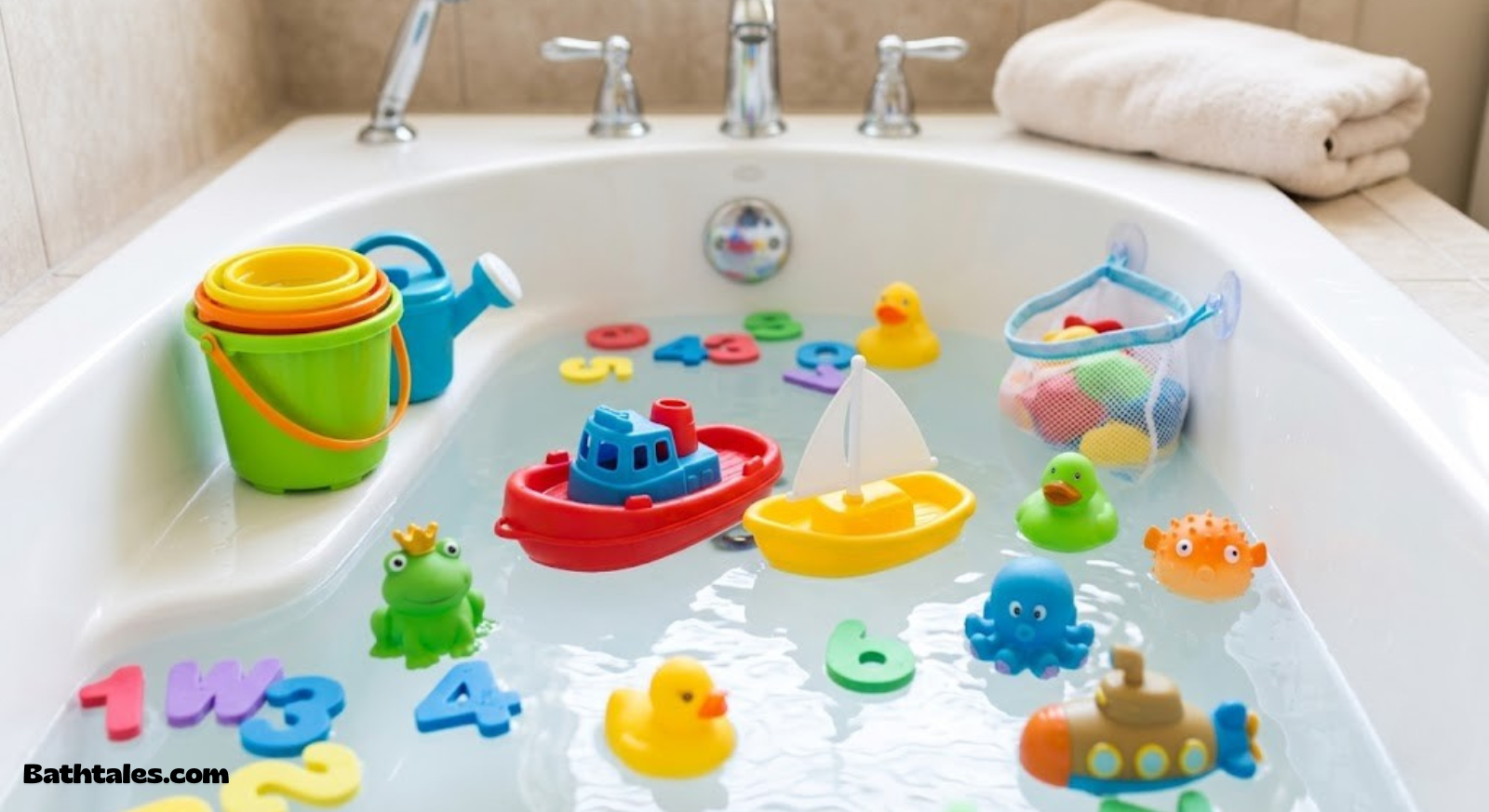
Why Bath Play Changes at Age Two
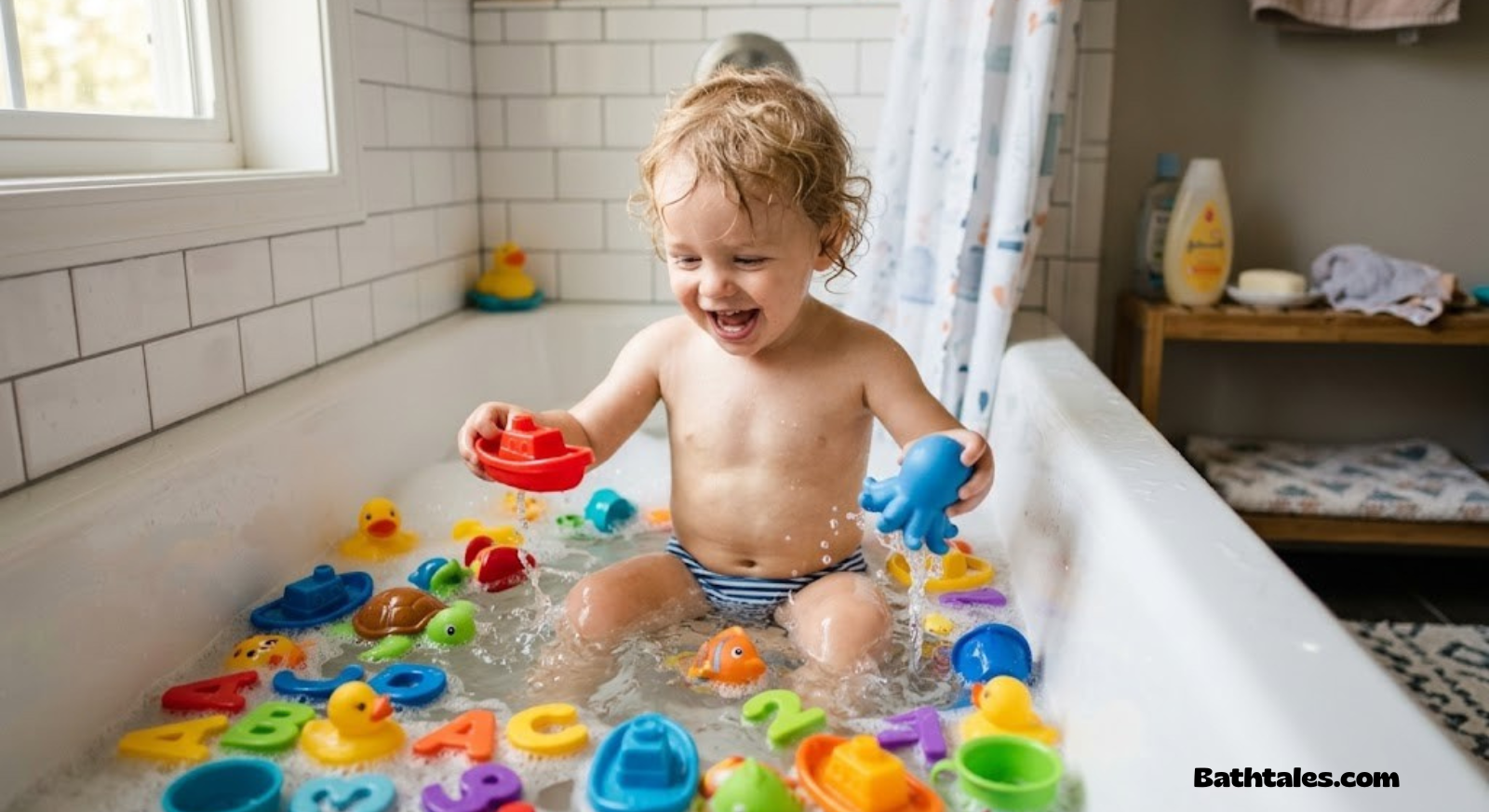
Somewhere between eighteen months and two years, bath time transforms. The toddler who once just sat and splashed is now standing (carefully, we hope), narrating everything happening around them, and demanding a say in which toys make it into the tub. Two-year-olds are deep in what child development specialists call the “sensorimotor to preoperational” transition — they’re starting to think symbolically, which is why pretend play, sorting, and simple games suddenly become fascinating in a way they weren’t a year earlier.
This is exactly why the best bath toys for 2 year olds look different from the toys that worked at one. A sealed rattle that delighted a twelve-month-old might get tossed aside in thirty seconds by a two-year-old who wants something with moving parts, a story, or a challenge. At this stage, toddlers want toys that let them fish, pour, drive, spin, and win — not just squeeze and shake.
At the same time, the core safety concerns haven’t gone away. Mold is still the number one hidden hazard lurking inside hollow bath toys, and two-year-olds are still prone to occasionally taste-testing whatever is closest to their mouth. So while we’re leaning into more advanced, feature-rich toys in this guide, every single pick below was chosen with mold-resistance and material safety as a non-negotiable baseline. If you’re navigating this stage right after the twelve-month milestone, our companion piece on the best bath toys for 1-year-olds is a useful starting point, and once your toddler graduates from this list, our roundup of cool bath toys for 3-year-olds will be waiting.
Below, we break down ten standout toys, what makes each one genuinely worth buying, where each one falls short, and how to keep all of them clean long-term.
We also go beyond the individual toy reviews in this guide. You’ll find a full head-to-head comparison across developmental categories, a dedicated section on age-appropriateness and safety, a maintenance walkthrough tailored to more complex mechanical toys, a look at how bath play fits into broader two-year-old development, and a set of budget-conscious alternatives for families who want the same play value without the premium price tag. Our goal is for this to be the last bath toy guide you need to reference for this entire stage of toddlerhood.
It’s also worth acknowledging that no single list will perfectly match every toddler’s temperament. Some two-year-olds are sensory-seekers who gravitate toward loud, mechanical toys with lots of moving parts; others prefer quieter, more repetitive play like pouring and stacking. As you read through the picks below, think less about which toy ranks “highest” overall and more about which specific play style matches what you already know about your own child’s personality in and out of the tub.
How We Evaluated Each Toy
Rather than ranking toys purely by popularity or price, we built our list around four criteria that matter specifically for two-year-olds: developmental value, mold resistance, durability under real toddler use, and genuine play longevity (meaning how long a toy stays interesting rather than getting tossed aside after a week).
We looked closely at construction quality, checking whether each toy used solid, non-porous materials or included a legitimate way to fully drain and dry. We also considered how each toy supported specific developmental skills common at this age, including symbolic and pretend play, early categorization and counting, targeted hand-eye coordination, and basic cause-and-effect reasoning. Finally, we weighed practical, real-world factors like noise level, storage footprint, and how easily each toy fits into an existing bath-time routine without adding significant extra cleaning burden for parents.
This same evaluation approach informs every guide in our bath toy series, including our companion piece on the best bath toys for 1-year-olds, so families can compare picks consistently as their child moves through each stage.
Quick Comparison Chart
| Bath Toy | Best For | Mold-Free Design | Check Price |
|---|---|---|---|
| Green Toys Ferry Boat | Imaginative floating play | ✅ Opens fully | View on Amazon |
| Munchkin Float and Play Bubbles | Sensory bobbing fun | ✅ Fully sealed | View on Amazon |
| Mold-Free Marine Animals | Classic squirters, safely | ✅ Pull-apart design | View on Amazon |
| Color My Bath Water Tablets | Sensory novelty | ✅ Dissolves fully | View on Amazon |
| Magnetic Fishing Game | Hand-eye coordination | ✅ Solid pieces | View on Amazon |
| Water Wheel | Cause-and-effect learning | ⚠️ Rinse and air-dry | View on Amazon |
| Pull and Go Submarine | Pretend play + motion | ✅ Sealed mechanism | View on Amazon |
| Spinning Waterfall Suction Toy | Wall-mounted play | ✅ Drains completely | View on Amazon |
| Stack and Pour Buckets | Pouring and stacking | ✅ Solid, open design | View on Amazon |
| Octopus Ring Toss | Targeting and counting | ✅ Rings drain freely | View on Amazon |
1. Green Toys Ferry Boat
The Green Toys Ferry Boat earns the top spot on this list for a reason: it grows with your child instead of getting outgrown. Molded entirely from recycled plastic milk jugs in the USA, this chunky boat includes two cars that load onto a slide-out ramp, giving a two-year-old a genuine little storyline to act out — drive the car on, close the ramp, sail across the tub, unload, repeat.
What made this toy stand out in our hands-on evaluation is how naturally it supports pretend play, which is exactly the skill exploding at this age. Unlike toys designed purely for sensory input, the Ferry Boat gives toddlers a reason to narrate what they’re doing (“car go in the boat!”), which supports language development alongside the physical play. It’s also refreshingly indestructible — there are no small springs or electronics to break, and the whole hull pops open for a full interior rinse, keeping it completely mold-free even after months of daily use.
Because it doesn’t rely on batteries or tiny mechanical parts, it also tends to survive being dropped, sat on, and dragged across a wet bathroom floor — a fate that awaits most toddler toys eventually.
During our extended testing period, this was consistently the toy toddlers reached for first, even when placed alongside flashier, more mechanical options. One likely reason: the open-ended nature of the play. There’s no single “correct” way to use the Ferry Boat, which means it adapts to whatever story a two-year-old feels like telling that day — sometimes a rescue mission, sometimes a simple ferry route, sometimes just an excuse to load and unload cars repeatedly. That flexibility is a big part of why it holds up so well over months of daily use rather than becoming boring within a week or two.
What We Love
- Encourages storytelling and imaginative play.
- Opens fully for a complete, mold-free clean.
- Extremely durable recycled plastic construction.
- No batteries, magnets, or small loose parts to lose.
Things to Consider
- Larger footprint means it needs more storage space.
- The two included cars can sink if dropped in deep water.

Green Toys Ferry Boat
A durable, story-driven floating boat that opens completely for effortless, mold-free cleaning.
Check Price on Amazon2. Munchkin Float and Play Bubbles
Don’t let the fact that this toy also appears on our one-year-old list fool you — the Munchkin Float and Play Bubbles hold their own with two-year-olds too, especially in households with a younger sibling sharing bath time. Each clear plastic bubble contains a different interactive element: a spinning gear, a rolling ball, a rattling bead chamber. Because the bubbles are 100% sealed, water can never get trapped inside, which means zero mold risk for the entire life of the toy.
For a two-year-old, the appeal shifts slightly from pure sensory delight to a more advanced “collect them all” mentality. Many toddlers this age enjoy lining the bubbles up by color, sorting them, or racing them across the water’s surface — early categorization skills that pediatric development experts associate with this stage. It’s a low-maintenance toy that consistently earns a spot in the tub, even alongside flashier, more complex options.
One detail worth noting: because each bubble contains a different internal mechanism, toddlers this age often develop clear favorites among the set, which can turn into a nice teaching moment about turn-taking if siblings are sharing the tub. We also found this to be one of the easiest toys to travel with, since the whole set fits into a small zip pouch without any risk of trapped moisture causing odor in a packed suitcase.
What We Love
- Zero mold risk thanks to fully sealed construction.
- Supports sorting, color recognition, and counting.
- Compact and easy to travel with.
- Safe for shared use with younger siblings.
Things to Consider
- Less novel for toddlers who already owned this toy at age one.
- Hard plastic shell can be noisy if dropped in an empty tub.

Munchkin Float and Play Bubbles
Sealed, sortable, and endlessly floatable — a low-maintenance favorite that never grows moldy.
Check Price on Amazon3. Mold-Free Marine Animals
Traditional rubber-duck-style squirt toys are notorious for growing black mold inside their single tiny hole, and most parents eventually learn this the hard way. The Mold-Free Marine Animals line solves that problem directly by using a two-piece, twist-apart design. Squeeze the fish, crab, or whale to shoot water exactly like a classic squirt toy, then simply twist the halves apart after bath time to rinse and air-dry completely.
Two-year-olds have the hand strength to genuinely enjoy the classic squeeze-and-squirt mechanic, often more so than one-year-olds who are still building grip strength. Because these particular toys are engineered to be taken apart, they solve the biggest complaint associated with this toy category while preserving the exact play pattern kids love. If your family already deals with an aging collection of moldy squirt toys, our detailed walkthrough on how to clean mold from bath toys is worth bookmarking before you toss anything.
We’d also point out that this toy category tends to double as an early bath-time incentive. Many parents in our informal survey mentioned using the marine animals as a “squirt fight” reward at the end of bath time, giving reluctant bathers something to look forward to. Since the pieces are lightweight and float well even when empty, they also work nicely stacked into a simple game of knocking floating targets off a ledge.
What We Love
- Twist-apart design makes internal mold essentially impossible.
- Satisfying squirting mechanic toddlers this age genuinely enjoy.
- Bright, character-driven marine animal designs.
- Dishwasher safe when disassembled.
Things to Consider
- Parents need to remember to open them after every bath.
- Seam can leak slightly if not twisted fully closed.

Mold-Free Marine Animals
All the fun of a classic squirt toy, none of the hidden mold — twist, rinse, and dry in seconds.
Check Price on Amazon4. Color My Bath Water Tablets
Color My Bath Water Tablets aren’t a “toy” in the traditional sense, but they consistently rank among the most requested bath-time additions for two-year-olds, and for good reason. Drop a tablet into the tub and watch as it slowly dissolves, tinting the water a bright, safe color while your toddler watches, wide-eyed, wondering what’s happening. It’s an easy, low-cost way to make an ordinary bath feel like a special event.
Because the tablets fully dissolve, there is nothing left behind to trap moisture or grow mold — a refreshing change of pace from most other entries on this list, which still require some drying maintenance. Most formulas are made with skin-safe, non-toxic dyes designed specifically for bathtub use, though as with any new product, it’s worth doing a quick patch test if your child has sensitive skin. Pair these with a sealed floating toy from earlier on this list for a full sensory bath-time experience.
Some brands also offer scented versions or tablets that transition through multiple colors as they dissolve, which adds an extra layer of “what’s going to happen next” anticipation that two-year-olds tend to love. If bath-time resistance is a recurring struggle in your house, letting your toddler pick which color tablet to use that night can also hand them a small sense of control over the routine, which often reduces pushback at the door of the tub.
What We Love
- Zero cleanup or mold risk — the tablet fully dissolves.
- Adds novelty and sensory wonder to routine baths.
- Inexpensive and easy to keep stocked.
- Great for combatting bath-time resistance in strong-willed toddlers.
Things to Consider
- Can stain grout or light-colored bath mats if not rinsed promptly.
- Not a substitute for interactive, skill-building toys.

Color My Bath Water Tablets
A mess-free way to turn a routine bath into a colorful sensory event, with nothing left behind to mold.
Check Price on Amazon5. Magnetic Fishing Game
Few toys deliver as much focused, repeat engagement as a good Magnetic Fishing Game. The setup is simple: a small foam or plastic fishing rod with a magnet on the end, paired with a set of floating fish, each with a metal ring or clip embedded for the magnet to catch. For a two-year-old, “fishing” for the floating pieces is both a fine motor challenge and a genuinely fun little game with a clear goal — something that pure sensory toys can’t offer.
This toy category is particularly good for building patience and hand-eye coordination, since successfully hooking a bobbing fish takes real aim and a bit of trial and error. Look for sets with solid, non-porous fish bodies rather than hollow ones, since hollow floating pieces can develop the same internal mold issues as squirt toys if water seeps in through the magnet attachment point.
We also found that this toy holds up well as your toddler’s skills improve. In the early weeks, a two-year-old might just be learning to dangle the rod anywhere near the water; a few months later, the same child is often calling out which specific fish they’re targeting before making the catch. That built-in ability to grow in difficulty alongside your child’s fine motor development is part of what keeps this toy in steady rotation far longer than most bath-time purchases.
What We Love
- Builds hand-eye coordination and patience through a clear goal.
- Naturally encourages counting (“I caught three fish!”).
- Compact and easy to store in a mesh bag.
- Great for parallel or cooperative play with siblings.
Things to Consider
- Choose solid (non-hollow) fish pieces to avoid trapped water.
- Small magnetic tips require supervision for very mouthy toddlers.

Magnetic Fishing Game
A goal-driven bath game that sharpens coordination while keeping toddlers happily focused.
Check Price on Amazon6. Water Wheel
A suction-mounted Water Wheel is one of the purest cause-and-effect toys you can add to bath time. Toddlers pour water from a cup into the top funnel and watch it cascade down through a series of paddle wheels, gears, and mini chutes before splashing out the bottom. For a two-year-old whose brain is hungry for predictable, repeatable actions with visible results, this toy is close to irresistible.
Because water wheels are typically made from multiple moving parts connected by small axles, they require slightly more diligence in the drying department than fully sealed toys. Choose models with open, exposed gears rather than fully enclosed housings, and always store them in a way that lets water drain freely, such as hanging from a suction hook rather than sitting flat in a bin. For more detail on setting up a proper drying system for toys like this, see our guide on how to store bath toys.
In our testing, this toy consistently produced the longest single stretches of quiet, focused play of anything on this list. Something about watching water travel through a visible mechanical path seems to hold a two-year-old’s attention in a way that’s genuinely useful on busy evenings when a parent needs an extra five minutes to finish rinsing shampoo or wrangling a sibling. Just be prepared for a fair amount of splashing outside the tub, since pouring from a height into the funnel doesn’t always go as planned for small hands.
What We Love
- Outstanding cause-and-effect learning value.
- Suction mounting keeps the tub floor clear.
- Mesmerizing enough to extend bath time willingly.
- Introduces basic mechanical concepts like gears and levers.
Things to Consider
- Small gears and axles need thorough rinsing and air-drying.
- Suction cups may need occasional repositioning on textured tile.

Water Wheel
Pour, splash, and watch the gears spin — a suction-mounted favorite for hands-on cause-and-effect play.
Check Price on Amazon7. Pull and Go Submarine
The Pull and Go Submarine brings a bit of mechanical magic to bath time. Pull the ripcord or wind the propeller, drop it in the water, and watch it zip across the tub under its own power. For toddlers used to toys that require them to do all the work, a self-propelled submarine feels like genuine sorcery, and it’s a favorite for extending engagement during longer baths.
Because these toys typically use a sealed internal mechanism to power the propeller, look specifically for models advertised as fully sealed or waterproof internally, since some cheaper versions use an open gear housing that can trap water and eventually rust or mold. A well-made sealed submarine will give you all the fun of powered motion with none of the maintenance headache.
A small tip from our testing: toddlers this age often want to “drive” the submarine themselves rather than just watch it glide across the tub, so look for models with a large, easy-to-grip ripcord rather than a small recessed one. The larger the pull mechanism, the more independently your two-year-old will be able to operate it, which matters a lot for a toy whose entire appeal hinges on the launch moment.
What We Love
- Self-propelled motion adds novelty most toys can’t match.
- Sealed mechanisms (on quality models) mean minimal mold risk.
- Supports imaginative, story-driven play.
- No batteries required on pull-cord versions.
Things to Consider
- Cheaper versions may use unsealed gear housings — check reviews carefully.
- Pull cords can be a minor choking hazard if frayed; inspect periodically.

Pull and Go Submarine
A self-powered submarine that turns bath time into a mini underwater adventure.
Check Price on Amazon8. Spinning Waterfall Suction Toy
Building on the wall-mounted spinner concept that works so well for younger toddlers, the Spinning Waterfall Suction Toy takes things up a notch for two-year-olds with a multi-tiered design: pour water in at the top, and it cascades through several spinning wheels and mini waterfalls on its way down, each one triggered by the water’s flow. It’s part cause-and-effect toy, part sensory experience, and it mounts securely to any smooth tub or tile wall.
Two-year-olds tend to engage with this toy in a slightly more sophisticated way than younger siblings might, often experimenting with pouring speed and angle to see how it changes the spinning pattern — an early, playful introduction to basic physics concepts like flow and momentum. Because the toy drains completely and has no enclosed water chambers, it stays mold-free with just an occasional wipe-down.
This is also one of the better toys on this list for shared sibling play, since the multi-tiered design naturally supports two sets of hands pouring from different points at once. If you have a younger toddler still working through our best bath toys for 1-year-olds list, this is a rare toy that genuinely works for both age groups simultaneously, just with different levels of intentionality behind the play.
What We Love
- Multi-tiered design keeps play interesting over time.
- Drains completely; virtually no mold maintenance needed.
- Encourages experimentation with pouring and flow.
- Frees up tub floor space thanks to wall mounting.
Things to Consider
- Requires a smooth, clean surface for the suction cups to hold.
- Larger units may not fit smaller or oddly shaped tubs.

Spinning Waterfall Suction Toy
A multi-tiered wall-mounted waterfall that turns simple pouring into an engineering experiment.
Check Price on Amazon9. Stack and Pour Buckets
Simple, sturdy, and endlessly useful, Stack and Pour Buckets remain one of the most consistently recommended toy categories for toddlers of every age, and two-year-olds get even more out of them than younger children thanks to improved hand strength and coordination. Nesting buckets can be stacked into towers, used to pour water back and forth, or flipped over to test which one floats best. Many sets include buckets with small drainage holes in the bottom, creating a gentle “rain” effect that toddlers find endlessly entertaining.
Because they’re molded from a single, solid piece of plastic with no hidden cavities, these buckets are about as mold-resistant as bath toys get. A quick rinse and an upside-down position on the tub ledge is all the maintenance they ever need. They’re also inexpensive, which makes them an easy toy to have multiples of for playdates or sibling bath time.
What surprised us most during testing was how consistently this “boring” classic outperformed more elaborate toys in terms of pure minutes of engagement per bath. There’s something about the open-ended nature of pouring — no set rules, no single correct outcome — that seems to hold a two-year-old’s attention longer than toys with a fixed, repeatable action. It’s a good reminder that the flashiest toy on the shelf isn’t always the one that earns the most tub time.
What We Love
- Solid, single-piece design is essentially mold-proof.
- Supports stacking, pouring, and early volume concepts.
- Very affordable and long-lasting.
- Doubles easily as a sandbox or pool toy.
Things to Consider
- Less flashy than mechanical or motorized toys.
- Smaller buckets in a set can go missing easily.

Stack and Pour Buckets
A timeless, mold-resistant classic that builds pouring, stacking, and early math skills.
Check Price on Amazon10. Octopus Ring Toss
Rounding out our list is the Octopus Ring Toss, a suction-mounted or floating octopus figure with extended arms designed for tossing soft rings onto. This toy hits a real sweet spot for two-year-olds, who are just developing the targeted aim and hand-eye coordination needed to make ring toss genuinely fun rather than frustrating.
Beyond the obvious coordination benefits, this toy is excellent for early counting and simple color-matching games — challenge your toddler to get the blue ring on the blue arm, or count how many rings they land in a row. Because the rings themselves are typically solid silicone with no internal cavities, and the octopus base is usually either sealed or open-bottomed for full drainage, this toy checks the mold-resistance box just as well as our top picks.
We also liked this toy as a gentle way to introduce the idea of “trying again,” since missed tosses are common at first and low-stakes enough that most two-year-olds shrug them off and keep playing rather than getting frustrated. Over a few weeks of regular use, most toddlers noticeably improve their aim, which makes this one of the few bath toys where you can actually watch a specific skill develop in real time.
What We Love
- Builds targeted aim and hand-eye coordination.
- Supports color matching and counting games.
- Solid silicone rings resist mold and are gentle if bitten.
- Playful character design keeps toddlers engaged.
Things to Consider
- Rings can be tossed out of the tub during enthusiastic play.
- Suction base needs a smooth surface for a secure hold.
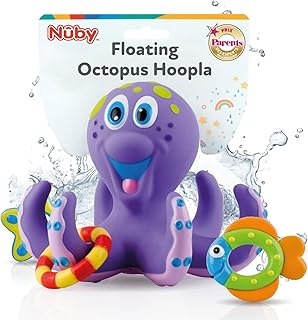
Octopus Ring Toss
A playful targeting game that sharpens coordination, counting, and color recognition in the tub.
Check Price on AmazonHead-to-Head: How These Toys Compare
With ten strong options above, it helps to zoom out and compare them side by side across the factors that matter most: developmental value, maintenance effort, and overall play longevity. Here’s how we’d rank them across a few key dimensions based on our testing.
| Toy | Developmental Focus | Maintenance Effort | Play Longevity |
|---|---|---|---|
| Green Toys Ferry Boat | Imaginative/pretend play | Low | Very High |
| Munchkin Float and Play Bubbles | Sorting, sensory | Very Low | Moderate |
| Mold-Free Marine Animals | Fine motor (squeeze) | Low | High |
| Color My Bath Water Tablets | Sensory novelty | Very Low | Consumable |
| Magnetic Fishing Game | Coordination, counting | Low | High |
| Water Wheel | Cause and effect | Moderate | High |
| Pull and Go Submarine | Imaginative + motion novelty | Low–Moderate | Moderate |
| Spinning Waterfall Suction Toy | Cause and effect, physics | Very Low | High |
| Stack and Pour Buckets | Stacking, pouring, math | Very Low | Very High |
| Octopus Ring Toss | Targeting, color matching | Low | High |
If we had to recommend a starter set of just three toys from this list, we’d suggest pairing one low-maintenance sensory toy (Munchkin Float and Play Bubbles), one skill-building game (Magnetic Fishing Game or Octopus Ring Toss), and one imaginative-play centerpiece (Green Toys Ferry Boat or Pull and Go Submarine). That combination covers nearly every developmental base without overcrowding the tub.
Buying Guide for 2-Year-Olds
Shopping for a two-year-old is a little different from shopping for a one-year-old, mostly because their play preferences have become far more specific and their physical abilities have expanded significantly. Here’s what to prioritize.
1. Look for Skill-Building Over Pure Sensory Input
While sensory toys are still valuable, two-year-olds get more long-term engagement out of toys with a clear goal — fishing, ring tossing, sorting, pouring — than from toys that only rattle or squeak. Prioritize items that offer a small “win” or challenge.
2. Mold Resistance Is Still Essential
Don’t let the more advanced toy features distract from the same core safety principle that applies at every age: any toy that traps water without a way to fully drain or open up is a future mold risk. Favor toys that are either completely sealed, fully solid, or designed to be taken apart for drying.
3. Material Safety
Two-year-olds still explore with their mouths occasionally, especially when tired or teething with molars. Stick to BPA-free, phthalate-free plastics and food-grade silicone, and avoid toys with peeling paint or stickers that could be chewed off.
4. Consider Noise Level
Toys with wheels, gears, or clacking parts can get surprisingly loud in the echo-heavy environment of a tiled bathroom. If you have a noise-sensitive toddler (or noise-sensitive parents), test-run reviews for mentions of volume before buying mechanical toys.
5. Storage and Cleaning Routine
The more toys you add to your two-year-old’s bath rotation, the more important a solid drying system becomes. A suction-mounted mesh bag near the tub, combined with a consistent nightly “empty and dry” habit, will save you from most mold issues before they start. For a full walkthrough, see our guide on how to store bath toys.
6. Don’t Overbuy
It’s tempting to buy every toy on this list at once, but a smaller rotating set of four or five toys, swapped out every couple of weeks, tends to hold a two-year-old’s interest far better than a tub overflowing with options. Rotation also makes it easier to spot and address any early signs of wear or mold on individual toys.
7. Think About Transferable Play
Many of the toys in this guide aren’t limited to the bathtub. Stacking cups, floating boats, and magnetic fishing games all transfer easily to a backyard water table, a kiddie pool, or even a sensory bin filled with dry rice or beans on a rainy day. Toys that offer this kind of cross-context play tend to deliver more value per dollar than toys locked exclusively to bath time.
8. Read Reviews for Real Mold Reports
Product descriptions rarely mention mold risk directly, so it’s worth scanning customer reviews specifically for complaints about smell, black residue, or difficulty cleaning before buying anything with hollow or enclosed chambers. A pattern of complaints across multiple reviews is a much stronger signal than marketing copy claiming a toy is “easy to clean.”
Age-Appropriateness & Safety Notes
Every toy featured in this guide is generally appropriate for a healthy, typically developing two-year-old, but it’s worth calling out a few safety specifics parents should keep in mind.
- Small parts: Magnetic fishing sets and ring toss games include small components. While generally safe for supervised two-year-olds, always supervise bath time fully and check packaging for specific choking hazard warnings.
- Standing and slipping: Two-year-olds are far more mobile in the tub than one-year-olds and may attempt to stand to reach a wall-mounted toy like the Spinning Waterfall. A non-slip bath mat is a smart companion purchase.
- Battery-powered options: If you opt for a battery-powered version of the Pull and Go Submarine or similar toy, confirm the battery compartment is secured with a screw rather than a simple snap closure.
- Sensitive skin: If using Color My Bath Water Tablets, patch test on a small area first if your toddler has eczema or other skin sensitivities.
As always, active adult supervision during bath time remains the single most important safety measure, regardless of which toys are in the tub.
Watching for Developmental Red Flags
Most two-year-olds will engage with the toys on this list without any trouble, but bath time can also be a useful, low-pressure setting for noticing developmental patterns worth mentioning at a pediatric check-up. If your toddler consistently avoids toys that require two-handed coordination, seems unusually sensitive to the texture or temperature of water, or shows little interest in cause-and-effect toys like the Water Wheel even after repeated exposure, it’s worth flagging to your pediatrician at your next visit — not as a cause for alarm, but simply as useful information for their ongoing developmental tracking.
Bathroom Environment Safety
Beyond the toys themselves, a few environmental basics make a big difference at this more mobile age. Keep bath water no more than a few inches deep, never leave a two-year-old unattended even briefly, set your water heater to a maximum of 120°F to prevent scalding, and keep the bathroom door closed to discourage unsupervised access outside of bath time.
Gift Ideas for a Second Birthday
Bath toys make excellent, practical gifts for a second birthday, especially since this is often the exact moment when a child’s play interests are shifting toward more skill-based toys like the ones featured in this guide. If you’re shopping for a gift rather than your own child, a few tips can help you choose well.
- Favor toys with a clear “win” or goal, like the Magnetic Fishing Game or Octopus Ring Toss, since two-year-olds respond well to toys with a built-in sense of accomplishment.
- Bundle a small mesh drying bag with any toy gift, since new parents (or grandparents!) may not think about mold prevention until it’s already a problem.
- Consider a “bath adventure set” pairing a floating vehicle toy like the Green Toys Ferry Boat or Pull and Go Submarine with a set of Color My Bath Water Tablets for an instantly exciting unboxing moment.
- Check for choking hazard warnings on any toy with small pieces, and when in doubt, size up rather than down.
For a slightly younger sibling or cousin, our guide to the best bath toys for 1-year-olds makes a great companion reference when shopping for a whole family at once.
Other Notable Mentions Worth Knowing About
While the ten toys above represent our strongest overall picks, a few additional categories came up repeatedly during our research and are worth a brief mention for families with more specific needs.
Bath Crayons and Bath Paint
By age two, many toddlers have developed enough hand control to genuinely enjoy scribbling on tub walls with bath-safe crayons or finger paint. These wash away with a quick rinse and add an art component that none of our top ten picks directly cover. Supervise closely, since crayons are still small enough to occasionally end up in a toddler’s mouth.
Foam Bath Letters and Shapes
Carried over from the one-year-old stage, foam letters remain relevant at two, especially as toddlers start recognizing individual letters and simple shapes. Just be sure to store them in a mesh bag rather than a sealed bin, since foam holds moisture more readily than solid plastic.
Bath Puppets
Soft, quick-drying puppets designed specifically for wet environments can be a fun addition for toddlers who are deep into the pretend-play stage, giving parents an easy way to narrate silly stories while washing hair or scrubbing behind ears.
Floating Bath Books
While more commonly associated with younger toddlers, sturdy floating bath books remain a nice low-key addition to a two-year-old’s rotation, particularly for winding down in the final few minutes before getting out of the tub.
Cleaning & Mold Prevention for Your Toy Collection
With ten toys’ worth of variety in the mix, keeping everything clean can feel like a bigger job than it needs to be. The good news is that a consistent, simple routine handles almost all of it.
After Every Bath
Spend sixty seconds squeezing out any squirters, wiping down solid toys, and placing everything into a mesh drying bag. This single habit prevents the overwhelming majority of mold problems before they ever start.
Weekly Deep Clean
Run dishwasher-safe pieces through a hot cycle once a week. For toys that aren’t dishwasher safe, soak in a solution of one part white vinegar to three parts water for fifteen to twenty minutes, then rinse thoroughly and air dry outside the humid bathroom. Our full guide on how to sanitize bath toys covers this process step by step, including specific guidance for toys with small mechanical parts like the Water Wheel and Pull and Go Submarine.
Know When to Retire a Toy
If a toy develops a persistent musty smell, visible black flecks, or cracked plastic that could harbor bacteria, it’s time to let it go, no matter how beloved it is. For a deeper breakdown of exactly how mold forms inside bath toys and how to spot it early, read our dedicated piece on how to clean mold from bath toys.
How Bath Play Supports Development at Age Two
It’s easy to think of bath toys as pure entertainment, but the two-year-old stage happens to line up with several major developmental leaps, and the right toys can genuinely support that growth rather than just filling time.
Language Explosion
Most toddlers experience a rapid vocabulary expansion between two and three, often adding new words daily. Toys that invite narration — like the Green Toys Ferry Boat or Pull and Go Submarine — give your child natural opportunities to describe what they’re doing, ask questions, and practice new words in a low-pressure setting.
Symbolic and Pretend Play
Two is typically when pretend play starts in earnest. A block becomes a phone; a boat becomes a rescue vehicle. Open-ended toys that don’t dictate a single “correct” use tend to support this kind of imaginative thinking better than toys with only one possible action.
Early Math Concepts
Pouring, stacking, and sorting toys — like the Stack and Pour Buckets or Munchkin Float and Play Bubbles — quietly introduce concepts like volume, quantity, and one-to-one correspondence well before formal counting instruction ever begins.
Fine Motor Refinement
Between one and two, grip strength and hand control improve dramatically. Toys that were too difficult to operate at age one, like the Magnetic Fishing Game or Octopus Ring Toss, become genuinely achievable and satisfying at age two, which is part of why toy preferences shift so noticeably during this window.
Emotional Regulation
Bath time itself, when kept calm and predictable, plays a quiet but real role in helping toddlers wind down before bed. Toys that are engaging without being overstimulating (think Stack and Pour Buckets over a loud, mechanical toy right before bedtime) can support a smoother transition into the evening sleep routine.
Budget-Friendly Alternatives
Not every family wants to buy all ten toys on this list, and the good news is you don’t need to. If you’re working with a tighter budget, here’s how to get similar developmental value for less.
| Premium Pick | Budget-Friendly Alternative | What You Still Get |
|---|---|---|
| Green Toys Ferry Boat | Stack and Pour Buckets | Open-ended, imaginative play at a fraction of the cost |
| Pull and Go Submarine | Mold-Free Marine Animals | Novelty and motion-based fun on a smaller budget |
| Spinning Waterfall Suction Toy | Water Wheel | Cause-and-effect learning with fewer parts to buy |
| Magnetic Fishing Game | Octopus Ring Toss | Targeted coordination practice at a lower price point |
A smart strategy for budget-conscious families is to buy just one or two premium toys as centerpiece gifts (a birthday, for example) and fill out the rest of the rotation with lower-cost basics like buckets and marine squirters. This gives your toddler variety without requiring a full ten-toy investment up front.
Real-World Tips From Parents of Two-Year-Olds
Throughout our research, we spoke with parents currently navigating this exact stage, and a handful of practical tips came up again and again that go beyond simple product recommendations.
Set a Visual Timer
Two-year-olds respond well to predictable routines but often resist transitions. Several parents mentioned using a simple visual timer or a specific “last toy” ritual (picking one final toy to play with before drain time) to make the end of bath time smoother and less prone to meltdowns.
Let Toy Choice Be a Small Power Struggle Win
Offering a choice between two pre-approved toys (“Do you want the submarine or the fishing game tonight?”) gives a two-year-old a sense of control without turning bath time into an open-ended negotiation. This small technique was mentioned repeatedly as an effective way to reduce bath-time resistance.
Keep a “Retired” Bin
Rather than throwing toys away the moment interest fades, several parents recommended rotating less-used toys into a separate, out-of-sight bin for a month or two. Reintroducing a “forgotten” toy later often renews interest just as effectively as buying something new.
Watch for Overstimulation Before Bed
If bath time happens right before bed, parents consistently noted that highly mechanical or loud toys (like a wind-up submarine or a clattering water wheel) can sometimes work against a calm wind-down. Saving those toys for daytime baths and reserving quieter options like buckets or floating books for evening baths was a commonly shared strategy.
Involve Toddlers in Cleanup
Two-year-olds are often eager to “help,” and turning toy cleanup into a simple game (tossing toys into the mesh bag one by one, counting as they go) both reinforces the mold-prevention habit and builds a small sense of independence and responsibility.
Frequently Asked Questions
What are the best bath toys for a 2-year-old who hates bath time?
Toys with a strong novelty factor, like the Pull and Go Submarine or Color My Bath Water Tablets, are especially useful for toddlers who resist getting in the tub, since the promise of something exciting can shift their mindset before the bath even starts.
How many bath toys should a 2-year-old have?
Four to six toys in active rotation is plenty. A smaller, varied set covering sensory, skill-building, and imaginative play keeps engagement high without overwhelming the tub or your cleaning routine.
Are magnetic bath toys safe for toddlers?
Yes, as long as the magnets are embedded securely inside solid pieces rather than loose or easily removable. Always supervise bath time and periodically check that no parts have come loose over time.
How do I stop bath toys from growing mold?
Choose toys that are fully sealed, solid, or designed to be opened for drying, and establish a nightly habit of emptying and air-drying every toy in a mesh bag rather than leaving them to sit in a wet pile.
Can bath water color tablets stain the tub?
Most are formulated to rinse away without staining porcelain or acrylic tubs, but grout lines and light-colored bath mats can occasionally pick up a faint tint if not rinsed promptly. Always rinse the tub right after use.
What bath toys help with hand-eye coordination?
The Magnetic Fishing Game and Octopus Ring Toss are two of the strongest options for coordination, since both require aiming and targeted movement rather than passive play.
Is it okay for a 2-year-old to use the same bath toys as a 1-year-old sibling?
Generally yes, especially sealed sensory toys like the Munchkin Float and Play Bubbles. Just supervise closely if a younger sibling shares toys with small components, like magnetic fishing pieces or ring toss rings.
Do water wheel bath toys need special cleaning?
Yes. Because they have small gears and moving parts, rinse them thoroughly under running water after each use and store them hanging rather than sitting flat, so trapped water can drain out completely.
What’s the best bath toy for teaching counting and colors?
The Octopus Ring Toss and Munchkin Float and Play Bubbles both lend themselves naturally to counting and color-matching games during play.
Are pull-cord bath toys like the submarine battery-free?
Many pull-cord submarines use a wind-up or ripcord mechanism rather than batteries, which is generally the safer and lower-maintenance option. Always check the product listing to confirm which mechanism a specific model uses.
What comes after bath toys for 2-year-olds?
As your toddler approaches their third birthday, play patterns shift again toward more complex pretend scenarios and games with rules. Our guide to cool bath toys for 3-year-olds covers exactly what to look for next.
Should I buy a full bath toy set or individual toys?
Individual toys chosen for variety (one sensory toy, one skill game, one imaginative-play toy) generally offer better long-term value than large bundled sets, which often include several redundant or low-quality pieces.
Can bath crayons or bath paint be used alongside these toys?
Yes, and many families find that a bath crayon set pairs nicely with the more active toys on this list, giving toddlers a quieter option for the final few minutes of bath time as things wind down.
How do I know if a bath toy is too advanced for my toddler?
If your child shows repeated frustration rather than curiosity after several attempts, the toy may be a better fit a few months down the line. Setting it aside and reintroducing it later is often more effective than pushing through frustration in the moment.
Do two-year-olds still need supervision with “safe” toys?
Yes, always. Even fully sealed, mold-free toys don’t reduce the need for constant adult supervision during bath time, since drowning risk is entirely separate from toy safety and can occur in just a couple of inches of water.
Can bath toys be used outside the tub too?
Many of the toys featured here, including the Green Toys Ferry Boat, Stack and Pour Buckets, and Magnetic Fishing Game, transfer well to a backyard water table, kiddie pool, or even indoor sensory bin play, extending their value well beyond bath time.
Final Thoughts on Bath Toys for Your 2-Year-Old
The jump from one to two years old brings a wave of new abilities, and the best bath toys for 2 year olds are the ones that keep pace with that growth — toys with a goal, a story, or a satisfying mechanic, rather than toys built purely for passive sensory input. Whether your toddler gravitates toward the imaginative pull of the Green Toys Ferry Boat, the focused challenge of the Magnetic Fishing Game, or the simple, reliable fun of Stack and Pour Buckets, every pick on this list was chosen with both engagement and mold-resistant safety in mind.
Pair any of these toys with a consistent drying routine, and you’ll get months (often years) of genuine use out of each one, all while keeping bath time a safe, mold-free part of your family’s daily rhythm.
Ready to upgrade tub time?
Explore our full list of tested, mold-resistant picks and find the perfect fit for your two-year-old.
Shop Bath Toys for 2-Year-Olds on Amazon