
Cool Bath Toys for 3 Year Olds That Turn Every Bath Into a Splash-Worthy Adventure
A parent-tested roundup of the most fun, safe, and genuinely cool bath toys three-year-olds actually beg to play with.
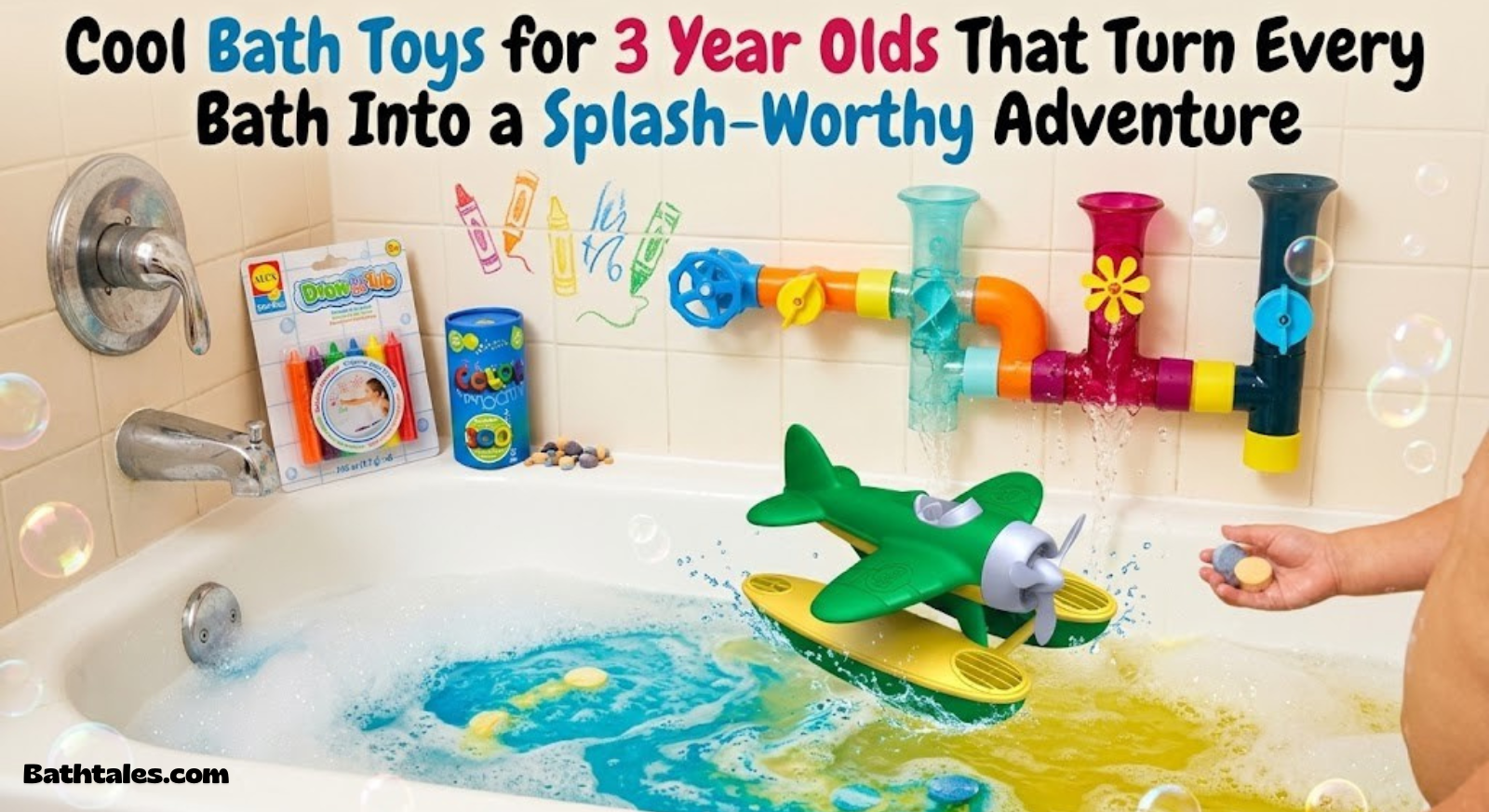
From foam letters to floating submarines, three-year-olds are at the perfect age to turn bath time into a mini science lab.
If you’ve ever tried to wrangle a three-year-old into the tub only to hear “five more minutes!” the second they spot a floating boat, you already know: the right bath toy changes everything. Three is a magical age for bath play. Kids this age have the hand strength to squeeze, pour, and launch toys across the tub, the curiosity to ask a hundred “why” questions about water, and just enough independence to want to do it all themselves. That combination makes bath time one of the best low-pressure learning windows in a toddler’s day — as long as the toys on hand are actually built for it.
This guide rounds up ten of the coolest bath toys for 3 year olds on the market right now, broken down by what makes each one worth adding to your tub-side toy bin. We’ll also cover the developmental skills bath toys support at this age, how to pick toys that resist mold, and answers to the questions parents ask most. If your toddler has already outgrown their baby bath toys, you may also want to check our guide to the best bath toys for 1 year olds or the best bath toys for 2 year olds to see how their interests have evolved.
Why Bath Toys Matter So Much at Age 3
Three-year-olds are developmentally in a sweet spot. They’ve moved past the mouth-everything phase of infancy, but they’re not yet self-conscious about “playing like a baby.” That freedom means bath time becomes one of the richest sensory playgrounds in the house. Warm water, floating objects, pouring, squirting, and building — all of it happens in a contained, low-stakes space where mistakes (a splash on the floor, a toppled tower of cups) don’t really matter.
From a developmental standpoint, this age group benefits enormously from open-ended bath play. Fine motor skills get a workout every time a toddler twists a valve, squeezes a squirter, or fits a puzzle piece into place. Cause-and-effect thinking develops as they notice that pressing a lever makes water shoot out, or that a heavier toy sinks while a lighter one floats. Language skills grow too, especially with toys that involve letters, numbers, or animal names, since bath time is often when parents narrate constantly (“Look, the octopus is orange!”).
There’s also an emotional layer. For toddlers who resist bath time, a genuinely fun toy can be the difference between a nightly battle and a request to stay in the tub longer. And for kids who already love the water, the right toy adds a layer of imaginative play — pretending the tub is the ocean, a car wash, or a rocket launch pad — that keeps them engaged well past the actual washing part.
Physically, three-year-olds are also refining skills that started developing a year or two earlier. Grip strength has improved enough that they can twist, pull, and squeeze with real intention rather than the clumsy swipes of a younger toddler. Balance and body awareness have matured too, which is part of why so many toys at this age involve pouring, aiming, or launching something across the tub — kids finally have the control to do it purposefully instead of by accident. Parents often notice this shift first in the bathtub, since it’s one of the few environments where a toddler is undressed, unhurried, and free to experiment without worrying about making a mess on the carpet.
Attention span is another area that shifts noticeably around this age. Where a two-year-old might flit between toys every minute or two, a typical three-year-old can often sustain focused play on a single activity for ten or fifteen minutes at a stretch, particularly when the toy offers some kind of ongoing feedback loop, like a puzzle that isn’t quite solved yet or a pipe structure that keeps leaking in a new spot. That extended focus window is part of why toys with a bit of built-in challenge tend to outperform purely novelty-based toys for this specific age group.
There’s a social dimension too, especially in households with more than one child. Bath time is frequently one of the only times siblings share a small, contained space together with no screens and no separate activities pulling them apart. Toys that support two-player play — ring toss, fishing games, or building sets with enough pieces to split — turn that shared time into genuine cooperative play rather than parallel play where kids simply exist near each other. That’s a meaningful developmental step for three-year-olds, many of whom are just starting to understand turn-taking and shared goals in a deeper way than they could as toddlers a year younger.
Below, we’ve picked toys that hit different play styles: building and engineering, water propulsion, sensory color play, fine motor precision, and imaginative sea-life themes. A well-rounded bath toy bin usually includes a mix of these categories rather than ten versions of the same idea.
One thing worth noting before diving into the picks: three-year-olds are also at the stage where they start noticing and imitating routines. They watch how a parent scrubs a toy clean, how a sibling sets up a game, or how a toy gets stored after bath time, and they often try to copy those steps themselves. That means the toys you choose aren’t just entertainment — they quietly model habits like cleanup, sharing, and turn-taking. A ring toss game, for example, teaches far more than hand-eye coordination when two kids are trading turns and cheering each other on. Keep that in mind as you build out your bath toy collection; the “soft skills” a toy teaches can matter just as much as the play value itself.
1. Boon Building Bath Pipes

The Boon Building Bath Pipes system is essentially a tiny plumbing set for the tub, and it’s one of the most consistently praised bath toys for toddlers who love to build. Suction-cupped pipe pieces attach to the tub wall in whatever configuration your three-year-old dreams up, and water poured in at the top winds its way down through funnels, spinners, and drainage points before splashing out at the bottom.
What makes this toy stand out at age 3 specifically is the balance of structure and freedom. There’s no single “right” way to build the pipe system, so kids can experiment with different layouts every bath night, but the modular pieces also introduce basic engineering logic — water has to flow somewhere, and if a pipe is angled wrong, it leaks or backs up. That kind of real-time feedback is exactly the sort of learning toddlers absorb best through play rather than instruction.
Pros
- Strong suction cups grip tile and acrylic tubs well
- Modular design supports endless rebuilding
- Encourages early cause-and-effect reasoning
- Pieces are large enough to avoid choking concerns
Cons
- Suction cups can lose grip on textured tub surfaces
- Some interior water pooling requires regular drying
Boon Building Bath Pipes — a suction-cup pipe system that turns bath time into a mini engineering project.
Check Price on AmazonBecause these pieces have small interior channels, it’s worth doing a quick mold check every week or two. If you’re not already in the habit, our guide to cleaning mold from bath toys walks through a simple routine that keeps toys like this one hygienic long-term.
Parents who’ve used this set for a while often mention that it holds up well to repeated rearranging, which matters more than it sounds at first. Three-year-olds don’t just build a pipe structure once and leave it — they’ll tear it down and rebuild it a dozen different ways across a single bath, testing whether water flows faster through a straight line or a series of loops. That repetitive experimentation is exactly the kind of hands-on problem-solving that’s hard to replicate with screen-based learning apps, and it’s a big part of why this toy tends to stay in heavy rotation well past the first few weeks.
2. Alex Toys Rub a Dub Water Flutes

Water Flutes bring a musical twist to bath play that most toy bins are missing. As water flows through the flute-shaped tubes, it produces a gentle bubbling, gurgling sound that toddlers find endlessly fascinating. Tilting the flutes at different angles changes the sound and flow pattern, giving three-year-olds an easy, low-effort way to experiment with cause and effect.
This toy tends to work especially well for toddlers who are more sound-and-sensory driven than building-driven. It’s also a nice option for siblings sharing bath time, since flutes can be handed back and forth or lined up in a row for a mini “water orchestra.”
Pros
- Simple, no-batteries design that’s easy for little hands
- Gentle sound feedback keeps toddlers engaged
- Lightweight and easy to travel with
Cons
- Less visually stimulating than colorful floating toys
- Interior tubing needs thorough drying between uses
Alex Toys Rub a Dub Water Flutes — a simple, satisfying sound-and-water toy for sensory-driven toddlers.
Check Price on AmazonBecause the flutes rely purely on water flow rather than batteries or complex mechanisms, they also travel well — several parents keep a set packed for hotel bathtubs or a grandparent’s house, since there’s nothing to charge and very little that can break. For toddlers who get overstimulated by louder, more visually busy toys, the gentle, predictable sound of the flutes can even serve as a calming activity toward the end of a bath, right before the wind-down into pajamas and bedtime.
3. Green Toys Seacopter
Green Toys has built a strong reputation among parents who want durable, sustainably made toys, and the Seacopter is one of their most popular bath-specific pieces. Made from recycled plastic milk jugs, this little helicopter-boat hybrid floats on the water’s surface while its top rotor spins as it moves — no batteries required, just a push from a toddler’s hand.
Three-year-olds tend to gravitate toward this toy because it combines two favorite play themes: vehicles and water. The spinning rotor gives immediate visual feedback, which keeps toddlers pushing it back and forth across the tub, and the solid one-piece construction means there are no small parts to lose or crevices where mold can hide — a real advantage over toys with multiple joints or chambers.
| Feature | Details |
|---|---|
| Material | 100% recycled plastic (no BPA, phthalates, or PVC) |
| Batteries | None required — manual push propulsion |
| Mold Risk | Low — solid, single-piece body |
| Best For | Vehicle-loving toddlers, water play beginners |
Green Toys Seacopter — a durable, eco-friendly floating helicopter-boat with a spinning rotor.
Check Price on AmazonGreen Toys has built its whole product line around the idea that eco-conscious materials don’t have to mean flimsy construction, and the Seacopter is a good example of that philosophy in action. The plastic used is noticeably thicker and more rigid than a lot of dollar-bin bath toys, which means it survives being dropped on tile, sat on, or used as an impromptu boat for a smaller toy passenger without cracking. For parents trying to reduce the amount of disposable plastic coming into the house, it’s also an easy toy to feel good about buying.
4. Color My Bath Tablets

Color-changing bath tablets aren’t a toy in the traditional sense, but for three-year-olds, watching plain water transform into a swirl of blue, green, or purple is genuinely thrilling. These tablets dissolve quickly and tint the bathwater without staining skin, tubs, or towels, making them one of the lowest-effort ways to make an ordinary bath feel like an event.
This is a great option for toddlers who resist getting into the tub in the first place, since the novelty of colored water often does the persuading for you. It also pairs well with other floating toys on this list — a submarine or Seacopter cruising through bright blue “ocean” water adds a layer of imaginative play that clear water just doesn’t offer.
Pros
- Instantly transforms an ordinary bath into a novel experience
- Dissolves fast, no scrubbing or staining
- Pairs well with floating toys for imaginative ocean play
Cons
- Consumable — needs to be repurchased over time
- Not a hands-on toy in the traditional sense
Color My Bath Tablets — dissolvable tablets that turn plain bathwater into a colorful sensory experience.
Check Price on AmazonA small tip from experienced parents: introduce color tablets gradually rather than every single bath. Because the novelty is a big part of the appeal, saving them for nights when your toddler is especially resistant to bathing — or for a low-key “special occasion” bath — tends to keep the excitement level high. Using them every night can dull the effect over time, the same way any surprise loses some of its magic with repetition.
5. Munchkin Fishing Toy

The Munchkin Fishing Toy set gives toddlers a simple rod-and-reel setup to “catch” floating fish pieces, and it’s a favorite for building hand-eye coordination in a way that feels like a game rather than practice. At three years old, kids are developing the wrist control and patience needed to line up a hook with a moving target, and this toy makes that skill-building feel like play rather than a task.
It also introduces a bit of friendly competition if siblings or friends are in the tub together, with kids racing to see who can reel in the most fish. Because the pieces are brightly colored and float well, it doubles as a color-sorting activity if you ask your toddler to catch the fish in a specific order.
Pros
- Builds hand-eye coordination and patience
- Doubles as a color-recognition activity
- Good for group or sibling bath play
Cons
- Multiple small pieces to track and dry after each bath
- Younger or less coordinated toddlers may get frustrated at first
Munchkin Fishing Toy — a rod-and-reel bath game that builds coordination while kids “catch” floating fish.
Check Price on AmazonThis is also one of the easier toys to adapt as a toddler’s skills improve. In the early weeks, most three-year-olds are happy just scooping fish up with the hook in any order. A few months later, the same set can be turned into a timed challenge, a color-sorting task, or even a simple counting game — “catch three fish before the water gets cold” — which means it tends to stay relevant far longer than toys with a single fixed way to play.
6. Skip Hop Moby Waterfall Rinser

Hair washing is a notorious bath-time battle for a lot of toddlers, and the Skip Hop Moby Waterfall Rinser is designed specifically to soften that struggle. Shaped like a friendly whale, this cup lets water pour through a soft-flow spout instead of splashing directly over a child’s face, which many three-year-olds find far less startling than a traditional cup pour.
While it’s technically a functional bath tool rather than a pure toy, kids at this age often treat it like one, scooping and pouring water just for the fun of watching it “rain” out of the whale’s mouth. That dual purpose — genuinely useful for parents, genuinely fun for toddlers — makes it one of the more practical picks on this list.
Skip Hop Moby Waterfall Rinser — a whale-shaped rinse cup that makes hair washing far less stressful.
Check Price on AmazonParents dealing with genuine hair-wash anxiety often pair this tool with a bit of extra narration — counting down before each pour, or letting the toddler hold the whale and control the pour themselves once they’re comfortable. Handing over that small bit of control can make a surprisingly big difference for kids who dislike feeling like something is being “done to them” during bath time, which is a common source of resistance at this age.
7. Munchkin Foam Letters and Numbers

Foam letters and numbers are a bath-time classic for good reason. Wet foam sticks to tile or acrylic tub walls with no suction cups or adhesive required, and at three years old, kids are right in the window where letter and number recognition starts clicking. Sticking a soggy “B” to the wall while a parent asks “what letter is that?” turns a few minutes of bath time into low-pressure literacy practice.
Because the set includes both letters and numbers, it also works for simple counting games or spelling out a toddler’s name, which tends to be a favorite activity around this age. The pieces are soft, lightweight, and easy for small hands to grip, making them accessible even for toddlers who aren’t yet confident with more complex toys.
Pros
- Supports letter and number recognition through play
- No suction cups to fail — foam sticks on its own when wet
- Soft, safe, and easy to grip
Cons
- Foam can absorb water and needs to fully air-dry to avoid mildew
- Pieces can lose stickiness over time with heavy use
Munchkin Foam Letters and Numbers — wet-stick foam pieces that turn bath time into playful early literacy practice.
Check Price on AmazonFoam toys are one of the trickiest categories to keep mold-free since they absorb water. Storing them properly between baths makes a big difference — our guide to storing bath toys covers the best ways to let foam pieces dry fully without cluttering the tub.
8. Pull and Go Submarine

Pull-string submarines add a bit of mechanical magic to bath time. Toddlers pull a cord, drop the sub in the water, and watch it zip forward under its own power, no batteries needed. For three-year-olds who love vehicles or ocean themes, this kind of self-propelled motion is genuinely exciting — it feels like the toy has a mind of its own, which sparks storytelling and imaginative play about underwater adventures.
It’s also a nice complement to other sea-themed toys on this list, like the Janod Ocean Bath Puzzle or the Octopus Ring Toss, letting kids build out an entire pretend underwater world across a single bath.
Pull and Go Submarine — a battery-free, pull-string submarine that zips through bathwater on its own.
Check Price on AmazonWhat tends to surprise parents most is how much narration this simple toy generates. A submarine that “zips off on its own” practically invites a running commentary — where’s it going, what’s it looking for, is it being chased by something — and that kind of spontaneous storytelling is valuable language practice for three-year-olds, even though it looks like nothing more than splashing around with a toy boat.
9. Octopus Ring Toss

A floating octopus with outstretched arms makes a surprisingly effective ring-toss target, and this toy is a favorite for toddlers who like a bit of gentle challenge in their play. Tossing soft rings onto the octopus’s arms builds hand-eye coordination and gross motor control, and because the octopus floats and bobs slightly with the water, it’s a bit trickier — and more fun — than a stationary target.
Like the fishing toy, this one works well with multiple kids in the tub, and the bright colors make it easy to turn into a simple color-matching game alongside the standard toss-and-count play.
Octopus Ring Toss — a floating octopus target that turns ring-toss into a playful coordination game.
Check Price on AmazonParents who’ve used this toy across multiple bath seasons note that it’s a good one to bring out specifically when a toddler seems bored with their usual lineup. Because it introduces a light element of challenge and scorekeeping, it tends to re-energize a bath routine that’s started to feel repetitive, without requiring an entirely new toy purchase to do it.
10. Janod Ocean Bath Puzzle

Floating puzzle pieces bring a bit of quiet, focused play into a bath routine that’s often loud and splashy. The Janod Ocean Bath Puzzle features sea-life shapes that toddlers fit together on the water’s surface, combining puzzle-solving with the calming effect of water play. It’s a nice option for winding down toward the end of a bath, right before pajama time.
Because the pieces are ocean-themed, this puzzle pairs naturally with the submarine and octopus toys above, letting toddlers build out a full imaginative sea scene while also practicing shape recognition and spatial reasoning.
Janod Ocean Bath Puzzle — floating sea-life puzzle pieces that combine calm play with early problem-solving.
Check Price on AmazonThis is one of the few toys on this list that works nearly as well solo as it does with a parent guiding the play. Some three-year-olds prefer to quietly work through the puzzle on their own, treating it almost like a meditative task, while others turn it into a race against a sibling or parent. Either way, it’s a useful toy to have on hand for evenings when the household needs bath time to feel calmer rather than more energetic.
Developmental Milestones Bath Play Supports at Age 3
Pediatric development guidelines generally describe age three as a period of rapid growth across nearly every domain — physical, cognitive, language, and social-emotional. What makes bath time such a useful setting for this stage is that it naturally touches on all four areas at once, often within a single fifteen-minute routine, without requiring any special planning from parents.
Fine Motor Development
Three is typically the age when children start refining their pincer grip, wrist rotation, and two-handed coordination. Tasks like fitting puzzle pieces together, threading rings onto an octopus arm, or twisting pipe segments into place all give toddlers repeated, low-stakes practice with exactly these movements. Unlike structured fine-motor exercises, bath play doesn’t feel like practice to a child — it feels like fun, which tends to keep engagement (and therefore repetition) much higher.
Language and Vocabulary
Bath time is also a prime opportunity for vocabulary growth, mostly because parents narrate almost everything happening in the tub without thinking about it. Naming colors, counting fish, describing an octopus’s arms, or explaining why a heavier toy sinks while a lighter one floats all introduce new words in a context a toddler can immediately see and touch. That concrete, hands-on connection between word and object is part of why so many speech and language specialists recommend everyday routines like bath time as informal language-building opportunities.
Cognitive and Problem-Solving Skills
Water play is a surprisingly rich environment for early scientific thinking. Toddlers at this age are starting to notice patterns — that pouring water from a height splashes more, that a submarine moves faster with a stronger pull, that a puzzle piece only fits one particular way. These small discoveries build a foundation for later problem-solving and logical reasoning, even though none of it feels like “learning” from a three-year-old’s perspective.
Social-Emotional Growth
Finally, bath time often becomes one of the more emotionally significant parts of a toddler’s day, particularly as a wind-down ritual before bed. Toys that involve turn-taking or shared play with a sibling support early lessons in patience, fairness, and cooperation, while calmer solo toys like a floating puzzle give kids a chance to self-regulate and settle before the transition to pajamas and sleep. Recognizing which type of play your child needs on a given night — active and social, or calm and independent — can make the whole bedtime routine go more smoothly.
Bath Time Safety Tips Every Parent Should Know at This Age
No matter how well-designed a bath toy is, the toy itself is only one piece of a safe bath routine. Three-year-olds are more independent than infants, which sometimes leads parents to relax supervision a bit too much. Water safety experts consistently point out that drowning risk doesn’t disappear just because a child can sit up, talk, and play confidently — young children can still slip, submerge, or panic quickly, and it happens silently far more often than people expect.
A few habits make a noticeable difference. First, keep the water level shallow enough that your toddler can sit comfortably without needing to brace themselves against the tub wall. Second, stay within arm’s reach for the entire bath rather than stepping out to grab a towel or answer the door — if you need to leave, take your child with you, wrapped in a towel if necessary. Third, check bath toys periodically for cracks, sharp edges, or loose small parts, especially toys like the ring toss set or fishing game that include multiple pieces, since wear and tear can create hazards over time that weren’t there when the toy was new.
Non-slip mats or textured tub appliques also go a long way toward preventing slips, particularly once a toddler starts standing up mid-bath to reach for a toy that’s floated out of arm’s reach. And finally, always test water temperature before your child gets in, since three-year-olds are often eager to jump straight into the tub the moment they see a favorite toy waiting for them.
It’s also worth thinking about how toys are positioned around the edge of the tub, not just inside it. Suction-cup toys mounted too close to the faucet or drain can sometimes tempt a toddler to lean or climb in ways they otherwise wouldn’t, so it helps to place building sets and wall-mounted toys along a stretch of tub wall that doesn’t require reaching over anything hot or sharp. Similarly, floating toys that drift toward the drain end of the tub can prompt toddlers to chase them right as the water starts draining, which is a moment worth staying especially attentive to, since footing can get unexpectedly slippery as the water level drops.
Bath toy hygiene ties into safety too, even though it’s easy to file mold prevention under “cleanliness” rather than “safety.” Toddlers at this age still occasionally chew or suck on toys during focused play, especially foam pieces, and toys with visible mold or a persistent musty smell should be pulled from rotation rather than reintroduced after a quick rinse. When in doubt, a toy that can’t be fully dried or thoroughly cleaned is one worth replacing rather than risking repeated exposure to mold spores in a warm, damp bathroom environment.
Bath Toys as Gifts: What Actually Gets Used
Bath toys are a popular gift for birthdays, holidays, and “just because” moments, but not every bath toy earns a permanent spot in the tub. Toys that get used long-term tend to share a few traits: they’re easy for a toddler to operate independently, they don’t require batteries or complicated setup, and they hold up to nightly water exposure without falling apart within a month.
If you’re shopping for someone else’s three-year-old rather than your own, it helps to ask (or casually observe) what’s already in their toy rotation. A household that already has several building-style toys might appreciate something different, like the Janod Ocean Bath Puzzle or the Color My Bath Tablets, rather than another suction-cup pipe set. Toys with an educational angle, like the Munchkin Foam Letters and Numbers, also tend to be well received by parents specifically, since they double as a subtle vote of confidence in a toddler’s growing skills.
One practical tip: avoid gifting bath toys with intricate multi-chamber designs to families who’ve mentioned mold struggles in the past. A thoughtful, easy-to-clean toy is almost always more appreciated long-term than a flashy one that ends up in the trash within a few months.
Consumable-style gifts, like a set of color-changing bath tablets, can also be a good middle-ground option when you’re not sure what a particular toddler already owns. They don’t add to clutter, they’re easy to use immediately, and they give a family a fun, low-commitment way to try something new without worrying about where it will be stored once the novelty wears off. Pairing a consumable item with one higher-quality toy — say, tablets alongside a durable floating vehicle — often lands well as a gift bundle, giving both an instant “wow” moment and something that sticks around in the toy rotation for months afterward.
Quick Comparison Table
If you’re short on time, here’s how all ten toys stack up side by side across the traits parents tend to care about most: play style, skill focus, and how easy each toy is to keep clean.
| Toy | Play Style | Main Skill Focus | Mold Risk |
|---|---|---|---|
| Boon Building Bath Pipes | Building / engineering | Cause & effect, spatial reasoning | Moderate |
| Alex Toys Rub a Dub Water Flutes | Sound / sensory | Cause & effect, auditory awareness | Moderate |
| Green Toys Seacopter | Vehicle / floating | Gross motor, imaginative play | Low |
| Color My Bath Tablets | Sensory / visual | Sensory exploration | None |
| Munchkin Fishing Toy | Skill game | Hand-eye coordination | Moderate |
| Skip Hop Moby Waterfall Rinser | Functional / play | Sensory comfort, pouring | Low |
| Munchkin Foam Letters and Numbers | Educational | Letter & number recognition | High |
| Pull and Go Submarine | Vehicle / imaginative | Imaginative play, motor skills | Low |
| Octopus Ring Toss | Skill game | Hand-eye coordination, gross motor | Moderate |
| Janod Ocean Bath Puzzle | Puzzle / calm play | Problem-solving, shape recognition | Moderate |
Buying Guide: What to Look for in Bath Toys for 3 Year Olds
Material and Mold Resistance
The single biggest complaint parents have about bath toys isn’t durability — it’s mold. Any toy with an internal chamber, especially the classic squeeze toys with a single hole, tends to trap water and grow mildew within weeks. When shopping, look for solid one-piece designs like the Green Toys Seacopter, or toys explicitly labeled as mold-resistant or open-drain. If you already have a few mold-prone toys in the mix, our guide to sanitizing bath toys covers safe cleaning methods that won’t damage the plastic or leave chemical residue behind.
Age-Appropriate Skill Level
Three-year-olds are capable of more complex play than toddlers a year or two younger, but they still benefit from toys with clear, simple mechanics. Look for toys that offer a “next level” of challenge — like ring toss or puzzle pieces — rather than the purely sensory toys that suited a one- or two-year-old. If your child masters everything on this list quickly, our guide to best bath toys for 4 year olds is a good next stop.
Battery-Free Where Possible
Given the amount of water involved, battery-powered bath toys are generally best avoided. Most of the toys featured here use manual propulsion, suction, or pull-string mechanisms instead, which keeps them safer, longer-lasting, and easier to clean without worrying about battery compartments.
Storage and Drying Habits
No bath toy, no matter how well designed, stays mold-free without a good storage routine. A mesh bag, ventilated bin, or simple over-the-tub caddy that lets toys air-dry between uses makes a bigger difference than the toy material itself. Our full bath toy storage guide covers several setups that work well in small bathrooms.
Educational Value Without Feeling Like a Lesson
The best bath toys for this age sneak in learning without feeling like flashcards. Letters, numbers, colors, counting, and simple problem-solving all show up naturally in toys like the foam letter set or the ocean puzzle, which means kids are absorbing skills while they think they’re just playing.
Toy Variety vs. Toy Overload
It’s tempting to buy every appealing toy at once, especially when browsing a list like this one, but bath toy collections tend to work best when they’re curated rather than exhaustive. A tub crowded with fifteen different toys often leads to less focused play, not more, since a toddler’s attention gets scattered across too many options. A better approach is picking three or four toys that cover different play styles — one building toy, one skill-based game, one sensory item, one imaginative-play toy — and rotating in a couple of “new” ones every month or two from a separate storage bin. This keeps the tub feeling fresh without turning bath time into a chaotic toy dump.
Matching Toys to Your Child’s Temperament
Not every toy on this list will land the same way with every toddler, and that’s worth keeping in mind before buying several at once. Kids who are naturally cautious or easily overstimulated often do better with calmer, more predictable toys like the water flutes or the ocean puzzle, while more physically confident, high-energy toddlers tend to gravitate toward ring toss, fishing games, or anything involving building and knocking things down. If you’re not sure which category your child falls into, it can help to start with one or two toys from different ends of that spectrum and see which one gets more repeat requests over the following week.
Budget Considerations
Bath toys span a wide price range, and it’s rarely necessary to buy the most expensive option in a category to get good play value. In general, toys with fewer moving parts and simpler mechanics — a solid floating vehicle, a set of foam shapes — tend to be both cheaper and more durable than toys with intricate multi-piece designs. If budget is a concern, it’s usually smarter to buy two or three simple, well-made toys than one expensive toy with a lot of features a three-year-old may not fully appreciate yet.
Building a Bath Toy Routine That Actually Works
Beyond picking the right toys, a lot of the “magic” behind a smooth bath time comes down to routine. Three-year-olds thrive on predictability, and a bath that follows a familiar shape — even a loose one — tends to go more smoothly than a free-for-all every night. A simple structure might look like: five minutes of open water play with a favorite floating toy, a few minutes of an actual washing task disguised as play (like using the waterfall rinser or foam letters while shampooing), and a short wind-down activity like the ocean puzzle right before drain time.
Giving toddlers a small amount of control within that structure also helps reduce pushback. Letting a three-year-old choose which two toys come into the tub tonight, or deciding whether the octopus or the submarine “goes first,” satisfies their growing need for independence without turning bath time into an open negotiation over everything. Small choices like this tend to head off bigger battles later in the routine, including the parts parents actually care about, like washing hair or getting out on time.
Routines also benefit from a bit of flexibility built in, since not every night calls for the same energy level. A toddler who’s had an overstimulating day at daycare might do better with a shorter, calmer bath centered on the water flutes or the puzzle, while a low-key day at home might be the right time to break out a more active game like ring toss or fishing. Paying attention to your child’s mood before deciding which toys to offer, rather than defaulting to the same lineup every night out of habit, tends to make the whole routine feel more responsive to what your toddler actually needs in that moment.
It also helps to give a warning before bath time ends rather than pulling the plug abruptly. A simple “two more minutes, then we’re saying goodbye to the water” gives a toddler time to mentally wrap up whatever game they’re in the middle of, which tends to result in a much calmer exit from the tub than a sudden, unexpected end to play.
Cleanup itself can become part of the routine rather than an afterthought tacked onto the end of it. Many parents find that turning toy pickup into a quick game — “let’s see how fast we can get all the fish back in the net” — gets far more cooperation from a three-year-old than a flat instruction to clean up. It also reinforces the same organizational habits you’re hoping will eventually happen without prompting, since toddlers at this age learn far more from repeated modeling than from being told what to do a single time.
Finally, consider rotating which toy “leads” the bath each night. If the same one or two toys always come out first, they can start to feel less special over time. Letting a toddler pick a different lead toy from a small labeled bin — even something as simple as “Monday is fishing night, Wednesday is puzzle night” — adds a bit of anticipation to the routine that many kids genuinely look forward to.
Frequently Asked Questions
What are the best bath toys for a 3 year old?
The best options combine hands-on play with a bit of skill-building, such as building pipe sets, floating puzzles, ring-toss games, and foam letters. A mix of a few different play styles tends to keep three-year-olds more engaged than several toys that do the same thing, since it gives them a reason to reach for something different depending on their mood that particular evening. Rotating between a calmer sensory toy and a more active skill-based game also helps parents gauge which style of play their own child responds to best over time.
How many bath toys should a toddler have at once?
Most parents find that four to six toys in rotation is plenty. Too many toys in the tub at once can overwhelm a toddler and make cleanup harder, while rotating a small set keeps play feeling fresh. A practical approach is to keep a slightly larger collection in storage — maybe eight to ten toys total — and only bring a handful into the actual bath each night, swapping a couple out every week or so to maintain a sense of novelty without buying anything new.
How do I stop bath toys from getting moldy?
Choose toys without small internal chambers when possible, rinse toys with clean water after each bath, and let them fully air-dry in a ventilated container rather than a sealed bin. Toys that already show mold can often be salvaged with a vinegar or diluted bleach soak, though badly contaminated toys with mold deep inside a sealed chamber are usually better replaced than cleaned, since some designs make it nearly impossible to fully reach the interior.
Are foam bath toys safe?
Foam bath toys are generally safe, but because foam absorbs water, they need extra attention to fully dry between uses to prevent mildew. Squeezing out excess water and storing them somewhere with airflow helps a lot. It’s also worth periodically checking foam pieces for tearing, since small torn fragments can occasionally end up in a toddler’s mouth if left unnoticed.
What bath toys help with learning at age 3?
Foam letters and numbers, floating puzzles, and sorting-style games like the fishing toy or ring toss all support early literacy, counting, and problem-solving skills through hands-on play. Even toys that aren’t explicitly “educational,” like a floating vehicle or color-changing tablets, contribute to learning indirectly by encouraging descriptive language, observation, and cause-and-effect reasoning as parents narrate what’s happening in the tub.
Do bath toys need batteries to be fun?
Not at all. Many of the most engaging toys for this age, like pull-string submarines, suction-based pipe systems, and simple floating toys, rely on manual play rather than batteries, which also makes them easier to keep clean and safe around water. Battery-powered toys can also be more prone to breaking down once water inevitably finds its way into a seam, so battery-free designs tend to have a longer usable lifespan in a bath environment specifically.
What age are bath toys with small pieces appropriate for?
Toys with smaller components, like ring toss sets or puzzle pieces, are generally fine from around age 3 and up, once a child is past the stage of mouthing objects. Always check individual product age recommendations before purchasing, and if your child still tends to put things in their mouth during play, it may be worth waiting a bit longer or sticking with larger, single-piece toys in the meantime.
How often should bath toys be replaced?
Well-maintained hard plastic toys can last for years, but foam or textured toys tend to need replacing sooner, typically every six months to a year, once they start showing wear, cracking, or persistent mold. A quick monthly inspection — checking for cracks, discoloration, or a musty smell — is usually enough to catch problems before they become a real hygiene concern.
Can bath toys help with hair-washing anxiety?
Yes. Toys like the Skip Hop Moby Waterfall Rinser are specifically designed to make hair rinsing feel gentler and less startling, which can meaningfully reduce hair-wash resistance for toddlers who are sensitive to water on their face. Letting a toddler practice pouring water over a doll or toy first, before it’s their own turn, can also help build confidence for kids with more persistent anxiety around rinsing.
What’s the difference between bath toys for 2 year olds and 3 year olds?
Two-year-olds tend to favor simple sensory toys like squirters and stacking cups, while three-year-olds are ready for a bit more challenge, including building sets, puzzles, and games with clearer rules like ring toss. Our guide to bath toys for 2 year olds breaks down that earlier stage in more detail, which can be useful if you have children at both ages sharing bath time and want toys that work for the whole group.
Are color-changing bath tablets safe for toddlers?
Most color-changing bath tablets are formulated to be gentle on skin and safe for the age range listed on the packaging, but it’s always worth checking the ingredient list and doing a small patch test if your child has sensitive skin or eczema. It’s also a good habit to rinse the tub thoroughly after use so no tinted residue is left behind for the next bath.
How do I keep bath toys organized between uses?
A ventilated mesh bag or wall-mounted caddy that drains water away from the toys is the easiest long-term solution. Avoid sealed plastic bins, which trap moisture and speed up mold growth. Hanging storage that keeps toys off the tub floor also makes bath time cleanup faster, since everything has an obvious “home” a three-year-old can help put things back into.
Should bath toys be different for boys and girls?
Play preferences at three years old are shaped far more by a child’s individual interests and temperament than by gender, so there’s no real need to shop differently based on that. A toddler who loves vehicles will likely enjoy the Seacopter or submarine regardless of gender, and the same goes for building-focused kids and the Boon pipe set. It’s generally more useful to base toy choices on the play styles a specific child already gravitates toward.
Making Bath Time the Best Part of the Day
The right bath toys can turn a nightly chore into something your three-year-old actually looks forward to. Whether it’s the engineering challenge of the Boon Building Bath Pipes, the calm focus of the Janod Ocean Bath Puzzle, or the pure novelty of color-changing water, each toy on this list brings something a little different to the tub. A small rotating collection covering a few play styles — building, sensory, skill-based, and imaginative — tends to hold a toddler’s interest far longer than a single “favorite” toy ever could.
Shop Top-Rated Bath Toys on Amazon