
Best Bath Toys for 4 Year Olds That Make Every Bath Feel Like Playtime
A hands-on roundup of the most engaging, skill-building bath toys four-year-olds genuinely love to play with.
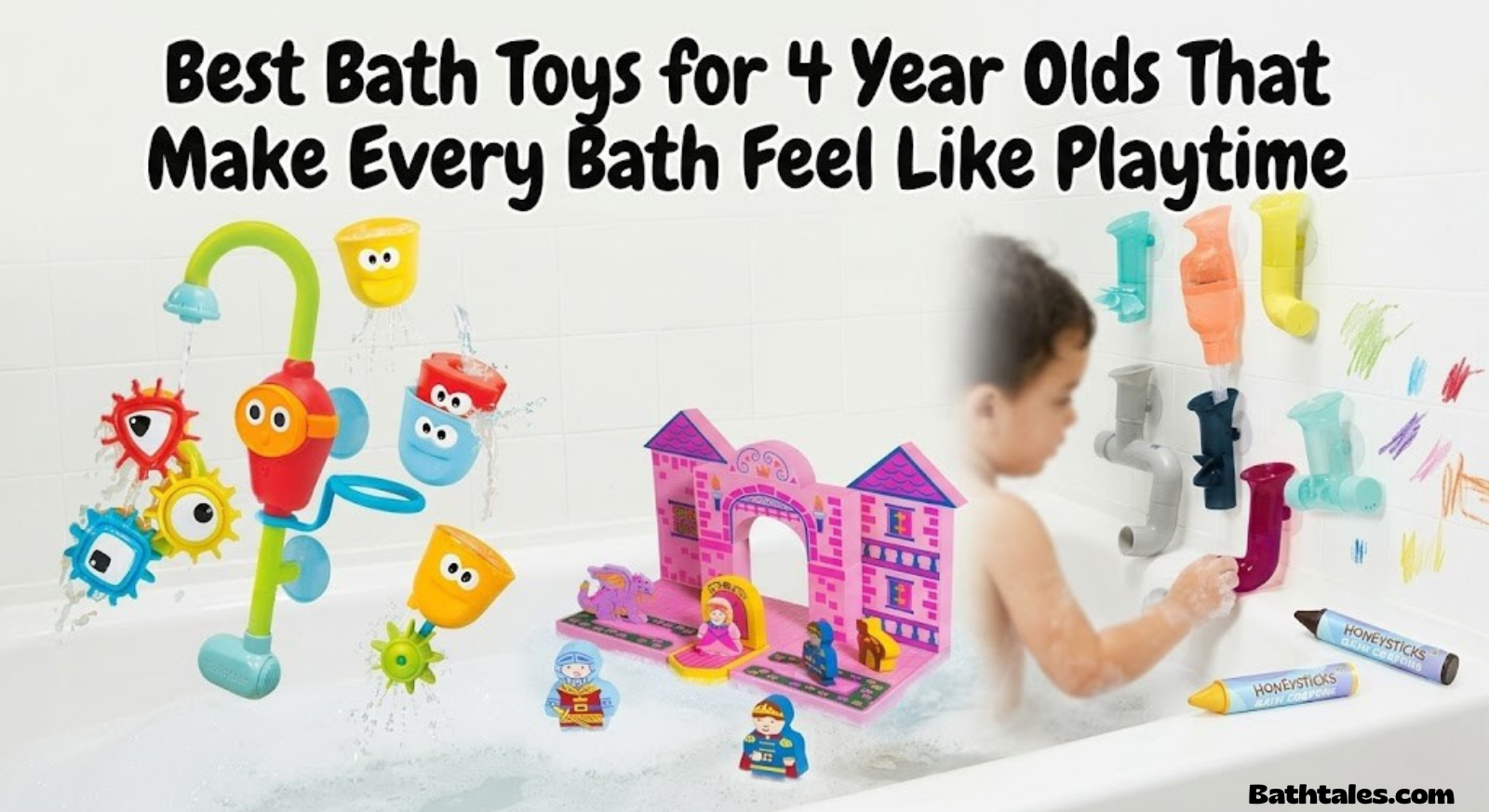
By age four, kids want more of a challenge in the tub — bigger builds, real games, and toys that reward a little strategy.
Four is a turning point for bath time. Kids this age aren’t satisfied with simple floating toys anymore — they want games with rules, builds with real structure, and toys that let them show off a skill they’ve been practicing. They’re also more independent in the tub than ever before, which means bath time can shift from a hands-on parenting task into something closer to supervised, self-directed play, as long as the right toys are on hand to hold their attention.
This guide rounds up ten of the best bath toys for 4 year olds available right now, chosen specifically for the way preschoolers actually play: with more coordination, more patience, and a growing appetite for competition and creativity. We’ll also cover what to look for when shopping for this age group, how bath toys support preschool-level development, and answers to the questions parents ask most often. If your child has outgrown toddler-era toys, it’s worth comparing notes with our guide to cool bath toys for 3 year olds to see how their play style has shifted.
Why Bath Toys Still Matter So Much at Age 4
It’s tempting to think bath toys become less important as kids get older, but four-year-olds are actually at one of the richest stages for bath-time play. They’ve developed enough physical coordination to handle multi-step toys, enough patience to follow simple game rules, and enough imagination to turn a tub into a castle, an ice cream shop, or a basketball court without any prompting. The toys that worked at two or three often feel too simple now — a four-year-old wants something that pushes back a little, whether that’s a puzzle to solve, a target to hit, or a build that takes real thought to construct.
This is also the age when preschoolers start caring about mastery. A three-year-old is happy just splashing a toy around; a four-year-old wants to get good at something — landing a ball in a hoop, catching every fish in a set, building a tower that doesn’t topple over. That shift toward goal-oriented play is a meaningful part of preschool development, and bath toys that offer a clear “win” condition tend to hold attention far longer than toys that are purely sensory.
Independence is another factor. Many four-year-olds are capable of washing themselves with minimal help, which frees up bath time to become more about play and less about a parent actively managing every step. Toys that support unsupervised-feeling play — within eyesight, of course — give preschoolers a sense of ownership over their own bath routine, something this age group tends to crave as they push for more autonomy across every part of the day.
That craving for autonomy shows up in small ways throughout the bath, from insisting on choosing their own toys to wanting to control the water temperature knob themselves. Giving a four-year-old reasonable amounts of control within a safe framework — offering two toy options rather than an open-ended choice, for instance — tends to satisfy that need for independence without creating chaos, and it’s a pattern that carries over well beyond bath time into other daily routines like getting dressed or picking out breakfast.
There’s also a growing social piece. Four-year-olds are more skilled at cooperative and competitive play than they were a year earlier, understanding turn-taking, simple scoring, and shared goals in a way toddlers usually can’t. Toys built around games — basketball hoops, fishing sets, ring-style challenges — tap directly into that emerging social awareness, especially in households with siblings or regular playdates that spill over into bath time.
Language also continues developing quickly at this stage, and bath time remains one of the more natural, low-pressure settings for that growth to happen. A four-year-old narrating a pretend fishing expedition or explaining why their castle needs a wider base to stay balanced is practicing sentence structure, sequencing, and descriptive vocabulary, all without it feeling like a lesson. Parents who lean into that narration — asking a follow-up question rather than simply observing — often find bath time becomes one of the richer conversational windows in an otherwise busy day.
Attention span has matured too. Where a toddler might lose interest in a toy after a couple of minutes, many four-year-olds can stay absorbed in a single activity for fifteen or twenty minutes, particularly if the toy offers an ongoing challenge rather than a single fixed action. That’s part of why so many of the picks below lean into building, sorting, or game-like mechanics — they reward the longer attention span this age group has developed.
Preschoolers at this age are also starting to develop a genuine sense of humor, and toys that lean into a bit of silliness — a chomping shark, a scoop of pretend ice cream, a wobbly floating castle — tend to land especially well. Laughter during bath time isn’t just a nice bonus; it’s often a sign that a child feels relaxed and secure enough to be playful rather than rushed or stressed, which matters for a routine that happens at the end of every single day.
1. Boon PIPES & TUBES Building Bath Toy Set

The Boon PIPES & TUBES set takes the classic suction-cup pipe concept and scales it up for kids who are ready for a more complex build. With more pieces, more connection points, and a wider variety of shapes than toddler versions, this set lets four-year-olds design genuinely elaborate water routes across the tub wall, complete with spinners, funnels, and multiple drainage points.
What makes this a strong pick at this age is the amount of planning involved. A four-year-old building with this set has to think several steps ahead — where does the water need to go, which piece connects to which, what happens if a section is angled wrong — which is exactly the kind of sequential thinking preschoolers are starting to develop. It’s less about splashing and more about constructing something that actually works, which makes success feel earned rather than automatic.
Pros
- Larger, more complex piece set than toddler versions
- Strong suction cups hold up to elaborate builds
- Builds sequential thinking and planning skills
- Endlessly reconfigurable for repeat play value
Cons
- More pieces means more parts to track and dry
- Interior channels need regular mold checks
Boon PIPES & TUBES Building Bath Toy Set — a bigger, more advanced pipe-building system for preschoolers.
Check Price on AmazonBecause this set has more interior channels than most, it’s worth a proper cleaning routine every week or two. Our guide to cleaning mold from bath toys covers a simple process that keeps multi-piece sets like this one hygienic without much extra effort.
Parents who’ve used this set over several months often mention that the play value holds up surprisingly well, mostly because a four-year-old rarely builds the same structure twice. One bath might be dedicated to a single long water slide from one corner of the tub to the other, while the next becomes a branching network with multiple exit points. That variety keeps the toy from feeling repetitive in a way that more fixed, single-purpose toys often do after a few weeks.
2. Honeysticks Bath Crayons

Bath crayons turn tile walls into a blank canvas, and four-year-olds — many of whom are deep into a drawing phase at this point — tend to love the novelty of being “allowed” to draw on the wall for once. Honeysticks makes theirs from beeswax and food-grade pigments, so parents don’t have to worry much about what happens if a stray mark ends up near a mouth, and the marks wipe away easily with a washcloth once the bath is over.
This toy taps into a different kind of play than the building and game-based toys elsewhere on this list — it’s open-ended, artistic, and doesn’t require any particular skill to enjoy. That makes it a good option for winding down toward the end of a bath, or for kids who are more drawn to quiet, creative activities than active games.
Pros
- Made from natural beeswax and food-grade pigments
- Wipes off tile easily with a washcloth
- Open-ended creative play with no “right” way to use it
Cons
- Can leave faint residue on grout if not wiped promptly
- Crayons wear down and need occasional replacing
Honeysticks Bath Crayons — natural, washable crayons that let preschoolers draw right on the tub wall.
Check Price on AmazonBecause there’s no game to win or structure to follow, bath crayons also make a good “reset” activity if a bath has gotten a little too rowdy. Handing a preschooler a crayon and suggesting they draw their day, a favorite animal, or whatever comes to mind tends to shift the energy in the room noticeably, which many parents find useful right before the final rinse-and-out stretch of the routine.
3. Glo Pals Light-Up Cube Set

Glo Pals cubes light up the moment they touch water, and for four-year-olds, that instant visual payoff never seems to get old. Each cube glows a different color, which opens the door to simple games — sorting by color, hiding cubes for an underwater treasure hunt, or just watching the tub fill with soft, colorful light as the bath winds down toward bedtime.
This toy tends to work especially well as a calming, low-stakes bath addition. Because it doesn’t require any particular skill or coordination to enjoy, it’s an easy toy to fall back on during a tired, cranky end-of-day bath when a more involved game might be more frustration than fun.
| Feature | Details |
|---|---|
| Activation | Lights up automatically on water contact |
| Batteries | Built-in, rechargeable via included cable |
| Mold Risk | Low — sealed, water-resistant casing |
| Best For | Calming, low-effort sensory play |
Glo Pals Light-Up Cube Set — color-changing cubes that light up on contact with water for instant sensory fun.
Check Price on AmazonBecause the cubes are rechargeable rather than disposable, they also tend to be a more economical long-term pick than toys that rely on replaceable batteries or consumable elements. Many parents keep a set specifically for the last few minutes of bath time, using the soft glow as a built-in cue that the bath is winding down without needing to announce it outright.
4. Yookidoo Spin ‘N’ Sort Spout Pro

This spout-mounted toy channels water through a spinning wheel and sorting chute system, giving four-year-olds a hands-on way to explore water flow, gears, and simple mechanics. Kids drop small balls or toys into the top and watch them spin and sort their way down through the mechanism, which combines the appeal of a marble run with the novelty of running water.
Because it attaches directly to the tub spout, it also turns the otherwise-ignored faucet area into an active play zone, which is a nice way to make use of bath time real estate that usually just sits there. Preschoolers tend to enjoy experimenting with how fast the water needs to run to keep the wheel spinning, offering an early, playful introduction to basic physics concepts.
Pros
- Turns the faucet area into an active play zone
- Combines water flow with visible mechanical action
- Encourages early physics and cause-and-effect thinking
Cons
- Fit may vary depending on faucet shape and size
- Small sorting balls need to be tracked and dried
Yookidoo Spin ‘N’ Sort Spout Pro — a spout-mounted spinning sorter that turns running water into a mini physics lesson.
Check Price on AmazonThis toy also tends to spark a lot of “what if” experimentation. Preschoolers will often test what happens when they drop different objects into the sorter, or try blocking the water flow briefly to see how the wheel responds, both of which are exactly the kind of hands-on hypothesis testing that early science education tries to encourage. None of it feels like a lesson in the moment, which is precisely why it tends to stick.
5. Fat Brain Toys Squigz Starter Set

Squigz are soft, squishy suction pieces that snap onto tile, tub walls, and each other with a satisfying pop, and they’re one of the more flexible building toys a four-year-old can get their hands on. Unlike toys designed for a single specific structure, Squigz have no predetermined build, which means kids can create towers, chains, silly creatures, or entirely abstract shapes limited only by imagination.
The tactile, squishy texture is also a big draw at this age. Four-year-olds who are still very much in a hands-on, sensory-driven stage of play tend to enjoy simply squeezing and popping the pieces on and off, even without building anything in particular, which makes this a toy that works equally well for structured building and unstructured fidgety play.
Fat Brain Toys Squigz Starter Set — squishy suction pieces that snap together for open-ended building and sensory play.
Check Price on AmazonSquigz also travel unusually well for a bath toy, since the pieces are lightweight, quick-drying, and don’t require any water at all to be fun — many families keep a set doing double duty as a car-ride or restaurant-table activity. That crossover value makes it one of the more cost-effective picks on this list, since the play doesn’t stop the moment bath time ends.
6. Coogam Magnetic Fishing Game

The Coogam Magnetic Fishing Game uses a magnetic rod-and-fish system that’s a step up in challenge from the hook-and-loop versions younger toddlers use. Four-year-olds have the fine motor control to line up the magnet precisely, which turns fishing from a nearly-automatic activity into a genuine test of steady hands and patience — especially once the fish start drifting with the water’s movement.
Because the set typically includes numbered or color-coded fish, it also doubles easily as a counting or sorting game, letting parents adjust the challenge level depending on whether a four-year-old wants a relaxed splash-around or a timed “catch them all” competition with a sibling.
Pros
- Magnetic mechanism is more challenging than hook-and-loop designs
- Doubles as a counting or color-sorting activity
- Great for sibling competition and turn-taking practice
Cons
- Multiple small pieces to gather and dry after each bath
- Magnets require occasional inspection for security
Coogam Magnetic Fishing Game — a magnetic rod-and-fish game that builds precision and steady-hand coordination.
Check Price on AmazonMany parents find this is one of the easier toys to quietly level up as a child’s coordination improves. Early on, “success” might just mean landing the magnet anywhere near a fish, but within a few weeks, most four-year-olds start setting their own informal challenges — catching only the red fish first, or trying to beat their previous best time — without any prompting needed from an adult.
7. Bath Blocks Floating Castle & Ball Run
This floating block set lets four-year-olds construct an actual castle on the water’s surface, complete with a ball run that sends small balls cascading down through the structure. It’s one of the more ambitious builds on this list, combining architectural creativity with the same satisfying cause-and-effect payoff as a marble run — every added block changes how the balls travel through the finished structure.
Because the whole thing floats, kids also get to watch their creation drift and bob as they build, which adds a layer of real-time problem-solving: a lopsided castle tips over, while a balanced one stays upright. That immediate physical feedback makes this one of the more educational builds in this roundup, disguised entirely as imaginative castle play.
Bath Blocks Floating Castle & Ball Run — a floating building set that combines castle construction with a working ball run.
Check Price on AmazonThis set also tends to invite storytelling in a way that pure building toys sometimes don’t. A finished castle rarely stays a static structure for long — it usually becomes the setting for an entire pretend narrative involving whichever floating figures or toys happen to be nearby, turning a builder’s activity into a full imaginative play session without much effort required from a parent.
8. Ice Cream Foam Maker Play Set

This playful set turns bath foam into pretend ice cream scoops, complete with cones, toppings, and a scooper tool. Four-year-olds who are deep into imaginative role-play — running pretend shops, serving “customers,” taking orders — tend to latch onto this toy immediately, since it gives them a concrete prop to build an entire pretend scenario around.
It’s also a clever way to make washing feel like play, since the “ice cream” is really just bath foam or soap, meaning kids can scoop, serve, and squish their way through actual cleaning without realizing that’s what’s happening. For parents dealing with a preschooler who resists washing, this kind of disguised functionality can be genuinely useful.
Pros
- Turns actual washing into imaginative pretend play
- Supports role-play and storytelling skills
- Simple to use with no complicated setup
Cons
- Works best with a compatible foaming soap
- Pieces need thorough rinsing to prevent residue buildup
Ice Cream Foam Maker Play Set — turns bath foam into pretend ice cream scoops for imaginative role-play.
Check Price on AmazonParents often get creative with this set beyond its intended use, turning it into a pretend ice cream shop where siblings take turns being the customer and the “scooper.” That kind of role-swapping play builds empathy and perspective-taking skills, since a four-year-old running the pretend shop has to think about what the customer wants rather than only focusing on their own turn.
9. Munchkin Shark Grabber Bath Toy
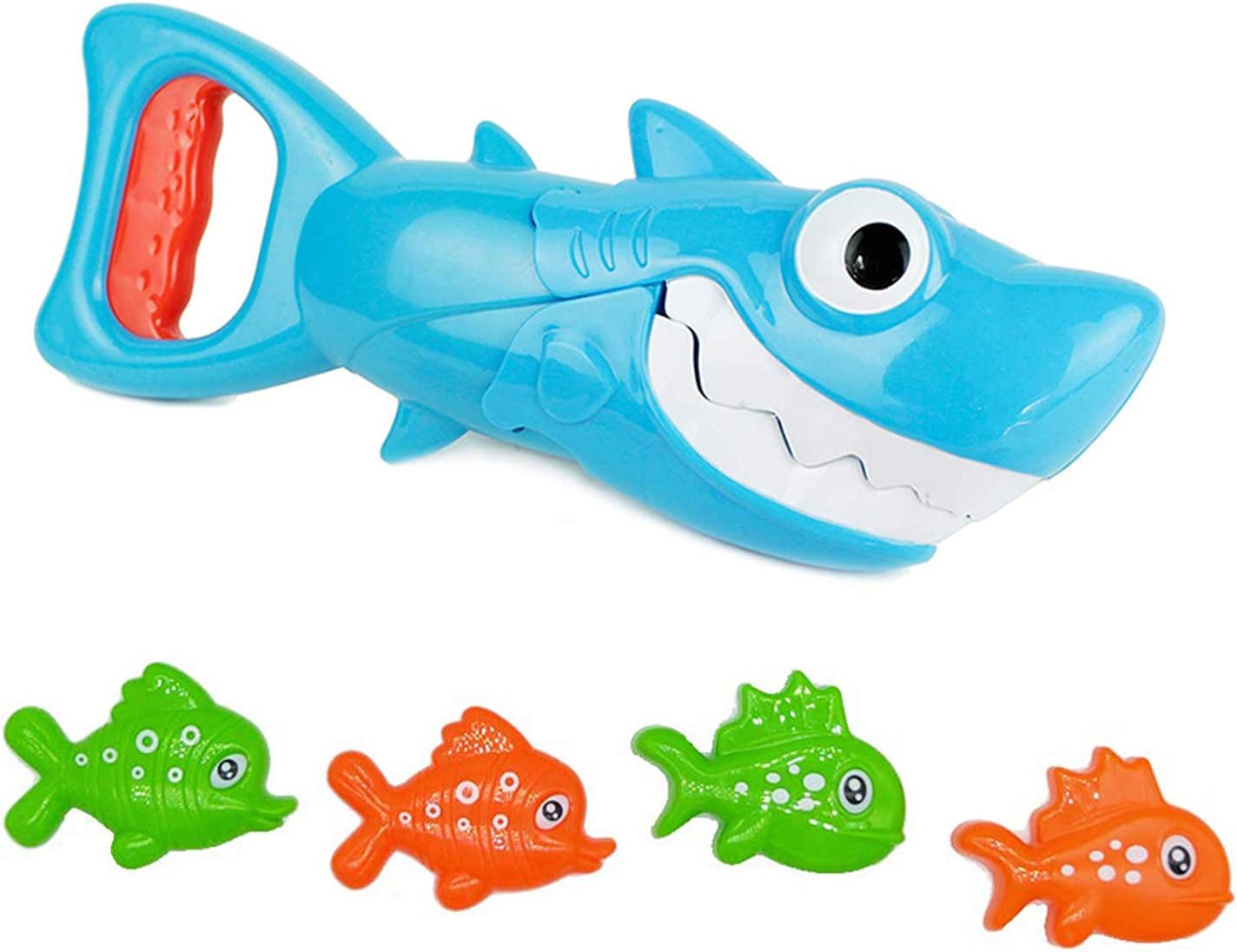
The Shark Grabber is a squeeze-activated toy shark that “chomps” its jaws when a trigger is pressed, and it’s become a popular pick for kids who like a bit of playful drama in their bath toys. Four-year-olds enjoy chasing floating targets around the tub and snapping the shark’s jaws shut at just the right moment, which builds hand strength and timing while keeping the energy level high.
It also works well paired with other floating toys on this list, letting kids invent games where the shark “hunts” fish from the Coogam set or chases balls from the ball-run castle, extending the play value well beyond the toy’s single mechanical trick.
Munchkin Shark Grabber Bath Toy — a squeeze-activated toy shark that snaps its jaws for high-energy chasing games.
Check Price on AmazonBecause the chomping action requires a firm, deliberate squeeze, this toy also does quiet double duty as hand-strengthening practice, which can be useful for kids who are still building the grip strength needed for tasks like using scissors or forming letters with a pencil. It rarely feels like “practice” to the child involved, since the payoff is a dramatic, satisfying snap rather than a worksheet.
10. Bathtub Basketball Hoop & No-Hole Balls Set

A suction-mounted basketball hoop turns the tub into a mini sports arena, and for four-year-olds who are starting to enjoy real games with real scoring, this toy tends to be an instant favorite. The included balls are designed without drainage holes, which keeps them from filling with water and going moldy the way many older bath balls do — a small design detail that makes a real difference in long-term hygiene.
This is also one of the better toys on the list for building gross motor skills specifically, since aiming and shooting requires arm strength, coordination, and a bit of trial-and-error adjustment that toddlers usually aren’t ready for. Siblings or parents can easily join in for a quick game, adding a layer of social, competitive play that rounds out a bath toy collection nicely.
Pros
- No-hole balls resist water retention and mold
- Builds gross motor skills and hand-eye coordination
- Easy to turn into a competitive multiplayer game
Cons
- Suction cup placement matters for a secure hoop mount
- Balls can bounce out of the tub during enthusiastic play
Bathtub Basketball Hoop & No-Hole Balls Set — a suction-mounted hoop and mold-resistant ball set for active bath games.
Check Price on AmazonParents with more than one child in the tub often find this becomes the go-to toy for settling sibling disputes over “whose turn is it,” simply because the game structure makes turn-taking obvious and self-enforcing in a way that open-ended toys sometimes don’t. A quick best-of-five shooting contest can turn a potential argument into a shared activity both kids actually look forward to.
Developmental Milestones Bath Play Supports at Age 4
Preschool development guidelines generally describe age four as a period defined by growing independence, more sophisticated motor control, and an increasing interest in rules, games, and mastery. Bath time is a uniquely convenient setting for supporting all of these areas, since it happens daily and naturally invites the kind of hands-on, low-pressure practice four-year-olds respond to best.
Fine and Gross Motor Development
Where three-year-olds are refining basic grip and coordination, four-year-olds are building on that foundation with more complex, multi-step physical tasks. Aiming a basketball shot, lining up a magnetic fishing rod, or connecting dozens of suction pieces into a working pipe system all require a level of precision and planning that wasn’t quite there a year earlier. These small physical challenges, repeated night after night, contribute meaningfully to the fine and gross motor milestones expected around this age.
Executive Function and Planning
Four-year-olds are also starting to develop early executive function skills — the ability to plan ahead, adjust a strategy, and follow multi-step instructions. Building toys like the pipe set or floating castle ball run give kids direct practice with this kind of forward-thinking, since a successful build requires imagining the finished result before starting and adjusting along the way when something doesn’t work as expected.
Social and Emotional Growth
Game-based toys, from the fishing set to the basketball hoop, tap into a preschooler’s growing understanding of rules, turn-taking, and healthy competition. Learning to win gracefully, lose without a meltdown, and cheer on a sibling’s turn are all social-emotional skills that continue developing well into elementary school, and low-stakes bath games are a gentle, repeatable way to keep practicing them in a setting where the consequences of a “loss” are minimal.
Creativity and Imaginative Play
Open-ended toys like the Squigz set, bath crayons, and the ice cream foam maker support a different but equally important skill: imaginative, self-directed play. Four-year-olds who regularly engage in pretend play tend to show stronger storytelling ability and problem-solving flexibility, and bath time — free from the usual toy clutter of a playroom — often becomes a surprisingly focused space for this kind of creativity to flourish.
Language Development Through Narration
Even though four-year-olds are far more verbal than toddlers, bath time continues to be a strong setting for language growth. Describing a building strategy out loud, narrating a pretend ice cream order, or negotiating the rules of a basketball game all require more sophisticated vocabulary and sentence structure than everyday conversation typically demands. Parents who ask open-ended questions during bath play — “how did you figure out that piece went there?” — tend to draw out longer, more detailed responses than yes-or-no questions, which supports the kind of expressive language skills preschool teachers often look for heading into kindergarten.
Confidence and Self-Efficacy
Successfully completing a challenge — landing a basketball shot, catching a fish, finishing a build — gives four-year-olds a genuine, earned sense of accomplishment that’s a little different from the praise-driven confidence of earlier toddlerhood. This kind of self-directed mastery, where a child can see and feel their own progress without needing constant adult validation, is an important building block for the kind of independent confidence that continues developing throughout the preschool and early elementary years.
Bath Time Safety Tips for Preschoolers
It’s easy to assume that a four-year-old, who can talk in full sentences and often insists on doing everything “by myself,” needs less supervision in the bath than a toddler did. In reality, active adult supervision is still essential at this age. Preschoolers can still slip on a wet tub surface, submerge briefly while playing an enthusiastic game, or get distracted mid-task in ways that lead to accidents faster than most parents expect. The confidence a four-year-old shows in the water is not the same thing as genuine water safety competence.
Because bath toys at this age tend to involve more physical activity — basketball shots, chasing a shark toy, building a tall tower — it’s worth paying extra attention to footing and space. A wet tub floor combined with an excited child standing up to make a shot or reach a high-mounted hoop is a common recipe for slips. A textured non-slip mat, along with gentle reminders to stay seated during calmer parts of the bath, can meaningfully reduce that risk without dampening the fun.
Multi-piece toys also deserve a closer look at this age, simply because there are more of them. Fishing game pieces, sorting balls, and small building components should be checked periodically for cracks or looseness, and any toy that shows signs of breaking down should be retired rather than kept in rotation. It’s also worth doing a quick sweep of the tub floor before draining, since small pieces can end up underfoot and become a slipping hazard even after the bath itself has ended.
Finally, keep an eye on how “competitive” games are going emotionally, not just physically. Four-year-olds are still developing the ability to handle losing gracefully, and a basketball or fishing game that turns into real frustration is a good cue to shift the tone — maybe switching to cooperative scoring (“let’s see how many we can get together”) rather than head-to-head competition, especially toward the end of a long day when patience is already running low.
Bath Toys as Gifts for a Preschooler
Bath toys make popular birthday and holiday gifts for four-year-olds, but the toys that actually get used long-term tend to share a few common traits: a genuine skill or challenge component, straightforward setup with no batteries to manage, and construction sturdy enough to survive nightly water exposure. Toys that lean too far into novelty without offering real replay value often end up forgotten within a few weeks, no matter how exciting they look on a store shelf.
If you’re buying for a child who isn’t your own, it can help to think about which of the play styles covered in this guide — building, game-based, creative, or sensory — seems like the best fit for that particular kid’s personality, rather than defaulting to whatever’s currently trending. A naturally competitive, high-energy four-year-old is likely to get more mileage out of the basketball hoop or fishing game, while a quieter, more artistic child may appreciate the bath crayons or Squigz set far more.
It’s also worth checking in, even casually, about what a family already owns before adding a near-duplicate toy to their collection. A household that already has a robust building set might appreciate a game-based toy instead, rounding out their existing rotation rather than overlapping with it. And for families who’ve mentioned struggling with bath toy mold in the past, favoring toys with simpler, solid construction — like the Shark Grabber or Glo Pals cubes — tends to be a safer, more appreciated choice than intricate multi-chamber sets.
Quick Comparison Table
Here’s how all ten toys stack up across play style, skill focus, and mold risk, so you can quickly match a toy to what your four-year-old is most drawn to right now.
| Toy | Play Style | Main Skill Focus | Mold Risk |
|---|---|---|---|
| Boon PIPES & TUBES Building Set | Building / engineering | Planning, sequential thinking | Moderate |
| Honeysticks Bath Crayons | Creative / artistic | Open-ended creativity | Low |
| Glo Pals Light-Up Cube Set | Sensory / calming | Sensory exploration, sorting | Low |
| Yookidoo Spin ‘N’ Sort Spout Pro | Mechanical / cause-effect | Early physics, cause & effect | Moderate |
| Fat Brain Toys Squigz Starter Set | Open-ended building | Creativity, fine motor | Low |
| Coogam Magnetic Fishing Game | Skill game | Precision, coordination | Moderate |
| Bath Blocks Floating Castle & Ball Run | Building / imaginative | Balance, problem-solving | Moderate |
| Ice Cream Foam Maker Play Set | Pretend play | Role-play, storytelling | Low |
| Munchkin Shark Grabber Bath Toy | Active / chasing | Hand strength, timing | Low |
| Bathtub Basketball Hoop Set | Competitive game | Gross motor, coordination | Low |
Buying Guide: What to Look for in Bath Toys for 4 Year Olds
Look for a Bit of Built-In Challenge
Four-year-olds get bored quickly with toys that offer no real skill component. Toys that involve aiming, building, sorting, or timing tend to hold attention far longer than toys that only require passive floating or squeezing. When comparing similar options, lean toward the one that offers a slightly higher ceiling of challenge — kids this age generally rise to meet it rather than getting frustrated, as long as the toy also allows for an easier, low-pressure mode of play when needed.
It’s worth watching how your own child reacts to a bit of difficulty before assuming more challenge is always better, though. Some four-year-olds thrive on toys that push their skills right up to the edge of frustration, treating a hard-to-land basketball shot as motivation to keep trying, while others disengage quickly once something feels genuinely difficult. Neither response is unusual at this age, and it’s a useful thing to notice, since it can guide which toys are worth introducing gradually versus which ones are ready to be a regular part of the rotation right away.
Material and Mold Resistance
Mold remains one of the most common bath toy complaints at any age, and preschool-level toys with more pieces — like fishing sets or building kits — carry a higher mold risk simply due to their complexity. Favor toys with solid, single-piece construction where possible, and for toys that do have multiple parts, plan on a regular cleaning routine. Our guide to sanitizing bath toys covers safe, effective methods that won’t damage plastic components or leave behind harsh chemical residue.
Balance Structured and Open-Ended Toys
A well-rounded bath toy collection at this age usually includes both game-style toys with clear rules (basketball, fishing) and open-ended creative toys (crayons, Squigz, foam sets). Kids who only have access to structured games can start to feel pressure around “winning,” while kids with only open-ended toys may miss out on the confidence boost that comes from mastering a skill-based challenge. Mixing both keeps bath time flexible enough to match whatever mood your child is in on a given night.
Consider Group Play Potential
If your four-year-old regularly baths with a sibling, cousin, or friend, toys built around simple competition — basketball, fishing, ring-style games — tend to get more consistent use than solo sensory toys. Look for sets that include enough pieces for two players, or that are naturally suited to taking turns, since four-year-olds are generally ready to enjoy that kind of shared, structured play.
Safety Around More Complex Pieces
As bath toys get more sophisticated at this age, they often include smaller components — magnetic fishing pieces, sorting balls, suction cups — that weren’t part of a toddler’s simpler toy set. Always check manufacturer age recommendations, inspect pieces periodically for wear, and store multi-piece sets somewhere they won’t scatter and get lost or stepped on outside the tub.
Think About Long-Term Value, Not Just Initial Excitement
Some toys generate a big reaction the moment they come out of the box but lose their appeal within a week or two, while others — often the simpler, more open-ended ones — quietly stay in rotation for months. When comparing options, it’s worth thinking about how a toy will hold up once the initial novelty wears off. Building sets and creative toys like Squigz or bath crayons tend to age well because kids can use them differently every time, while highly specific novelty toys sometimes struggle to maintain the same level of interest once the “wow” factor fades.
Match Toys to Bathroom Setup
Not every toy fits every bathroom equally well. Suction-based toys need a reasonably smooth, non-textured tub surface to stay put, spout-mounted toys need a compatible faucet shape, and toys with a lot of horizontal building space work best in a standard-sized tub rather than a cramped one. Before buying, it’s worth double-checking product dimensions and mounting requirements against your specific bathroom setup to avoid a toy that looks great online but doesn’t quite work at home.
Building a Bath Toy Routine That Grows With Your Child
Four-year-olds respond well to a bath routine that gives them real choices rather than a fixed script every night. Letting your child pick which “game” toy comes out tonight — basketball, fishing, or the pipe-building set — gives them a sense of control that tends to reduce the kind of pushback more common in toddlers who feel like everything is being decided for them.
It also helps to build in a natural progression across the bath: an active, high-energy toy first to burn off any leftover wiggles from the day, followed by a calmer, more focused activity like building or drawing, and finishing with something soothing like the light-up cubes right before drain time. This kind of structure mirrors the natural wind-down most bedtime routines are trying to achieve, using the bath toys themselves to help transition from active play to a calmer, sleep-ready state.
This active-to-calm progression tends to work especially well on nights when a child seems wound up or overtired, since it gives them a structured way to burn off extra energy before being asked to settle down. On calmer evenings, the same routine can simply be compressed or skipped in favor of whatever the child is most drawn to that night — the goal is a flexible framework rather than a rigid checklist that has to be followed exactly the same way every single time.
Since four-year-olds are more capable of following multi-step instructions, bath time is also a good place to start introducing simple responsibility around toy care — rinsing a toy before it goes in the drying bin, for instance, or helping sort pieces back into the right storage container. These small routines build habits that carry over well beyond the bathroom, and preschoolers often take real pride in being “in charge” of a small task like this.
Some families find it helpful to turn toy cleanup into a short, predictable ritual with its own mini steps — rinse, shake off excess water, place in the drying bag — rather than a vague instruction to “clean up.” Preschoolers tend to respond well to concrete, repeatable sequences like this, and over time many kids start running through the steps with little to no prompting, which quietly takes one more task off a parent’s evening plate.
Finally, don’t be afraid to let a favorite toy stay in heavy rotation if that’s clearly what your child wants. Unlike toddlers, who often benefit from frequent novelty, four-year-olds sometimes prefer deepening their mastery of one toy — building increasingly elaborate pipe structures, or steadily improving their basketball accuracy — over constantly switching between new options. Following your child’s lead here usually works better than forcing variety for its own sake.
It’s also worth revisiting your bath toy collection every few months as a family, not just when something breaks or gets moldy. A quick check-in — “which toys have you outgrown, which do you still love” — helps keep the rotation genuinely matched to your child’s current interests rather than relying on toys that were exciting six months ago but have quietly become background noise. Preschoolers change quickly, and a toy collection that grows with them tends to get far more consistent use than one that stays static year after year.
Frequently Asked Questions
What are the best bath toys for a 4 year old?
The strongest options combine a bit of skill or challenge with genuine fun, such as building sets, magnetic fishing games, basketball hoops, and open-ended creative toys like bath crayons. A mix of active, structured, and creative toys tends to keep four-year-olds more engaged over time than a collection of similar sensory toys, since preschoolers this age tend to cycle between wanting a challenge and wanting to unwind depending on the day.
How is bath play different for a 4 year old compared to a toddler?
Four-year-olds generally want more challenge and structure than toddlers, favoring toys with clear goals, scoring, or building components over purely sensory play. They also have the coordination and patience to handle more complex, multi-piece toys that would frustrate a younger child, and they’re more likely to invent their own rules or games on top of a toy’s original design.
How many bath toys should a preschooler have in the tub?
Four to six toys in active rotation tends to work well, ideally spanning a mix of active games, building toys, and calmer creative options. Keeping a larger backup collection in storage and swapping a couple of toys in every week or two helps maintain novelty without overwhelming the tub or making cleanup feel like a chore.
Are bath crayons safe for kids to use?
Most bath crayons made from natural, non-toxic ingredients are safe for preschoolers, though it’s still worth double-checking the ingredient list, especially for children with sensitive skin. They typically wipe off tile easily and shouldn’t stain grout if cleaned within a reasonable time after each use, though letting marks sit for days can occasionally leave faint residue in porous grout lines.
How do I prevent mold in bath toys with lots of small pieces?
Rinse every piece with clean water after each use, dry them thoroughly, and store the set in a ventilated container rather than a sealed bin. Multi-piece sets like fishing games or building kits benefit from a deeper monthly clean using a vinegar soak or diluted bleach solution to catch anything trapped in small crevices, and it’s worth setting a recurring reminder if mold has been a recurring issue in your household before.
What skills do bath toys help develop at this age?
Building sets support planning and sequential thinking, game-based toys build coordination and social skills like turn-taking, and open-ended creative toys support imagination and storytelling. Together, a varied bath toy collection touches nearly every major area of preschool development without feeling like structured learning, which is part of why bath time remains such a valuable daily routine well past the toddler years.
Do 4 year olds still need supervision during bath time?
Yes. Even though four-year-olds are more independent than toddlers, active adult supervision is still strongly recommended for the entire bath, since young children can still slip or get into trouble in water quickly and quietly, and a confident swimmer or talker at this age isn’t the same as a genuinely water-safe one.
What’s the best way to store bath toys with lots of small parts?
A hanging mesh bag or a ventilated caddy that lets water drain and air circulate is generally the best option for multi-piece sets. Avoid sealed bins or drawers, which trap moisture and speed up mold growth, especially with sets that include several small components that are easy to overlook during a quick post-bath cleanup.
Are competitive bath games good for preschoolers?
Yes, in moderation. Simple games like basketball or fishing help preschoolers practice healthy competition, turn-taking, and handling both winning and losing, all of which are valuable social-emotional skills at this age. Keeping the tone light and low-pressure helps these games stay fun rather than stressful, and switching to cooperative variations can help on nights when a child seems more sensitive to losing than usual.
How do I keep a 4 year old engaged in the bath longer?
Toys with a bit of built-in challenge — building sets, aiming games, sorting activities — tend to hold attention far longer than simple floating toys at this age. Rotating in a “new” toy every so often from a storage bin, even if it’s not brand new, can also re-spark interest without requiring constant purchases, and letting your child choose which toy leads that night’s bath adds a layer of anticipation many kids respond well to.
What’s the difference between bath toys for 3 year olds and 4 year olds?
Three-year-olds generally do best with simpler, more forgiving toys, while four-year-olds are ready for more complex builds, real game mechanics, and toys that reward precision and planning. Our guide to cool bath toys for 3 year olds covers that earlier stage in more detail if you have children at both ages sharing bath time and want toys that work reasonably well for both.
Can bath toys help preschoolers with washing resistance?
Toys that disguise washing as play, like the ice cream foam maker, can meaningfully reduce resistance for preschoolers who dislike the actual washing part of bath time. Letting a child “help” with a fun tool often works better than insisting on a standard washcloth routine at this age, since it shifts washing from something being done to them into something they’re actively choosing to do.
Should I buy bath toys based on my child’s current interests?
Generally, yes. A four-year-old who’s currently obsessed with sports is far more likely to get lasting use out of a basketball hoop than a building set, even if the building set seems more “educational” on paper. Matching a toy to a child’s existing enthusiasm almost always leads to more consistent, longer-term play than choosing based on a toy’s marketed skill benefits alone.
Making Bath Time a Highlight of Your Preschooler’s Day
Four-year-olds are ready for bath toys that ask a little more of them — a build to plan, a shot to line up, a fish to catch — and the ten picks in this guide cover that wider range of preschool play styles. Whether your child gravitates toward the engineering challenge of the Boon pipe set, the competitive thrill of bathtub basketball, or the quiet creativity of bath crayons, rotating a handful of these toys keeps bath time feeling fresh, engaging, and genuinely fun long after the novelty of simpler toddler toys has worn off.
Shop Top-Rated Bath Toys on Amazon