
How to Bathe as a Woman: A Complete, No-Nonsense Guide
From water temperature to hygiene, products, and the little rituals that turn a rinse into an actual reset — here’s everything worth knowing about bathing well.
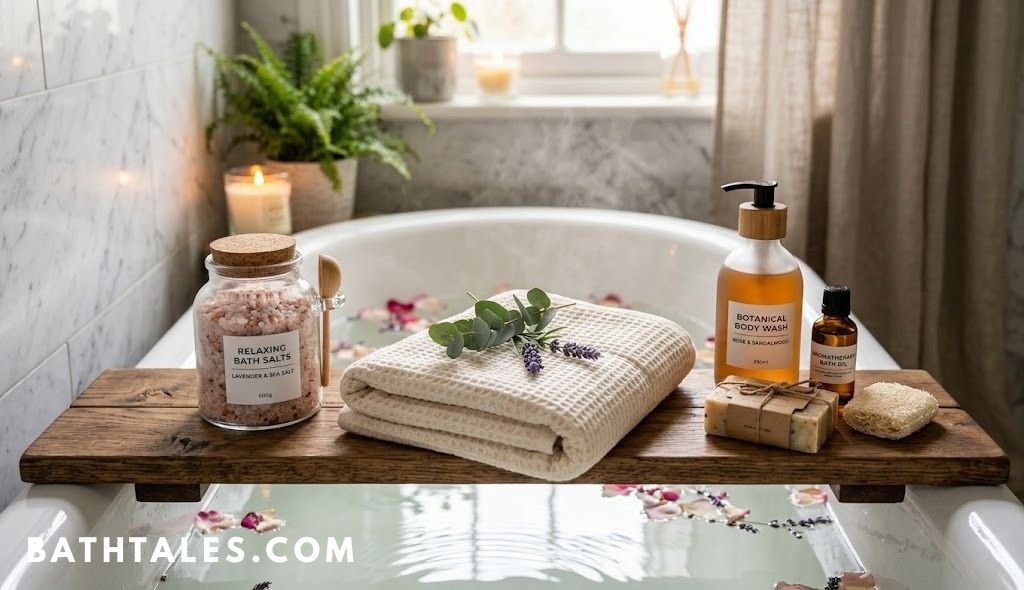
Bath vs. Shower: What Actually Fits Your Life
Before getting into technique, it helps to be honest about which one you actually need today.
Showers are fast, efficient, and use less water — they’re the obvious choice on a weekday morning. A bath is a different kind of tool. It’s slower by design, and that slowness is exactly what makes it useful for sore muscles, dry skin, cramps, or a mind that won’t quiet down. Neither one is “better” in a universal sense; they solve different problems. If you’ve been going back and forth on which suits your routine, this comparison of bath vs. shower breaks down the practical differences in more depth.
The science behind each
From a dermatological standpoint, showers deliver water in brief, moving contact — which means less opportunity for the skin barrier to absorb excess water and swell. Baths involve prolonged immersion, which softens the outermost layer of skin (the stratum corneum) and temporarily weakens its barrier function. That’s not inherently bad — it’s exactly why moisturizer absorbs better right after a soak — but it does mean baths require a bit more aftercare to avoid the tightness and dryness that follow.
On the hygiene side, both are effective at removing dirt, sweat, and transient bacteria. Showers have a slight edge in simply rinsing contaminants away with gravity and running water. Baths, conversely, allow you to add therapeutic ingredients — salts, oils, oatmeal — that sit against the skin long enough to have a meaningful effect. If your goal is purely cleanliness, a shower wins on efficiency. If your goal is skin treatment, muscle recovery, or mental decompression, a bath gives you options a shower can’t.
There’s also the cardiovascular angle. Warm baths cause vasodilation — your blood vessels widen, which can lower blood pressure and improve circulation. A 2018 study published in Heart found that people who bathed daily in warm water had a 28% lower risk of cardiovascular events compared to those who bathed once or twice a week. The mechanism isn’t fully understood, but the gentle thermal stress of warm water immersion appears to improve vascular function over time. Showers don’t produce the same effect because the immersion time is too brief.
Practical considerations
Beyond the biology, there are real-life factors that make one or the other the right choice on any given day:
- Time: A shower takes 5–10 minutes. A bath, from filling to cleanup, takes 30–45 minutes minimum. If you’re short on time, that math matters.
- Water use: An average bath uses 30–50 gallons. An 8-minute shower uses about 17 gallons with a standard showerhead. If water conservation is a priority, showers have a clear advantage.
- Physical ability: Getting in and out of a bathtub requires balance and mobility that not everyone has. Showers — especially walk-in showers — are more accessible for many people.
- Mental state: If you’re anxious, overstimulated, or physically tense, the forced stillness of a bath can be therapeutic in a way a shower simply isn’t. There’s no multitasking in a tub — and that’s the point.
Many people find that a combination works best: quick showers on busy days, and a longer soak two or three evenings a week when they need the recovery or the quiet. It doesn’t have to be either/or.
Bath — Pros
- Soaking time eases muscle tension
- Better for very dry or flaky skin when paired with oils
- Easy to fold in aromatherapy, music, and quiet time
- Can ease menstrual cramps and lower back pain
Bath — Cons
- Uses more water than a shower
- Takes longer to prepare and clean up
- Not ideal if you have an active skin infection
- Can leave skin over-softened if too long or too hot

Check Price on Amazon
Setting Up Your Bath: Temperature, Timing, and Water Level
The biggest difference between a bath that leaves you relaxed and one that leaves you dried out and dizzy usually comes down to three variables: temperature, duration, and how full the tub is.
Water temperature
Warm — not hot — is the target. Somewhere around 92–100°F (33–38°C) feels comfortably warm without stripping natural oils from skin or raising your heart rate the way a very hot soak can. If you don’t have a thermometer, the water should feel pleasantly warm on the inside of your wrist, not scalding.
Temperature affects the body differently depending on where you set it. Cooler water (80–90°F) causes vasoconstriction — blood vessels tighten, which can reduce inflammation and leave you feeling alert. It’s a useful range after intense exercise when you want to bring swelling down without slowing recovery. Warmer water (92–100°F) causes vasodilation — blood vessels relax, blood pressure drops slightly, and muscles soften. This is the sweet spot for most bath goals: stress relief, cramp management, general relaxation. Hot water (101–104°F) intensifies all of these effects but comes with trade-offs: faster heart rate, more skin oil loss, and a real risk of feeling lightheaded when you stand up. Anything above 104°F should be avoided entirely — it’s uncomfortable for most people and poses genuine safety risks, especially for pregnant women, those with heart conditions, or anyone who has had alcohol.
How long to soak
Fifteen to twenty minutes is the range most dermatologists point to. Long enough for muscles to loosen and for a bath salt or oil to do its job, short enough that your skin doesn’t over-absorb water and become more prone to irritation once you’re out. If you’re new to bathing regularly, a full walkthrough of how to take a bath step by step is worth a look.
Water level
Fill enough to cover your hips and lower torso when seated — you don’t need to submerge your shoulders unless the tub is deep enough to do so comfortably. Overfilling just means more water displaced (and spilled) when you get in. For standard bathtubs, filling to about two-thirds full hits this mark. If you have a deeper soaking tub, you can go higher, but be mindful that deeper water means more hydrostatic pressure on your body, which can make your heart work a bit harder.
Preparing the space before you fill
A few small preparations make a meaningful difference to the experience:
- Check the tub’s cleanliness: A quick wipe-down with a damp cloth removes any residue from prior use. Soap scum and mineral deposits sitting in the tub will dissolve into your bath water, which isn’t harmful but isn’t pleasant either.
- Set out everything you need: Towel, robe, moisturizer, a glass of water, your cleanser, salts or oils, a book or phone (if you want one). This prevents dripping-wet scrambles across the bathroom floor.
- Temperature of the room: If your bathroom gets cold, a quick blast of hot water in the shower (with the drain closed) can warm the air before you fill the tub. Stepping out of a warm bath into a cold room is jarring and can make the experience less pleasant than it should be.
| Water Temperature | Feel | Best For |
|---|---|---|
| 80–90°F (27–32°C) | Cool to lukewarm | Hot weather, post-workout cooldown |
| 92–100°F (33–38°C) | Warm, comfortable | Everyday relaxation, cramps, dry skin |
| 101–104°F (38–40°C) | Hot | Occasional deep muscle relief (short soaks only) |
| Above 104°F (40°C) | Too hot | Not recommended — risk of dizziness and skin irritation |
Step-by-Step: How to Bathe, From Start to Finish
This is the practical walkthrough — six steps, in order, with a quick visual for each.
1Clear and prep the space
Before running water, put everything you’ll want within arm’s reach: towel, robe, a cup of water, your cleanser, and whatever you’re soaking with. Reaching dripping-wet out of a tub to grab a forgotten towel is how most bath mishaps happen.
2Run the water to the right temperature
Start with warm, not hot, and adjust as the tub fills — it’s easier to add hot water later than to cool an overheated bath down. Use a bath thermometer if you have one, or the wrist test described above.
3Add your salts, oils, or bubble bath
Add products after the water is mostly full and moving — this disperses salts or oils evenly instead of leaving concentrated pockets that can irritate skin. A cup of Epsom salt or a few drops of a gentle oil is usually enough; more isn’t better here.
4Ease in and settle
Sit rather than lower quickly, especially with hotter water — this lets your body adjust gradually and avoids the lightheadedness that comes from a sudden temperature shift. Once settled, this is the point to start actually unwinding: close your eyes, breathe, let your shoulders drop.
5Cleanse — outer body first, then intimate areas last
Work from the outside in: shoulders, arms, torso, legs, and finish with the vulva area using plain warm water or a mild, fragrance-free wash made for that purpose. This order keeps you from spreading anything from other parts of the body toward more sensitive skin.
6Rinse, drain, and dry properly
Rinse off any product residue with fresh water before draining, since sitting in soapy water as it drains can leave a film on skin. Once out, pat — don’t rub — dry, paying attention to skin folds, and moisturize while skin is still slightly damp.

Check Price on Amazon
Choosing Bath Products That Actually Work For You
The bath aisle is enormous, and most of it is marketing. A short, well-chosen product list beats a shelf of things you tried once. For a curated starting point, this list of best bath products is a useful filter before you buy anything.
What’s worth having
- A fragrance-free or lightly scented salt for muscle relief
- A gentle, pH-balanced body wash — separate from anything used on the face
- A body oil or thick cream for right after you get out
- A soft washcloth or konjac sponge, replaced regularly
What to be cautious with
- Heavily fragranced bubble baths, which can irritate sensitive skin
- Bath bombs with strong dyes near intimate areas
- Products marketed as “feminine wash” for internal use — the vagina is self-cleaning and doesn’t need internal products
Understanding ingredient labels
Bath products can sound exotic on the label and be functionally inert in the tub. A few ingredients actually carry weight:
- Magnesium sulfate (Epsom salt): The most studied bath salt. While transdermal absorption rates are debated, many users report reduced muscle soreness and improved relaxation after Epsom soaks.
- Colloidal oatmeal: Finely ground oatmeal suspended in water. It’s an FDA-recognized skin protectant that soothes itching and irritation, making it useful for eczema and dry-skin flare-ups.
- Jojoba oil: Closest in structure to human sebum, meaning it absorbs more readily than heavier oils and won’t leave a slick, greasy residue on the tub or your skin.
- Lavender essential oil: One of the few essential oils with published research supporting its calming effects. Used in a bath, it provides mild aromatherapy — but should always be diluted, never dropped directly into water undiluted, as undiluted oils can sit on the skin and cause irritation.
- Coconut oil: Excellent for moisturizing, but it makes tub surfaces extremely slippery. Use sparingly and clean the tub after to prevent falls next time.
Ingredients to avoid or limit: sodium lauryl sulfate (SLS), which is a harsh surfactant unnecessary in a bath; synthetic fragrances (listed simply as “fragrance” or “parfum”), which are common contact allergens; and artificial dyes, which serve no functional purpose and can stain skin or tubs.
Bath Bomb vs. Bath Salt: Choosing the Right Additive
Both dissolve in your tub, but they serve different purposes and produce very different results. If you’ve been picking between them based on which smells nicer in the store, it’s worth understanding what each one actually does to the water — and to your skin.
What bath bombs are
A bath bomb is a compressed mixture of baking soda (sodium bicarbonate) and citric acid, held together with binders and typically loaded with fragrance, color, and sometimes skin-conditioning oils. When it hits water, the acid-base reaction produces carbon dioxide — the fizzing you see — and dissolves the bomb into the bath. The appeal is almost entirely sensory: the fizz is fun, the color is visually pleasant, and the scent fills the room quickly.
What bath bombs are not, generally, is therapeutic. The active fizzing reaction is over within a few minutes, and whatever oils or butters were in the bomb are dispersed at very low concentrations across a full tub of water. Some higher-quality bombs include genuinely beneficial ingredients like shea butter or dead sea clay, but the delivery method — a one-time, rapid dissolve — means there’s minimal contact time for absorption compared to salts that sit dissolved in the water for the full duration of your soak.
The other consideration is what’s in the bomb beyond the base ingredients. Synthetic fragrances and FD&C dyes are common in mass-market bath bombs, and both are frequent triggers for contact dermatitis, especially in the vulvar and perineal area. If you have sensitive skin, a history of UTIs, or are prone to yeast infections, heavily dyed or fragranced bath bombs can be a problem.
What bath salts are
Bath salts are mineral compounds — typically magnesium sulfate (Epsom), Dead Sea salt, Himalayan pink salt, or magnesium chloride — that dissolve in water and remain dissolved for the entire soak. Unlike bath bombs, which deliver their payload in a single burst, salts create a sustained mineral environment that your skin is immersed in for 15–20 minutes or more.
The primary draw is functional: Epsom salt for muscle soreness, Dead Sea salt for skin conditions, magnesium flakes for transdermal magnesium delivery. The experience is subtler than a bath bomb — no fizz, usually no dramatic color change — but the effects are more sustained and, for many people, more meaningful.
Salts also play well with other additions. You can add essential oils to an Epsom soak for aromatherapy, or mix Dead Sea salt with colloidal oatmeal for a combined skin-soothing bath. Bath bombs don’t offer this kind of customization because their formulation is fixed once manufactured.
| Feature | Bath Bomb | Bath Salt |
|---|---|---|
| Primary purpose | Sensory experience (fizz, color, scent) | Functional (muscle relief, skin care, relaxation) |
| Active ingredients | Baking soda + citric acid + fragrance/dye | Mineral compounds (Mg sulfate, Mg chloride, etc.) |
| Dissolution time | 2–5 minutes (rapid) | Gradual, remains dissolved throughout soak |
| Customizability | Low — pre-formulated | High — can add oils, essences, oatmeal |
| Skin sensitivity | Higher risk (dyes, synthetic fragrance) | Lower risk (unscented options widely available) |
| Cost per use | $3–$10+ per bomb | $0.50–$2 per cup of salt |
| Best for | Occasional treat, kids, sensory enjoyment | Regular soaks, muscle recovery, skin conditions |
The bottom line: bath bombs are a fun occasional indulgence, but bath salts are the more practical, more versatile, and more skin-friendly choice for a regular bathing routine. If you enjoy the visual and aromatic experience of a bomb, there’s no harm in using one now and then — just choose brands that use plant-based colorants and avoid synthetic fragrances, particularly if you’re soaking skin that’s already irritated or reactive.
For a deeper comparison, including specific product recommendations for each category, see bath bomb vs. bath salt.
Feminine Hygiene Basics in the Bath
This is the part people often feel awkward asking about directly, so here it is plainly: the vulva (the external area) benefits from gentle washing, while the vagina (internal) is self-cleaning and doesn’t need soap, douches, or internal rinses of any kind.
General guidance
- Wash the external vulva with warm water or a fragrance-free cleanser made for that area
- Avoid inserting soap, bubble bath, or bath salts internally
- Wash front to back to avoid introducing bacteria from other areas
- If you use a tampon or menstrual cup, it’s fine to leave it in during a bath
- Dry the area thoroughly afterward — trapped moisture is a common irritation trigger
If something feels off — persistent itching, unusual discharge, or odor — that’s worth a conversation with a doctor rather than a new product. Bathing habits can support comfort, but they’re not a substitute for medical care when something is actually wrong.
What the pH balance actually means
The vaginal microbiome maintains a pH of roughly 3.8–4.5, which is mildly acidic and supports the growth of Lactobacillus bacteria — the “good” bacteria that crowd out pathogens. Anything that disrupts this pH — scented soaps, douches, bath bombs with synthetic chemicals, even heavily chlorinated tap water — can temporarily shift the balance and allow harmful bacteria or yeast to overgrow.
This is why the guidance to use only warm water or a pH-balanced, fragrance-free wash on the vulva isn’t arbitrary caution — it’s based on how the vaginal ecosystem actually works. You don’t need to be paranoid about it; the body is resilient and self-corrects quickly in most cases. But reducing unnecessary chemical exposure during bathing is one of the simplest things you can do to avoid irritation, BV (bacterial vaginosis), and yeast infections.
A note on bath products specifically: salts, oils, and fragranced additions dissolve into the water you’re sitting in, and some of that water will come into contact with the vulvar area. For most people, unscented Epsom salt or Dead Sea salt in reasonable amounts is perfectly fine. But if you’re prone to infections, keeping your bath additions minimal and fragrance-free is a sensible precaution. Save the lavender bombs for a foot soak if you’re uncertain.
Bath Salts 101: What They Do and How to Pick One
Not all bath salts are interchangeable. Epsom salt (magnesium sulfate) is the most common and is generally associated with muscle relief. Dead Sea salt carries a broader mineral profile and is often used for skin conditions. Himalayan pink salt sits somewhere in between — milder, with a gentler mineral load. A detailed comparison of Dead Sea salt vs. Epsom salt is worth reading if you’re deciding between the two, and if you’d rather compare magnesium delivery methods, magnesium flakes vs. Epsom salt covers that specifically.
| Salt Type | Primary Mineral | Commonly Used For |
|---|---|---|
| Epsom Salt | Magnesium sulfate | Muscle soreness, general relaxation — see best salts for muscle soreness |
| Dead Sea Salt | Magnesium, potassium, calcium | Skin conditions, detox soaks — see best detox bath salts |
| Himalayan Pink Salt | Sodium chloride + trace minerals | Gentle, everyday soaks — see best Himalayan pink bath salt |
| Magnesium Flakes | Magnesium chloride | Faster-absorbing magnesium soaks |
How to choose based on your goal
Choosing the right salt isn’t about finding the “best” one in absolute terms — it’s about matching the mineral profile to what your body needs this week. Here’s a practical framework:
- Muscle soreness after exercise: Start with Epsom salt. It’s the most widely available, the most affordable, and has the most anecdotal support for post-exercise recovery. One to two cups per standard bath is the typical dose. If you train hard and regularly, magnesium flakes are worth trying too — magnesium chloride is thought to absorb more efficiently through the skin than magnesium sulfate, though clinical evidence is still limited.
- Eczema, psoriasis, or dry patches: Dead Sea salt tends to be more effective here because of its broader mineral content — particularly the bromide and potassium, which have mild anti-inflammatory properties. Start with a half-cup dissolved fully before getting in, and limit your soak to 15 minutes to avoid over-drying.
- Everyday relaxation and stress relief: Any of the salts work, but Epsom combined with a few drops of lavender or chamomile essential oil is the simplest, most affordable combination. Himalayan pink salt is a gentler alternative if Epsom feels too mineral-heavy on your skin.
- Sleep preparation: A warm (not hot) Epsom soak 30–60 minutes before bed takes advantage of the post-bath temperature drop, which signals your body to produce melatonin. Add magnesium flakes for a potentially stronger effect. For specific blend recommendations, see best bath salts for relaxation and sleep.
- Cold and flu symptom relief: Epsom salt combined with eucalyptus or peppermint essential oil can help open airways and ease body aches when you’re sick. The steam from the warm water carries the volatile oils upward. Keep the water at a comfortable temperature — you don’t want to stress your body further with excessive heat when you’re already fighting an infection. More specifics are in best bath salts for cold and flu.
For a comprehensive comparison across every salt type and use case, best bath salts for every type of soak organizes it all in one place.
If sleep is the goal, start with a salt blend built for winding down — see best bath salts for relaxation and sleep. For colder months, a soak formulated for congestion and aches is a nice addition too — check best bath salts for cold and flu. And if your skin runs dry, best bath salts for dry skin narrows the list to gentler formulas. Unsure how much to actually use? How much bath salt to use has the measurements. Prefer making your own? How to make bath salts at home walks through it, and if you’ve had a bag sitting in your cabinet for a while, do bath salts expire answers that directly.

Check Price on Amazon
How Long to Soak in Bath Salts: A Goal-by-Goal Guide
“Soak for 15 to 20 minutes” is good general advice, but the right duration actually depends on what you’re soaking for. A muscle-recovery soak works differently from a skin-soothing one, and the temperature of the water changes the equation too.
Why duration matters
When you sit in mineral-rich water, your skin goes through two simultaneous processes: it absorbs water (and whatever is dissolved in it) through osmosis, and it loses some of its natural oils through the warm water’s solvent action. In the first 10 minutes, absorption dominates — your skin is drinking in moisture and minerals. Between 10 and 20 minutes, the balance tips: you’re still absorbing, but you’re also starting to strip away the lipid layer that keeps skin supple. Past 20–25 minutes, most people have diminishing returns — the skin becomes waterlogged (you’ll notice the telltale wrinkling of fingers and toes), and the barrier function is weakened enough that post-bath dryness becomes more likely.
This is why the common advice to soak for 15–20 minutes isn’t arbitrary. It’s the window where you get the most benefit with the least downside. But within that window, there are meaningful differences.
By goal
Muscle soreness and post-workout recovery: 15–20 minutes at 95–100°F (35–38°C). The warmth increases blood flow to sore areas, and the magnesium from Epsom salt or magnesium flakes has time to interact with the skin surface. There’s no need to go longer — the research on warm water immersion for recovery consistently shows benefits at this duration without additional gains from extended soaking. If the water starts to cool, adding a bit of hot water is fine, but don’t try to maintain a hot soak for the full 20 minutes, as excessively hot water can increase inflammation rather than reduce it.
Skin conditions (eczema, psoriasis, dry skin): 10–15 minutes at 90–95°F (32–35°C). Shorter and cooler is better for compromised skin. The goal is to hydrate the skin and deliver minerals without overwhelming the already-weakened barrier. Dead Sea salt soaks for psoriasis, for example, are typically studied at 10–15 minutes in lukewarm water. Anything longer risks making dry or inflamed patches worse once you’re out. Follow immediately with a thick moisturizer or body oil applied to damp skin.
Stress relief and relaxation: 15–20 minutes at 92–100°F (33–38°C). This is the sweet spot for unwinding without over-soaking. The temperature range triggers parasympathetic nervous system activation — your “rest and digest” mode — and the 15–20 minute window is long enough for your mind to actually slow down. For many people, it takes the first 5 minutes just to stop thinking about their to-do list, which is why shorter soaks aren’t as effective for mental decompression.
Sleep preparation: 20 minutes at 95–98°F (35–37°C), finished 60–90 minutes before bed. The mechanism here is thermoregulation: your core body temperature rises slightly during the bath, then drops afterward as you cool down. That post-bath temperature drop mimics the natural temperature decline your body undergoes as it transitions to sleep, which can help you fall asleep faster and experience deeper sleep in the first half of the night. Timing matters — too close to bedtime and you’re still warm; too early and the effect has worn off.
Cold and flu relief: 10–15 minutes at 96–100°F (36–38°C). When you’re sick, your body is already working hard to regulate temperature, so a shorter, moderately warm soak is gentler on the system. The steam from the water helps with congestion, and the warmth can ease body aches. Don’t push through a longer soak if you feel dizzy or overheated — listen to your body and get out when it tells you to.
| Goal | Duration | Temperature | Key Notes |
|---|---|---|---|
| Muscle recovery | 15–20 min | 95–100°F | No benefit past 20 min; add salts early |
| Skin conditions | 10–15 min | 90–95°F | Shorter is better; moisturize immediately after |
| Stress relief | 15–20 min | 92–100°F | First 5 min is mental transition — allow it |
| Sleep prep | 20 min | 95–98°F | Finish 60–90 min before bed |
| Cold/flu | 10–15 min | 96–100°F | Stop early if dizzy; stay hydrated |
| Detox/general wellness | 15–20 min | 92–100°F | Drink water before and after |
One thing all of these durations have in common: drink water before and during your soak. Warm water immersion is mildly dehydrating — you sweat more than you realize, even in a bath. A glass of water before you get in, and another when you get out, keeps things in balance. For a full breakdown with additional context, how long to soak in bath salts covers this in greater detail.
Making the Bath Actually Relaxing (Not Just Wet)
Water alone doesn’t guarantee relaxation — the environment around it does most of the work. A few adjustments, drawn from how to make a bath more relaxing, go a long way:
- Dim overhead lights or switch to a single candle
- Keep your phone in another room, or at least out of arm’s reach
- Add a scent you associate with calm — lavender and chamomile are common choices; see best essential oils for bath salts
- Play something quiet — instrumental music or ambient sound, not a podcast that keeps your brain engaged
- Set a rough time limit so you’re not rushed or anxious about the clock
For extra comfort, small physical additions matter too — a rolled towel behind your neck, a non-slip mat, or a tray for your drink. This guide on how to make a bath comfortable covers the setup side in more detail.
The psychology of the bath ritual
There’s a reason warm baths have been prescribed for anxiety and insomnia for centuries — and it’s not just the heat. The structure of a bath creates a natural boundary between “doing” and “being.” You can’t check emails in a bathtub (well, you can, but you really shouldn’t). You can’t fold laundry or answer the door. The bath is one of the few spaces in modern life that physically removes you from the things pulling at your attention.
This boundary effect is amplified when you add sensory anchors: a consistent scent that your brain begins to associate with relaxation, a specific playlist you only play during bath time, or the ritual of lighting the same candle. Over time, these cues become triggers for your nervous system to downregulate — your body learns that this combination of inputs means it’s safe to relax. It’s a form of classical conditioning, and it works whether you’re conscious of it or not.
The key is consistency over complexity. You don’t need a perfectly curated spa setup. You need the same three or four elements repeated in the same order, and your brain will start doing the relaxation work for you before you’ve even gotten into the water.
Building a Bath Routine You’ll Actually Keep
The best routine is the one that survives a busy week. Rather than aiming for a daily ritual, most people do better with two to three intentional soaks a week, each with a light structure. A full weekly framework is laid out in best bath routine, but the short version looks like this:
| Day | Focus | Add |
|---|---|---|
| Sunday evening | Reset for the week | Epsom salt + calming oil |
| Wednesday | Mid-week muscle relief | Magnesium flakes, warm not hot |
| Friday or Saturday | Skin-focused soak | Dead Sea salt or a moisturizing oil |
Adapting the routine to your life
The three-day framework above is a starting point, not a prescription. The point is intentionality — choosing why you’re bathing, not just falling into the tub because you feel like you should. Here are some ways people adapt it:
- For athletes and frequent exercisers: Shift the Wednesday soak to whatever day follows your hardest training session. If you work out four or five days a week, consider two recovery soaks: one mid-week and one at the end of your training block. Best bath salts for athletes has salt and timing recommendations specific to athletic recovery.
- For chronic pain or menstrual discomfort: You may need more frequent soaks during flare-ups — daily warm baths during the first two days of a period, for instance, can meaningfully reduce cramp intensity for many women. Use Epsom salt at body-temperature water and keep the soak at 15 minutes.
- For very dry or eczema-prone skin: Fewer soaks (once or twice a week), shorter duration (10–15 minutes), and always followed by a thick emollient applied to damp skin. Over-bathing is a common trigger for eczema flares, so err on the side of less rather than more.
- For mental health and anxiety management: The bath becomes less about physical benefit and more about the routine itself. The same time, same setup, same scents — every time. Predictability is calming for an anxious brain. Even a 10-minute soak counts if it’s consistent.
If your skin type or goals are specific — athletic recovery, for instance — a tailored list like best bath salts for athletes is more useful than a general one.
Alternative Bath Types: Sitz Baths, Infrared Soaks, and Milk Baths
The standard full-body bath isn’t the only option. Depending on your needs, a targeted soak or a different bathing method may serve you better. Here’s what three popular alternatives involve and when each one makes sense.
Sitz bath
A sitz bath is a shallow soak that targets the pelvic and perineal area — hips and buttocks only. You can buy a purpose-built sitz bath basin that sits on top of your toilet seat, or simply fill your regular bathtub with a few inches of warm water and sit in it. The water level only needs to reach your hips.
Sitz baths are most commonly recommended for postpartum recovery, hemorrhoid discomfort, and post-surgical healing in the pelvic region. The warm water increases blood flow to the area, which promotes healing and reduces swelling, while the shallow depth means you’re not fully immersing your entire body (useful if full baths aren’t recommended due to a surgical incision elsewhere).
The typical protocol is 10–15 minutes in warm (not hot) water, two to three times a day. Some people add Epsom salt to the water, which may provide additional comfort, though plain warm water is effective on its own. After a sitz bath, pat the area dry gently — don’t rub, especially if you’re healing from tears, episiotomy, or hemorrhoid treatment.
A sitz bath is distinct from a regular bath in both purpose and setup. If you’re trying to decide which one fits your situation, sitz bath vs. regular bath compares them side by side.
Infrared bath
Infrared bathing uses infrared light or far-infrared heat technology to warm the body — sometimes in a specialized tub, more commonly in an infrared sauna or a portable infrared blanket or mat that can be used in a bathtub. Unlike a traditional bath, where heat is conducted from the water to your skin, infrared heat penetrates deeper into the body’s tissues (up to 1.5 inches below the skin surface, according to manufacturers’ claims).
Proponents of infrared bathing cite deeper muscle relaxation, more efficient detoxification through sweating, improved circulation, and relief from chronic pain conditions like fibromyalgia. The evidence is promising but still emerging — most studies on infrared therapy have been done in sauna settings rather than bath settings, and sample sizes tend to be small.
The practical difference for the user is that infrared bathing typically uses lower ambient temperatures (100–130°F air temperature in a sauna, or warm water in a tub combined with infrared panels) but produces a more intense sweating response. You’ll want to hydrate heavily before and after, and sessions are usually limited to 20–30 minutes.
If you’re curious about the comparison, infrared bath vs. regular bath breaks down the differences in more detail, including what to expect from each.
Milk bath
Milk baths have been used since ancient Egypt — Cleopatra is the most famous historical proponent, though the historical evidence for that specific claim is thin. What’s not in dispute is that milk contains lactic acid, which is a gentle alpha-hydroxy acid (AHA) that can soften skin, mildly exfoliate dead surface cells, and improve skin texture over time.
A modern milk bath typically involves adding one to two cups of whole milk (or coconut milk for a dairy-free alternative) to a warm bath, sometimes combined with honey, oatmeal, or essential oils. The lactic acid concentration in a diluted milk bath is low — much lower than a dedicated AHA product — so the exfoliation is very gentle and suitable even for sensitive skin.
Who benefits most: people with dry, flaky skin who want a mild exfoliation without scrubbing; anyone looking for a gentler alternative to chemical exfoliants; and those who enjoy the sensory experience (milk baths leave skin feeling notably soft and silky). The main caution is for people with dairy allergies — even topical contact can trigger a reaction, so coconut milk or oat milk is a safer choice if there’s any concern.
For a thorough comparison of what each offers, including ingredient ratios and technique, milk bath vs. regular bath is a good resource.
Which alternative is right for you?
| Bath Type | Best For | Duration | Special Notes |
|---|---|---|---|
| Sitz bath | Postpartum, hemorrhoids, perineal healing | 10–15 min | Shallow; can be done in a basin or tub |
| Infrared bath | Deep tissue relaxation, chronic pain, detox | 20–30 min | Requires specialized equipment; hydrate well |
| Milk bath | Gentle exfoliation, very dry skin, sensory luxury | 15–20 min | Use whole milk or coconut milk; avoid if dairy-allergic |
| Standard warm bath | General relaxation, muscle soreness, hygiene | 15–20 min | Most versatile; add salts or oils as needed |
Bathing During Pregnancy
Warm baths are generally considered safe throughout pregnancy and can genuinely help with swelling, lower back pain, and sleep. The key adjustment is temperature: keep water at or below body temperature (roughly 98–100°F) rather than the hotter end of the range, since overheating is the actual concern, not bathing itself. A thermometer takes the guesswork out of this. For salt choices during this period, best bath salts for pregnancy lists options that are gentle and appropriately formulated. As always, mention it to your OB if you have a high-risk pregnancy or specific concerns.
What changes during pregnancy
Pregnancy alters the bathing equation in several ways that are worth understanding:
- Core temperature sensitivity: In the first trimester especially, elevated core body temperature (above 102°F for prolonged periods) has been associated with neural tube defects. This is why hot tubs are generally advised against, while warm baths are fine — the water temperature drops quickly in a bathtub and you can control it, whereas hot tubs maintain a consistently high temperature.
- Skin changes: Pregnancy hormones increase blood volume and can make skin more sensitive, more prone to itching, and more reactive to products that were previously fine. If you notice new irritation from a bath product you’ve used before, it’s likely the pregnancy amplifying your skin’s reactivity, not a change in the product itself.
- Balance and mobility: As your center of gravity shifts, getting in and out of the tub requires more care. A non-slip mat is non-negotiable. If stepping over the tub edge becomes difficult, a shower may be the safer option in the third trimester.
- Swelling (edema): Warm baths can help with the swelling common in feet and ankles during pregnancy. A 15-minute soak with Epsom salt at body temperature can reduce the heaviness and discomfort, though it won’t eliminate pregnancy-related edema entirely — that’s driven by blood volume and fluid retention, which baths can temporarily ease but not fix.
The bottom line: warm baths are a genuinely helpful comfort measure during pregnancy, not something to be afraid of. Just keep the temperature moderate, choose fragrance-free products, and be mindful of your changing body’s balance and skin sensitivity.
Bathing for Sensitive, Dry, or Reactive Skin
If your skin reacts easily — redness, tightness, flaking — the fix is usually less product, not more. Fragrance-free formulas, shorter soak times, and moisturizing immediately after are the three biggest levers. For eczema-prone skin specifically, best bath salts for eczema is a good starting filter, and for skin that’s sensitive generally rather than diagnosed with a condition, best bath salts for sensitive skin narrows things further. If you’d rather avoid synthetic additives altogether, best organic bath salts covers that angle.
Why baths can be both helpful and harmful for sensitive skin
It’s a genuine paradox: warm water softens and hydrates skin, which feels great while you’re in the tub. But that same softening weakens the skin’s barrier — the lipid matrix between skin cells that keeps moisture in and irritants out. When the barrier is compromised, your skin is more vulnerable to everything: allergens, bacteria, environmental irritants, and even the products you apply afterward.
The solution isn’t to avoid baths — for many people with dry or eczema-prone skin, regular short soaks are actually recommended by dermatologists as part of the “soak and seal” method (soak in plain or minimally treated water, then immediately seal in moisture with a thick emollient). The key is controlling the variables:
- Temperature: Lukewarm, not warm. For sensitive skin, 90–95°F (32–35°C) is the target. Hotter water strips oils faster and increases inflammation.
- Duration: 10 minutes maximum for sensitive or compromised skin. Shorter is better.
- Products: Fewer is better. Plain water is fine for a soak-and-seal bath. If you add salt, use unscented Epsom or Dead Sea salt at a modest dose (half a cup per bath). Avoid all bubble baths, heavily scented products, and anything with synthetic dyes.
- Post-bath: Pat dry gently (never rub), then apply a thick, fragrance-free emollient within 2–3 minutes while the skin is still damp. This is the single most important step — the moisturizer acts as a replacement for the natural lipid barrier that the bath temporarily weakened.
For organic salt options with no synthetic additives or processing agents, best organic bath salts is a useful guide for choosing salts that are as clean as possible.

Check Price on Amazon
The Post-Bath Routine Most People Skip
What you do in the five minutes after a bath matters almost as much as the bath itself. Skin absorbs moisturizer far better when it’s applied to slightly damp skin rather than fully dry skin, so the order here is deliberate:
- Pat dry — don’t rub, especially on the face and any irritated areas
- Apply body oil or cream within two to three minutes of getting out
- Let hair air-dry partially before brushing if it’s fragile or curly
- Drink a glass of water — warm baths are mildly dehydrating
Why the timing matters
The outer layer of your skin (stratum corneum) acts like a sponge during a bath — it absorbs water and swells. When you step out, that water begins to evaporate. If you apply moisturizer while the skin is still damp, the emollient traps that water against the skin surface, keeping it hydrated for hours. If you wait until the skin is fully dry, the water has already evaporated, and the moisturizer is working from a much drier baseline — less effective, even if you use the same product.
This is the principle behind the “soak and seal” method that dermatologists frequently recommend for eczema and chronically dry skin, and it applies to everyone, not just those with a diagnosis. The product doesn’t have to be expensive — a thick drugstore cream with ceramides or a simple oil like jojoba or sweet almond performs well. The timing of application is more important than the price tag.
Keeping Your Bathroom Clean So Your Bath Stays Clean
A beautiful bath in a grimy tub defeats the purpose. The cleanliness of the space you bathe in directly affects how hygienic and pleasant the experience is — and it’s easier to maintain than you might think if you stay ahead of it rather than letting buildup accumulate.
Why bathroom cleanliness matters for bathing
Every time you bathe, you’re sitting in a container that holds whatever was left behind from the last use: soap residue, mineral deposits from hard water, dead skin cells, body oils, and — if it’s been a while — mold and bacteria. None of this is dangerous in small amounts, but accumulated residue affects water quality, creates slippery surfaces, and can contribute to skin irritation or infections, particularly in the vulvar area.
Soap scum, for instance, is formed when the fatty acids in soap react with calcium and magnesium ions in hard water. It coats tub surfaces with a dull, slightly tacky film that harbors bacteria and makes the tub look dirty even after you’ve “cleaned” it. Mold thrives in the persistent moisture of bathrooms, especially in grout lines, silicone caulk, and around drains. Shower drains in particular accumulate a mix of hair, soap, and biofilm that can produce unpleasant odors and serve as a breeding ground for bacteria.
A clean bathroom isn’t about obsessive scrubbing — it’s about a regular rhythm that prevents problems from building up in the first place.
A practical cleaning rhythm
Here’s a maintenance schedule that keeps most bathrooms in good shape without turning cleaning into a second job:
- After every bath or shower: Squeegee or wipe down wet surfaces (tub walls, glass door) with a microfiber cloth. This 30-second habit prevents soap scum and mineral deposits from forming in the first place. It’s the single most impactful cleaning habit you can adopt.
- Weekly: Spray the tub, shower walls, and fixtures with a bathroom cleaner and wipe down. Clean the toilet. Mop the floor. Wash bath mats. For product recommendations that cut through grime without harsh fumes, best bathroom cleaner reviews and ranks the options.
- Monthly: Deep clean the grout, inspect silicone caulk for mold or deterioration, clean the shower drain, and descale fixtures if you have hard water. If soap scum has accumulated despite weekly cleaning, how to remove soap scum covers the most effective methods, including options that don’t require scrubbing for an hour.
- Every few months (or as needed): Re-caulk any areas where silicone has degraded, deep clean behind and under the tub if accessible, and address any persistent mold issues. If mold has gotten into your grout and won’t budge with regular cleaning, how to clean grout without scrubbing has methods that use chemical soaking rather than elbow grease. For mold that’s spread to caulk or drywall, how to get rid of bathroom mold is a more thorough guide.
Drain maintenance
Shower and bathtub drains are the most neglected part of most bathrooms, and they’re also the most likely source of bad odors. Hair, soap, and biofilm accumulate inside the drain pipe over time, creating a sludge that smells unpleasant and can slow drainage. A simple monthly routine: remove the drain cover, pull out any visible hair with a drain snake or tweezers, pour a kettle of boiling water down the drain, then follow with a half-cup of baking soda and a cup of white vinegar. Let it fizz for 10 minutes, then flush with more hot water. If the drain is already slow or smelly, how to clean a shower drain walks through the process in more detail, including what to do when the simple methods aren’t enough.
When to do a full deep clean
Even with regular maintenance, bathrooms benefit from a thorough deep clean two or three times a year. This involves everything in the monthly routine plus: washing the shower curtain (or wiping down a glass door with a vinegar solution inside and out), cleaning exhaust fan covers, wiping down walls and baseboards, cleaning inside cabinets and drawers, and checking for any water damage or hidden mold. If you’re not sure where to start or what order to do things in, how to deep clean a bathroom provides a step-by-step framework that covers every surface and fixture in the room.
Keeping your tub safe between cleans
A few habits reduce the cleaning burden and keep the tub safer:
- Rinse the tub with hot water after each use, even if you don’t do a full clean. This flushes away most soap and residue before it can harden.
- Use a bath mat with suction cups and wash it weekly — bath mats harbor moisture and can develop their own mold and mildew.
- If you use oils or coconut oil in your bath, wipe the tub down with a bit of dish soap on a cloth afterward. Oil residue makes the tub surface extremely slippery for the next person who uses it.
- Keep the bathroom ventilated during and after bathing. Run the exhaust fan for at least 15 minutes after you’re done, or crack a window. Moving air dries out the room and inhibits mold growth.
Bathing With Children: Making the Tub Safe and Fun
If you share your home with young children, their bath routine is a different universe from yours — different safety concerns, different products, different priorities. Here’s what’s worth knowing from infancy through the preschool years.
Bath safety for babies and toddlers
Children under five should never be left unsupervised in or near water — not even for a moment, not even with an inch of water in the tub. Drowning in shallow water is silent and fast. This is the single most important safety rule, and it applies whether your child is a newborn in an infant tub or a three-year-old who seems confident in the water.
Additional safety measures:
- Water temperature: Test with your elbow or a thermometer before every bath. For babies and toddlers, 98–100°F (37–38°C) is the target — body temperature, not adult comfort temperature. If you don’t have a bath thermometer, a simple floating one is inexpensive and removes the guesswork.
- Water depth: For infants, 2–3 inches is enough. For toddlers sitting independently, waist-deep is sufficient. Never fill above the child’s seated hip level.
- Non-slip surface: Use a non-slip mat inside the tub and a non-slip rug outside it. Wet tile with a splashing toddler is a recipe for a hard fall.
- Cover the faucet: A soft spout cover prevents head injuries if the child bumps against the faucet while playing.
- Set your water heater: If your hot water heater is set above 120°F (49°C), consider lowering it to prevent accidental scalding. Anti-scald devices on faucets add another layer of protection.
Bath products for young children
Children’s skin is thinner and more permeable than adult skin, which means it absorbs products more readily and reacts more strongly to irritants. The product list for young children should be very short:
- A gentle, fragrance-free baby wash (use sparingly — babies don’t get that dirty)
- Plain warm water for most baths — soap isn’t needed every time
- A mild, fragrance-free moisturizer applied after the bath if skin is dry
Avoid: adult body washes, heavily fragranced baby products, bubble bath (a common trigger for urinary tract irritation in young girls), and any bath product not specifically formulated for infants or young children. Bath salts and essential oils are not appropriate for babies or toddlers — their skin can’t handle these concentrations, and ingestion (which babies will attempt with everything) is a risk.
Bath toys: the hidden hygiene problem
Squirt toys, rubber ducks, and other squeeze-type bath toys are notorious for developing mold inside. Water gets in through the squeeze hole, can’t fully drain, and sits in the warm, dark interior — a perfect mold incubator. Children then squeeze the toy and spray that moldy water directly into the bath, or worse, into their mouths.
How to manage this:
- Choose solid toys over squeeze toys: Toys without holes don’t trap water. If your child loves squeeze toys, seal the hole with a drop of hot glue after purchase to prevent water entry.
- Drain and dry toys after every bath: Tip out any water, shake well, and let toys air-dry in a mesh bag or open basket — not piled in a closed toy bin where moisture stays trapped.
- Sanitize weekly: Soak toys in a solution of one part white vinegar to four parts water for 10 minutes, then rinse and dry. For toys that already show visible mold, how to sanitize bath toys has more aggressive cleaning methods. If the mold is inside a squeeze toy and won’t come out, it’s time to replace the toy.
- Replace regularly: Even well-maintained bath toys should be replaced every few months if they’re showing signs of wear, discoloration, or persistent mold.
For specific recommendations organized by age, best bath toys for 1-year-olds, best bath toys for 2-year-olds, cool bath toys for 3-year-olds, and best bath toys for 4-year-olds each cover age-appropriate options. For storage solutions that keep toys dry between uses, how to store bath toys covers wall-mounted bags, mesh nets, and other options. And if mold has already taken hold, how to clean mold from bath toys walks through recovery and prevention.
Transitioning from infant tub to family tub
Most babies transition to the regular bathtub somewhere between 6 and 12 months, once they can sit up independently. At that point, the safety focus shifts from “support the baby” to “prevent slipping and keep the water level appropriate.” A non-slip mat in the tub, close supervision, and modest water levels are the essentials. Bath time becomes more about play and sensory exploration than hygiene at this stage — and that’s perfectly fine. A child who associates the tub with fun and comfort is a child who’ll be easier to bathe for years to come.
Common Mistakes Worth Avoiding
- Water too hot: feels good for five minutes, then leaves skin dry and you lightheaded.
- Soaking too long: past 20–25 minutes, skin starts to over-soften rather than benefit.
- Using internal cleansers: the vagina doesn’t need soap or douching — this can actually cause irritation.
- Skipping moisturizer after: the single biggest reason people feel “tight” and dry post-bath.
- Too much fragrance near intimate areas: a common, avoidable irritation trigger.
Mistakes people don’t know they’re making
Beyond the obvious ones, there are subtler habits that undermine the bath experience:
- Adding products to still water: Salts and oils poured into a stationary tub settle at the bottom in concentrated pockets. If you sit down before they’ve dissolved, you can get concentrated salt or oil on a small area of skin, which causes stinging or irritation. Always add products while the water is running or stir them in thoroughly with your hand before getting in.
- Not rinsing after a salt soak: Salt crystals that don’t fully dissolve can sit on skin and continue to draw moisture out through osmosis, even after you’ve left the tub. A quick rinse with fresh water before draining removes any undissolved residue and prevents the “salt burn” some people experience after bath salt soaks.
- Shaving before a bath: Shaving creates micro-abrasions in the skin. If you then soak in salted, fragranced, or otherwise treated water, those tiny cuts absorb the products and can sting or become inflamed. Shave toward the end of the bath instead, when the warm water has softened the hair, or after the bath while your skin is still warm and pliable.
- Ignoring water quality: Hard water — water with high mineral content — leaves a residue on skin that can cause dryness and irritation even without products. If you notice a film on your skin or tub after bathing, hard water might be the culprit. A shower head filter won’t help a bath, but a bath water filter that attaches to the faucet can reduce mineral content for each fill.
- Bathing in a dirty tub: As mentioned in the cleaning section, accumulated soap scum and residue dissolve back into your bath water. A quick wipe-down before filling takes 30 seconds and makes a noticeable difference in water clarity and how your skin feels afterward.
- Staying in a cooling tub: As the water temperature drops, the initial benefit of the warm soak reverses. Cool water constricts blood vessels and can leave muscles tenser than before you got in. If the water has cooled noticeably, it’s time to get out or add hot water — don’t just sit there because the timer hasn’t gone off yet.
Frequently Asked Questions
How often should a woman take a bath?
Two to four soaks a week is comfortable for most people. Daily bathing is fine too if your skin tolerates it and you moisturize afterward.
What is the ideal bath water temperature?
Roughly 92–100°F (33–38°C) — warm enough to relax muscles without drying out skin or causing lightheadedness.
Is it okay to use soap on intimate areas in the bath?
Warm water alone, or a fragrance-free pH-balanced cleanser on the external vulva only, is the safest approach. Internal cleansing isn’t necessary or recommended.
Should I take a bath before or after shaving?
Shaving toward the end of a warm soak is easiest, since warm water softens hair and skin. Rinse with cooler water afterward.
How long should a bath last?
Fifteen to twenty minutes is a good target — long enough to relax, short enough to avoid over-softening skin.
Are bath salts actually good for you?
Epsom and Dead Sea salt soaks are commonly used for muscle soreness and skin softening. Evidence is modest, but the ritual itself is genuinely calming for many people.
Can I take a bath during my period?
Yes — warm water can ease cramping. Many people bathe with a tampon or cup in place.
Is a bath or shower better for skin?
Neither is universally better. Showers are quicker; baths allow soaking time that helps with muscle tension and certain dry-skin conditions.
What should I do right after getting out of the bath?
Pat dry, then moisturize within a few minutes while skin is still slightly damp for better absorption.
Is it safe to bathe while pregnant?
Generally yes, at body temperature or slightly warmer — avoid water hotter than that, and check with your provider for specific concerns.
How do I make a bath more relaxing without spending a lot?
Dim lighting, a cup of Epsom salt, quiet music, and your phone out of reach make more difference than expensive products.
Can bath products cause UTIs or irritation?
Fragranced bubble baths and dyed bath bombs sitting near the urethra can raise irritation and, for some people, UTI risk. Fragrance-free, tested products lower that risk.
What’s the difference between a sitz bath and a regular bath?
A sitz bath is a shallow soak targeting the pelvic and perineal area only — typically 2–4 inches of water in a basin or the tub. It’s commonly used for postpartum recovery, hemorrhoid relief, and perineal healing. A regular bath is a full-body soak. For a detailed comparison, see sitz bath vs. regular bath.
Are bath bombs bad for you?
Not inherently, but many contain synthetic fragrances and dyes that can irritate sensitive skin and the vulvar area. Choose plant-based colorants and minimal fragrance if you use them. For a fuller breakdown, bath bomb vs. bath salt compares them in detail.
Can I use milk in a bath for dry skin?
Yes — milk contains lactic acid, a gentle exfoliant that softens skin. Use one to two cups of whole or coconut milk in a warm bath for a mild, nourishing soak. More on this in milk bath vs. regular bath.
How often should I deep clean my bathroom?
A thorough deep clean every three months keeps most bathrooms in good shape, with weekly maintenance cleans in between. If you notice persistent mold or soap scum buildup, you may need to deep clean more frequently. How to deep clean a bathroom has a full checklist.
The Short Version
Keep the water warm, not hot. Wash from the outside in. Skip anything internal. Moisturize while your skin is still damp. Everything else — the candles, the salts, the playlist — is just the part that makes it feel less like a chore and more like something you look forward to.
Shop Bath Essentials on Amazon