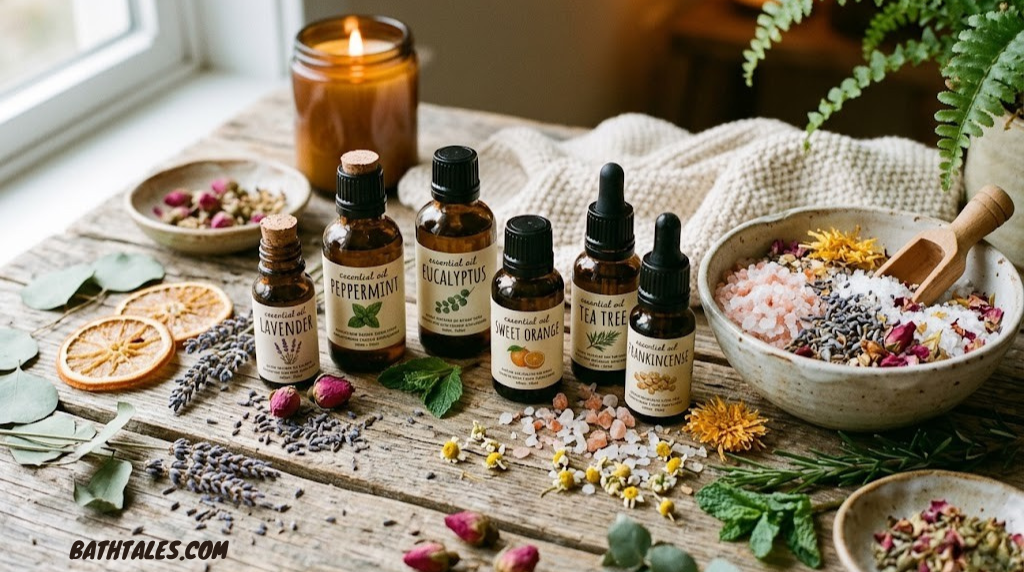
Best Essential Oils for Bath Salts: The Complete Aromatic Soak Guide
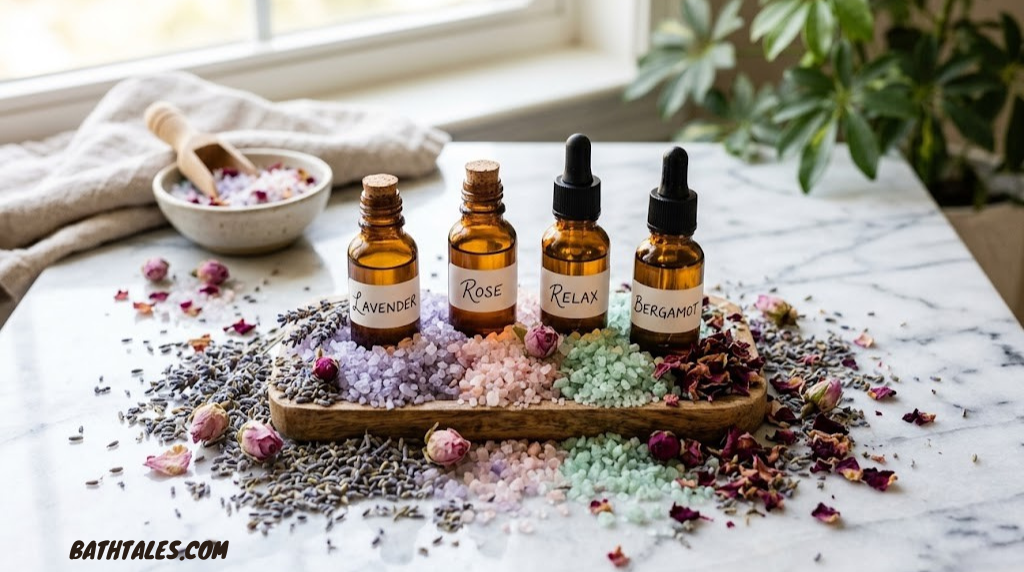
Why the Right Essential Oil Turns a Bath Into a Ritual
There’s a distinct difference between a quick rinse and a true restorative soak — and a surprising amount of that difference comes down to what you mix into your bath salts. The wrong choice leaves you with water that smells vaguely medicinal and skin that feels oddly dry. The right essential oil, properly diluted into your salt base, can shift your nervous system from fight-or-flight to genuine rest in under ten minutes.
Essential oils are concentrated aromatic compounds distilled from plant material — flowers, bark, leaves, roots, and resins. In their pure form they’re too potent for direct skin contact. But when you blend them into bath salts before dissolving those salts in warm water, something elegant happens: the salt acts as an emulsifying buffer, dispersing the oils more evenly through the water column than they’d ever manage on their own. The result is a bath that works on multiple levels simultaneously — therapeutically through the skin, and aromatically through the steam you breathe.
This guide covers the absolute best essential oils for bath salts, how each one works, which salt bases they pair with most effectively, the precise dilution ratios that are both safe and potent, and ready-to-use blend recipes you can make at home tonight. Whether you’re building a product line, perfecting your self-care ritual, or learning to make bath salts at home, this is the resource you’ll return to again and again.

Premium Essential Oil Starter Kit
Top 6 bath-ready oils — lavender, eucalyptus, tea tree, peppermint, lemon, and frankincense — in therapeutic-grade amber bottles.
Shop on Amazon #adHow Aromatherapy Actually Works in a Bath
Before you can make smart choices about which essential oils belong in your bath salts, it helps to understand what’s actually happening once those salts dissolve. Essential oils work through two simultaneous pathways: olfactory absorption (what you inhale) and transdermal absorption (what your skin uptakes). Both pathways are active in a warm bath, which is why the experience can feel so noticeably different from simply diffusing an oil in the air.
Pathway 1: Olfactory Absorption
Warm bath water releases volatile aromatic compounds into the steam above the surface. When you inhale that steam, aromatic molecules travel up through the nasal passages and bind to olfactory receptors wired directly to the limbic system — the brain’s emotional and memory center. This is why lavender can genuinely reduce perceived stress, or why eucalyptus steam feels like it opens your airways almost immediately. The limbic connection is fast, direct, and bypasses the analytical cortex. Your brain responds before you even consciously register it.
Pathway 2: Transdermal Absorption
Warm water dilates blood vessels near the skin surface. When essential oil molecules — tiny enough to slip between lipid layers in the skin barrier — are well-dispersed in the water, a portion of them pass into the bloodstream. Absorption rates vary by oil composition and skin condition, but studies have shown detectable levels of compounds like linalool (lavender), 1,8-cineole (eucalyptus), and menthol (peppermint) in the blood within 20–30 minutes of a bath.
The Temperature Factor
Bath temperature is a legitimate therapeutic variable, not just a comfort preference. At around 104°F (40°C) — what most people call “hot but comfortable” — vasodilation is maximized, making both aromatic release and transdermal absorption more efficient. Go too hot and you stress the cardiovascular system; too cool and you lose some of the therapeutic benefit. Most aromatherapists recommend staying in a 99–104°F bath for 15–20 minutes for optimal effect. For guidance on timing, our article on how long to soak in bath salts breaks this down further.
The Mineral Synergy
The mineral content of your chosen salt base also plays a role. Epsom salt supplies magnesium sulfate, which many bathers report helps muscles relax — a synergistic effect that pairs naturally with muscle-targeting essential oils like eucalyptus and rosemary. Dead Sea salts supply a complex mineral cocktail including potassium, calcium, and bromide, lending anti-inflammatory and skin-softening properties that amplify floral and resinous oils beautifully. Our in-depth breakdown of Dead Sea salt vs. Epsom salt is worth reading if you haven’t chosen your base yet.
The 12 Best Essential Oils for Bath Salts — At a Glance
Not all essential oils belong in a bath. Some are too irritating, some are phototoxic, and some simply don’t survive the heat and dilution well enough to deliver results. The twelve oils below have been selected on three criteria: therapeutic efficacy, established dermal safety at recommended dilutions, and meaningful aromatic performance even in warm water.
Lavender
RELAXATIONThe undisputed queen of bath aromatherapy. Calming, skin-supportive, versatile, and safe for nearly every skin type.
Eucalyptus
RESPIRATORYCool, camphoraceous, and deeply decongestant. Exceptional for steam-room-style breathing benefits in a bath.
Peppermint
COOLING / MUSCLECooling menthol content makes it ideal for post-workout recovery or overheated summer soaks.
Rose / Geranium
SKIN + MOODLush, floral, deeply feminine. Geranium is the accessible alternative to costly rose absolute.
Sweet Orange
UPLIFTINGBright, cheerful, and mood-boosting. One of the safest citrus oils for bath use — not phototoxic.
Frankincense
GROUNDINGRich, resinous, meditative. Promotes cellular regeneration and deep calm. A true luxury oil.
Chamomile (Roman)
SENSITIVE SKINGentle, anti-inflammatory, soothing. The first choice for reactive, eczema-prone, or baby-adjacent skin.
Rosemary
CIRCULATIONStimulating and clarifying. Boosts circulation and mental focus — ideal for a morning bath.
Cedarwood
SLEEP SUPPORTWoody, sedating, and rich in cedrol. A top choice for evening baths aimed at winding down before sleep.
Ylang Ylang
ROMANCE / STRESSIntensely floral and sweetly exotic. Used in low doses (it’s powerful) for sensual, stress-dissolving baths.
Sandalwood
DRY SKIN / CALMCreamy, warm, grounding. Excellent for dry skin and longevity as a base note in blends.
Tea Tree
CLEANSINGAntimicrobial and clarifying. Excellent for foot soaks or post-gym baths targeting bacteria and odor.
Each of these oils receives its own dedicated section below, with dilution guidance, best-use scenarios, pairing suggestions, and product recommendations. But first — a quick visual overview of where each oil sits within its scent family, which matters enormously for blending.
Scent families above — blend across families for complexity, within families for intensity.

USDA Certified Organic Lavender Essential Oil
True Bulgarian lavender (Lavandula angustifolia), steam distilled, third-party tested. Perfect bath-salts starting point.
View on Amazon #adLavender Essential Oil — The Universal Bath Salt Staple
If you were only allowed one essential oil in your bath salt collection, lavender would win by consensus. This isn’t marketing sentiment — it’s the result of decades of clinical research confirming what traditional herbalists knew for centuries: Lavandula angustifolia extract (true lavender, not lavandin or spike lavender) has measurable calming effects on the central nervous system, meaningful anti-inflammatory action on the skin, and a safety profile that makes it suitable for almost all adults and older children.
The main active constituents are linalool (25–40%) and linalyl acetate (25–45%), both of which have been shown in peer-reviewed studies to reduce cortisol levels, lower heart rate, and improve subjective ratings of sleep quality. Linalool in particular modulates GABA receptors — the same neural pathways targeted by anti-anxiety medications, but gently and without pharmaceutical side effects at aromatic doses.
Lavender in a Bath: What to Expect
Within five minutes of entering a lavender-infused bath, most people notice a distinct slowing of mental chatter. By the ten-minute mark, muscle tension in the neck and shoulders typically eases. The aromatic molecules released by warm water reach the limbic system quickly; meanwhile, some transdermal uptake begins contributing its quieter, slower effects. For a bath specifically optimized for relaxation and sleep, lavender is the non-negotiable anchor oil.
Which Lavender Is Right for Bath Salts?
Not all lavender oils are created equal. Here’s a quick breakdown of the main varieties you’ll encounter:
| Lavender Type | Latin Name | Linalool % | Best For | Notes |
|---|---|---|---|---|
| True Lavender | L. angustifolia | 25–40% | Relaxation, skin healing | Premium choice; use therapeutic grade |
| Lavandin | L. x intermedia | 20–30% | Budget blends, cleaning | Harsher camphor note; still pleasant |
| Spike Lavender | L. latifolia | 15–25% | Respiratory support | More camphoraceous, less floral |
| French Lavender | L. stoechas | Varies | Perfumery | Not recommended for bath use at high doses |
✦ Pros of Lavender in Bath Salts
- Broadest evidence base for stress reduction
- Excellent skin-healing and anti-inflammatory properties
- Blends with almost every other oil category
- Safe for sensitive skin at standard dilutions
- Widely available, relatively affordable
- Non-phototoxic — no sun restriction needed
✦ Cons / Considerations
- Quality varies enormously — cheap oils often adulterated
- Over-use can cause sensitization in some people
- Not everyone enjoys floral-dominant scents
- Lavandin is often mislabeled as true lavender
Lavender Dilution Guide for Bath Salts
🧂 Classic Lavender Soak — Per 2 cups (500g) Bath Salt
For a deeper evening ritual, try pairing lavender with cedarwood (10 drops lavender : 5 drops cedarwood per cup of salt). The woody base note extends the aromatic profile and adds a gentle sedative quality that makes it one of the best blends for those who struggle to fully unwind before bed.

Eucalyptus Globulus Essential Oil — Therapeutic Grade
Steam-distilled, 85–90% 1,8-cineole content. Ideal for respiratory bath blends and muscle recovery soaks.
View on Amazon #adEucalyptus & Peppermint — The Dynamic Cooling Duo
Eucalyptus and peppermint are the essential oil world’s most effective respiratory allies, and they share an important characteristic that makes both particularly powerful in a hot bath: their primary aromatic compounds — 1,8-cineole (eucalyptol) in eucalyptus, and menthol in peppermint — create a perceived cooling sensation through a mechanism called chemesthesis. They don’t actually lower skin temperature; they activate cold-sensitive TRPM8 receptors in the skin and respiratory tract, creating the unmistakable “breathing in fresh air” sensation even in a steaming hot bath.
Eucalyptus Essential Oil in Depth
There are over 700 species of eucalyptus, but for bath salts, two dominate the conversation: E. globulus (high 1,8-cineole content; more medicinal, used for respiratory support) and E. radiata (gentler profile, slightly sweeter, more skin-friendly, better for sensitive individuals). For most bath applications, E. radiata is the more versatile choice.
In a warm bath, eucalyptus steam actively supports bronchodilation — a gentle opening of the airways — making it the standout choice for winter soaks when you’re fighting a cold or dealing with sinus congestion. For dedicated sinus and immune-support bath formulas, visit our guide to best bath salts for cold and flu for complete protocols.
🤧 Winter Sinus Soak Recipe — Per Cup (250g) Salt
Peppermint Essential Oil in Depth
Peppermint (Mentha x piperita) is arguably the most powerful muscle-cooling oil available in the essential oil world. Its menthol content — typically 40–55% in a quality oil — creates an intense cooling sensation that counteracts the ache and inflammation of sore muscles without any pharmacological intervention. This makes it an obvious pairing with Epsom salt for post-workout recovery. Our dedicated resource on best bath salts for muscle soreness covers this combination in granular detail.
✦ Eucalyptus + Peppermint Combined Pros
- Immediate respiratory opening sensation
- Effective for post-exercise muscle relief
- Natural antimicrobial properties
- Psychologically invigorating and clarifying
- Pairs beautifully with pine, tea tree, rosemary
✦ Cons / Cautions
- Peppermint not safe for young children or infants
- Can over-stimulate if used before bedtime
- Eucalyptus globulus too harsh for sensitive skin
- Both oils require careful dosage control
Looking to build the ultimate athlete recovery soak? Eucalyptus, peppermint, and a quality Epsom salt base form the backbone of nearly every formula discussed in our best bath salts for athletes roundup.

Pure Peppermint Essential Oil — High Menthol
Steam-distilled from Mentha x piperita. 45–55% menthol. Perfect for muscle recovery bath salt blends.
View on Amazon #adCitrus Essential Oils — Mood Elevation in a Salt Jar
Citrus oils occupy a unique position in aromatherapy: they’re among the most psychologically immediate, mood-boosting substances available, yet they’re also among the most misunderstood from a safety standpoint. The distinction between phototoxic and non-phototoxic citrus oils matters enormously when you’re putting something on your skin — even via bath water.
The Phototoxicity Issue Explained
Many cold-pressed citrus oils (particularly bergamot, lime, lemon, and grapefruit) contain furocoumarins — compounds that react with UV light and can cause severe skin burns, hyperpigmentation, or chemical burns if you expose treated skin to sunlight within 12–18 hours. This makes them risky in bath salts unless you’re certain the product is labeled “FCF” (furocoumarin-free) or steam-distilled rather than cold-pressed.
The good news: sweet orange essential oil is naturally very low in furocoumarins and is considered safe for bath use without sun precautions. It’s also one of the most joyfully uplifting oils in the entire aromatic palette — bright, warm, and reminiscent of fresh-peeled citrus fruit. Paired with frankincense or cedarwood in evening bath salts, it takes the edge off woody base notes beautifully.
| Citrus Oil | Phototoxic? | Bath-Safe Version | Primary Benefit | Dilution in Bath Salt |
|---|---|---|---|---|
| Sweet Orange | No ✓ | Any cold-pressed or steam-distilled | Uplifting, anxiety-easing | 15–25 drops / cup |
| Bergamot | Yes (unless FCF) | FCF bergamot only | Anxiety, depression, skin | 10–15 drops FCF / cup |
| Lemon | Yes (cold-pressed) | Steam-distilled lemon | Clarifying, energizing | 10–15 drops / cup |
| Grapefruit | Mild risk | Steam-distilled preferred | Detox, uplifting | 10–15 drops / cup |
| Mandarin | Low risk | Cold-pressed generally fine | Gentle uplift, children-friendly | 15–20 drops / cup |
☀️ Sunrise Citrus Bath Salt Blend — Per 2 Cups Salt
Citrus bath salts are especially effective as a morning ritual. The combination of bright top notes with the physical warmth of the bath triggers alertness through the olfactory pathway while the hot water relaxes muscles. It’s the closest thing to a luxury spa wake-up you can create at home.
Floral Essential Oils — Skin Luxury & Emotional Softness
Floral essential oils represent some of the most complex, skin-supportive aromatics available. They tend to sit in the middle and base note categories, which means they linger in the bath long after you’ve stepped out, leaving a subtle trail on your skin. For people who care deeply about the cosmetic and emotional dimensions of their bath ritual, florals are irreplaceable.
Geranium — The Accessible Floral Powerhouse
Rose absolute is breathtaking, but it takes roughly three tons of rose petals to produce a single kilogram of true rose oil — a fact that explains the staggering price. Geranium essential oil (Pelargonium graveolens) offers a strikingly similar aromatic profile at a fraction of the cost, with its own distinctive therapeutic profile: it’s hormone-balancing, cicatrizant (scar-healing), and genuinely effective for dry, irritated, and aging skin.
Geranium is also a remarkable blender. It softens the sharpness of citrus, deepens the simplicity of lavender, and adds a feminine grace note to earthy wood blends. For skin-focused bath salt work, geranium is among the top recommendations from professional aromatherapists. If you’re dealing with dry skin concerns, geranium in a milk-and-salt bath is worth trying.
Ylang Ylang — Handle With Intentional Restraint
Ylang ylang (Cananga odorata) is the most polarizing oil in this guide. In small doses it’s extraordinarily beautiful — creamy, narcotic, tropical, and genuinely romantic. But it becomes cloying and headache-inducing fast. This is an oil that rewards precision. The professional standard is a maximum of 0.5–0.8% in bath products, which translates to roughly 4–6 drops per cup of salt. Pair it with bergamot or jasmine to balance its sweetness, and with a touch of sandalwood to deepen the base.
Roman Chamomile — Gentle Enough for Sensitive Skin
Roman chamomile (Anthemis nobilis) is perhaps the most skin-gentle essential oil in common use. It contains isobutyl angelate and other esters that actively dampen inflammatory responses in the skin — making it one of the few essential oils considered appropriate (at low dilutions) for reactive and eczema-prone skin. For dedicated sensitive skin soaks, our guide to best bath salts for sensitive skin provides full protocols including chamomile formulations.
✦ Why Floral Oils Earn Their Place
- Deep skin-healing and regenerative properties
- Emotionally rich — reduce emotional numbness and tension
- Long-lasting fragrance presence on skin post-bath
- Balance and soften harsher aromatic categories
- Geranium offers hormonal-balance support
✦ Floral Oil Cautions
- True rose is prohibitively expensive for most DIYers
- Ylang ylang causes headaches if overdosed
- Jasmine absolute (not an EO) is not heat-stable in baths
- Some florals interact with hormone medications

Floral Essential Oil Collection — Geranium, Rose, Ylang Ylang
Three-bottle floral set ideal for skin-nourishing bath salt blends. GC-MS tested for purity.
Shop Florals on Amazon #adEarthy, Woody & Resinous Oils — Depth, Grounding & Meditation
If lavender is the entry point and eucalyptus is the wake-up call, earthy and resinous oils are the anchor — the aromatic equivalent of putting your bare feet on soil. They work on a slower timescale, calming the mind rather than exciting it, and they extend the aromatic arc of a bath blend from a single bright note into something that feels like a full composition.
Frankincense — Sacred and Cellular
Frankincense (Boswellia carterii or B. sacra) has been used in ritual and medicine for thousands of years, and modern research is beginning to explain why. Its primary active sesquiterpenes (alpha-pinene and boswellic acids in steam-distilled form) have demonstrated anti-inflammatory, immune-modulating, and cell-membrane-supporting properties. In a bath salt context, frankincense offers a meditative depth — balsamic, slightly sweet, unmistakably ancient — alongside genuine cosmetic benefits for mature and dry skin types.
Cedarwood — The Sleep Architect
Cedarwood Atlas (Cedrus atlantica) contains high concentrations of cedrol — a sesquiterpene that has been shown in multiple studies to promote sleep through GABA-ergic activity similar to, but milder than, pharmaceutical sleep aids. For an evening bath ritual specifically designed to prepare the body and mind for deep sleep, cedarwood is the best essential oil to anchor the blend. Pair it with lavender (60% lavender : 40% cedarwood) for a classic, highly effective sleep-support soak.
Sandalwood — Dry Skin’s Best Friend
Sandalwood (Santalum album) is one of the richest base notes in aromatherapy, with a warm, creamy, almost milky quality that is unmistakably luxurious. Beyond fragrance, it contains santalol — a compound with proven anti-inflammatory and skin-hydrating properties, making it one of the few essential oils that actively improves dry, irritated, or dull skin when applied transdermally. It’s also a superb fixative, meaning it slows the evaporation of lighter top notes in your blends, extending both the bath experience and the shelf life of the aromatic profile. Explore how it works alongside specific salt types in our Himalayan pink salt guide.
🌲 Evening Forest Soak — Per 2 Cups (500g) Salt
Tea Tree — The Cleansing Base Note
Tea tree (Melaleuca alternifolia) isn’t typically thought of as a base note, but in bath salt formulas it earns its place as a powerful cleansing agent and antimicrobial enhancer. Its terpinen-4-ol content provides broad-spectrum antimicrobial activity, making it an excellent addition to foot soak formulas, post-gym recovery baths, or detox soaks. It blends particularly well with eucalyptus, rosemary, and lemon. For skin concerns including eczema, use tea tree at very low concentrations (1–2 drops per cup of salt) and pair with a skin-barrier-supportive oil like chamomile.
Blending Ratios, Perfumery Notes & Ready-to-Use Recipes
Good essential oil blending is part chemistry, part artistry. The most reliable framework for beginners is the top-middle-base note system, borrowed from classical perfumery. This approach acknowledges that different aromatic molecules evaporate at different rates: top notes hit you first, heart/middle notes form the soul of the blend, and base notes anchor it, slow evaporation, and provide lasting depth.
Scent Note Categories for Bath Oils
| Note | Characteristic | Examples | % of Blend |
|---|---|---|---|
| Top Note | First impression; light, volatile | Lemon, orange, eucalyptus, peppermint, bergamot | 25–30% |
| Middle Note | Heart of the blend; balanced | Lavender, geranium, rosemary, chamomile, ylang ylang | 45–55% |
| Base Note | Anchor; slow-evaporating, rich | Cedarwood, frankincense, sandalwood, vetiver, patchouli | 15–25% |
Purpose-Built Bath Salt Recipes
💆 Deep Relaxation Blend — Per Cup (250g) Salt
💪 Post-Workout Muscle Recovery Blend — Per Cup (250g) Salt
✨ Luxury Skin Renewal Blend — Per Cup (250g) Salt
🌙 Sleep & Dreams Blend — Per Cup (250g) Salt
🌸 Detox & Refresh Blend — Per Cup (250g) Salt
For a deeper exploration of detox-focused bath salt formulas, including which ingredients add lymphatic-drainage support, our best detox bath salts guide covers the full landscape.

Complete Aromatherapy Blending Kit
Includes 10 essential oils, glass measuring pipettes, a blending reference chart, and amber storage bottles.
View Kit on Amazon #adCarrier Oils — The Missing Layer in Bath Salt Formulation
Most guides on essential oils and bath salts focus exclusively on the aromatic compounds and the salt base. But there’s a third category of ingredient that dramatically improves both the safety and sensory quality of the final product: carrier oils. If you’ve ever mixed essential oils into bath salts and found that the scent faded quickly, the texture felt slightly harsh, or your skin felt subtly stripped after the bath, the missing piece was almost certainly a carrier oil.
Carrier oils are lipid-based plant oils — typically cold-pressed from seeds, nuts, or fruits — that serve as a vehicle for essential oils. In bath salts, they perform three critical functions: they slow the evaporation rate of volatile aromatic compounds (extending how long you smell the blend), they add an emollient layer that protects the skin barrier during the soak, and they further improve the dispersal of essential oil molecules throughout the water column. Think of them as the bridge between the sharp potency of essential oils and the mineral canvas of your salt base.
Why Carrier Oils Matter More Than You Think
Essential oils are hydrophobic — they don’t dissolve in water. Bath salts help break them into smaller droplets, but without a lipid carrier, those droplets still tend to coalesce on the water’s surface. Carrier oils act as an additional emulsifying layer: the lipid molecules surround the essential oil droplets and help them stay suspended in the water for longer. The practical result is a bath where the aromatic experience is fuller and more evenly distributed, and where your skin absorbs beneficial compounds more gradually instead of in concentrated bursts.
There’s also a direct skin-care argument. Warm water strips the skin’s natural sebum layer over time — that tight, slightly dry feeling after a long bath is evidence of this. Carrier oils replenish that lipid barrier in real-time, so you step out of the bath with skin that feels soft and conditioned rather than clean-but-parched. For anyone using bath salts as part of a skin-care regimen, this is not optional — it’s the difference between a bath that helps your skin and one that subtly undermines it.
The Best Carrier Oils for Bath Salts
Not every carrier oil works well in bath salts. You need oils that are liquid at room temperature, relatively shelf-stable, and light enough to disperse in water without leaving a greasy film on the tub surface. Here are the top choices:
| Carrier Oil | Texture / Feel | Shelf Life | Best For | Amount per Cup Salt |
|---|---|---|---|---|
| Fractionated Coconut Oil | Very light, non-greasy | Indefinite | Universal — the default choice | 1–2 tsp |
| Jojoba Oil | Closest to skin sebum | 2+ years | Oily/combo skin, acne-prone | 1 tsp |
| Sweet Almond Oil | Medium, slightly rich | 6–12 months | Dry skin, general moisturizing | 1–2 tsp |
| Grapeseed Oil | Very light, fast-absorbing | 6–12 months | Oily skin, lightweight feel | 1–2 tsp |
| Avocado Oil | Rich, heavy, deeply nourishing | 9–12 months | Mature or very dry skin | 1 tsp (it’s dense) |
| Olive Oil (extra virgin) | Rich, slightly heavy | 12–18 months | Budget option, deep conditioning | 1 tsp |
| Argan Oil | Light-medium, luxurious | 18–24 months | Premium skin and hair conditioning | 1 tsp |
Fractionated Coconut Oil: The Gold Standard
If you’re only going to use one carrier oil for your bath salt formulations, make it fractionated coconut oil. Unlike regular coconut oil (which solidifies below 76°F and can clump in bath salt jars), fractionated coconut oil remains permanently liquid. It’s virtually odorless, so it won’t compete with your essential oil blend. It’s extremely shelf-stable — it essentially doesn’t go rancid. And it has a very light, non-greasy texture that disperses readily in warm water without leaving an oily ring around your tub. It’s also the carrier oil most commonly used by professional aromatherapists for bath products, which means the dilution ratios in this guide are calibrated with fractionated coconut oil as the assumed carrier.
How to Add Carrier Oils to Bath Salts
The mixing order matters. Always combine your essential oils with your carrier oil first — in a small glass dish, swirl them together for 15–20 seconds. This pre-blend ensures the essential oils are partially diluted before they contact the salt. Then pour the oil blend over your measured salt and mix thoroughly with a non-reactive spoon (glass, stainless steel, or wood — not plastic, which can absorb aromatic compounds and degrade).
A general guideline: 1–2 teaspoons of carrier oil per cup (250g) of bath salt. More than that and the salt can become overly oily, clumping in the jar and leaving a residue on the tub. Less than 1 teaspoon and you’re not getting meaningful skin-conditioning benefits. The sweet spot for most formulations is 1.5 teaspoons per cup.
Carrier Oils and Sensitive Skin
For people with eczema, psoriasis, or generally reactive skin, the carrier oil choice becomes as important as the essential oil selection. Jojoba oil is particularly well-suited because its molecular structure is almost identical to human sebum, meaning the skin recognizes it as its own and absorbs it without triggering an immune response. Sweet almond oil is another strong choice for sensitive skin — it’s rich in vitamin E and oleic acid, both of which support the skin barrier. Avoid olive oil for very sensitive skin; while deeply moisturizing, its high oleic acid content can actually disrupt the skin barrier in people with compromised skin function.
For those managing specific conditions through bath soaks — whether that’s sitz baths for postpartum recovery or foot soaks for cracked heels — the carrier oil becomes even more critical because the skin in those areas is often already compromised. In those cases, a richer carrier like avocado or argan paired with a gentle essential oil (chamomile or lavender at 0.5% dilution) provides the most healing environment.
🥥 Carrier-Enriched Skin Softening Base — Per 2 Cups (500g) Salt
Dried Botanicals, Herbs & Decorative Additions
A jar of bath salts doesn’t have to be a uniform white or pink mass. Adding dried botanicals — flower petals, herbs, clays, and other natural materials — transforms bath salts from a purely functional product into something that looks as luxurious as it feels. But aesthetics aren’t the only reason to include them: many dried botanicals contribute their own subtle therapeutic compounds to the bath water, working alongside your essential oils to enhance the overall experience.
The key is understanding which additions actually add value to a bath and which ones are purely decorative (or worse, create maintenance headaches). Here’s a thorough breakdown of the most popular options.
Dried Flowers
Dried flowers are the most popular bath salt addition, and for good reason — they’re visually stunning, they often contribute their own gentle aromatic compounds, and many have documented skin benefits. However, not all dried flowers are practical in a bath. Large petals can clog drains, some flowers bleed color onto skin or tub surfaces, and certain varieties lose their charm when fully hydrated and go slimy rather than elegant.
Lavender buds are the gold standard. They maintain their shape in water, release a gentle secondary aroma that complements lavender essential oil, and add a classic, recognizable visual element. Use 1–2 tablespoons per cup of salt. Rose petals (dried, not fresh) are the runner-up — they soften beautifully in warm water and contribute mild anti-inflammatory properties through their natural gallic acid content. However, they do tend to leave pinkish residue on white tubs, so use sparingly or choose a darker-colored salt base. Calendula petals are the underappreciated hero: bright orange-yellow, genuinely anti-inflammatory and wound-healing, and they hold their color in water without staining skin.
Other botanicals worth considering: chamomile flowers (whole, dried — gentle and apple-sweet), cornflower petals (purely decorative but a stunning blue accent), hibiscus petals (tart, beautiful deep red, rich in vitamin C), and jasmine buds (subtle fragrance, very elegant). Avoid marigold (Tagetes) in bath salts — it can cause photosensitivity.
Dried Herbs
Fresh herbs wilt and decay in bath salt jars, but properly dried herbs can add a secondary aromatic dimension and gentle therapeutic compounds. Dried rosemary leaves release a subtle camphoraceous note that pairs well with eucalyptus and citrus blends. Dried peppermint leaves contribute a mild cooling sensation beyond what the essential oil provides — though the effect is subtle. Dried thyme is mildly antiseptic and adds visual texture. The most practical way to include dried herbs is to lightly crush them before adding — this increases surface area and helps them release their compounds into the bath water more effectively.
One caution: dried herbs tend to be messier than dried flowers. They can leave small fragments in the tub that require rinsing. If you’re making bath salts as gifts, consider placing herbs in a small muslin bag that floats in the bath — all the aromatic benefit, none of the cleanup. This approach also works well for bath products aimed at people who are particular about their tub maintenance.
Clays and Powders
Natural clays add mineral richness and a silky texture to the bath water without changing the essential oil profile. Kaolin clay (white) is the gentlest option — it softens water, adds slip, and is suitable for all skin types including sensitive. Bentonite clay is more detoxifying; it binds to impurities and heavy metals on the skin surface, but it can be drying for some people. Rhassoul clay (Moroccan lava clay) is a premium option that improves skin texture and elasticity with regular use. Add 1–2 tablespoons of clay per cup of salt, and mix well to prevent clumping.
Colloidal oatmeal is technically a powder rather than a clay, but it deserves mention here because of its extraordinary skin-soothing properties. Finely ground oatmeal disperses in water and forms a protective film on the skin surface that reduces itching, redness, and irritation. It’s the active ingredient in most medicated bath products for eczema and dermatitis. Adding 2–3 tablespoons of colloidal oatmeal to your essential oil bath salts creates a dual-action soak that’s both aromatically therapeutic and dermatologically protective. Our guide to bath salts for sensitive skin features several formulations that combine colloidal oatmeal with gentle essential oils.
Other Add-Ins Worth Considering
Dried citrus peel (lemon, orange, or grapefruit) adds a visual pop and contributes limonene — the same aromatic compound found in citrus essential oils, but in a gentler, slower-releasing form. Grate the peel finely and dry it completely before adding to prevent mold growth in the jar.
Coconut milk powder is a luxurious addition that makes the bath water feel creamy and rich. The fats in coconut milk condition the skin similarly to a carrier oil, while the natural sugars add a subtle sweetness to the aromatic profile. Use 1–2 tablespoons per cup of salt. This pairs beautifully with ylang ylang and sandalwood in tropical-themed blends.
Sea kelp powder adds trace minerals (iodine, fucoidans, alginates) and is traditionally used in detox and skin-firming formulations. Its oceanic scent pairs naturally with citrus and tea tree blends. Add sparingly — 1 teaspoon per cup of salt — because it does contribute a distinct marine aroma that not everyone enjoys.
Dried milk powders — goat milk, buttermilk, or whole milk — bring lactic acid to the bath, which gently exfoliates dead skin cells and promotes cell turnover. Goat milk powder in particular is rich in capric and caprylic acids, which support the skin’s acid mantle. These are especially effective in skin-renewal blends alongside geranium and frankincense essential oils.
How to Layer Botanicals into Your Salt Jar
For maximum visual impact in a gift jar or display container, layer your ingredients: a base layer of plain salt, a middle layer of salt mixed with essential oils, then a top layer of mixed botanicals. This creates a beautiful gradient effect and also protects the essential oils from direct light exposure (the botanical layer acts as a natural shade). Press the top botanical layer gently into the salt surface so it doesn’t shift during transport.
For functional bath salts (where you’ll scoop directly into the bath), simply mix everything together. The botanicals will distribute naturally through the salt, and the visual effect is still appealing — just less stratified. This approach is more practical for regular use and ensures every scoop contains a balanced ratio of salt, oil, and botanicals.
Matching Essential Oils to the Right Salt Base
The salt base isn’t neutral. Each variety has its own mineral composition, crystal size, and subtle sensory quality — and the right essential oil can harmonize with or clash against those properties. Here’s how to think about salt-oil pairing as a deliberate creative and therapeutic choice.
Epsom Salt (Magnesium Sulfate)
Epsom salt has no inherent fragrance and a very clean, mineral-neutral profile. It’s the most forgiving canvas for essential oil blending because it doesn’t compete with or alter the aromatic profile of the oils added to it. Its magnesium content supports muscle relaxation, making it the natural partner for muscle-targeting oils: eucalyptus, peppermint, rosemary, black pepper, and marjoram. For the full comparison between Epsom and its main competitor, see our magnesium flakes vs. Epsom salt breakdown.
Himalayan Pink Salt
Himalayan salt carries 84+ trace minerals, a subtle earthy warmth, and a beautiful visual presence in any bath salt jar. Its mineral complexity makes it a natural ally for earthy, grounding oils: frankincense, cedarwood, sandalwood, and patchouli feel especially at home here. The slightly detoxifying mineral profile also pairs naturally with clay-adjacent aromatics. See our dedicated guide to Himalayan pink bath salt for more.
Dead Sea Salt
Dead Sea salt is the most therapeutically complex salt base, with high concentrations of magnesium, potassium, calcium, bromide, and zinc — a mineral cocktail that actively supports skin health, anti-inflammatory response, and nervous system regulation. Its mild bitterness and dark color pair beautifully with rich, complex aromatic profiles: rose, frankincense, ylang ylang, and bergamot FCF elevate it into something genuinely spa-worthy. For skin conditions including eczema and psoriasis, Dead Sea salt paired with chamomile or geranium is a classically recommended pairing. Learn more about this comparison in our Dead Sea salt vs Epsom salt guide.
Sea Salt (Fine or Coarse)
Unrefined sea salt offers a broad mineral spectrum and a clean, slightly ocean-like baseline note. It’s an excellent carrier for citrus and herbal blends that benefit from that maritime freshness. Lemon, grapefruit, rosemary, and tea tree all feel natural here. Coarse sea salt provides a more abrasive texture for those who like a light exfoliation, while fine sea salt dissolves faster and distributes oils more quickly through the bath water.
| Salt Type | Mineral Profile | Best Oil Categories | Therapeutic Focus |
|---|---|---|---|
| Epsom Salt | Magnesium sulfate | Herbal, cooling, muscle | Muscle recovery, nervous system |
| Himalayan Pink | 84+ trace minerals | Earthy, resinous, grounding | Detox, skin minerals, meditation |
| Dead Sea Salt | Mg, K, Ca, Br, Zn | Floral, resinous, citrus FCF | Skin conditions, anti-inflammatory |
| Fine Sea Salt | Sodium, broad trace minerals | Citrus, herbal, tea tree | Cleansing, general wellness |
| Coarse Sea Salt | Sodium, broad trace minerals | Woody, earthy, citrus | Exfoliation, circulation |
For detailed dosing guidance on how much salt to actually use per bath, including the difference between a light mineral soak and a full therapeutic protocol, our article on how much bath salt to use is the essential reference.
Essential Oil Safety, Dilution & Skin Sensitivity
Essential oils are powerful — their concentration relative to the plant materials they come from is extraordinary, and treating them casually is the source of most adverse reactions. The good news is that bath salts are actually one of the safer application formats because the salt-water system creates inherent dilution. But there are still important rules to follow.
Safe Dilution Percentages for Bath Use
| User Group | Max Dilution % | Drops per Cup (250g) Salt | Notes |
|---|---|---|---|
| Healthy adults | 1–3% | 15–30 drops | Standard therapeutic range |
| Sensitive skin | 0.5–1% | 5–10 drops | Patch test first |
| Elderly adults | 0.5–1% | 5–10 drops | Thinner skin = faster absorption |
| Pregnant (2nd/3rd tri) | 0.5–1% safe oils only | 5–8 drops | See pregnancy-specific guide |
| Children 6–12 | 0.5–1% | 5–8 drops gentle oils | No eucalyptus globulus or peppermint |
| Children under 6 | Consult pediatrician | 1–3 drops max, very gentle oils | Lavender, chamomile only |
Oils to Avoid Entirely in a Bath
Special Considerations by Skin Type
Eczema and psoriasis: Stick to Roman chamomile, true lavender, and geranium at low dilutions. Avoid all potential irritants including tea tree at higher percentages, citrus, and spice oils. Our guide to best bath salts for eczema outlines full protocols.
Pregnancy: Many oils that are fine for general adult use become questionable during pregnancy due to potential effects on the uterus or fetal development. Always check a current aromatherapy pregnancy reference, and see our best bath salts for pregnancy guide for safe, trimester-specific recommendations.
Sensitive or reactive skin: The single most effective protective measure is patch testing — applying a small amount of your diluted blend to the inner forearm and waiting 24 hours before a full bath. Our sensitive skin bath salts guide covers the gentlest formulations available.
For those interested in organic bath salts, choosing certified organic essential oils eliminates the concern about pesticide residues in the aromatic compounds — particularly relevant for citrus and lavender, which are among the most heavily treated crops in conventional agriculture.
Essential Oils for Specific Health Goals & Conditions
The beauty of essential oil bath salts is their adaptability. A single jar of Epsom salt can be transformed into dozens of different therapeutic experiences depending on which oils you blend in. This section moves beyond general categories and maps specific health goals to precise oil combinations, salt pairings, and dosing strategies. Think of it as a prescription guide for your bath salt pantry.
Anxiety & Acute Stress
When stress is sharp and immediate — the racing-heart, can’t-stop-thinking kind — you need oils that work fast through the olfactory pathway to down-regulate the sympathetic nervous system. Lavender is the foundation, but a single-note lavender bath, while effective, misses the opportunity to create a more layered and therapeutically deeper experience.
The most effective anxiety blend combines lavender (middle note, calming) with bergamot FCF (top note, anxiolytic — one of the few essential oils with clinical trial data showing genuine anti-anxiety effects) and vetiver or cedarwood (base note, grounding, heavy). The bergamot reaches the limbic system first and starts the calming cascade; lavender deepens it; the base note anchors the effect so it persists after you leave the bath. Use Dead Sea salt as the base for its additional nervous-system-supporting mineral profile.
🧘 Calm the Storm — Anxiety Relief Blend — Per Cup (250g) Salt
This blend works best at 100–102°F — warm enough for vasodilation and aromatic release, but not so hot that it adds cardiovascular stress on top of the emotional stress you’re trying to relieve. Soak for at least 15 minutes, breathing slowly and deliberately through the nose to maximize olfactory pathway engagement. For more strategies on turning your bath into a relaxation tool, our guide on how to make your bath more relaxing covers the full spectrum of techniques.
Insomnia & Difficulty Falling Asleep
Sleep-targeted bath salts need to do two things: lower core body temperature (paradoxically, a warm bath does this by bringing blood to the surface, where it cools faster when you exit) and activate parasympathetic nervous system dominance. The essential oil choice for this application is very specific — stimulating oils like rosemary or peppermint will actively work against you, so they must be excluded entirely.
The most evidence-backed sleep oils are lavender (clinical data supporting improved sleep onset and quality), cedarwood (cedrol content directly promotes GABA activity), and marjoram sweet (a mild sedative that also relieves the muscle tension that often prevents comfortable sleep positioning). Roman chamomile adds a gentle anti-anxiety layer. All four should be anchored in a base note of vetiver if you have it — vetiver is the deepest, most grounding base note in aromatherapy and its earthy aroma has been described as “the smell of the earth at midnight.”
🌙 Deep Sleep Protocol — Per Cup (250g) Salt
Take this bath 60–90 minutes before your intended sleep time. The temperature drop that occurs after you exit the bath is part of the sleep-triggering mechanism — your body interprets it as a signal to produce melatonin. Keep the lights dim during and after the bath to avoid suppressing melatonin through blue light exposure. For more sleep-focused formulas, see our dedicated resource on bath salts for relaxation and sleep.
Chronic Muscle Pain & Joint Stiffness
For ongoing muscle and joint issues — not just post-workout soreness, but chronic conditions like fibromyalgia, arthritis, or tension held from desk work — the essential oil approach needs to be more nuanced than the typical “eucalyptus and peppermint” recommendation. While those oils are effective for acute muscle fatigue, chronic pain responds better to anti-inflammatory and warming oils used consistently over time.
Black pepper essential oil deserves special mention here. Its warming effect isn’t just sensory — piperine, its primary active compound, has demonstrated genuine analgesic and anti-inflammatory properties in peer-reviewed research. Combined with marjoram (an antispasmodic that relaxes chronically tight muscles) and ginger (another warming, circulation-boosting oil), black pepper creates a deeply penetrating heat that’s qualitatively different from the surface-level cooling of peppermint. Use Epsom salt as the base — the magnesium absorption synergizes with the essential oils’ muscle-relaxing properties.
🔥 Chronic Pain Relief Blend — Per Cup (250g) Salt
For athletes and fitness enthusiasts managing recurring soreness, this blend complements the acute-recovery formulas covered in our best bath salts for athletes guide. Alternate between the two approaches: the eucalyptus-peppermint blend for immediate post-workout recovery, and this warming blend for the chronic tension that accumulates over weeks of training.
Skin Rejuvenation & Anti-Aging
Essential oils that support cellular regeneration and collagen production are a different category from those that simply moisturize. Frankincense is the standout here — its boswellic acids have been shown to support healthy cell turnover and reduce the appearance of fine lines when used consistently. Carrot seed oil (a lesser-known option) is rich in beta-carotene and has a reputation among professional estheticians for improving skin tone and elasticity. Helichrysum (immortelle) is the premium choice — it promotes tissue regeneration and is genuinely effective for scar fading and age-spot reduction, though it comes with a premium price tag.
For anti-aging bath salts, pair these regenerative oils with a rich carrier oil (argan or rosehip seed oil) and Dead Sea salt, which supplies zinc and sulfur — both cofactors in collagen synthesis. The bath becomes a full-body skin treatment that works through both direct mineral contact and transdermal absorption of the essential oil compounds.
✨ Youth & Glow Blend — Per Cup (250g) Salt
Cold, Flu & Immune Support
When you’re fighting an infection, the bath becomes a therapeutic tool in a more direct sense. The combination of warm water (which raises core body temperature slightly, creating a mild fever-like state that can support immune function), steam inhalation (which delivers antimicrobial compounds directly to the respiratory tract), and transdermal absorption (which allows immune-modulating compounds to enter the bloodstream) makes a well-formulated essential oil bath genuinely useful as a complementary approach to conventional cold management.
The essential oils with the strongest immune-supporting evidence are eucalyptus (1,8-cineole has demonstrated direct antiviral activity), tea tree (broad-spectrum antimicrobial), ravensara or ravintsara (traditionally used in French aromatherapy for respiratory infections), and lemon (d-limonene supports white blood cell activity). Pine needle oil is another underrated option — its alpha-pinene content supports bronchodilation and has a fresh, clearing aroma that feels immediately beneficial when you’re congested.
🤧 Immune Boost Bath — Per Cup (250g) Salt
For comprehensive guidance on using bath salts during illness — including temperature protocols, frequency recommendations, and complementary ingredients like ginger and apple cider vinegar — our bath salts for cold and flu guide is the definitive resource.
Headache & Migraine Relief
Headaches respond remarkably well to essential oil baths, particularly when the headache is tension-related (the most common type). Peppermint applied to the temples is a well-known remedy, but in a bath context the approach is different — you’re using the combination of warm water (to relax the neck and shoulder muscles where tension headaches originate) and diffused peppermint or spearmint (to activate the cooling receptors in the sinuses and forehead area that counteract pain signaling). Lavender contributes its analgesic properties — multiple studies have shown that lavender inhalation reduces headache severity.
For migraines specifically, the approach shifts slightly. Light and sound sensitivity mean you want a darker, quieter environment — and the essential oil choice should avoid anything too sharp or stimulating. Lavender, peppermint (at low doses — too much can trigger nausea in migraine sufferers), and Roman chamomile form the safest and most effective triad. Keep the water temperature moderate (98–100°F rather than very hot) to avoid vasodilation that can worsen some types of migraine.
Emotional Processing & Grief Support
This is a less commonly discussed application, but one that aromatherapy practitioners take seriously. Certain essential oils have been used for centuries to support emotional processing — the release of stored grief, the softening of emotional numbness, and the creation of a safe sensory environment for difficult feelings. Rose absolute is the classic choice for this work — its aroma is almost universally described as “heart-opening” and its historical use in emotional healing spans cultures and millennia. Frankincense supports the meditative, contemplative aspect. Neroli (bitter orange blossom) eases the anxiety that often accompanies emotional vulnerability.
A grief-support bath is not about fixing or curing — it’s about creating a space where difficult emotions can surface safely. The warm water relaxes the body’s defensive tension, the aroma engages the limbic system where emotional memories are stored, and the solitude of the bath provides privacy. Use a simple salt base (Epsom or Himalayan), keep the essential oil concentration on the lower side (0.5–1%), and allow whatever comes up to be present without judgment. This is perhaps the most profound use of essential oil bath salts — and the one least likely to appear in a product description.
Morning Energy & Mental Clarity
Not everyone reaches for bath salts in the morning, but for those who do, the right essential oil blend can replace or complement a cup of coffee. Rosemary is the standout morning oil — its 1,8-cineole content has been shown in clinical studies to improve cognitive performance, memory retention, and alertness. Combined with peppermint (for its TRPM8-mediated cooling clarity) and a bright citrus top note like lemon or grapefruit, you get a bath that’s genuinely invigorating without being jarring.
The salt base matters here too: Himalayan pink salt’s trace mineral content provides subtle electrolyte support that complements the morning rehydration your body needs after sleep. Keep the bath temperature slightly cooler than an evening soak (96–100°F) — you want to feel refreshed and alert when you step out, not drowsy. And keep it shorter: 10–15 minutes is ideal for a morning bath, compared to 20–25 minutes for an evening wind-down.
⚡ Morning Clarity Blend — Per Cup (250g) Salt
For those exploring how to structure their mornings around bathing — whether a bath or a shower is more effective for energy and alertness — our bath vs. shower comparison covers the physiological differences in detail.
How to Buy Quality Essential Oils — Markers, Red Flags & Trusted Suppliers
The essential oil market is flooded with products ranging from genuinely therapeutic-grade to outright synthetic fraud, and the packaging rarely helps you tell the difference. A beautiful amber bottle with an elegant label and the word “pure” on the front tells you almost nothing about what’s actually inside. This section gives you the concrete markers that separate quality oils from expensive disappointment — knowledge that protects both your health and your wallet.
What “Therapeutic Grade” Actually Means (and Doesn’t)
Here’s the uncomfortable truth: “therapeutic grade” is a marketing term, not an industry certification. There is no regulatory body — not the FDA, not the USDA, not any international standard organization — that certifies essential oils as “therapeutic grade.” Several major essential oil companies have trademarked their own grading terms, which creates the impression of an independent standard when in fact each company defines its own criteria. This doesn’t mean the oils are bad — some companies using this term produce excellent products — but it does mean you cannot use the phrase as a reliable quality indicator on its own.
What actually matters is verifiable testing data. The gold standard in the essential oil industry is GC-MS testing — Gas Chromatography-Mass Spectrometry. This laboratory analysis identifies every chemical compound present in an essential oil and their exact percentages. A quality supplier will make GC-MS reports available for every batch of oil they sell — not just a generic “certificate” but the actual batch-specific report with the lot number matching your bottle.
The 7 Questions to Ask Before Buying
| Question | Good Answer | Red Flag |
|---|---|---|
| Is GC-MS testing available? | Yes, batch-specific, accessible online | “Our oils are tested” with no report |
| What’s the Latin name? | Specific species listed (e.g., L. angustifolia) | Generic “lavender oil” with no species |
| Country of origin? | Specific region (e.g., Bulgaria, Kashmir) | Vague or undisclosed origin |
| Extraction method? | Steam distillation or cold-pressed specified | No extraction method listed |
| Plant part used? | Specified (flower, leaf, bark, etc.) | Not disclosed |
| Price reasonable? | Within market range for the species | Suspiciously cheap for rare oils |
| Organic certification? | USDA, ECOCERT, or equivalent | “Natural” used as a substitute |
Price Reality Check
Essential oil pricing follows botanical reality. Oils that require enormous amounts of plant material or labor-intensive extraction are expensive — that’s not a mark of luxury, it’s a mathematical consequence of production. If you see “rose absolute” or “sandalwood” at a price comparable to sweet orange, something is wrong. Here are approximate wholesale price ranges for common bath-salt oils (per 15ml bottle, as of early 2025) to help you spot impossibly cheap offers:
These ranges account for organic vs. conventional sourcing and various supplier tiers. If a “sandalwood” oil is selling for $6 per bottle, it’s either heavily diluted with carrier oil, synthetically adulterated, or it’s amyris oil (a completely different botanical) mislabeled as sandalwood. All three scenarios are common in the discount essential oil market.
Organic vs. Conventional: Does It Matter?
For bath salt applications, organic certification provides two concrete benefits. First, it eliminates pesticide residue concerns — particularly relevant for lavender and citrus oils, which are among the most heavily sprayed crops in conventional agriculture. Since you’re applying these compounds to warm, dilated skin with enhanced absorption capacity, minimizing chemical contaminants is a legitimate health consideration. Second, organic farming practices generally produce plants with higher concentrations of therapeutic compounds — the stress of growing without synthetic pesticides can actually increase a plant’s production of defensive aromatic compounds, which is precisely what you want in an essential oil.
The cost premium for organic is typically 20–40% over conventional. For oils you use in small quantities (frankincense, ylang ylang, sandalwood), the absolute price difference is minimal. For high-volume base oils like lavender and eucalyptus, the difference adds up — but given that a single bottle typically provides 30–50 bath salt batches, the per-bath cost increase is negligible.
Storage: Protecting Your Investment
Essential oils degrade through three mechanisms: oxidation (exposure to air), UV damage (exposure to light), and thermal degradation (exposure to heat). Proper storage slows all three and can extend the useful life of your oils by years. Always keep oils in their original amber or cobalt glass bottles with caps tightly sealed. Store in a cool, dark location — a drawer or cabinet away from the stove, radiator, and windows. Refrigeration extends shelf life further but isn’t necessary for most oils if the other conditions are met.
Citrus oils are the most vulnerable to oxidation — they can begin degrading within 6–12 months of opening, even with proper storage. Adding a few drops of vitamin E oil to your citrus oil bottles can slow this process. Woodsy and resinous oils (cedarwood, frankincense, sandalwood, patchouli) actually improve with age — like fine wine, they become smoother and more complex over time. A 5-year-old bottle of sandalwood, properly stored, is more valuable than a fresh one.
Master Essential Oil Comparison Table for Bath Salts
Use this reference table to quickly identify the right essential oil for any goal, skin type, or bath occasion. This is the at-a-glance version of everything covered in the deep dives above.
| Essential Oil | Scent Profile | Primary Benefit | Skin Type | Drops / Cup Salt | Best Time | Note Position | Tag |
|---|---|---|---|---|---|---|---|
| Lavender True | Floral, herbal, clean | Calming, stress relief, skin healing | All types | 15–25 | Evening | Middle | RELAX |
| Eucalyptus Radiata | Cool, camphor, fresh | Respiratory, decongestant | Normal–oily | 8–15 | Morning / winter | Top | BREATH |
| Peppermint | Intense mint, cool | Muscle cooling, clarity | Normal (avoid sensitive) | 3–8 | Post-workout | Top | MUSCLE |
| Sweet Orange | Bright citrus, warm | Mood uplift, anti-anxiety | All types | 15–20 | Morning | Top | UPLIFT |
| Geranium | Rose-like, green, fresh | Skin balance, hormones, mood | Dry–combination | 10–18 | Anytime | Middle | SKIN |
| Roman Chamomile | Apple-sweet, soft | Anti-inflammatory, soothing | Sensitive, eczema | 5–12 | Evening | Middle | GENTLE |
| Frankincense | Balsamic, resinous, sacred | Meditation, cell support, anti-aging | Mature, dry | 8–15 | Evening | Base | GROUND |
| Cedarwood Atlas | Woody, warm, mild | Sleep support, sedating | All types | 8–15 | Pre-bedtime | Base | SLEEP |
| Ylang Ylang | Exotic floral, creamy | Stress, romance, mood | Normal–dry | 3–6 only | Evening | Middle-Base | MOOD |
| Rosemary ct. camphor | Herbal, sharp, green | Circulation, mental focus | Normal–oily | 8–15 | Morning | Middle | FOCUS |
| Sandalwood | Creamy, woody, warm | Deep moisturizing, calming | Dry, mature | 5–12 | Evening | Base | SKIN |
| Tea Tree | Sharp, medicinal, clean | Antimicrobial, cleansing | Oily, acne-prone | 5–10 | Post-gym | Top-Middle | CLEAN |
| Bergamot FCF | Citrus-floral, refined | Anxiety, depression, skin | Normal–oily | 8–15 | Anytime | Top | MOOD |

Frankincense + Cedarwood Duo Set
Two premium grounding oils in one set. Perfect for the Evening Forest Soak and sleep-support bath salt blends.
Shop on Amazon #adSeasonal Bath Salt Recipes — Spring, Summer, Fall & Winter
Your bath salt needs change with the seasons — and so should your essential oil blends. A heavy, grounding frankincense-and-cedarwood formula that feels perfect on a dark December evening becomes oppressive in July. A bright, cooling peppermint-citrus blend that’s exhilarating in summer feels thin and unsatisfying in January. Designing your bath salt collection around the seasonal calendar ensures you always have the right aromatic experience for the moment.
This section provides four complete seasonal formulations, each optimized for the physical and emotional demands of its time of year. Each recipe makes enough for approximately 8–10 baths when using ½–1 cup of salt per bath.
Spring — Renewal & Allergy Relief
Spring is the season of emergence — and for many people, of pollen, congestion, and the lingering heaviness of winter. Spring bath salts should accomplish two things: clear the respiratory system (lavender is surprisingly effective for seasonal allergy support due to its natural antihistamine-like linalool content) and lift the mood after months of darker, heavier aromatics. This blend uses eucalyptus for airway support, lavender for both allergy relief and emotional uplift, lemon for its clarifying brightness, and geranium to bridge the floral-herbal divide that defines spring’s aromatic character.
🌱 Spring Renewal Bath Salts — Full Batch (8–10 Baths)
Summer — Cooling & Sun Recovery
Summer baths serve a fundamentally different purpose than winter baths. You’re not trying to warm up — you’re trying to cool down, recover from sun exposure, and counteract the inflammation and dehydration that hot weather inflicts on skin. This blend leans heavily on peppermint for its chemesthetic cooling effect, paired with aloe-vera-infused salt (you can buy this or make it by mixing aloe vera gel into your salt and drying it in a low oven) and lavender for its genuine ability to support sun-irritated skin. The water temperature should be warm but not hot — 95–98°F is ideal for a summer soak.
☀️ Summer Cool-Down Bath Salts — Full Batch (8–10 Baths)
Autumn — Grounding & Immune Fortifying
As the days shorten and the air cools, the bath becomes a sanctuary from the gathering dark. Autumn bath salts should feel warm, grounding, and protective — this is the season when immune-supporting oils become particularly relevant as cold-and-flu season begins. This blend pairs the warmth of cedarwood and frankincense with the immune-boosting properties of tea tree and eucalyptus, anchored by a sweet orange top note that preserves some of summer’s brightness even as the world turns inward.
🍂 Autumn Harvest Bath Salts — Full Batch (8–10 Baths)
Winter — Deep Warmth & Respiratory Support
Winter is bath salt season at its most essential. Cold air, indoor heating, reduced sunlight, and the peak of cold-and-flu season make the therapeutic bath not a luxury but a practical wellness tool. This blend is designed for maximum warmth (black pepper and ginger provide genuine warming through TRPV1 receptor activation — the complement to peppermint’s cooling TRPM8 pathway), deep respiratory support (eucalyptus and pine needle), and the kind of enveloping comfort that makes a winter evening bath feel like the best room in the house.
❄️ Winter Hearth Bath Salts — Full Batch (8–10 Baths)
For those who want to extend the winter bathing experience beyond essential oils — incorporating heat therapy elements like infrared bathing for deeper tissue warming — our comparison of infrared vs. regular baths explores how different heating methods interact with aromatherapy.
Bath Salts vs. Bath Bombs — What’s the Real Difference?
Bath bombs get more Instagram attention. Bath salts get more therapeutic results. That’s the short version, but the full comparison is more nuanced — and understanding the differences helps you choose the right format for your specific goals, whether you’re buying pre-made products or formulating your own at home.
Composition: What’s Actually Inside
Bath salts are, at their core, mineral salts — Epsom (magnesium sulfate), sea salt (sodium chloride with trace minerals), Dead Sea salt, or Himalayan pink salt — combined with essential oils and optional additives like carrier oils, dried botanicals, and clays. The ingredient list is typically short, recognizable, and easy to customize.
Bath bombs are built around a chemical reaction: baking soda (sodium bicarbonate) combined with citric acid. When these two dry ingredients contact water, they react to produce carbon dioxide gas — the fizzing effect. Beyond this base reaction, bath bombs typically contain additional ingredients: cornstarch (to slow the reaction and create a smoother fizz), emulsifiers (to disperse oils and colorants), dyes or micas (for color), fragrance oils (often synthetic — more on this below), and binding agents (oils or water, pressed into molds). The ingredient list for a commercial bath bomb can easily reach 15–25 items, many of them synthetic.
| Factor | Bath Salts | Bath Bombs |
|---|---|---|
| Core active ingredient | Mineral salts (Mg, K, Ca) | Baking soda + citric acid |
| Typical ingredient count | 3–8 | 10–25+ |
| Fragrance source | Essential oils (natural) | Often synthetic fragrance oils |
| Customizability | Very high — easy to formulate at home | Moderate — requires molds and precise ratios |
| Shelf life | 6–12 months | 6 months (loses fizz over time) |
| Mineral delivery | Direct — salt dissolves, minerals absorb | Minimal — salts are secondary ingredients |
| Environmental impact | Low — natural, biodegradable | Moderate — dyes, micas, synthetic compounds |
| Cost per bath (DIY) | $0.50–2.00 | $1.00–4.00 |
| Sensory experience | Therapeutic, quiet, mineral-rich | Visual, theatrical, fragrant |
| Skin benefit | High — mineral absorption, oil conditioning | Moderate — depends on formulation quality |
Which Is Better for Essential Oils?
This is where bath salts have a clear advantage. Bath salt formulations are designed from the ground up to deliver essential oils effectively — the salt acts as a natural dispersant, the simple ingredient list means nothing interferes with the aromatic compounds, and the DIY formulation process gives you complete control over oil quality, concentration, and blend composition.
Bath bombs, by contrast, present several challenges for essential oil delivery. The chemical reaction between baking soda and citric acid generates heat and turbulence that can degrade some volatile aromatic compounds. Many commercial bath bombs use synthetic fragrance oils rather than true essential oils because they’re cheaper, more stable during the fizzing reaction, and more intense — but they lack any therapeutic benefit. Even when genuine essential oils are used in bath bombs, the emulsifiers and colorants required to create the visual effect can coat the skin and reduce the efficiency of transdermal absorption.
That said, bath bombs excel at one thing: the experiential, sensory element. The fizzing, the color burst, the visual spectacle — these create a moment of delight that pure bath salts can’t match. For children especially, a bath bomb can transform an ordinary bath into an event. And for adults who are motivated primarily by the sensory pleasure of bathing rather than by therapeutic goals, a well-made bath bomb is a perfectly valid choice.
For a deeper dive into the full comparison — including ingredient analysis, cost breakdowns, and specific product recommendations — our dedicated bath bomb vs. bath salt guide covers every angle.
The Hybrid Approach
Some bath enthusiasts use both formats sequentially: a bath bomb for the initial fizzing spectacle and visual burst, followed by a handful of essential oil-infused bath salts dissolved in the same water for the therapeutic mineral and aromatic benefits. This approach gives you the best of both worlds — the sensory excitement of a bath bomb and the genuine therapeutic action of bath salts — without compromising either experience. If you try this, use an unscented or lightly scented bath bomb to avoid overwhelming the more nuanced essential oil blend in your salts.
Building a Complete Bath Ritual from Start to Finish
An essential oil bath salt soak is most effective when it’s part of a deliberate ritual — not just a matter of dumping salt into water and hoping for the best. The environment you create around the bath, the way you prepare and enter the water, what you do during the soak, and how you care for yourself afterward all influence how deeply the therapeutic compounds work and how lasting the benefits are. This section lays out a complete bath ritual framework that you can adapt to any schedule, any bathroom, and any therapeutic goal.
Step 1: Environment Preparation (10 Minutes Before)
Before you run the water, set the space. This isn’t indulgence — it’s neuroscience. The transition from your daily state of mind to a parasympathetic (rest-and-recover) state doesn’t happen the instant you step into warm water. It requires sensory cues that signal to your brain that the environment is safe and the transition is happening. Light, temperature, and sound are the three most effective environmental levers.
Dim the lights or switch to candles
Bright overhead lighting suppresses melatonin production and keeps your brain in alert, task-oriented mode. Dim lighting — whether from candles, a dimmer switch, or a single warm lamp — signals to the suprachiasmatic nucleus (your brain’s light-detection center) that the day is ending. This is particularly important for evening baths aimed at relaxation or sleep preparation.
Choose your audio environment intentionally
Silence works for meditation-focused soaks. Ambient music at 60–80 BPM (roughly the resting heart rate) has been shown to physiologically slow heart rate and breathing through a mechanism called rhythmic entrainment. Nature sounds — rain, ocean waves, birdsong — activate the brain’s default mode network in a way that promotes reflective, open-ended thinking. Avoid podcasts, news, or anything with language that engages the analytical brain.
Prepare your post-bath items in advance
Lay out a clean, dry towel (ideally warmed on a radiator or in a dryer for 30 seconds), a robe, a glass of water (hydration is critical — warm baths are mildly dehydrating), and any post-bath skin care you plan to use. Having everything ready prevents the ritual from being disrupted by scrambling for a towel while wet and cold.
For more ideas on setting up the perfect bathroom environment — from tub comfort to ambient details — our guides on how to make a bath comfortable and how to make your bath more relaxing cover dozens of specific techniques.
Step 2: Water Temperature & Salt Dissolution
Run the water to your target temperature before adding salt. This matters because salt dissolves differently at different temperatures — and because adding salt to already-running water distributes it more evenly than dumping it into a still tub. The ideal temperature range depends on your goal:
Add your measured bath salt blend (typically ½–1 cup per standard bathtub) under the running water stream. The water movement helps dissolve the salt and disperse the essential oils through the water column. Swirl the water with your hand for 15–20 seconds after the tub is full to ensure complete distribution. You should see no oil droplets floating on the surface — if you do, the essential oils weren’t adequately mixed into the salt before adding, or you used too much oil relative to salt.
Step 3: The Soak Itself (15–25 Minutes)
Enter the bath slowly and give your body 2–3 minutes to adjust to the temperature. The first few minutes are when the aromatic compounds are most volatile — close your eyes and take 5–10 slow, deep breaths through the nose to maximize the olfactory pathway engagement. This is the moment of greatest impact for stress reduction, mood elevation, or whatever emotional shift your chosen blend is designed to facilitate.
During the soak, there’s no prescribed activity. Some people meditate. Some simply breathe and let the mind wander. Some read (waterproof e-readers have made this practical). Some close their eyes and focus on where they feel the warmth most intensely — a simple body-scanning mindfulness practice that deepens the relaxation response. What you should not do is scroll your phone. The blue light, the mental engagement, and the cortisol-triggering nature of social media and news actively work against the therapeutic benefits you’ve spent time and resources creating.
At the 15-minute mark, most people have absorbed the majority of the available aromatic compounds and minerals. Staying longer is fine — up to 25–30 minutes — but beyond 30 minutes, the skin begins to absorb too much water (a process called maceration), which can paradoxically leave it feeling dry and wrinkled rather than soft and conditioned. For detailed timing guidance specific to different salt types and therapeutic goals, our article on how long to soak in bath salts provides research-backed recommendations.
Step 4: Post-Bath Care
When you exit the bath, pat (don’t rub) your skin with the towel. Rubbing removes the thin carrier-oil film that’s been deposited on your skin — that film is doing important work as a moisture barrier, and you want it to stay. If you used a carrier oil in your bath salt blend, your skin should already feel soft and conditioned. Apply a body moisturizer or oil within 3 minutes of exiting while the skin is still slightly damp — this locks in the hydration from the bath.
Drink the glass of water you prepared. Even a 20-minute warm bath can dehydrate you mildly, and rehydrating immediately helps your body process and eliminate any toxins that were mobilized during the soak (particularly relevant for detox-focused blends with juniper, grapefruit, or tea tree).
For evening baths aimed at sleep, transition directly from the bath to your pre-sleep routine. The post-bath temperature drop that naturally occurs is itself a sleep trigger — extending the cooling process by spending time in a cool room before bed amplifies this effect. Dim any remaining lights, avoid screens, and allow the drowsy, heavy-limbed feeling that a good evening bath produces to carry you naturally toward sleep.
A complete bath ritual extends beyond just the soak itself. If you’re interested in how bathing practices differ and how to build a holistic routine around your bathing habit, our best bath routine guide explores this in full detail.
Troubleshooting Common Bath Salt Mistakes
Even with careful formulation, things can go wrong. Essential oil bath salts are a simple product, but the interaction between oils, salts, water chemistry, and individual skin creates variables that can produce unexpected results. Here are the most common problems and their solutions.
“The Oils Are Floating on Top of the Water”
This is the most common issue, and it has two causes. First, the essential oils weren’t adequately pre-mixed into the salt before being added to the bath. Always blend your essential oils (and carrier oil, if using) into the salt in a separate bowl first, mixing thoroughly for at least 60 seconds. The salt crystals should feel slightly damp and uniformly aromatic — no oily patches or clumps. Second, you may be using too much essential oil relative to salt. The safe range of 15–30 drops per cup of salt isn’t just about skin safety — it’s also about the salt’s capacity to emulsify those oils. If you’re seeing floating oil, reduce your oil-to-salt ratio or add a teaspoon of liquid castile soap to the bath water, which acts as an additional emulsifier.
“The Bath Salts Clumped Together in the Jar”
Moisture is the enemy of bath salt shelf life. Clumping occurs when hygroscopic salt crystals absorb humidity from the air, from the carrier oil, or from inadequately dried botanicals. To prevent this: ensure your mixing bowl and utensils are completely dry before blending; add carrier oils sparingly (no more than 2 teaspoons per cup of salt); include a small silica gel packet in your storage jar; and always seal the jar tightly between uses. If clumping has already occurred, break up the mass with a fork and spread the salt on a baking sheet in a low oven (170°F / 75°C) for 15–20 minutes to drive off excess moisture. The essential oils can handle this temperature without significant degradation.
“I Can Barely Smell the Oils in the Bath”
This has several possible explanations. Your essential oils may have degraded — citrus oils in particular lose potency within 6–12 months. The dilution may be too low; while 15 drops per cup is safe, it’s the minimum for a noticeable aromatic experience in a full bathtub of water, which dilutes those drops across 40–80 gallons. Try increasing to 25–30 drops per cup on your next batch. The water temperature may be too low — aromatic compounds volatilize much more effectively at 100°F+ than at body temperature. And finally, check your salt-to-bath ratio: using only ¼ cup of salt in a full tub gives the oils very little dispersing medium. Half a cup to a full cup per bath is the standard recommendation.
“My Skin Feels Irritated After the Bath”
Stop using that particular blend immediately and switch to a plain Epsom salt bath (no essential oils) for your next 2–3 soaks to let the irritation resolve. When you reintroduce essential oils, start at half the previous concentration and use only the gentlest oils — lavender and chamomile at 0.5% dilution. If irritation persists, you may have developed a sensitization response to a specific oil, or you may have an allergy to a botanical family. Patch testing on the inner forearm (24 hours before a full bath) is the most reliable way to identify the culprit before it affects your full-body skin. For more sensitive-skin-specific guidance, our sensitive skin bath salt formulations are designed to minimize irritation risk.
“The Bath Left an Oily Ring in the Tub”
Too much carrier oil. The recommended range of 1–2 teaspoons per cup of salt exists specifically to prevent this. If you’re already within range and still seeing residue, the issue may be your carrier oil choice — heavier oils like olive, avocado, and unrefined coconut leave more residue than fractionated coconut or grapeseed oil. To clean the ring: sprinkle baking soda on the residue, spray with white vinegar, let it sit for 10 minutes, and wipe with a non-abrasive sponge. For persistent tub stains from botanicals or colored clays, our soap scum removal guide covers techniques that work for bath salt residue as well.
“Dried Flowers Are Clogging My Drain”
This is a predictable consequence of adding botanicals to bath salts without planning for cleanup. Solutions include: using a mesh drain catcher (a stainless steel mesh screen that sits over the drain — cheap and effective), placing all botanicals in a muslin or cheesecloth bag that floats in the bath, or switching to smaller botanicals that pass through drains easily (fine-ground oatmeal, clay powders, or crushed herb leaves rather than whole petals). If drain maintenance is a concern, the simplest approach is to strain your bath — pour the used water through a fine mesh colander. For persistent drain issues, our guide on how to clean a shower drain covers both prevention and resolution.
“My Bath Salts Lost Their Scent After a Month”
Top-note oils (especially citrus) fade fastest in stored bath salts because their small, volatile molecules evaporate even through the seal of a closed jar. If scent longevity is a priority, build your blends with a higher proportion of middle and base notes, which are inherently more stable. Adding a fixative — a heavy base-note oil like vetiver, patchouli, or sandalwood at 5% of the total blend — slows evaporation of all the other oils. Storing in smaller jars (so there’s less air space above the salt) also helps. And always use airtight glass containers — plastic is slightly permeable to volatile aromatic molecules and will allow scent to escape over time.
“The Bath Water Changed Color Unexpectedly”
Some natural additives release pigment: turmeric turns water bright yellow-orange, hibiscus makes it deep pink-red, activated charcoal makes it gray-black, and some clays add a muddy tint. Himalayan pink salt itself adds a faint blush. None of this is harmful, but if the color is staining your skin or tub, reduce the amount of that additive or switch to a less pigment-heavy alternative. Dried calendula petals give a warm golden hue without staining; cornflower petals provide blue accents that dissolve cleanly. If color staining does occur on skin, it typically fades within 2–3 hours. On tub surfaces, a paste of baking soda and hydrogen peroxide left for 15 minutes will lift most natural pigment stains.
DIY Bath Salt Gift Recipes — Mason Jar Formulas for Every Occasion
Homemade essential oil bath salts are among the most appreciated DIY gifts you can give — they’re luxurious, personal, practically useful, and far more impressive than their modest cost would suggest. A beautifully packaged jar of custom bath salts communicates thoughtfulness in a way that a store-bought gift rarely can, because the recipient can see (and smell) that real care went into the formulation. Here are four occasion-specific recipes designed for gifting, along with packaging guidance to make them look as professional as they smell.
The Holiday Warmth Gift Jar
Designed for winter holidays, housewarmings, or anyone who loves the warm, spiced aromas of the season. This blend uses cinnamon leaf (not cinnamon bark — bark is too hot for bath use; leaf is gentler and more aromatic) alongside sweet orange and clove bud at very low, safe concentrations. The visual appeal comes from the contrast of pink Himalayan salt with golden dried orange peel.
🎁 Holiday Warmth Gift Jar — Makes 1 Large Jar (10–12 Baths)
The Self-Care Sunday Gift Jar
A universal crowd-pleaser — this blend is designed to appeal to almost everyone, combining lavender’s universal appeal with a hint of vanilla-like sweetness from benzoin resinoid and a grounding cedarwood base. The visual layering of white Epsom salt with purple lavender buds and pale pink rose petals creates a jar that looks stunning even before it’s opened.
🎁 Self-Care Sunday Gift Jar — Makes 1 Large Jar (10–12 Baths)
The New Mom Recovery Gift Jar
Designed with postpartum recovery in mind — safe for the second and third trimester and the early postpartum period (though always note on the label that the recipient should confirm with their healthcare provider). This blend uses the gentlest essential oils at conservative dilutions, combined with skin-healing Dead Sea salt and soothing colloidal oatmeal. The focus is on comfort, not stimulation.
🎁 New Mom Recovery Gift Jar — Makes 1 Jar (8–10 Baths)
The Energizer Morning Gift Jar
For the person in your life who claims they’re “not a bath person” — this blend might convert them. The combination of bright citrus and stimulating rosemary creates a morning bath experience that feels genuinely energizing rather than sleepy. The visual design uses white sea salt as a canvas with dried citrus zest for pops of color.
🎁 Energizer Morning Gift Jar — Makes 1 Jar (10–12 Baths)
Packaging Tips for a Professional Finish
The container matters as much as the contents. Wide-mouth mason jars (8 oz or 16 oz) are the classic choice, but cork-topped glass jars, apothecary jars, and even clean candle vessels with lids work beautifully. Always use glass — plastic absorbs essential oils and can leach chemicals. For a layered look, pour each layer slowly using a funnel, pressing each one flat with the back of a spoon before adding the next.
Tie the jar with natural twine or a fabric ribbon. Attach a handwritten or printed label that includes: the blend name, the ingredients list (including essential oils by Latin name), the recommended usage (amount per bath), any safety warnings (“external use only,” “avoid during pregnancy unless cleared by your doctor,” “keep away from eyes”), and the date of preparation. This attention to detail transforms a mason jar of salt into a gift that feels curated, intentional, and genuinely luxurious.
Frequently Asked Questions
The Path from Good Bath to Great One Runs Through Your Oil Collection
Essential oils are the most direct way to customize your bath experience to exactly what you need on any given day. The same jar of Himalayan salt sitting on your shelf can become a muscle-recovery soak with eucalyptus and peppermint, a sleep-preparation ritual with lavender and cedarwood, or a skin-renewal treatment with geranium and frankincense — depending solely on which oils you blend in.
The key takeaways from this guide: always dilute in the salt before adding to water; respect the dermal safety limits of each oil; choose citrus oils carefully (steam-distilled or FCF for phototoxic varieties); and think in terms of scent notes when blending for a sophisticated, lasting aromatic profile. The recipes provided here are starting points — your job is to modify them, test them, and develop your own signature blends over time.
And if you’re building a collection from scratch? Start with three oils that cover the three main therapeutic territories: lavender (relaxation and skin healing), eucalyptus radiata (respiratory and energizing), and sweet orange (mood uplift). Those three alone, in various combinations with different salt bases, will give you more bath variation than most people experience in a lifetime of soaking.
Deepen Your Bath Salt Knowledge
From choosing the right salt base to mastering advanced blending techniques, BathTales covers every dimension of the aromatic bath experience.
Explore All Bath Salt Guides →
Build Your Complete Bath Salts Oil Collection
Start with the essential trio — lavender, eucalyptus, and sweet orange — available as a verified pure set. All three bath-safe, beautifully bottled.
Shop the Starter Set on Amazon #ad