Magnesium Flakes vs Epsom Salt: Which One Should You Actually Be Using?
Two minerals. One bathtub. A surprisingly important difference in what your body actually absorbs.
Disclosure: BathTales earns a small commission from qualifying purchases through Amazon affiliate links in this article. This has no effect on the editorial content or our recommendations.
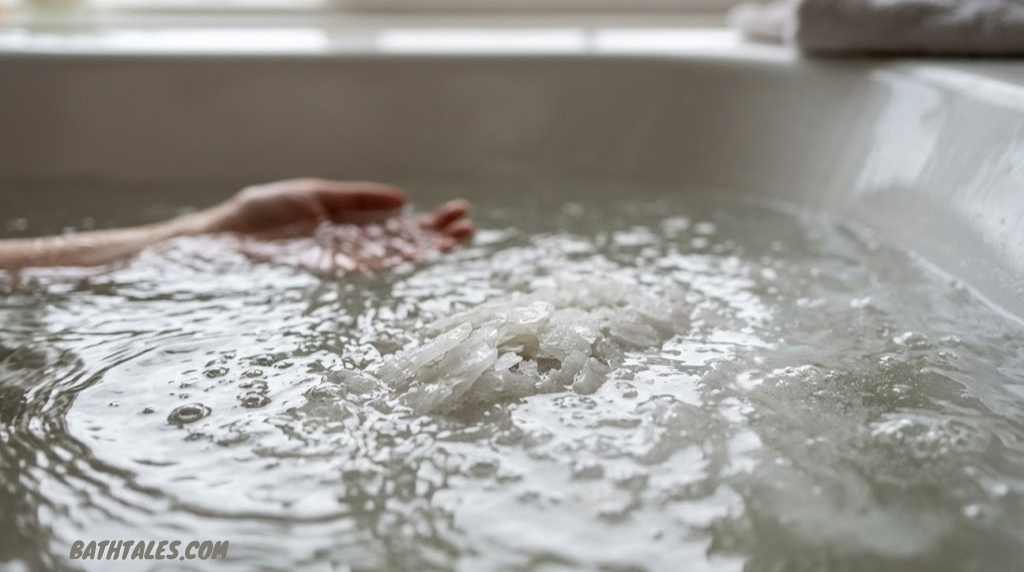
Walk into any pharmacy or wellness shop and you’ll find both on the shelf — magnesium flakes and Epsom salt — often sitting side by side, both marketed as bath-time miracle workers. They look similar. They both dissolve in your tub. They’re both linked to the same buzzy wellness benefit: magnesium. So what’s actually different between them, and does the difference matter enough to justify paying significantly more for one over the other?
The short answer: yes, there is a meaningful difference — but the right choice depends entirely on what you’re using it for. This guide breaks down the chemistry, the absorption science, the skin effects, and the practical use cases so you can make an informed decision rather than guessing at the shelf.
What Are Magnesium Flakes and Epsom Salt, Exactly?
Magnesium Flakes
MgCl₂ — Magnesium Chloride
Higher bioavailabilityEpsom Salt
MgSO₄ — Magnesium Sulfate
Budget-friendly classicDespite how similar they sound and look, magnesium flakes and Epsom salt are chemically distinct compounds. Let’s start at the beginning.
Magnesium Flakes (Magnesium Chloride)
Magnesium flakes are crystals or flakes of magnesium chloride (MgCl₂), typically sourced from ancient inland seas or briny bodies of water like the Zechstein Sea in the Netherlands, which is widely regarded as one of the purest deposits on Earth. The flakes are hygroscopic — they absorb moisture from the air — which is why quality suppliers package them in sealed bags.
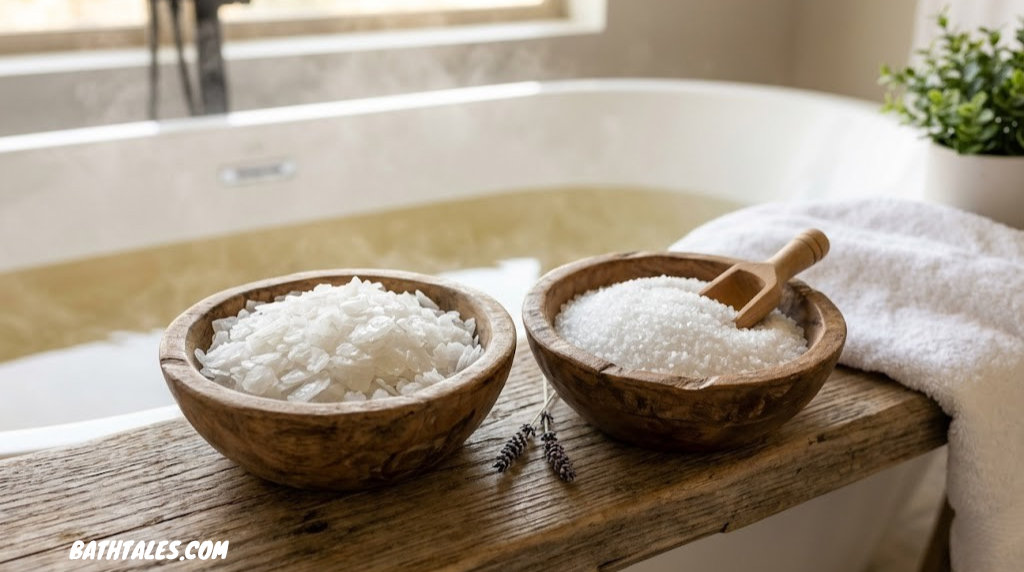
In terms of appearance, they’re slightly translucent, flat, and irregular in shape. When dissolved in water, they create a clear, slightly viscous solution. The magnesium content in flakes is notably high — a good-quality product typically contains around 47–49% magnesium chloride by weight.
Epsom Salt (Magnesium Sulfate)
Epsom salt is named after the town of Epsom in Surrey, England, where it was first discovered in a natural spring. The compound is magnesium sulfate (MgSO₄·7H₂O) in its heptahydrate form — meaning it carries seven water molecules in its crystal structure, which gives it that bright white, dry, granular appearance you’re familiar with.
Epsom salt is one of the most widely produced mineral compounds in the world. It’s used not just in baths but in agriculture as a soil supplement, in the textile industry, in pharmacy as a laxative, and in food production as a firming agent. That broad industrial production is a major reason why it’s dramatically cheaper than magnesium flakes.
Both compounds contain magnesium — but they carry it on very different chemical “vehicles,” which turns out to matter quite a bit for how the body uses them.

Top Pick · Magnesium Flakes
Ancient Minerals Magnesium Bath Flakes — Zechstein Source
Ultra-pure magnesium chloride from the Zechstein seabed. One of the most trusted brands for transdermal magnesium therapy. Ideal for full baths and foot soaks.
Check Price on Amazon →The Chemistry Explained Simply
You don’t need a chemistry degree to understand why these two compounds behave differently — but knowing a few fundamentals helps you cut through the marketing noise and make a genuinely informed choice.
What Happens When You Dissolve Them in Water
When either compound hits your bathwater, it dissociates — meaning the magnesium ion separates from its partner ion. Magnesium flakes release Mg²⁺ and Cl⁻; Epsom salt releases Mg²⁺ and SO₄²⁻. Both produce free magnesium ions in solution, which is the form that can theoretically be absorbed through skin.
So far, they sound similar. The divergence happens at the cellular level.
Why Chloride Has an Advantage
The chloride ion (Cl⁻) is much smaller than the sulfate ion (SO₄²⁻). Chloride is also a naturally abundant ion in the human body — it’s a critical component of cellular fluid balance and is actively transported across cell membranes through established ion channels. This means the chloride carrier in magnesium chloride doesn’t impede absorption the way a large, less-familiar ion like sulfate might.
Magnesium chloride also has significantly higher solubility in water compared to magnesium sulfate. A more concentrated, fully dissolved mineral solution in your bathwater may support greater skin contact with free magnesium ions, which is the first step in any transdermal absorption process.
The Sulfate Factor
Sulfate isn’t without value. Sulfur is an essential element involved in detoxification pathways, particularly the sulfation detox pathway that processes certain hormones, neurotransmitters, and environmental toxins in the liver. Some proponents of Epsom salt specifically argue that the sulfate component supports this pathway when absorbed through skin.
The problem is that sulfate absorption through skin is even less well-studied than magnesium absorption. The topical sulfate benefit is plausible in theory, but the clinical evidence base is thin. For most people, adequate sulfur intake through diet (eggs, cruciferous vegetables, alliums) far exceeds what any bath could conceivably deliver.
Absorption: Does the Science Actually Stack Up?
This is the most contested and most important question in the whole magnesium flakes vs Epsom salt debate. The wellness world frequently presents transdermal magnesium absorption as settled fact. The truth is considerably more nuanced — and knowing what the research actually says protects you from both overclaiming enthusiasts and overcautious skeptics.
What the Research Shows
The most cited study in support of transdermal magnesium absorption was conducted by Dr. Norman Shealy and published in a small-circulation journal in the early 2000s. Participants who applied magnesium chloride spray topically for 12 weeks showed measurable increases in cellular magnesium levels. The study had methodological limitations — no control group, small sample size — but it remains influential in naturopathic literature.
A more rigorous study published in PLOS ONE examined magnesium levels before and after soaking in Epsom salt baths. The majority of participants showed elevated urinary magnesium excretion after soaking, suggesting absorption had occurred. However, serum magnesium — the clinical gold standard for magnesium status — showed more variable results across participants.
Skin is a remarkably effective barrier. The stratum corneum, the outermost skin layer, exists specifically to keep things out — including water and dissolved minerals. However, it isn’t an absolute seal. Magnesium, being a small divalent cation, can traverse follicular and sweat-gland pathways (which bypass the main barrier) and may also move through the lipid matrix of the stratum corneum at a slow but meaningful rate.
Magnesium Chloride vs Sulfate: Which Absorbs Better?
Head-to-head human studies comparing magnesium chloride and magnesium sulfate absorption rates through bathing are limited. However, the body of evidence on oral bioavailability consistently shows that magnesium chloride is absorbed more efficiently than magnesium sulfate when ingested. Most researchers agree this advantage likely extends to topical use, because the governing factor — the ionic mobility and membrane compatibility of the chloride carrier — applies in both contexts.
Additionally, foot soaks with magnesium chloride have been specifically studied in clinical contexts including diabetic foot care and athlete recovery, and the results are generally positive for localized tissue effects. The feet are a particularly effective absorption site because the skin is thinner between the toes and the pores are larger.
The Practical Takeaway
Transdermal magnesium absorption from baths is real, but it’s not a replacement for dietary magnesium. Think of it as a complementary top-up — particularly useful for people with absorption issues in the gut, or those whose magnesium needs are elevated by stress, intensive exercise, or pregnancy. Both forms deliver some magnesium; magnesium chloride is the more efficient delivery vehicle.
For a detailed guide on optimal soak duration, see our article on how long to soak in bath salts — timing turns out to matter more than most people realize.
Skin and Body Benefits: A Full Comparison
Beyond the absorption question, both mineral forms offer a range of benefits for skin and body — and the profiles are meaningfully different. Here’s a full breakdown.
| Benefit | Magnesium Flakes (MgCl₂) | Epsom Salt (MgSO₄) |
|---|---|---|
| Magnesium absorption | ✔ Higher bioavailability | ~ Moderate absorption |
| Muscle relaxation | ✔ Excellent | ✔ Excellent |
| Skin hydration | ✔ Moisturizing, hygroscopic | ~ Can be drying at high doses |
| Gentle on sensitive skin | ✔ Generally gentle | ~ May irritate dry/sensitive skin |
| Sleep support | ✔ Strong — higher Mg delivery | ✔ Good — warm water effect |
| Sulfur/sulfate benefits | ✗ None | ✔ Detox pathway support |
| Foot soak efficacy | ✔ Excellent absorption site | ✔ Good for softening skin |
| Stress & anxiety relief | ✔ High Mg = stronger nervous system effect | ✔ Moderate via Mg + warm water |
| Constipation relief (oral) | ~ Possible (MgCl₂ oral supplements) | ✔ Classic medical use (oral dose) |
| Price per bath | ✗ Higher cost | ✔ Very affordable |
| Availability | ~ Specialty / online | ✔ Everywhere |
| Shelf life / storage | ~ Absorbs moisture — needs airtight storage | ✔ Very stable, long shelf life |
Skin Texture and Hydration
One area where magnesium flakes pull ahead noticeably is skin feel. Because magnesium chloride is hygroscopic — meaning it draws and retains moisture — soaking in magnesium flakes tends to leave skin feeling softer and more hydrated than an Epsom salt bath. Many people notice a difference immediately after stepping out of the tub.
Epsom salt, by contrast, can have a mildly dehydrating effect at higher concentrations, similar to how sea salt dries out skin after ocean swimming. This doesn’t mean Epsom salt is bad for skin — at normal bath concentrations (1–2 cups per tub), the effect is minimal. But for people with chronically dry skin, eczema, or sensitive skin conditions, magnesium flakes are the clearly gentler option. See our guide to best bath salts for dry skin for a fuller picture of options.
People with eczema or skin sensitivities should also check our dedicated guide to best bath salts for eczema — some formulations are specifically designed to minimize irritation while maximizing mineral contact.

Top Pick · Epsom Salt
Dr Teal’s Pure Epsom Salt Soaking Solution — Lavender
The benchmark value Epsom salt. Pure USP-grade magnesium sulfate with lavender essential oil. Widely available, affordable, and effective for muscle relaxation and general bathing.
Check Price on Amazon →For Muscle Soreness and Athletic Recovery
Muscle recovery is probably the most common reason people reach for mineral bath salts — and both forms deliver meaningful benefits here, but through slightly different mechanisms.
How Magnesium Supports Muscle Function
Magnesium is a cofactor in over 300 enzymatic reactions in the human body. For muscles specifically, it plays several critical roles: it regulates calcium entry into muscle cells (preventing hypercontraction), it supports ATP synthesis (the energy currency used for muscle contraction and repair), and it reduces oxidative stress in fatigued muscle tissue. When magnesium levels are suboptimal — which is common in athletes who sweat heavily — muscle cramping, delayed recovery, and impaired performance are all more likely.
A magnesium bath provides a warm, relaxing vehicle for delivering magnesium to the very tissues that need it. The warm water itself also dilates blood vessels, improves local circulation, and reduces neuromuscular tension — all of which enhance recovery independently of mineral content.
The Epsom Salt Sulfate Argument for Recovery
Advocates of Epsom salt for athletic recovery often point to the sulfate component. Sulfate is involved in synthesizing proteoglycans — key structural components of cartilage and connective tissue. In theory, topical sulfate exposure could support joint and tendon health. However, the research specific to transdermal sulfate uptake and connective tissue benefit in athletes is not well-established, and most sports medicine professionals focus primarily on oral nutrition for joint support.
In practice, most athletes and trainers who have tried both products report that magnesium flakes produce more noticeable recovery effects — deeper muscle relaxation, less next-day soreness, and better sleep after intense training days. This aligns with the superior bioavailability profile of magnesium chloride.
If you’re a regular exerciser, our roundup of the best bath salts for athletes compares recovery-focused formulations — including multi-mineral blends that combine magnesium chloride with Dead Sea minerals and essential oils for post-training use.
Pros and Cons: Muscle Recovery Comparison
✔ Magnesium Flakes — Strengths
- Higher magnesium delivery to muscle tissue
- Better for frequent, high-intensity training recovery
- Gentler on skin with repeated use
- Excellent for foot soaks targeting fatigued feet and calves
✗ Magnesium Flakes — Limitations
- Significantly higher cost per bath
- Needs sealed storage to prevent moisture absorption
- Harder to find in local shops
- No sulfate component
✔ Epsom Salt — Strengths
- Very affordable — enables daily use without guilt
- Available everywhere
- Long-standing track record in sports recovery
- Sulfate component offers additional potential benefit
✗ Epsom Salt — Limitations
- Lower magnesium bioavailability than flakes
- Can dry out skin at high doses
- Results may be less pronounced for serious athletes
For a targeted guide specifically around post-exercise bathing, see best bath salts for muscle soreness — including specific dosing and temperature recommendations for optimal results.
Sleep and Relaxation: Which One Actually Helps You Wind Down?
If there’s one wellness benefit both products are universally celebrated for, it’s sleep and relaxation. And this is an area where the science is more solidly established than the absorption debate — because the mechanisms are multiple and mutually reinforcing.
The Magnesium-Sleep Connection
Magnesium is directly involved in regulating the GABA (gamma-aminobutyric acid) receptor system — the same pathway targeted by many sleep medications. GABA is an inhibitory neurotransmitter that quiets neural activity and is essential for initiating and maintaining sleep. Magnesium binds to GABA receptors and potentiates their inhibitory action, essentially making it easier for your brain to shift from a wired, active state into a relaxed, sleep-ready state.
Magnesium also plays a role in melatonin synthesis and helps regulate the hypothalamic-pituitary axis, which governs the body’s circadian rhythm. People with low magnesium status frequently report insomnia and light sleep — and both oral and topical magnesium supplementation have been associated with improved sleep quality in randomized trials.
The Bath Temperature Effect
Soaking in warm water before bed does something elegant to your physiology: it temporarily raises your core body temperature. When you step out of the bath, your body rapidly disperses that heat to the environment, causing a sharp drop in core temperature. This temperature drop mimics the natural cooling that occurs at the onset of sleep and is one of the body’s primary sleep-onset signals. This effect applies regardless of what’s in the water — the mineral content is a bonus on top of a well-established thermophysiological mechanism.
Magnesium Flakes vs Epsom Salt for Sleep: The Difference
Both products support sleep via the mechanisms above. The edge for magnesium flakes comes from the higher magnesium delivery, which more directly supports GABA activity and melatonin regulation. For people with significant magnesium deficiency or chronic sleep challenges, this higher delivery may produce more noticeable results.
For people who simply want a relaxing evening bath to ease general tension, both products are broadly comparable. Adding a handful of drops from our guide to the best essential oils for bath salts — particularly lavender, chamomile, or frankincense — amplifies the relaxation effect significantly for either product.
Our dedicated guide on best bath salts for relaxation and sleep explores the full range of mineral options for evening wind-down routines.

Best for Sleep · Magnesium Flakes
Life-flo Pure Magnesium Flakes — 44 oz
High-concentration magnesium chloride flakes from the Netherlands. Popular for evening relaxation baths and foot soaks. No additives, fragrance-free for sensitive users.
View on Amazon →Sensitive Skin, Eczema, Dry Skin, and Pregnancy
For people with compromised or reactive skin — whether from a diagnosed condition like eczema or psoriasis, or simply chronic dryness and sensitivity — the choice between magnesium flakes and Epsom salt matters more than it might for the average bather.
Why Skin Sensitivity Changes the Calculation
Sensitive skin has a compromised epidermal barrier — the outer layer that normally keeps moisture in and irritants out. When this barrier is impaired, both water and dissolved minerals penetrate more easily, which cuts both ways: absorption is potentially higher, but so is the risk of irritation and further barrier damage.
Epsom salt at standard bath concentrations is considered safe for most sensitive skin, but the sulfate component and the mildly drying effect of magnesium sulfate can be problematic for very dry or eczema-prone skin. People with these conditions often report that Epsom salt baths leave their skin feeling tight or slightly irritated, particularly after the bath cools.
Magnesium flakes, on the other hand, tend to leave skin feeling softer and more comfortable — likely because the hygroscopic nature of magnesium chloride helps maintain surface moisture during and after the soak. Several small studies on Dead Sea bathing (which primarily delivers magnesium chloride) in eczema patients have shown improvements in skin hydration and reductions in inflammation markers.
For dry or sensitive skin, we also recommend browsing our roundup of best bath salts for sensitive skin — which highlights products that pair mineral content with skin-protective ingredients like aloe, colloidal oat, and nourishing carrier oils.
Pregnancy Considerations
Magnesium requirements increase significantly during pregnancy, making mineral baths an appealing complementary support. Both magnesium flakes and Epsom salt are commonly used by pregnant women for swelling, back pain, muscle cramps, and general relaxation. The key precautions are universal: keep water temperature below 100°F (38°C), limit soak time to 15–20 minutes, and check with your healthcare provider before establishing a routine.
Magnesium flakes may be preferable during pregnancy precisely because they deliver more bioavailable magnesium — and pregnancy is one of the life stages where magnesium insufficiency is most common and most impactful. Our guide to the best bath salts for pregnancy covers safe options and trimester-specific guidance in detail.
Epsom Salt and Eczema — A Nuanced View
It’s worth noting that some dermatologists do recommend Epsom salt baths for eczema specifically for a different reason: the osmotic effect. A dilute Epsom salt solution may help draw excess fluid from inflamed, weeping eczema lesions, potentially reducing swelling and bacterial load. This is different from the skin-drying concern — it applies specifically to active, inflamed eczema rather than dry, stable eczema. The key is concentration: a dilute solution may help; a strong solution will almost certainly worsen dry, cracked skin.
If you’re navigating eczema-specific bathing choices, our dedicated guide to best bath salts for eczema provides a more complete picture of mineral bathing for this condition.
Cost, Value, and Practical Considerations
This is where the Epsom salt case becomes very compelling — and where magnesium flakes have to earn their premium price tag with meaningful performance advantages.
| Metric | Magnesium Flakes | Epsom Salt |
|---|---|---|
| Typical online price | $18–$35 for 2–3 lbs | $5–$12 for 4–6 lbs |
| Dose per full bath | 1–2 cups (approx. 250–450g) | 1–2 cups (approx. 250–500g) |
| Cost per full bath | ~$4–$8 | ~$0.80–$2.00 |
| Cost per foot soak | ~$1.50–$3.00 | ~$0.40–$1.00 |
| Where to buy | Online, specialty health stores | Grocery, pharmacy, online, everywhere |
| Shelf life | 1–2 years in sealed container | 3+ years, highly stable |
| Storage needs | Airtight container essential | Standard dry storage fine |
The Cost-Benefit Reality
If you’re bathing 3–4 times a week for health purposes, magnesium flakes will cost you $50–$100 per month compared to roughly $8–$20 for Epsom salt. That’s a significant premium. Whether it’s justified depends entirely on your specific goals.
For someone with a diagnosed magnesium deficiency, compromised gut absorption, chronic muscle issues, or serious sleep problems, the higher delivery of magnesium chloride likely makes the premium worthwhile — particularly when compared to the cost of oral magnesium supplements, which need to be taken separately anyway.
For the casual bather who wants a relaxing soak a few times a month, Epsom salt offers excellent value. The relaxation, muscle relief, and mental de-stress effects are real — and the mineral absorption, while lower, is still occurring.
The Blend Strategy
Many experienced mineral bathers use a combination: a base of affordable Epsom salt supplemented with a smaller amount of magnesium flakes. This spreads the cost while delivering a higher-quality mineral profile. A typical blend might be 1.5 cups of Epsom salt plus ½–1 cup of magnesium flakes per bath — providing the sulfate benefit of Epsom salt alongside the better absorption profile of magnesium chloride, at a cost in the $2–$4 range per bath.
For more guidance on quantities and dosing, our article on how much bath salt to use is a practical reference covering full baths, foot soaks, and special circumstances.
How to Use Magnesium Flakes and Epsom Salt: Practical Protocols
Getting the most out of either product requires a few simple but important protocols. The difference between a transformative soak and a mediocre one often comes down to temperature, timing, and concentration.
Full Body Bath Protocol
Magnesium Flakes — Recommended Doses
- Full body bath: 1–2 cups (250–450g) in a standard tub. Start with 1 cup if you have sensitive skin.
- Foot soak: ½ cup in a basin of warm water. Soak 20–30 minutes.
- High-concentration therapeutic bath: Up to 3 cups for intense muscle recovery — increase gradually.
Epsom Salt — Recommended Doses
- Full body bath: 1–2 cups (250–500g) dissolved in a standard tub.
- Foot soak: ½ cup in warm water, 20–30 minutes.
- Children: Use ½ cup for ages 6–12; consult a pediatrician for younger children.
Temperature and Timing Tips
- Aim for water temperature of 100–104°F (38–40°C). Hotter water may reduce mineral absorption and cause cardiovascular stress.
- Add minerals while the tap is still running for better dissolution.
- Soak for at least 20 minutes — this is generally considered the minimum for meaningful mineral exposure.
- Don’t rinse off immediately after — let the mineral film remain on your skin for 30 minutes to an hour if possible.
- Apply moisturizer while skin is still slightly damp to lock in hydration.
If you’re interested in making your own custom blends, our guide on how to make bath salts at home walks through creating personalized mineral mixes with carrier oils, essential oils, and other functional ingredients.

Value Pick · Magnesium Flakes
Seven Minerals Pure Magnesium Chloride Flakes — 6.5 lb Bulk
Pharmaceutical-grade magnesium chloride in a large bulk format that brings the per-bath cost down significantly. Zechstein-verified source. Great option for daily bathers and families.
View on Amazon →The Side-by-Side Verdict: Who Should Use Which?
Rather than declaring one product a universal winner, the most honest answer is that each has a clearly defined ideal user. Here’s the practical breakdown.
Choose Magnesium Flakes If You:
- Have a known or suspected magnesium deficiency
- Experience chronic muscle cramps, spasms, or tension
- Have sensitive, dry, or eczema-prone skin
- Are pregnant and seeking magnesium support
- Train intensively and need post-workout recovery support
- Have gut absorption issues that limit oral magnesium uptake
- Want maximum benefit from a regular therapeutic soak
Choose Epsom Salt If You:
- Want a cost-effective, accessible everyday bath product
- Are new to mineral bathing and want to test the waters (literally)
- Primarily want relaxation and muscle relief without optimizing for mineral absorption
- Have normal, resilient skin with no sensitivity issues
- Want the additional sulfate benefit for detox support
- Bathe very frequently and cost is a real consideration
How Magnesium Flakes and Epsom Salt Compare to Other Bath Salts
It’s worth placing both within the broader landscape of mineral bath salts. Himalayan pink salt, Dead Sea salt, and sea salt each have distinct profiles. Dead Sea salt, in particular, is notable for its extremely high magnesium chloride content — making it essentially a more complex version of magnesium flakes with additional trace minerals. Our comparison of Dead Sea salt vs Epsom salt explores that rivalry in depth.
Himalayan pink salt is another popular option with a distinct mineral profile — our guide to the best Himalayan pink bath salt covers what makes it unique. For a broader overview of all bath salt types, the complete guide to best bath salts for every type of soak is a useful reference.

Budget Pick · Epsom Salt
Sky Organics USDA Certified Organic Epsom Salt — 5 lb
Certified organic, fine-grain Epsom salt. Free from artificial fragrances and additives. Great everyday option for muscle soreness, relaxation, and general mineral bathing.
Check Price on Amazon →What About Organic and Natural Options?
If purity and sourcing matter to you, look for magnesium flakes certified from the Zechstein seabed — generally considered the gold standard for pharmaceutical-grade purity. For Epsom salt, USP-grade (United States Pharmacopeia) is the purity benchmark to look for. Our roundup of the best organic bath salts covers certified-clean options across multiple mineral types, including brands that test for heavy metals and contaminants.
For those monitoring how long their products stay potent, our article on do bath salts expire clarifies the shelf life differences between mineral types and how to store them properly.
Frequently Asked Questions
Magnesium flakes (magnesium chloride) are generally considered superior for magnesium absorption because magnesium chloride is more bioavailable than magnesium sulfate. They’re also gentler on sensitive skin. However, Epsom salt is significantly cheaper and still offers genuine relaxation and muscle-relief benefits — making it the better choice for many everyday bathers.
Yes — combining both is safe and popular. A blend of 1–1.5 cups of Epsom salt plus ½ cup of magnesium flakes gives you the sulfate benefit of Epsom salt alongside the superior absorption profile of magnesium chloride, at a moderate cost. There are no known negative interactions between the two compounds in bathwater.
The science on transdermal magnesium absorption is still evolving. Some studies show measurable increases in serum magnesium after magnesium chloride baths, while others show modest effects. Most experts agree that dermal absorption complements — but does not replace — dietary magnesium intake. Soaking for at least 20 minutes in warm water maximizes whatever absorption occurs.
The standard recommendation is 1–2 cups (approximately 250–500g) dissolved in a standard full bathtub of warm water. For a foot soak, half a cup in a basin is sufficient. Our guide on how much bath salt to use covers dosing by soak type in full detail.
Magnesium plays a well-documented role in sleep regulation, supporting GABA activity and melatonin production. Soaking in magnesium flakes before bed — especially in warm water — may promote relaxation and improve sleep quality. The warm water itself also raises core body temperature, which triggers a cooling response as you exit the bath that encourages sleepiness. See our best bath salts for relaxation and sleep guide for more options.
Yes — magnesium flakes are generally gentler than Epsom salt for sensitive skin because magnesium chloride is less drying than magnesium sulfate and is hygroscopic (moisture-attracting). People with eczema, psoriasis, or dry skin often tolerate magnesium flakes better. Always start with a lower concentration (1 cup per full bath) and rinse off after soaking if you notice any irritation.
Absolutely — magnesium flakes are excellent for foot soaks. The soles of the feet have larger pores and thinner skin than most body areas, making them one of the most effective sites for transdermal mineral absorption. Use about ½ to 1 cup of flakes in a warm foot basin and soak for 20–30 minutes. They’re particularly beneficial for athletes and people who spend long hours on their feet.
Magnesium chloride (magnesium flakes) contains magnesium bonded to chloride ions. Magnesium sulfate (Epsom salt) contains magnesium bonded to sulfate ions. The key difference is bioavailability: magnesium chloride is more easily absorbed and utilized by the body. Magnesium sulfate also provides sulfur via the sulfate component, which has a separate theoretical benefit for detox pathways — though evidence for topical sulfate absorption is limited.
Epsom salt is one type of bath salt, but the term “bath salt” covers a broad category that includes Himalayan pink salt, Dead Sea salt, sea salt, and magnesium chloride flakes. Each has a different mineral profile and set of benefits. Epsom salt is specifically magnesium sulfate — a single chemical compound, not a blended natural mineral salt.
Most experts recommend soaking for 20–40 minutes. Less than 20 minutes may not allow adequate time for mineral absorption. Soaking longer than 45–60 minutes may cause mild skin dehydration, especially at higher mineral concentrations. Warm water (100–104°F) is ideal. Our dedicated guide on how long to soak in bath salts covers timing for different goals and conditions.
Both are effective for muscle soreness. Magnesium flakes deliver more bioavailable magnesium, which supports muscle function and reduces cramping. Epsom salt’s sulfate component may also support muscle recovery. For post-workout soreness in serious athletes, magnesium flakes have a slight edge. For general aching and tension, both perform comparably and Epsom salt offers far better value. See our best bath salts for muscle soreness guide for full recommendations.
Pregnant women should consult their healthcare provider before using mineral baths, especially in the first trimester. Both magnesium flakes and Epsom salt are commonly used in pregnancy baths when water temperature is kept below 100°F and soak time is limited to 15–20 minutes. Magnesium demand increases significantly during pregnancy, making flakes a particularly useful supplement. See our best bath salts for pregnancy guide for trimester-specific advice.
Final Verdict: Magnesium Flakes vs Epsom Salt
Both magnesium flakes and Epsom salt are genuinely valuable bath products — the difference lies in who they serve best, not in one being universally superior. Magnesium chloride flakes win on bioavailability, skin feel, and suitability for sensitive skin and specific health goals. Epsom salt wins on price, accessibility, and overall bang-for-buck for everyday wellness bathers.
If you’re using your mineral soak therapeutically — for magnesium deficiency, serious muscle recovery, skin conditions, or sleep support — magnesium flakes are worth the investment. If you want a relaxing, beneficial soak a few times a week without breaking the bank, Epsom salt is outstanding value and remains one of the most evidence-supported home wellness tools available.
For the optimal outcome, consider a blend of both. It’s cheaper than using flakes alone, more effective than using Epsom salt alone, and gives you the full mineral spectrum in a single bath.
Explore All Bath Salt Types at BathTales →