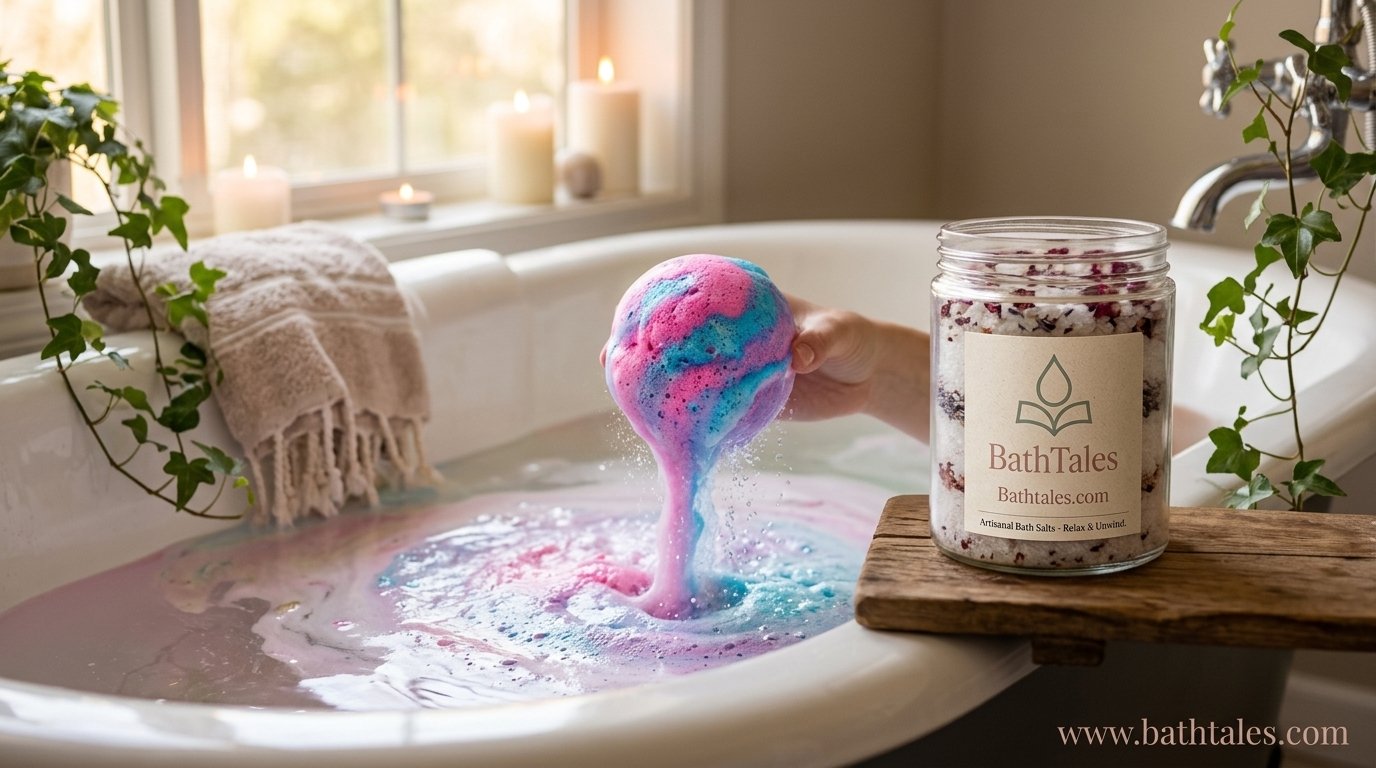
Bath Bomb vs Bath Salt: Which One Deserves a Spot in Your Tub?
A deep-dive comparison of ingredients, skin benefits, mess factor, cost, and which soak actually wins for relaxation, sore muscles, and sensitive skin.
Stand in front of a bath products shelf and you’ll see two categories fighting for your attention: the colorful, fizzing spheres known as bath bombs, and the simple jars of crystals labeled bath salt. Both promise relaxation. Both promise a spa-like soak. But they work in genuinely different ways, and picking the wrong one for your needs can mean a tub full of glitter residue when what you actually wanted was sore-muscle relief.
This guide breaks down exactly how bath bombs and bath salts differ — from their ingredients and skin effects to cleanup, cost, and safety — so you can decide which one belongs in your bath routine tonight, and which one you might want to skip entirely.
What Is a Bath Bomb?
A bath bomb is a compressed, ball- or dome-shaped mixture that reacts the moment it touches water. The core chemistry is simple: baking soda (sodium bicarbonate) meets citric acid, and the two combine in an acid-base reaction that releases carbon dioxide gas. That’s the fizz you see the second the bomb hits the tub.
Around that fizzing core, manufacturers build in the fun stuff — essential oils or fragrance oils, cornstarch as a binder, Epsom salt or sea salt in smaller amounts, shea or cocoa butter for a moisturizing finish, colorants, and sometimes glitter, dried flowers, or a surprise toy in the center. The entire experience is designed to be visual and sensory first, therapeutic second.

Want to try a well-reviewed bath bomb set? A good gift-box set lets you sample scents and skin-feel before committing to a full case.
Check Bath Bomb Sets on AmazonWhat Is a Bath Salt?
Bath salt is exactly what it sounds like: mineral salt crystals — most commonly Epsom salt (magnesium sulfate), Dead Sea salt, or Himalayan pink salt — dissolved directly into bathwater. Unlike a bath bomb, there’s no chemical reaction and usually no fizz. You simply scoop a measured amount into running water and let it dissolve.
Because the base ingredient is a single mineral rather than a cocktail of binders and butters, bath salts tend to be simpler formulations. Many are unscented or lightly scented with a few drops of essential oil, marketed toward function — sore muscles, detox, sleep support — rather than spectacle. If you’re comparing specific types, guides like Dead Sea Salt vs Epsom Salt and Magnesium Flakes vs Epsom Salt go deeper on which mineral fits which goal.

Looking for a reliable everyday soak? A large bag of pure Epsom or Dead Sea salt covers months of soaks for less than a single bath bomb multipack.
Shop Bath Salts on AmazonHow They’re Made: Ingredients and Process
Understanding manufacturing helps explain why the two products feel so different in the tub. Bath bombs are pressed, not poured. Manufacturers mix dry ingredients (baking soda, citric acid, cornstarch, Epsom salt) with a small amount of liquid binder — usually a light spritz of witch hazel or oil — just enough moisture to hold the mixture together without triggering the fizzing reaction prematurely. The damp mixture is packed tightly into a mold, dried, and released as a solid sphere or shape.
Bath salts require no molding at all. Mined or evaporated mineral crystals are cleaned, sometimes crushed to a uniform grain size, and blended with a carrier oil and a few drops of essential oil if a scented version is being made. There’s no drying stage and no reaction to manage, which is part of why bath salt production is generally cheaper and more scalable than bath bomb manufacturing. If you’re curious about doing either at home, How to Make Bath Salts at Home walks through a simple DIY blend.
| Attribute | Bath Bomb | Bath Salt |
|---|---|---|
| Core ingredients | Baking soda + citric acid | Mineral salt (Epsom, Dead Sea, Himalayan) |
| Manufacturing process | Pressed/molded, dried | Cleaned, graded, blended |
| Reaction in water | Fizzes (CO2 release) | Dissolves quietly |
| Shelf stability | Sensitive to humidity | Very stable |
Head-to-Head Comparison
Here’s the side-by-side breakdown most shoppers actually want before they add either product to their cart.
| Category | Bath Bomb | Bath Salt |
|---|---|---|
| Primary purpose | Sensory experience, fragrance, color | Muscle relief, mineral absorption, detox |
| Skin softness | Moderate (from added oils/butters) | Moderate to high (mineral-rich types) |
| Water residue | Oily film, color tint possible | Minimal, clear water |
| Cleanup | Can stain tub, glitter risk | Rinses cleanly |
| Cost per use | Higher per soak | Lower per soak |
| Sensitive skin risk | Higher (fragrance, dye load) | Lower (especially unscented) |
| Best for | Gifting, self-care rituals, kids’ bath fun | Sore muscles, sleep, recovery, detox soaks |
Skin Benefits: What Each One Actually Does
Bath bombs lean heavily on added moisturizers to make skin feel soft — shea butter, cocoa butter, and coconut oil are common additions that leave a light film on the skin after soaking. That film can genuinely help dry skin, but it also means more film left behind in the tub. If dry skin is your main concern, it’s worth comparing dedicated options in Best Bath Salts for Dry Skin, since some mineral blends outperform bomb-based moisture on a lasting basis.
Bath salts work differently. Magnesium sulfate (Epsom salt) is often used specifically because magnesium can be absorbed through the skin during a soak, which some people find helps with muscle tension and sleep quality. Dead Sea salt brings a wider mineral profile — magnesium, potassium, calcium — associated with easing skin conditions like mild eczema or psoriasis flare-ups, which is why guides such as Best Bath Salts for Eczema and Best Bath Salts for Sensitive Skin focus almost entirely on salt-based soaks rather than bombs.
Bath Bomb Skin Pros
- Butters leave immediate softness
- Fun, sensory experience improves mood
- Good for occasional pampering
Bath Bomb Skin Cons
- Fragrance/dye can irritate sensitive skin
- Oily film can clog tub surfaces
- Effects are short-lived
Muscle Relief & Relaxation
If the goal of your soak is easing sore, tight muscles after a workout or a long day on your feet, bath salt is the more purpose-built option. Concentrated magnesium sulfate soaks are the standard recommendation in guides like Best Bath Salts for Muscle Soreness and Best Bath Salts for Athletes, largely because you can control concentration — using more salt per soak than a standard bath bomb ever contains.
Bath bombs typically include only a small fraction of Epsom or sea salt relative to their total weight, since most of the formula is dedicated to the fizzing agents and fragrance. That means a bath bomb soak, while pleasant, delivers a much lower mineral dose than a dedicated salt soak. For relaxation and sleep specifically, Best Bath Salts for Relaxation and Sleep pairs magnesium with calming scents like lavender for a combined effect.

Training hard or on your feet all day? A concentrated magnesium soak is one of the simplest post-activity recovery habits to add.
Browse Recovery Bath SaltsMess & Cleanup: The Honest Comparison
This is where bath bombs lose the most points with people who’ve actually used both. Colorants can tint bathwater and occasionally leave a faint ring on the tub if not rinsed promptly. Glitter-loaded bombs are notorious for turning up in bathroom grout weeks later. Oil- and butter-based bombs can also leave the tub surface slippery, which matters more than people expect until someone slips.
Bath salt, by contrast, dissolves completely and rinses away with the drain water, leaving little to no residue on the tub itself. If tub maintenance is a recurring headache regardless of which product you use, pairing your soak routine with a solid cleaning schedule helps — see How to Remove Soap Scum and How to Deep Clean a Bathroom for the follow-up steps.
Easier Cleanup
- Bath salt: dissolves fully, no film
- No glitter or dye residue
- Safe for most tub surfaces
Harder Cleanup
- Bath bomb: dye can tint grout lines
- Glitter versions are very persistent
- Oily film needs a rinse after draining
Cost Comparison: Price Per Soak
Bath bombs are usually sold individually or in small multipacks, and pricing reflects the fragrance, molding, and packaging that go into each one. A single higher-end bath bomb can cost noticeably more than a single soak’s worth of bath salt, since bath salt is typically sold in bulk bags that last for dozens of baths.
| Factor | Bath Bomb | Bath Salt |
|---|---|---|
| Typical packaging | Individual or small multipack | Bulk bag (1–5 lb+) |
| Uses per package | 1 use per bomb | 15–40+ soaks per bag |
| Cost per soak | Higher | Lower |
| Best value scenario | Occasional treat, gifting | Regular weekly routine |
If budget matters and you’re soaking often, salt wins on cost per use every time. If you’re buying for a one-off gift or special occasion, the bath bomb’s presentation often justifies the higher per-unit price.
Safety: Kids, Pregnancy & Sensitive Skin
For children, the fragrance and dye concentration in many bath bombs can be more irritating than plain water soaks, and small embedded toys or glitter can pose a slip or ingestion risk for very young kids. If bath time is more about play than skincare, dedicated bath toys and age-appropriate toy guides are usually a safer way to add fun without the skin exposure.
During pregnancy, many people prefer to avoid strong fragrance oils and unregulated essential oil blends found in some bath bombs, and instead check pregnancy-safe formulations directly — see Best Bath Salts for Pregnancy for guidance on which minerals and scents are typically considered lower-risk (always confirm with your doctor first).
For sensitive or reactive skin, unscented or minimally scented bath salt is generally the gentler starting point, since you control exactly how much fragrance oil (if any) goes into the water, rather than relying on a pre-made fragrance load baked into a bomb.

Sensitive skin or soaking during pregnancy? An unscented, dye-free mineral salt gives you full control over what goes into the water.
Find Unscented Bath SaltEnvironmental Impact
Bath bombs often include synthetic dyes and glitter, and glitter in particular has drawn criticism for contributing to microplastic pollution once it goes down the drain — many bath product brands have shifted to biodegradable glitter alternatives in response. Fragrance oils and dyes can also affect greywater and septic systems more than a plain mineral salt would.
Bath salt, especially unscented or naturally colored versions, is generally considered the lower-impact option since it’s essentially a mined or evaporated mineral with minimal processing. If sustainability is a priority, look specifically for bath bombs labeled biodegradable-glitter-free, or default to salt-based soaks, particularly organic or minimally processed varieties covered in Best Organic Bath Salts.
Which One Should You Choose?
The right answer depends entirely on what you want out of the soak.
Choose a Bath Bomb If…
- You want a fun, visual, sensory ritual
- It’s a gift or special-occasion treat
- Skin softness from butters matters more than mineral dose
Choose Bath Salt If…
- You want muscle recovery or better sleep
- You soak regularly and care about cost per use
- You have sensitive skin or want fragrance-free control
Still deciding between broader bath styles rather than just additives? Bath vs Shower and Milk Bath vs Regular Bath cover the bigger-picture routine questions, while How Much Bath Salt to Use helps you dial in the right concentration once you’ve picked your soak.
Can You Use Both Together?
Yes — many people alternate rather than choosing one permanently. A common approach is a mineral-forward salt soak a few times a week for recovery and sleep, with an occasional bath bomb reserved for a weekend self-care night or special occasion. If you do combine them in the same bath, use a lighter hand with the salt since the bomb already contributes some sodium bicarbonate and minerals of its own, and stick to unscented salt to avoid an overwhelming fragrance mix.
For setting the mood either way, small routine upgrades — dimmed lighting, a warm towel warmer, or simply timing your soak right — go a long way. How to Make Bath More Relaxing and How to Make a Bath Comfortable cover the small details that make either product feel more like a ritual and less like a chore.
Ingredient Deep Dive: Reading the Label
Not all bath bombs are created equal, and the same goes for bath salt. Once you start reading labels closely, you’ll notice a wide spread in quality, and that spread is usually where the real difference between a great soak and a disappointing one comes from.
On a bath bomb label, look past the marketing name and check the ingredient order. Sodium bicarbonate and citric acid should be near the top, since those are the functional core. After that, you want to see recognizable moisturizers — shea butter, cocoa butter, coconut oil, or sweet almond oil — rather than a long list of synthetic surfactants like sodium lauryl sulfate stacked near the top of the list, which can be more drying than the product’s marketing suggests. Fragrance listed simply as “fragrance” or “parfum” gives you no information about what’s actually in the scent blend, while labels that specify “lavender essential oil” or “eucalyptus essential oil” tell you exactly what you’re soaking in.
On a bath salt label, the ingredient list is usually much shorter, which is part of the appeal. A quality Epsom salt product should list magnesium sulfate as essentially the only ingredient unless it’s explicitly a scented blend. Dead Sea salt products should specify that the salt is sourced from the Dead Sea itself, since some “Dead Sea salt” products on the market are actually blended with regular table salt or Epsom salt to cut costs. If mineral purity matters to you, comparing a few brands side by side using guides like Best Himalayan Pink Bath Salt can help you spot the difference between a genuine mineral product and a diluted one.
Color is another tell. Bath bombs almost always rely on cosmetic-grade dyes (often labeled as FD&C or D&C colors) to achieve their vivid, layered appearance, and while these are generally considered safe for external use, they’re the most common cause of tub staining and skin sensitivity complaints. Bath salts, by contrast, get their color naturally from the mineral itself — the pink tone in Himalayan salt comes from trace iron oxide, and Dead Sea salt is typically a pale white or gray rather than an artificially bright shade.
The Role of Essential Oils in Each Product
Both bath bombs and bath salts frequently use essential oils to add a therapeutic or aromatherapy angle, but the way the oil is delivered differs in an important way. In a bath bomb, essential oil is mixed into the dry formula before pressing, which means it’s exposed to the fizzing reaction and often diluted alongside fragrance oil to control cost. The scent tends to be strong initially, right as the bomb dissolves, and then fades relatively quickly.
In a bath salt blend, essential oil is typically added as a final step, drizzled over the crystals and mixed by hand, which means the oil coats the surface of the salt rather than being chemically altered by a reaction. Because you’re also controlling how much salt you add to the water, you’re indirectly controlling the essential oil dose too — using two tablespoons instead of a full cup naturally halves the aromatherapy strength. If you want to build your own custom blend rather than relying on a pre-made scent, Best Essential Oils for Bath Salts breaks down which oils pair well with which goals, from eucalyptus for congestion to chamomile for winding down before bed.
Buying Guide: What to Look for Before You Add to Cart
Whether you land on bath bombs, bath salt, or both, a few practical checks will save you from a disappointing purchase.
For Bath Bombs
- Check the scent list — synthetic-heavy fragrance blends are more likely to trigger sensitivity than single-note essential oil bombs.
- Look at the moisturizer content — bombs that list shea or cocoa butter near the top of the ingredient list will leave skin feeling noticeably softer than ones where oil is an afterthought.
- Avoid excessive glitter — if cleanup matters to you, seek out biodegradable glitter or glitter-free versions specifically.
- Watch the color intensity — extremely saturated dye colors are more likely to tint grout and tub surfaces.
For Bath Salt
- Confirm the mineral source — genuine Dead Sea or Himalayan salt should say so explicitly, not just imply it in the product name.
- Check grain size — finer grains dissolve faster, which matters if you’re filling the tub and soaking immediately rather than waiting.
- Look for third-party purity testing if you’re buying for a medical or sensitive-skin reason, since some cheaper blends cut mineral salt with regular table salt.
- Consider unscented first — you can always add your own essential oil, but you can’t remove a fragrance that’s already baked in.
Storage and Shelf Life
Bath bombs are surprisingly fragile from a storage standpoint. Because the fizzing reaction is triggered by moisture, even ambient humidity in a bathroom can slowly activate the reaction, leaving you with a crumbly, deflated bomb months before you intended to use it. Keeping bath bombs in an airtight container, away from the humid air near a shower, and using them within a reasonable window of purchase will preserve both their fizz and their fragrance strength.
Bath salt is far more forgiving. Pure mineral salt is essentially shelf-stable indefinitely, since salt itself doesn’t spoil or degrade. The main thing that changes over time is a scented blend’s essential oil content, which can fade or, in rare cases, turn slightly rancid if the carrier oil oxidizes. Storing bath salt in a sealed jar away from direct sunlight keeps scent blends fresher for longer, and unscented salt can realistically be stored for years without meaningful loss of quality. For a full breakdown on timelines, Do Bath Salts Expire? covers exactly what to watch for.
Common Myths About Bath Bombs and Bath Salts
Myth: A bigger fizz means a better bath bomb. Fizz intensity mostly reflects the ratio of baking soda to citric acid, not the quality of moisturizers or oils in the formula. A gently fizzing bomb can still leave skin softer than an aggressively fizzing one.
Myth: All bath salts do the same thing. Epsom salt, Dead Sea salt, and Himalayan salt have meaningfully different mineral profiles and are suited to different goals, from muscle recovery to skin conditions to general relaxation.
Myth: Bath bombs are always more “natural” because they look handmade. Handmade presentation has nothing to do with ingredient quality — some mass-produced salts are more minimally processed than small-batch bath bombs loaded with synthetic dye and glitter.
Myth: You need a fancy soak additive to get a good bath. Warm water, the right soak duration, and a comfortable environment do most of the heavy lifting regardless of what you add. See How Long to Soak in Bath Salts and How Do You Take a Bath? for the basics that matter more than the additive itself.
Seasonal and Situational Use
How you choose between a bath bomb and bath salt can shift depending on the season and the occasion. In colder months, many people lean toward bath salt soaks for their perceived role in easing the aches that come with cold weather and reduced activity, often pairing a warm Epsom soak with a heavier moisturizing routine afterward. During cold and flu season specifically, a warm bath with the right mineral and eucalyptus combination is a popular comfort ritual — see Best Bath Salts for Cold and Flu for blends built around that use case.
Bath bombs, on the other hand, tend to shine as an occasion-based product — a birthday gift, a self-care Sunday, a way to make a kid’s bath time feel special without much extra effort. Because they’re single-use and visually memorable, they work well as small gifts or add-ons rather than a daily staple. If you’re building a broader self-care or wellness gift set, pairing a bath bomb with a curated selection of best bath products tends to feel more complete than a bath bomb alone.
Frequently Asked Questions
Is a bath bomb or bath salt better for dry skin?
Bath bombs give an immediate softness from added butters and oils, but the effect is short-lived. Mineral-rich bath salts, particularly Dead Sea salt, tend to offer more lasting hydration support with regular use.
Can I mix a bath bomb and bath salt in the same bath?
Yes, though it’s best to use a lighter amount of salt since the bomb already contains some mineral content, and to choose an unscented salt to avoid clashing fragrances.
Do bath bombs actually do anything for your skin, or is it just fizz?
The fizzing itself is purely a chemical reaction and has no skin benefit on its own. Any skin benefit comes from the added oils, butters, or small amounts of salt mixed into the formula.
Which is cheaper over time, bath bombs or bath salts?
Bath salt is almost always cheaper per soak since it’s sold in bulk and a small scoop covers one bath, while bath bombs are single-use and priced individually.
Are bath bombs safe for kids?
Many are, but fragrance and dye levels can irritate sensitive young skin, and small embedded toys or heavy glitter can be a choking or slip hazard for toddlers. Check labels for kid-specific formulations.
Is bath salt safe during pregnancy?
Many plain, unscented mineral salts are considered lower-risk, but you should always confirm with your doctor before adding any bath additive during pregnancy, especially scented or essential-oil-based products.
Why does my tub get stained after using a bath bomb?
Synthetic dyes in some bath bombs can settle on tub surfaces, especially textured or porous ones. Rinsing the tub immediately after draining usually prevents staining from setting in.
Does Epsom salt actually help sore muscles?
Many people report noticeable relief from warm Epsom salt soaks after exercise, though scientific evidence on skin absorption of magnesium is mixed. The warm water itself also plays a large role in the relief.
How much bath salt should I use per bath?
Typical guidance is around one to two cups of Epsom salt per standard-sized bathtub, though this varies by salt type and personal preference — see our full breakdown for exact ratios.
Do bath salts expire?
Pure mineral salt itself doesn’t spoil, but scented or oil-blended versions can lose potency or go slightly rancid over a long period if the oil degrades.
Which is better for relaxation before bed?
Bath salt blended with calming essential oils like lavender is generally considered more effective for a bedtime wind-down, since you can control the mineral concentration and fragrance intensity precisely.
Can bath bombs clog my drain?
Standard bath bombs dissolve fully and shouldn’t clog a drain, but versions with dried flowers, glitter, or large solid inclusions can leave debris behind, so a drain strainer is a good precaution.
The “Detox Bath” Angle: Marketing vs Reality
Both bath bombs and bath salts are frequently marketed with the word “detox,” and it’s worth understanding what that term actually means in this context before assuming either product does something medically dramatic. A warm bath with salt or a bomb doesn’t pull toxins out of the bloodstream in any clinically measurable way. What a detox-labeled soak typically offers is a combination of warm-water relaxation, mild skin exfoliation from mineral grains, and the psychological benefit of a dedicated self-care ritual — all of which are legitimate benefits on their own, just not literal detoxification.
That said, some detox blends do include additional ingredients like bentonite clay, activated charcoal, or apple cider vinegar alongside the base salt, which can genuinely help with mild skin exfoliation or oil absorption even if they’re not removing toxins in a medical sense. If this category interests you, Best Detox Bath Salts breaks down which formulations are worth trying versus which are mostly marketing language on top of standard Epsom salt.
Fitting Either Product Into a Realistic Routine
The best soak additive is the one you’ll actually use consistently, not the one with the most impressive ingredient list sitting unused in a cabinet. If you’re someone who baths once a week as a wind-down ritual, a bath bomb’s short shelf-sensitive nature isn’t a real problem, since you’ll use it up quickly. If you soak several times a week for recovery or sleep support, the cost and mess profile of bath salt makes it the far more sustainable choice long-term.
It’s also worth thinking about how your soak habit fits into your broader bathroom routine. If you’re someone who showers most days and baths occasionally, the occasional-treat framing of a bath bomb fits naturally — see Bath vs Shower for how the two habits typically coexist. If baths are your primary way of winding down, building a small rotation of two or three bath salt blends for different moods, alongside a bath bomb reserved for special occasions, tends to be the setup most people settle into after trying both for a few weeks.
Final Verdict
Neither bath bombs nor bath salts are objectively “better” — they’re built for different moments. Bath bombs shine as an occasional, sensory treat: fun to watch, pleasant to smell, ideal for gifting. Bath salts are the more practical daily-driver: cheaper per soak, gentler on sensitive skin, and genuinely useful for muscle recovery and sleep support. If you only pick one to keep stocked at home, bath salt is the more versatile everyday choice — save the bath bombs for the nights you want to make bath time feel like an event.
Whichever direction you lean, the small details around your soak matter just as much as the additive itself — water temperature, soak duration, and even how you prep the room afterward all shape how the bath actually feels. Pairing your choice with a comfortable overall bathing routine, rather than treating the bomb or salt as a magic fix on its own, is what tends to make the habit stick long term.
If you’re still unsure, a simple approach works well for most people: buy one small bulk bag of unscented Epsom or Dead Sea salt for regular use, and pick up two or three individual bath bombs for treat nights. That combination covers both the practical, budget-friendly side of soaking and the occasional indulgent experience, without committing fully to one category before you know which you’ll reach for more often.
Shop Bath Bombs & Bath Salts on Amazon