Best Bath Salts for Eczema Relief: Stop the Itch, Heal the Skin
Expert-backed picks from Dead Sea salt to colloidal oatmeal blends — everything you need to soothe inflamed, itchy eczema-prone skin safely at home.
Living with eczema means navigating a minefield of triggers — harsh soaps, synthetic fragrances, temperature swings, stress. What many people don’t realize is that the right bath salt can be one of the most powerful, low-cost tools in your daily management arsenal. Not just any bath salt from the discount shelf, but a carefully formulated, mineral-rich soak that actively works to reduce inflammation, restore the skin’s compromised barrier, and quiet the relentless itch-scratch cycle that eczema sufferers know all too well.
This guide cuts through the noise. We’ve researched the science, studied dermatologist recommendations, tested categories across Dead Sea salts, Epsom salts, magnesium flake soaks, and colloidal oatmeal blends, and compiled it all into one comprehensive resource. Whether you’re dealing with atopic dermatitis on your arms, dyshidrotic eczema on your hands, or contact dermatitis anywhere on your body, you’ll find specific product recommendations and practical guidance here.
Before we dive into product picks, let’s establish the foundation — because understanding why certain ingredients work will help you make smarter choices beyond any list we provide. If you are entirely new to bath soaks and want to understand the fundamentals of how a proper bath works before getting into eczema-specific strategies, our guide on how to take a bath covers the basics of temperature, duration, and technique that underpin everything discussed here.
1. What Is Eczema — and Why Does Bathing Matter So Much?
Eczema (atopic dermatitis) is a chronic inflammatory skin condition affecting an estimated 15–20% of children and 1–3% of adults worldwide. Despite how common it is, it remains widely misunderstood. Eczema is not simply “dry skin” — it’s a complex immune-mediated condition in which the skin’s protective barrier is functionally deficient, allowing irritants, allergens, and microbes to penetrate more easily while simultaneously allowing moisture to escape.
The result is a skin environment that is chronically dry, itchy, inflamed, and prone to secondary bacterial infections (particularly Staphylococcus aureus, which colonizes eczema-affected skin in over 90% of cases). Standard flares involve intense itching, redness, weeping, and crusting.
Where Does Bathing Fit In?
This is where many eczema patients make a critical mistake: they’re told to avoid baths because “water dries skin out.” While prolonged soaking in hot water absolutely does harm eczema skin, properly structured baths are actually therapeutic. The “soak and seal” method — bathing in lukewarm water with therapeutic additives for 10–15 minutes, then immediately applying a thick emollient — is endorsed by the American Academy of Dermatology and the National Eczema Association as a core management strategy.
Bath salts transform that therapeutic soak from simple water exposure into an active treatment. The mineral content of certain salts addresses eczema at a biochemical level — replenishing skin-depleting mineral deficiencies, adjusting skin pH, disrupting the surface colonization of bacteria, and directly reducing inflammatory cytokines.
Understanding the Different Types of Eczema
Not all eczema is the same, and the specific type you have can influence how you approach bathing. The major subtypes include:
- Atopic dermatitis — the most common form, typically appearing in childhood, associated with a genetic predisposition to a weakened skin barrier and an overactive immune response. Often co-occurs with asthma and hay fever (the “atopic triad”). Bath salts with Dead Sea minerals and colloidal oatmeal are particularly well-suited here.
- Contact dermatitis — triggered by direct exposure to an irritant or allergen. Divided into irritant contact dermatitis (from soaps, detergents, solvents) and allergic contact dermatitis (from nickel, fragrances, preservatives). Identifying and eliminating the trigger is paramount, and fragrance-free bath salts play a supportive role in soothing the reactive skin once the trigger is removed.
- Dyshidrotic eczema — causes small, intensely itchy blisters on the edges of fingers, toes, palms, and soles of feet. Often triggered by stress, moisture, or metal allergies. Targeted soaking with magnesium-rich salts can help dry the blisters and reduce inflammation. Our later section on sitz baths versus regular baths is relevant here, as localized soaking in a shallow basin is often more practical than a full tub for hand and foot eczema.
- Nummular eczema — coin-shaped patches of irritated skin, often triggered by dry winter air, insect bites, or chemical irritants. Responds well to the barrier-repair properties of mineral soaks followed by aggressive moisturization.
- Seborrheic dermatitis — affects oily areas like the scalp, face, and chest. While less responsive to bath salts (it’s driven by a yeast overgrowth rather than barrier deficiency), the anti-inflammatory properties of Dead Sea minerals can still provide supplementary relief during flares.
- Stasis dermatitis — occurs on the lower legs due to poor circulation and fluid pooling. The anti-inflammatory and circulation-promoting effects of magnesium-rich soaks can be supportive alongside compression therapy and medical management.
Understanding your specific eczema type helps you choose the right salt, the right concentration, and the right complementary products. If you haven’t received a formal diagnosis from a dermatologist, that step should come before self-treating with any bath product, no matter how gentle it appears.
2. The Science: Why Bath Salts Actually Help Eczema Skin
The therapeutic mechanisms behind bath salts and eczema are more substantive than skincare marketing suggests. Let’s break down what the research actually shows.
Magnesium and Skin Barrier Function
Magnesium is the MVP mineral for eczema skin. Studies have shown that people with atopic dermatitis often have lower skin magnesium levels than healthy controls. Magnesium plays a critical role in regulating immune responses and inflammatory pathways — specifically, it inhibits the release of histamine from mast cells and reduces levels of substance P, the neurotransmitter largely responsible for the sensation of itch.
A widely cited German study published in the International Journal of Dermatology found that bathing eczema patients in Dead Sea salt solution (dissolved at 5% concentration in tap water) for 15 minutes significantly improved skin barrier function, reduced skin roughness, and decreased redness compared to a tap water control group. The magnesium-rich nature of Dead Sea salt was identified as the primary driver.
Dead Sea Salt and Climatotherapy
The therapeutic properties of the Dead Sea — the saltiest large body of water on Earth — have been documented in clinical literature for decades. “Climatotherapy” programs at the Dead Sea (combining salt water immersion with UV light exposure) have demonstrated 70–80% improvement rates in moderate-to-severe eczema patients. While home bath soaks can’t replicate the full experience, they do deliver the mineral component of the treatment in a practical, daily-accessible format.
pH Balancing
Healthy skin maintains a slightly acidic pH of around 4.5–5.5. Eczema-affected skin tends toward a more alkaline pH, which impairs the activity of skin-protective enzymes (particularly serine proteases) and promotes bacterial overgrowth. Dead Sea salt has natural pH-balancing properties that help nudge skin back toward its optimal acidic range, supporting the restoration of the normal microbiome.
Colloidal Oatmeal: The Dermatologist Darling
Colloidal oatmeal (oats ground into an ultra-fine, water-dispersible powder) has been FDA-approved as a skin protectant since 2003. Its active compounds — beta-glucans, avenanthramides, and ferulic acid — work synergistically to reduce itch, calm inflammation, and form a physical barrier on the skin surface that retains moisture. When dissolved in bathwater, colloidal oatmeal creates a silky, emollient coating on skin that measurably improves skin hydration for hours after the bath.
Anti-Microbial Effects
An often-overlooked benefit of mineral salt baths is their effect on the eczema-associated microbiome. As mentioned, Staphylococcus aureus colonizes eczema-affected skin in the vast majority of patients, and its presence amplifies inflammation and delays healing. The bromide, zinc, and sulfur naturally present in Dead Sea salt have documented antimicrobial properties that help rebalance the skin’s microbial environment without the harshness of pharmaceutical antiseptics. This is one mechanism by which Dead Sea salt baths can help break the cycle of recurring infection-prone flares — a benefit that plain Epsom salt baths provide to a lesser degree.
Reduces Inflammation
Magnesium inhibits histamine and substance P release
Repairs Skin Barrier
Minerals and beta-glucans restore barrier function
Balances pH
Nudges skin toward its protective acidic state
Locks in Moisture
Oat proteins create an occlusive layer post-soak
3. Water Quality and Eczema: Why Your Tap Water Matters More Than You Think
Here’s a factor that most eczema bath guides completely overlook: the water itself. You can buy the most premium Dead Sea salt available, but if you’re dissolving it in water that is actively undermining your skin, you’re fighting an uphill battle. Water quality — specifically hardness, chlorine content, and mineral composition — has a documented impact on eczema outcomes.
Hard Water and Eczema: The Evidence
Hard water contains elevated concentrations of dissolved calcium and magnesium carbonates. While magnesium is beneficial for eczema skin (as we’ve discussed at length), calcium in hard water interacts with soap and cleansers to form a residue known as “soap scum” that deposits on skin. This residue is difficult to rinse away completely, and it sits on the skin surface as a physical irritant — disrupting the already-compromised barrier, promoting dryness, and potentially triggering contact-type reactions in sensitized individuals.
A landmark UK study published in the Journal of Allergy and Clinical Immunology (2017) followed over 1,300 newborns and found that exposure to hard water in the home was significantly associated with an increased risk of developing atopic eczema in the first year of life. The implication was clear: the mineral composition of household water plays a meaningful role in eczema risk, particularly during the critical early months when the skin barrier is still maturing.
If you live in a hard water area and are managing eczema — whether your own or your child’s — addressing water hardness is a high-priority intervention. Options include:
- Whole-house water softeners — the most comprehensive solution, replacing calcium and magnesium ions with sodium ions throughout your water supply. Expensive to install but dramatically reduces soap scum formation and skin irritation during bathing.
- Shower and bath filters — more affordable point-of-use solutions that reduce chlorine, heavy metals, and some mineral content. Look for filters specifically rated for eczema or sensitive skin (brands like AquaBliss, Culligan, and Jolie have gained followings in the eczema community).
- Adding a water-softening agent to the bath — sodium bicarbonate (baking soda) at roughly 2–3 tablespoons per full tub can partially neutralize the effects of hard water. This is already a common DIY addition in eczema bath recipes for good reason.
Chlorine in Bathwater
Municipal water treatment relies on chlorine (or chloramine) to kill pathogens. While essential for public health, chlorine is a potent oxidizer that strips natural lipids from the skin surface — the exact lipids that eczema patients are already deficient in. Bathing in chlorinated water is a daily assault on the skin barrier for eczema sufferers, and many families report noticeable improvement in eczema symptoms after installing a dechlorinating bath filter.
Activated carbon filters and vitamin C (ascorbic acid) filters are both effective at neutralizing chlorine in bathwater. Some eczema bath salts contain sodium ascorbate specifically for this purpose — it’s worth noting as an added benefit when evaluating product ingredient lists.
Water Temperature: The Details Matter
We cover optimal water temperature in our step-by-step soaking guide later in this article, but it’s worth establishing the science here: water above 105°F (40.5°C) triggers mast cell degranulation in the skin, releasing histamine and producing the characteristic “hot bath itch” that eczema sufferers are all too familiar with. The ideal range of 97–100°F (36–38°C) — roughly body temperature — allows for mineral absorption and hydration without triggering this inflammatory cascade. Use a bath thermometer if you’re unsure; guessing by feel is unreliable, especially when hands or feet (common eczema sites) have reduced temperature sensitivity due to chronic inflammation.
1. Test your home’s water hardness (inexpensive test strips available online)
2. Install a chlorine-removing bath or shower filter if chlorine levels are detectable
3. If water is very hard, consider a whole-house softener or add 2–3 tbsp baking soda per bath
4. Always use lukewarm water (97–100°F) — never hot
5. If you notice a white mineral residue on your tub after draining, your water is likely hard
4. Key Ingredients to Look For in Eczema Bath Salts
Not all bath salts are created equal. When shopping for eczema-friendly products, the ingredient list is your most important guide. Here are the evidence-backed ingredients that genuinely support eczema-prone skin:
💎 Dead Sea Salt
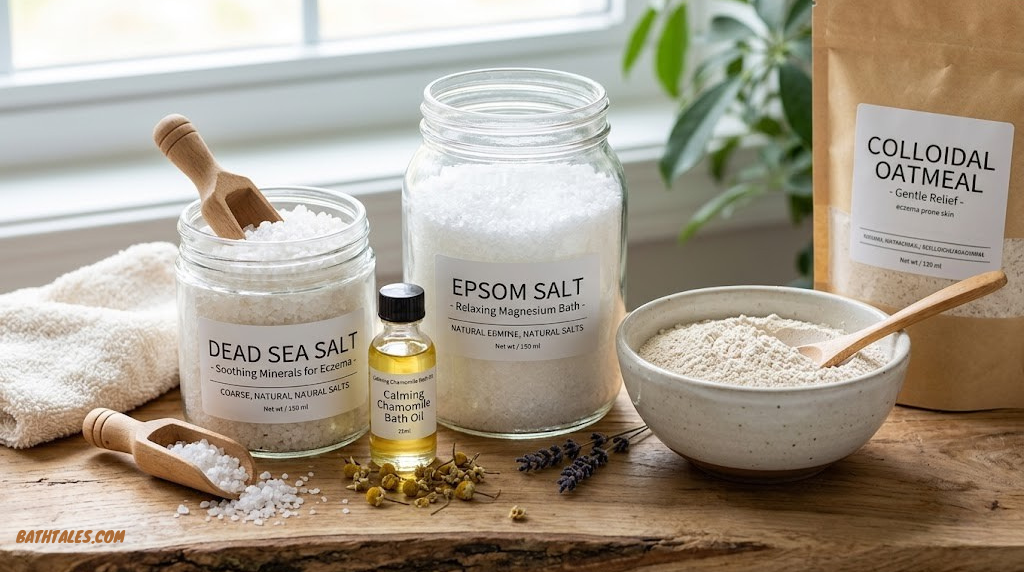
Contains 21 minerals (magnesium, potassium, calcium, zinc, sulfur). Clinically studied for eczema relief. The gold standard for eczema soaks. Look for 100% pure Dead Sea salt with no additives.
🛁 Epsom Salt
Magnesium sulfate — affordable and widely available. Strong anti-inflammatory properties. Less mineral diversity than Dead Sea salt but still highly effective for eczema management.
🌾 Colloidal Oatmeal
FDA-approved skin protectant. Beta-glucans soothe itch and reduce inflammation. Avenanthramides provide antioxidant and anti-itch benefits. Excellent for children and severely sensitive skin.
🌊 Magnesium Chloride
Found in magnesium flakes. More bioavailable than magnesium sulfate (Epsom). Deeply hydrating and particularly effective for barrier repair and reducing trans-epidermal water loss.
🌸 Chamomile Extract
Contains bisabolol and apigenin — potent natural anti-inflammatory compounds. Often found in premium eczema-focused bath products. Must be from certified natural sources to be safe for sensitive skin.
🧪 Sodium Bicarbonate
Baking soda. Helps neutralize excess acidity in bathwater, softens water, and has mild antimicrobial properties. Useful for calming mild flares. Often blended with Dead Sea salt.
For deeper comparison reading, check out our guides on Dead Sea Salt vs Epsom Salt and Magnesium Flakes vs Epsom Salt — both of which are particularly relevant for eczema management decisions.
5. Bath Oils vs Bath Salts for Eczema: Which Approach Works Better?
If you’ve spent any time in the eczema skincare community, you’ve encountered both mineral bath salts and bath oils recommended as must-haves. The question many people face is: do I need both, and if I can only choose one, which delivers better results for eczema?
How Bath Oils Work for Eczema
Bath oils operate on a fundamentally different mechanism than bath salts. While salts deliver minerals that work in the skin (anti-inflammatory, barrier-repairing, pH-adjusting), oils work on the skin — forming an occlusive, lipid-rich film that reduces transepidermal water loss (TEWL) during and after the bath. In essence, oils coat the skin and prevent the water from evaporating, which is particularly valuable in the critical minutes after stepping out of the tub.
Common eczema-safe bath oils include:
- Sunflower seed oil — rich in linoleic acid, which is a key component of the skin’s natural lipid barrier. Studies have shown it improves barrier function in eczema patients without the irritation potential of some other oils.
- Coconut oil (fractionated/MCT) — lighter fractionated coconut oil stays liquid at room temperature and disperses better in bathwater than virgin coconut oil. Has documented antimicrobial properties against S. aureus.
- Bath oil emulsions (e.g., Oilatum, Balneum) — pharmaceutical-grade bath oils formulated specifically for eczema and dermatitis. These emulsify in water to create a milky, skin-coating soak. Often prescribed by dermatologists in the UK and Europe.
- Olive oil — while traditional, research has shown that olive oil may actually impair barrier function in some individuals due to its high oleic acid content. Sunflower seed oil is a safer choice for most eczema sufferers.
How Bath Salts Differ in Their Approach
Bath salts are not primarily about surface coating — they’re about active mineral delivery. Magnesium, zinc, bromide, and sulfur from Dead Sea salt penetrate the stratum corneum and work at a cellular level to reduce inflammation, inhibit histamine, support enzyme function, and rebalance the skin microbiome. The effect is deeper and more physiologically active than what oils alone can achieve.
The Ideal Strategy: Use Both Together
The most effective eczema bath protocol actually combines both approaches. Here’s why they’re complementary rather than competitive:
- Salts deliver active minerals during the 10–15 minute soak, working on inflammation, barrier repair, and pH balance at the cellular level.
- Oils coat the skin surface during the soak, reducing water loss and softening dry, rough patches.
- After the bath, the mineral benefits are already absorbed into the skin, while the oil film helps lock in the moisture you’ve just soaked in — essentially doing part of the “seal” step before you even reach for your moisturizer.
If combining in a single bath, dissolve your salt first, then add a small amount of bath oil (1–2 teaspoons of sunflower seed oil or a pharmaceutical bath emulsion) once the salt is fully dissolved. This prevents the oil from coating the salt crystals and slowing their dissolution.
When to Prioritize Oil Over Salt
In certain situations, oil-based baths may be the better primary choice:
- During active flares with very dry, cracked, but non-weeping skin — the occlusive oil film provides immediate comfort
- For infants under 6 months, where salt concentration must be extremely low
- In winter when indoor air is very dry and skin needs maximum lipid supplementation
- When you’re between salt products and need a stopgap
6. Ingredients to Avoid If You Have Eczema
This section may be more important than the ingredients-to-include list. For eczema-prone skin, product avoidance is often the difference between a therapeutic soak and a full-blown flare. These are the non-negotiable watch-outs:
| Ingredient / Category | Why It’s Harmful | Common Aliases |
|---|---|---|
| Synthetic Fragrance | Top contact allergen. Even in small concentrations, fragrances can trigger histamine response and worsen itch | “Fragrance,” “Parfum,” any named scent |
| Artificial Dyes | No therapeutic benefit; frequent contact sensitizers, particularly Red 40 and Yellow 5 | FD&C dyes, color additives, colorants |
| Parabens | Endocrine-disrupting preservatives linked to skin sensitization in compromised barrier states | Methylparaben, propylparaben, butylparaben |
| SLS / SLES | Surfactants that strip the lipid barrier. Should never be near eczema skin | Sodium Lauryl Sulfate, Sodium Laureth Sulfate |
| Alcohol (ethanol) | Deeply drying and irritating to compromised skin; impairs barrier recovery | SD Alcohol, Denatured Alcohol, Alcohol Denat. |
| Methylisothiazolinone (MI) | Powerful contact allergen and sensitizer; particularly problematic in rinse-off products | MI, MIT, Kathon CG |
| Formaldehyde Releasers | Release small amounts of formaldehyde, a known carcinogen and common sensitizer | DMDM Hydantoin, Diazolidinyl urea, Quaternium-15 |
| Essential Oils (undiluted) | Even “natural” essential oils can cause contact sensitization; always use highly diluted, patch-tested options | Peppermint oil, Eucalyptus oil, Cinnamon oil, Citrus oils |
If you’re also managing sensitive skin alongside eczema (a very common combination), a fragrance-free, dye-free, paraben-free product is non-negotiable, not just preferred.
7. Bath Bombs, Bubble Baths, and Scented Products: Why They Worsen Eczema
With the explosion of the artisan bath product market, bath bombs, colorful bubble baths, and scented “fizzies” have become some of the most popular bathing products sold worldwide. For the general population, they’re a fun and indulgent bath addition. For anyone with eczema, they’re a potential disaster — and understanding why can save you from an unnecessary flare.
What’s Actually in a Bath Bomb?
The core chemistry of a bath bomb is straightforward: an acid (usually citric acid) and a base (usually sodium bicarbonate/baking soda) react in water to produce carbon dioxide gas — the satisfying fizz. But that’s just the starting point. Most commercial bath bombs also contain:
- Synthetic fragrances — the #1 contact allergen worldwide, present in virtually every bath bomb at concentrations designed to scent the entire room
- Artificial dyes — FD&C colorants that create the visual spectacle but serve zero therapeutic purpose and are common sensitizers
- Glitter and mica — cosmetic-grade glitter and mica particles that adhere to skin, clog pores, and can cause micro-irritation on compromised eczema skin
- Emulsifiers and surfactants — added to help oils and colors disperse in water; many are SLS-based, which strips the lipid barrier
- Preservatives — necessary for shelf stability in products containing water or botanical ingredients, often parabens or MI/MIT
Each of these categories is a documented eczema trigger. Stacking multiple triggers in a single product — as bath bombs do by design — creates a compound irritation event. For someone with healthy skin, the exposure is manageable. For someone with eczema’s deficient barrier, these ingredients penetrate more readily and provoke stronger immune responses.
Why “Natural” Bath Bombs Aren’t Much Better
Some brands market “natural” or “sensitive skin” bath bombs that replace synthetic fragrances with essential oils and use plant-based colorants. While marginally better, this doesn’t solve the core problem for eczema sufferers:
- Essential oils like peppermint, eucalyptus, tea tree, and citrus are still contact sensitizers for eczema-compromised skin
- Plant-based colorants (beet powder, turmeric) can still cause contact reactions
- The citric acid + baking soda reaction itself creates an alkaline environment in the bathwater — the opposite direction from what eczema skin needs
Bubble Bath: The Hidden Culprit
Bubble bath products deserve special mention because many parents — understandably — use them to make bath time enjoyable for children with eczema. The problem is that bubble formation requires surfactants, and the most effective surfactants (SLS, SLES, and cocamidopropyl betaine) are also the most damaging to the skin barrier. A child sitting in bubbly water for 15 minutes is getting a prolonged surfactant exposure on already-compromised skin. The fun of bubbles directly conflicts with the therapeutic goals of the bath.
If your child resists bath time without bubbles, consider this: a small amount of colloidal oatmeal in the bath creates a silky, slightly foamy texture that children often find satisfying without any of the harmful ingredients. Our guide to bath bombs vs bath salts provides a detailed side-by-side comparison of ingredients, safety profiles, and therapeutic value if you want to understand the full picture.
8. Best Bath Salts for Eczema: Detailed Reviews
Here are our top-tested, research-backed picks. Each product is assessed on mineral profile, ingredient safety, fragrance status, value, and real-world eczema relief performance.
One With Nature 100% Pure Dead Sea Salt (5 lb, Unscented)
This is our top recommendation for most eczema sufferers. One With Nature sources their Dead Sea salt directly from the Dead Sea, preserving all 21 naturally occurring minerals — magnesium, potassium, calcium, bromide, zinc, and sulfur among them. The salt is 100% unscented, dye-free, and completely free from additives, making it as close to pure therapeutic Dead Sea mineral exposure as you can get at home.
What sets this apart is the coarse crystal texture that dissolves slowly, maintaining mineral saturation throughout a full 15-minute soak. Unlike finely milled salts that dissolve instantly and become diluted, the gradual release keeps the water therapeutically active for your entire bath. Magnesium content is notably high, and users consistently report reduced itching, improved skin softness, and calmer flares with regular use.
The 5 lb bag provides excellent value — at approximately 1–2 cups per bath, you’re looking at 8–16 therapeutic soaks per bag. For eczema management requiring regular bathing, this cost efficiency matters significantly.
✅ Pros
- 100% pure Dead Sea salt, no additives
- All 21 therapeutic Dead Sea minerals
- Completely fragrance-free and unscented
- Large 5 lb bag = excellent value
- Coarse crystals dissolve gradually for sustained mineral release
- Vegan and cruelty-free
❌ Cons
- Coarse texture takes longer to dissolve — stir well
- Packaging not always resealable
- No added moisturizing agents (oils or oatmeal)

One With Nature 100% Pure Dead Sea Salt — 5 lb Unscented
Pure mineral therapy. No additives, no fragrance — just therapeutic Dead Sea minerals for eczema-prone skin.
Check Price on AmazonAveeno Fragrance-Free Soothing Bath Treatment (Colloidal Oatmeal)
When it comes to children with eczema, or adults with the most acutely sensitive, fragrance-reactive skin, Aveeno’s colloidal oatmeal bath treatment is the undisputed clinical gold standard. Aveeno has been a dermatologist-recommended brand for over 70 years, and this product earns every bit of that trust.
Each packet contains 100% natural colloidal oatmeal — finely milled to disperse evenly in bathwater and form a protective, silky coating on skin. The beta-glucan content is anti-inflammatory; avenanthramides (unique antioxidants found only in oats) are among the most effective natural anti-itch compounds known. The formula is completely free of fragrances, dyes, soaps, and harsh chemicals.
Clinically, colloidal oatmeal baths have been shown to reduce itch scores in atopic dermatitis patients within a single session. For parents managing eczema in young children, this is the safest starting point. It’s also completely suitable for full-body soaks and has the kind of proven track record that genuinely justifies the price premium.
✅ Pros
- FDA-approved skin protectant ingredient
- Dermatologist recommended for eczema
- Completely fragrance and dye free
- Safe for children and infants (with pediatrician guidance)
- Dissolves completely — no gritty residue
- Clinically studied for itch reduction
❌ Cons
- More expensive per soak than bulk salts
- No minerals (pure oatmeal, no salt content)
- Tub can become slightly slippery — use a bath mat

Aveeno Fragrance-Free Soothing Bath Treatment — 8 Packets
The most dermatologist-recommended colloidal oatmeal bath for eczema, hives, and irritated skin.
Check Price on AmazonDr. Teal’s Epsom Salt Magnesium Soak — Sensitive Skin with Colloidal Oatmeal & Cucumber
Dr. Teal’s has become the dominant brand in the accessible bath salt market, and for good reason. Their Sensitive Skin formulation for colloidal oatmeal and cucumber extract is one of the best mass-market options for eczema management. The base is pharmaceutical-grade magnesium sulfate (Epsom salt), combined with finely milled colloidal oatmeal for itch control and cucumber extract for its natural anti-inflammatory and skin-cooling properties.
What makes this stand out in the Dr. Teal’s lineup specifically is the hypoallergenic formulation — it’s lightly scented (something to note for those with the most fragrance-reactive skin) but designed to be far gentler than their mainstream scented products. Dermatologist approved, the combination of magnesium’s anti-inflammatory action with the oatmeal’s barrier-coating and itch-calming effects creates a genuinely dual-mechanism eczema soak.
The 3 lb container provides solid value and is widely available, making it the top pick for anyone starting out with therapeutic bath soaks and wanting a trusted, accessible product before committing to bulk purchasing.
✅ Pros
- Dual-action: Epsom + colloidal oatmeal
- Dermatologist approved
- Hypoallergenic, cucumber-soothing formula
- Wide availability and excellent price
- Dissolves easily in warm water
❌ Cons
- Contains light fragrance — may irritate the most reactive eczema
- Less mineral diversity than Dead Sea salt
- Not fully fragrance-free

Dr. Teal’s Sensitive Skin Magnesium Soak — Colloidal Oatmeal & Cucumber
Dermatologist-approved dual-action soak combining Epsom salt and colloidal oatmeal for eczema-prone skin.
Check Price on AmazonDead Sea Warehouse 100% Pure Dead Sea Bath Salts (5 lb, Unscented)
Dead Sea Warehouse offers another excellent option for eczema sufferers who want the full spectrum of Dead Sea minerals without any added ingredients. Their 5 lb bag of unscented therapeutic bath salts is a close competitor to One With Nature — slightly finer grain that dissolves a touch faster, which some users prefer for quicker mineral release.
The mineral profile is comprehensive and preserved: magnesium at the forefront, supported by potassium, calcium, sodium, bromide, and over a dozen trace minerals. The detoxifying and moisturizing properties are frequently cited in user reviews, with skin feeling noticeably softer and less inflamed after just a few sessions. The resealable packaging is a practical plus for maintaining freshness between uses.
✅ Pros
- Full spectrum Dead Sea minerals
- Unscented — safe for fragrance-reactive eczema
- Resealable bag keeps salt fresh
- Slightly finer grain for faster dissolving
- Large quantity = great value
❌ Cons
- Finer grain means quicker depletion in water
- Some users note slight natural mineral odor
- No additional skin-soothing additives

Dead Sea Warehouse — 100% Pure Dead Sea Bath Salts, 5 lb Unscented
Full-spectrum Dead Sea minerals in a resealable therapeutic-grade unscented formula.
Check Price on AmazonYareli Magnesium Flakes (Dead Sea Sourced, 15 lb)
Magnesium flakes deserve a spot on this list because they deliver magnesium chloride — a form of magnesium that is more readily absorbed through the skin than magnesium sulfate (Epsom salt). For eczema sufferers who are particularly responsive to magnesium’s anti-inflammatory effects, this can make a meaningful difference.
Yareli’s flakes are sourced from the Dead Sea, retaining the full mineral complex rather than being synthetically produced magnesium chloride. The flakes dissolve in warm water to create a deeply emollient, silky bath that coats skin in mineral-rich film. Users frequently note significant improvement in trans-epidermal water loss (dryness), making this particularly valuable for the characteristic dry, rough skin texture between eczema flares.
The 15 lb bag represents exceptional value for long-term, therapeutic-frequency use. Also excellent as a foot soak for localized dyshidrotic eczema on the feet or hands.
For a deeper comparison of this and similar products, read our Magnesium Flakes vs Epsom Salt guide and our resource on the best Himalayan pink bath salts for additional mineral-rich alternatives.
✅ Pros
- High-bioavailability magnesium chloride
- Dead Sea sourced — full mineral profile
- Creates deeply emollient, skin-softening bath
- Excellent for severe barrier-damage dryness
- Huge 15 lb bag = months of soaks
- Also perfect for foot soaks
❌ Cons
- Flakes can leave residue if not fully dissolved
- Higher price point per unit weight
- Large bag requires dry storage space

Yareli Dead Sea Magnesium Flakes — 15 lb Therapeutic Grade
High-bioavailability magnesium chloride from the Dead Sea. Superior barrier repair and anti-inflammatory action.
Check Price on Amazon9. Complete Comparison Table: Best Bath Salts for Eczema
Use this at-a-glance table to compare all five reviewed products against the factors that matter most for eczema management.
| Product | Type | Fragrance | For Kids? | Mineral Profile | Best For | Our Score |
|---|---|---|---|---|---|---|
| One With Nature Dead Sea Salt | Dead Sea Salt | ✅ None | ✅ Yes | ⭐⭐⭐⭐⭐ | Overall best for eczema; most users | 9.6 |
| Aveeno Soothing Bath Treatment | Colloidal Oatmeal | ✅ None | ✅✅ Best | N/A (non-mineral) | Children; severe fragrance sensitivity | 9.4 |
| Dr. Teal’s Sensitive Skin Soak | Epsom + Oatmeal | ⚠️ Light | ⚠️ Caution | ⭐⭐⭐ | Beginners; budget-conscious; dual-action | 9.1 |
| Dead Sea Warehouse Salts | Dead Sea Salt | ✅ None | ✅ Yes | ⭐⭐⭐⭐⭐ | Pure mineral therapy; fine-grain preference | 9.0 |
| Yareli Magnesium Flakes | Magnesium Chloride | ✅ None | ✅ Yes | ⭐⭐⭐⭐ | Severe dryness; barrier damage; foot soaks | 8.9 |
10. Dead Sea Salt vs Epsom Salt vs Himalayan Salt for Eczema: Which Is Best?
One of the most common questions from eczema sufferers choosing their first therapeutic bath salt is: which type of salt is actually superior? The answer depends on what aspect of eczema you’re most trying to address, but here’s how they stack up head-to-head.
Mg Content: ~35%
pH Effect: Balancing
Evidence: Strongest (clinical)
Verdict: Best for eczema
Mg Content: ~10%
pH Effect: Mild acidifying
Evidence: Moderate
Verdict: Good, not best
Mg Content: Low
pH Effect: Mild alkalizing
Evidence: Limited
Verdict: Good but less targeted
Mg Content: N/A
pH Effect: Stabilizing
Evidence: Strong (FDA-approved)
Verdict: Best for children
The Science of Each Salt Type for Eczema
Dead Sea salt wins for eczema not because of any single mineral, but because of the synergistic effect of its 21-mineral complex working together on inflamed, barrier-compromised skin. The Dead Sea mineral profile includes not just magnesium but also bromide (a natural sedative that reduces skin irritation), zinc (antimicrobial and wound-healing), sulfur (anti-inflammatory and keratolytic), and potassium (helps skin retain moisture by regulating water balance in cells).
Epsom salt is effective and affordable but contains only magnesium sulfate — powerful, but lacking the mineral diversity of Dead Sea salt. It’s a great option if you can’t access or afford Dead Sea salt, and there’s good evidence for its anti-inflammatory effects. Athletes and anyone dealing with eczema alongside muscle soreness (a common combination) will appreciate Epsom’s dual benefits — read more in our guide to best bath salts for muscle soreness.
Himalayan pink salt is the most popular bath salt by volume sold, but ironically the least targeted for eczema. It has 84 trace minerals, but most are present in such minute quantities they offer minimal therapeutic benefit at bath concentrations. The slight alkalizing effect can theoretically worsen eczema’s tendency toward elevated skin pH. That said, it’s a lovely, gentle option for those without severe eczema who want a relaxing mineral soak — check out our Himalayan pink salt guide for the best picks in that category.
For a comprehensive side-by-side breakdown of Dead Sea vs Epsom specifically, our dedicated Dead Sea Salt vs Epsom Salt comparison goes into much greater depth.
11. Bleach Baths for Eczema: The Evidence-Based Approach Most People Overlook
If you’ve been managing eczema for any length of time, you may have encountered the concept of bleach baths — and if you haven’t, this section may be one of the most valuable in this entire guide. Bleach baths are one of the most consistently recommended interventions by dermatologists for eczema patients who experience recurrent skin infections, and yet they remain widely unknown among the general public.
What Is a Bleach Bath?
A bleach bath involves adding a small, controlled amount of regular household bleach (sodium hypochlorite 6%) to a bathtub of lukewarm water and soaking for 5–10 minutes. The concentration is extremely dilute — roughly equivalent to the chlorine level in a swimming pool — and is specifically designed to reduce the colonization of Staphylococcus aureus on eczema-affected skin without the harshness of direct antiseptic application.
The American Academy of Dermatology, the National Eczema Association, and multiple peer-reviewed studies support bleach baths as an adjunctive therapy for moderate-to-severe atopic dermatitis, particularly in patients who experience frequent secondary infections (yellow crusting, oozing, worsening redness around existing patches).
The Clinical Evidence
A frequently cited randomized controlled trial published in Pediatrics (2009) found that children with moderate-to-severe eczema who took bleach baths twice weekly for three months showed significantly greater improvement in eczema severity (measured by the EASI score) compared to those bathing in plain water. The improvement was comparable to using a topical antibiotic (mupirocin) in the nose — the other arm of the study — but without the antibiotic-resistance concerns that come with long-term topical antibiotic use.
A meta-analysis published in the Annals of Allergy, Asthma & Immunology (2017) reviewing multiple bleach bath studies concluded that bleach baths significantly reduce S. aureus skin colonization and improve eczema severity scores, with minimal adverse effects when used at the recommended dilution.
How to Prepare a Bleach Bath
The standard protocol recommended by most dermatologists is as follows:
- Full bathtub (standard 40-gallon tub): Add ¼ to ½ cup of regular, unscented 6% sodium hypochlorite household bleach
- Half-full tub or child’s tub: Scale proportionally (⅛ to ¼ cup)
- Water temperature: Lukewarm, 97–100°F (same as mineral baths)
- Soak duration: 5–10 minutes — shorter than mineral bath soaks
- Frequency: 2–3 times per week, as directed by your dermatologist
- After soaking: Rinse briefly with plain water, pat dry, and apply emollient within 3 minutes (same soak-and-seal protocol)
Use regular, unscented household bleach. Do not use “splash-less,” scented, or concentrated formulations. Check that the label says 6% sodium hypochlorite.
Bleach Bath vs Mineral Salt Bath: When to Use Which
These two bathing strategies address different aspects of eczema and can be used on alternating days:
| Factor | Bleach Bath | Mineral Salt Bath |
|---|---|---|
| Primary Mechanism | Antimicrobial — reduces S. aureus colonization | Anti-inflammatory — delivers magnesium, zinc, bromide |
| Best For | Recurrent infections, yellow crusting, oozing | Dryness, itching, barrier repair, general maintenance |
| Soak Duration | 5–10 minutes | 10–15 minutes |
| Frequency | 2–3x/week (during infection-prone periods) | 2–5x/week (ongoing maintenance) |
| Contraindications | Open wounds (stings intensely), bleach allergy | Open wounds (salt stings), acute weeping lesions |
| Can Combine? | Do not combine in the same bath — alternate on different days | |
While bleach baths address the microbial dimension, mineral salt baths address the inflammatory and barrier dimensions of eczema. Together, as part of a structured weekly bathing schedule, they provide comprehensive coverage that addresses multiple pathways of the disease simultaneously.
12. How to Use Bath Salts for Eczema: The Soak-and-Seal Method
Even the best bath salt in the world won’t help if you’re using it wrong. The “soak and seal” protocol is the gold standard, and the specific details of how you execute it matter enormously for eczema skin. Here’s exactly what to do.
Fill the Tub with Lukewarm Water
Temperature is critically important. The target is 97–100°F (36–38°C) — body temperature or just slightly above. Hot water (above 105°F) causes mast cell degranulation in the skin, releasing histamine and triggering the itch response. It also strips the already-compromised epidermal lipid layer. Test the water with your inner wrist or elbow — it should feel warm but not hot.
Add Your Bath Salt Before Stepping In
Add your bath salt while the water is still running. For Dead Sea salt or Epsom salt, use 1–2 cups for a standard bathtub filled to soaking depth. For magnesium flakes, use 2–3 cups as they are less concentrated in crystal form. For colloidal oatmeal packets, follow the product directions (typically 1 packet). Stir with your hand to dissolve the salt completely. For coarser Dead Sea salt crystals, give the water 2–3 minutes to fully dissolve the salt before stepping in.
Soak for 10–15 Minutes
This is the therapeutic window. Soaking for 10 to 15 minutes allows sufficient time for mineral absorption and skin hydration without over-softening the already-fragile epidermal barrier. Do not exceed 20 minutes. Longer soaks paradoxically begin to pull moisture out of the skin through osmosis once the skin is fully saturated. You can gently agitate the water periodically to keep minerals in suspension. Read more about optimal timing in our guide on how long to soak in bath salts.
Pat Dry — Never Rub — and Seal Immediately
This step is where most people lose the benefit of their soak. When you get out of the tub, gently pat your skin dry with a soft cotton or bamboo towel. Never rub — friction on eczema-affected skin worsens irritation and disrupts the partially hydrated barrier. Leave skin slightly damp, then within 3 minutes, apply a thick, fragrance-free emollient (such as CeraVe Moisturizing Cream, Vanicream, or Aquaphor) all over your body. This “seals” the water into the skin before it can evaporate, dramatically multiplying the hydration benefit of your soak.
13. The Complete Eczema Bathing Routine: From Start to Finish
The soak-and-seal protocol described above is the core of eczema bath therapy — but the complete bathing routine encompasses more than just those 15 minutes in the tub. What you do before, during, and after the bath all contribute to the overall therapeutic outcome. Here is the full routine, mapped out from the moment you decide to take a bath to the moment you’re dressed and moisturized.
For general bath technique and comfort, our guide on how to make a bath comfortable covers ergonomic setup, pillow placement, and ambient environment tips that are especially valuable when you’re soaking for therapeutic purposes multiple times a week. And if you’re debating whether a shower might serve you better on non-soak days, our bath vs shower comparison breaks down the pros and cons of each for skin health — the answer isn’t always what you’d expect for eczema patients.
Pre-Bath Preparation (5 Minutes)
Gather Your Supplies
Before running the water, have everything within arm’s reach: your bath salt, a bath thermometer (if using), your emollient/moisturizer, a soft towel, and any prescription topicals your dermatologist has prescribed. The worst thing you can do is step out of a warm bath to hunt for moisturizer — every second of air exposure on wet skin is moisture lost.
Check the Water
If you’ve installed a bath filter (highly recommended — see our water quality section), make sure it’s properly connected. Run the water for 30 seconds before plugging the tub to flush any stagnant water from the pipes. Adjust temperature to 97–100°F before adding salt.
Remove Makeup and Sunscreen
If you have facial eczema or are using any prescription topicals, remove surface products with a gentle, fragrance-free cleanser before entering the bath. This allows the mineral water to contact the skin directly without barrier layers of product interfering with absorption. For guidance on creating a broader bathing ritual, explore our resource on the best bath routine for overall wellness.
During the Bath (10–15 Minutes)
Enter Slowly
Lower yourself into the bath gradually rather than plunging in. This gives your skin time to adjust to the water temperature and minimizes the shock response that can trigger histamine release. Start with your feet and legs, then lower your torso, then submerge your arms.
Relax — Stress Reduction Is Part of the Treatment
Stress is one of the most well-documented eczema triggers, and the cortisol spike from chronic stress directly impairs skin barrier repair. The bath itself is an opportunity for stress reduction — use it. Dim the lights, close the door, and let the warm water do its work. If your eczema flares are strongly stress-correlated, consider pairing your mineral soaks with deep breathing or progressive muscle relaxation. The combination of magnesium’s muscle-relaxing properties and deliberate stress reduction creates a compounding therapeutic effect. For more ideas on making your bath a genuine relaxation experience, see our guide on how to make your bath more relaxing.
Gently Agitate the Water
Every few minutes, use your hand to gently swirl the water. This keeps the dissolved minerals in suspension and ensures consistent contact with your skin. With coarser salts that dissolve slowly, this agitation is especially important for maintaining mineral saturation throughout the soak.
Don’t Scrub or Exfoliate
This is a common and damaging mistake. Eczema-affected skin is not dirty — it’s inflamed and barrier-compromised. Scrubbing with washcloths, loofahs, or exfoliating gloves during a therapeutic bath removes the very layers of skin you’re trying to heal. Use only your bare hands to gently splash water over any areas not submerged.
Post-Bath (The Critical 3 Minutes)
This phase is so important that we’ve dedicated an entire additional section below (Section 14) to advanced post-bath care techniques including wet wrap therapy. The basics:
- Stand up and let excess water drip off for 15–20 seconds
- Wrap in a soft, clean cotton or bamboo towel — pat, never rub
- Leave skin slightly damp (not dripping, not dry)
- Apply emollient generously to your entire body within 3 minutes
- Dress in loose, soft, breathable cotton clothing
A comprehensive collection of the best products to support your entire bathing routine — from towels to bath pillows to temperature tools — can be found in our best bath products guide.
14. Post-Bath Eczema Care: Wet Wrap Therapy, Moisturizer Layering, and Advanced Sealing
The minutes after your bath are where therapeutic outcomes are won or lost. The “seal” in soak-and-seal isn’t a suggestion — it’s the mechanism by which the entire bath’s benefits are preserved in your skin. But there’s an advanced version of this protocol that dermatologists frequently recommend for moderate-to-severe eczema: wet wrap therapy.
Understanding Wet Wrap Therapy
Wet wrap therapy (WWT) involves applying a moisturizer or topical medication to post-bath skin, then wrapping the treated area with a layer of damp fabric (usually cotton gauze, tubular bandages, or even damp cotton pajamas) followed by a dry outer layer. The damp fabric serves multiple functions:
- Occlusion — creates a physical barrier that dramatically reduces moisture evaporation from the skin surface
- Enhanced absorption — the moisture and occlusion increase the penetration of topical medications and moisturizers by up to 10-fold
- Cooling effect — the evaporative cooling from the damp layer reduces skin temperature, which directly calms the itch signal
- Physical barrier to scratching — the wrap physically prevents the fingernails from reaching the skin, breaking the itch-scratch cycle during the critical nighttime hours when unconscious scratching causes so much damage
How to Perform Wet Wrap Therapy After a Salt Bath
Here is the step-by-step protocol, best performed immediately after your mineral salt bath:
- Complete your soak-and-seal: Exit the bath, pat dry gently, and immediately apply your prescribed topical medication (if any) to affected areas, followed by a generous layer of fragrance-free emollient over your entire body.
- Prepare the damp layer: Take soft cotton bandages, tubular gauze (like Tubifast), or a set of cotton pajamas and dampen them with lukewarm water. Wring them out so they’re damp but not dripping.
- Wrap the affected areas: Apply the damp layer directly over the moisturized skin. For arms and legs, wrap in a spiral pattern. For the torso, a damp cotton undershirt or pajama top works well.
- Apply the dry layer: Over the damp layer, place a dry layer of clothing or dry bandages. This insulates the moisture and prevents the damp fabric from cooling the skin too much.
- Leave on for a minimum of 2 hours — overnight is ideal if tolerated. Many parents find that putting their child in damp pajamas under dry pajamas before bed is the most practical approach.
- Remove wraps in the morning and reapply emollient. Repeat the full bath + wrap cycle 2–3 times per week during severe flares.
Choosing the Right Moisturizer for the Seal Step
Not all moisturizers are equally effective for post-bath sealing. The general principle is: thicker is better. Moisturizer types, ranked from thinnest (least occlusive) to thickest (most occlusive):
| Moisturizer Type | Texture | Best For | Examples |
|---|---|---|---|
| Lotions | Thin, liquid | Warm weather; mild eczema; large surface areas | CeraVe Moisturizing Lotion, Vanicream Lite Lotion |
| Creams | Thick, whipped | Year-round use; moderate eczema; post-bath seal | CeraVe Moisturizing Cream, Vanicream Moisturizing Cream |
| Ointments | Greasy, petroleum-based | Severe eczema; overnight treatment; cold weather | Aquaphor Healing Ointment, plain petroleum jelly |
For the soak-and-seal protocol, creams are the standard recommendation for the body, with ointments reserved for the driest, most cracked areas (hands, feet, elbows, knees). Lotions are generally too thin for effective sealing after an eczema bath — the water-to-moisturizer ratio favors occlusion, and lotions simply don’t provide enough of it.
15. Using Bath Salts for Children with Eczema: Extra Caution Required
Eczema in children (particularly infants and toddlers) is one of the most common presentations — affecting up to 20% of children in developed countries. While bath soaks can be genuinely therapeutic for pediatric eczema, the approach needs to be even more conservative than for adults.
What’s Safe for Children
The safest products for children with eczema are:
- Fragrance-free colloidal oatmeal baths (Aveeno, as reviewed above) — FDA-approved, dermatologist recommended, suitable for all ages including infants from 6 months
- Fragrance-free, additive-free Dead Sea salt at low concentrations (start with ½ cup per full tub; work up to 1 cup as tolerated)
- Plain Epsom salt — fragrance-free, additive-free versions only
What to Avoid in Children
Never use the following on children with eczema, even if they appear in “gentle” marketing language:
- Any product containing fragrance, even “natural” or “hypoallergenic” fragrance
- Products with essential oils unless specifically formulated for pediatric use and approved by your pediatric dermatologist
- Colorful “bath bomb” type products — almost universally contain dyes and synthetic fragrance
- Products with preservatives like MI (methylisothiazolinone) or formaldehyde releasers
Making Bath Time Safe and Fun for Eczema Kids
One of the biggest challenges parents face is that children with eczema may resist therapeutic baths because they associate bath time with stinging, discomfort, or boring routines. Here are strategies that work:
- Keep bath time short and positive — 10 minutes is sufficient for mineral absorption; longer isn’t better for children
- Use clean, eczema-safe bath toys — avoid toys with paint that can chip, foam letters with adhesive backing, or any toy that’s difficult to dry and clean (mold in bath toys is a genuine eczema trigger). For age-appropriate toy ideas, our guides to the best bath toys for 1-year-olds and best bath toys for 2-year-olds include options that are easy to sanitize and free of harmful materials.
- Sanitize bath toys regularly — mold grows inside hollow bath toys quickly, and mold spores are a recognized eczema trigger. Clean toys weekly with a diluted white vinegar solution, and replace toys that show any signs of internal mold growth. Our guide on how to sanitize bath toys and how to clean mold from bath toys cover both prevention and remediation in detail.
- After the bath — make the moistururizer application part of a bonding routine (gentle massage with cream) rather than a clinical chore. Sing a song, use the time to connect. Compliance with the seal step is dramatically higher when children don’t dread it.
For extra guidance on skin-safe bathing for sensitive young skin, our best bath salts for sensitive skin guide covers overlapping recommendations. For pregnant parents managing their own eczema, read our bath salts for pregnancy guide — eczema often flares during pregnancy due to immune system shifts, and that resource addresses safe options during that specific period.
16. Eczema Bathing Across Life Stages: From Infants to Elderly
Eczema manifests differently at different ages, and your bathing strategy should evolve accordingly. What works for a 6-month-old is not what works for a teenager, and the considerations for elderly eczema patients are distinct from those in midlife. Here’s a stage-by-stage guide.
Infants (0–12 Months)
Infant eczema often appears first on the cheeks, scalp, and outer surfaces of the arms and legs between 2 and 6 months of age. At this stage, the skin barrier is still maturing, making it exceptionally vulnerable to both the eczema itself and to harsh products. Bathing guidance for infants with eczema:
- Bath frequency: Daily baths are fine (and recommended by many pediatric dermatologists) if kept short (5–10 minutes) and followed by immediate moisturization
- Salt concentration: Use at most ¼ cup Dead Sea salt or Epsom salt in a baby tub; colloidal oatmeal is safer for this age group
- Temperature: Slightly cooler than for adults — 97°F maximum, tested with a bath thermometer
- Products: Fragrance-free, dye-free, minimal ingredient products only. No essential oils at this age without explicit pediatric dermatologist guidance
- Post-bath: Apply emollient immediately, then dress in soft cotton. Avoid wool and synthetic fabrics against the skin
Toddlers (1–3 Years)
Toddler eczema tends to shift to the flexural areas — inside the elbows, behind the knees, wrists, and ankles. Toddlers are also more active in the bath, which increases product exposure time. This is the age when parents most commonly struggle with bath time compliance, because toddlers want fun and resist the “medical” feel of therapeutic baths. Our guides to bath toys for this age group — 1-year-olds, 2-year-olds — can help make therapeutic bath time engaging. Colloidal oatmeal remains the safest primary soak, with Dead Sea salt introduced cautiously at ½ cup per bath if tolerated.
School-Age Children (4–12 Years)
By school age, children can begin to participate in their own eczema management — applying their own moisturizer (with supervision), understanding why they need to avoid certain products, and recognizing early flare signs. Bath soaks can be increased to adult-equivalent mineral concentrations by age 8–10, though individual tolerance varies. This is also the age when peer pressure around appearance and products begins — children may resist “boring” fragrance-free products and want the colorful, scented options their friends use. Maintaining the therapeutic routine requires ongoing education and empathy. For older children who enjoy bath time, age-appropriate bath toys for 3-year-olds and bath toys for 4-year-olds can keep the experience positive.
Teenagers
Adolescent eczema adds hormonal complexity — puberty-related hormonal shifts can trigger new flares or worsen existing eczema. Teenagers also face social pressure around appearance, self-consciousness about visible eczema, and a desire for independence in product choice. Key bathing considerations for teens with eczema:
- Teach them the full soak-and-seal protocol and let them own it
- Discuss the difference between “fragrance-free” and “unscented” — teens are drawn to scented products
- Address shower habits: long, hot showers are the teen default and the eczema enemy
- Consider making bath salt soaks an evening wind-down ritual that doubles as stress management (homework pressure is a real eczema trigger)
Adults (20–65)
Adult eczema may be a continuation of childhood eczema or may develop for the first time in adulthood (adult-onset atopic dermatitis). Adults have the most flexibility in product choice and routine design, but also face unique challenges: occupational exposures (healthcare workers, hairdressers, food service), hormonal fluctuations (menstrual cycle, perimenopause), and stress from work and family responsibilities. The full range of products reviewed in this guide — Dead Sea salt, Epsom salt, magnesium flakes, colloidal oatmeal — are appropriate for adults, and combining them strategically (alternating Dead Sea salt baths with colloidal oatmeal baths throughout the week) provides the broadest therapeutic coverage.
Elderly (65+)
Aging skin undergoes structural changes — reduced lipid production, thinning of the epidermis, decreased collagen — that compound eczema’s barrier deficiency. Elderly eczema patients should:
- Use lower salt concentrations (start with ½ cup per bath) as the thinner skin barrier absorbs minerals more aggressively
- Prioritize colloidal oatmeal and bath oils over strong mineral soaks
- Be especially vigilant about the 3-minute seal — aging skin loses moisture faster
- Consider grab bars and non-slip mats as the combination of wet skin and ointment creates a significant slip risk. Making the bath safe and comfortable is as important as the therapeutic content — our resource on how to make a bath comfortable covers accessibility and ergonomic considerations.
- Avoid bleach baths unless specifically recommended by a dermatologist, as elderly skin may react more strongly to the oxidizing effect
17. DIY Eczema Bath Salt Blend: Make Your Own at Home
If you prefer to have full control over every ingredient in your soak — a very reasonable preference given how trigger-sensitive eczema can be — making your own therapeutic bath salt blend is straightforward and highly customizable. Here’s a base recipe proven effective for eczema management:
Base: 1 cup Dead Sea salt (coarse or medium grain)
Booster: ½ cup Epsom salt (fragrance-free)
Soothing Agent: ¼ cup colloidal oatmeal powder (blend rolled oats ultra-fine if needed)
Optional Soother: 1 tsp sodium bicarbonate (pure baking soda, pharmaceutical grade)
Optional Oil: 1 tbsp fractionated coconut oil (test for tolerance first)
Instructions: Combine dry ingredients in a glass jar. Add oil last if using. Stir well. Use 1–2 cups per standard bathtub. Store in an airtight container away from moisture.
This DIY approach gives you the mineral breadth of Dead Sea salt, the anti-inflammatory power of Epsom’s magnesium sulfate, and the itch-calming, barrier-coating effect of colloidal oatmeal in one blend. The sodium bicarbonate gently buffers the bathwater toward a more skin-friendly pH.
Want to expand your DIY repertoire? Our comprehensive guide on how to make bath salts at home covers blending techniques, storage best practices, and advanced customization options. For salt-specific deep dives, our best organic bath salts guide lists the highest-quality raw ingredients to source.
A Note on Essential Oils in DIY Eczema Blends
If you want to add essential oils to your DIY eczema blend, approach with caution. The safest options to consider (at very low dilution — no more than 0.5–1% of total batch weight) are true blue chamomile oil (German chamomile — contains the highest bisabolol and chamazulene content of any chamomile variety) and certified therapeutic-grade lavender oil. Always patch test on the inner forearm for 24 hours before adding to a full body soak. Avoid citrus oils, peppermint, eucalyptus, and cinnamon — all are common contact sensitizers for eczema-compromised skin. Our essential oils for bath salts guide has a full safety matrix for reference.
Alternative Soaks Worth Considering
Beyond traditional salt and oatmeal baths, several alternative soak types have been explored by eczema patients and may be worth incorporating into your rotation. A milk bath — using whole milk, coconut milk, or colloidal milk powder — delivers lactic acid (a gentle exfoliant) and milk fats that coat and soften skin. Our comparison of milk baths vs regular baths explores the pros and cons for sensitive skin. Infrared bathing — using far-infrared technology to deliver deep-penetrating warmth without the surface heat that triggers eczema itching — is an emerging modality covered in our infrared bath vs regular bath comparison. While not a replacement for mineral salt baths, these alternatives can add variety to your weekly routine and may provide complementary benefits for certain eczema subtypes.
18. Seasonal Eczema Bath Management: Adapting Your Routine Year-Round
Eczema is not a static condition — it fluctuates with the seasons, and your bathing strategy should fluctuate with it. Understanding the seasonal triggers and adapting your bath routine accordingly can prevent the predictable flare cycles that many eczema sufferers endure year after year.
Winter: The Toughest Season
Winter is universally acknowledged as the worst season for eczema. The combination of cold outdoor air (which holds less moisture), heated indoor air (which is extremely dry), hot showers and baths (tempting when cold, damaging to skin), and heavy layering with wool and synthetic fabrics creates a perfect storm of barrier-destroying conditions. Winter bath management priorities:
- Increase frequency — move from 2–3 soaks per week to daily if you can maintain the seal protocol rigorously
- Switch to thicker moisturizers — transition from cream to ointment for the post-bath seal during the driest months
- Add bath oil — combine a tablespoon of sunflower seed oil or a pharmaceutical bath emulsion with your mineral salt for extra occlusion
- Lower room humidity is your enemy — use a bedroom humidifier at night (target 40–50% humidity) to complement your bath therapy
- Avoid hot baths — the temptation to crank the temperature up in winter is strong, but it will undo all the mineral benefits. Stick to 97–100°F
Summer: Heat, Sweat, and Chlorine
Summer brings its own eczema challenges: heat-induced sweating (sweat contains sodium and chloride that sting eczema skin), increased sun exposure, chlorine from swimming pools, and air conditioning (which, like heating, dries indoor air). Summer bath management priorities:
- Rinse after swimming — immediately shower or bathe after pool exposure to remove chlorine, then apply emollient. A brief Dead Sea salt soak after swimming can help replace the minerals that chlorine strips
- Manage sweat — a cool (not cold) mineral bath after exercise or heat exposure removes sweat residue and soothes the stinging that follows
- Lighter moisturizers — switch to lotion or lighter cream formulas as heavy ointments can feel suffocating in heat and may trap sweat against the skin
- Sun protection — UV exposure is a double-edged sword for eczema; moderate sun can improve symptoms (hence Dead Sea climatotherapy), but sunburn triggers severe flares. Use mineral-based (zinc oxide) sunscreen on eczema-affected areas
Spring and Fall: Transition Periods
Spring and fall are transition seasons where temperature and humidity fluctuate unpredictably. Pollen counts rise in spring (allergic eczema flares), and fall brings the return of indoor heating and lower humidity. These are the seasons to be proactive rather than reactive:
- Begin increasing bath frequency and moisturizer thickness 2–4 weeks before you historically experience seasonal flares
- Spring allergies can worsen eczema — an evening bath washes pollen off the skin and out of the hair before bed, preventing overnight exposure
- Fall is the time to stock up on bath salt supplies for winter — buy in bulk before the dry season hits
19. Eczema Bath Salt Buying Guide: What to Check Before You Buy
With the market flooded with bath salt products making vague “natural” and “therapeutic” claims, here’s a practical checklist to filter the genuinely eczema-safe options from the marketing noise.
| Criteria | What to Look For | Red Flags |
|---|---|---|
| Fragrance Status | “Fragrance-Free” or “Unscented” explicitly stated on label | “Naturally scented,” “aromatic,” “fresh scent” — all mean fragrance |
| Salt Source | Named source (Dead Sea, Himalayan, USP-grade Epsom); country of origin | Generic “sea salt” with no geographic source stated |
| Ingredient List Length | Short, minimal — ideally 1–5 ingredients | Long list with synthetic chemical names — more potential irritants |
| Preservatives | No preservatives needed in dry salt (only if liquid added) | MI, MCI, formaldehyde releasers, parabens |
| Dye-Free | White, tan, or natural pink only — no artificial coloring | Vivid blue, green, purple colors = synthetic dyes |
| Certifications | NEA Seal of Acceptance; dermatologist tested; cruelty-free; USP grade for Epsom | Vague “clinically tested” without details; unverified certifications |
| Grain Size | Coarse to medium for slow mineral release; fine dissolves faster | Extremely fine powder (except colloidal oatmeal) may dissolve before adequate soaking |
| Packaging | Airtight, moisture-resistant; resealable for freshness | Open-top packaging; cardboard in humid environments |
For related research, browse our guides on best bath salts for dry skin and best detox bath salts — both overlap significantly with eczema-appropriate products. If relaxation is also part of your eczema management routine (stress is a major eczema trigger), our bath salts for relaxation and sleep guide pairs perfectly with this article. And if eczema is part of a broader winter or immune-related skin sensitivity pattern, the bath salts for cold and flu guide covers warming, immune-supportive soaks that are also gentle on irritated skin.
For athletes managing eczema alongside the demands of active training — where sweat, chlorine exposure, and synthetic fabrics compound skin irritation — our bath salts for athletes guide covers products and protocols that work for both recovery and eczema management simultaneously.
20. The Eczema-Sleep Connection: Nighttime Bathing for Better Rest
If you’ve ever lay awake at 2 a.m. scratching your arms raw, you know the eczema-sleep relationship is not a theoretical one — it’s a nightly reality for millions. Research consistently shows that eczema patients have significantly worse sleep quality than the general population, with itch intensity peaking in the evening and nighttime hours. This isn’t coincidental — it’s biological. Body temperature naturally rises in the evening, cortisol (which has anti-inflammatory properties) drops, and the parasympathetic nervous system (which increases itch perception) becomes more active.
A well-timed evening bath can directly interrupt this cycle. Here’s how to optimize your nighttime bath for sleep quality:
Timing Your Evening Bath
The ideal window is 60–90 minutes before your target bedtime. This timing serves two purposes: it aligns with the body’s natural thermoregulation cycle (a warm bath followed by the subsequent cooling of the body triggers drowsiness — the same mechanism behind the advice to take a warm bath before bed for insomnia), and it allows time for the full soak-and-seal protocol before you get into bed.
Sleep-Promoting Ingredients for Evening Baths
While any mineral salt bath will provide anti-inflammatory benefits, certain additions can specifically promote relaxation and sleep readiness:
- Dead Sea salt — the bromide content has mild natural sedative properties that complement the relaxation effect of warm water immersion
- Magnesium flakes — magnesium is involved in melatonin regulation and GABA receptor function. Evening magnesium baths may support the body’s natural sleep onset mechanisms
- Colloidal oatmeal — the silky, coating sensation on skin after an oatmeal bath provides a subtle, comforting tactile experience that some users describe as “cocooning” — helpful for the transition to sleep
The Anti-Scratch Strategy
Post-bath wet wrap therapy (detailed in Section 14) is particularly valuable at bedtime because the physical barrier of the wraps prevents unconscious scratching during sleep. Studies have shown that eczema patients scratch an average of 100+ times per night, much of it during semi-wakeful states they don’t remember in the morning. Cotton gloves, damp pajama wraps, and even keeping nails filed short (not just trimmed — filed smooth to reduce scratching damage) all contribute to minimizing nocturnal scratch damage.
For broader guidance on creating a bath routine that specifically promotes relaxation and sleep, our guide to making your bath more relaxing covers ambient lighting, temperature progression, and mindfulness techniques that enhance the sleep-promoting benefits of your evening eczema soak.
1. Begin your bath 60–90 minutes before bedtime
2. Use Dead Sea salt or magnesium flakes (bromide + magnesium = relaxation)
3. Dim the lights; no screens in the bath
4. Soak for 10–15 minutes at 97–100°F
5. Pat dry, apply ointment (thicker than daytime moisturizer)
6. Apply wet wraps or damp cotton pajamas
7. Dress in soft, breathable cotton
8. Sleep with a bedroom humidifier running
21. Creating a Safe, Eczema-Friendly Bathroom Environment
Your bathroom is where you do the most intensive skin care of your day — but it’s also where many hidden eczema triggers lurk. From cleaning products to mold to the towels you use, the bathroom environment plays a larger role in eczema management than most people realize.
Mold: The Invisible Eczema Trigger
Mold spores are a recognized allergen and eczema trigger. Bathrooms — warm, humid, poorly ventilated — are the most common site of mold growth in the home. Black mold (Stachybotrys) and common bathroom molds (Aspergillus, Cladosporium) release spores that become airborne during showering and bathing, settling on skin and triggering immune responses in sensitized individuals. Addressing bathroom mold is not just a cleaning task — it’s an eczema management strategy.
- Inspect and eliminate existing mold — check grout lines, silicone seals, shower curtains, and behind fixtures. Our guide on how to get rid of bathroom mold covers effective removal techniques that don’t require harsh chemical exposure.
- Improve ventilation — run the exhaust fan during and for 20 minutes after every shower or bath. If you don’t have an exhaust fan, open a window or use a portable dehumidifier.
- Clean regularly — weekly bathroom cleaning prevents mold establishment. Avoid harsh chemical cleaners (bleach-based sprays, ammonia) that leave irritating residues in the air. Our guide to the best bathroom cleaners covers options that are effective yet gentler on the indoor air quality that eczema patients breathe.
Soap Scum and Surface Irritants
Soap scum — the chalky residue that builds up on tub surfaces — is formed when calcium in hard water reacts with fatty acids in soap. While it’s primarily a cleaning nuisance, it can transfer to skin during bathing and act as a physical irritant. Keeping your tub clean between therapeutic baths ensures that the only thing contacting your skin during a soak is the mineral water and your chosen bath additive. Regular cleaning of the tub surface with a non-toxic cleaner prevents soap scum buildup. Our resource on how to remove soap scum provides effective methods, and a thorough bathroom deep clean periodically keeps all surfaces safe for sensitive skin.
Towels and Textiles
The towels you use post-bath matter for eczema skin. Standard terry cloth towels can be abrasive on inflamed skin. Consider these alternatives:
- Organic cotton towels — softer, no pesticide residues from cotton processing
- Bamboo towels — naturally antimicrobial, exceptionally soft, and more absorbent than cotton
- Microfiber towels — ultra-gentle on skin; pat-dry with microfiber causes less friction than terry cloth
- Dedicated eczema towels — use a separate towel for your body and your face, and wash towels after every use in fragrance-free detergent to prevent bacterial buildup
Cleaning Products and Air Quality
Harsh bathroom cleaning products — bleach sprays, aerosol disinfectants, scented tile cleaners — leave chemical residues in the air and on surfaces that can irritate eczema skin and airways. When cleaning the bathroom, ventilate thoroughly, and consider switching to fragrance-free, plant-based cleaning products. After a deep clean, rinse the tub thoroughly with plain water before using it for a therapeutic soak. For drain maintenance that doesn’t require harsh chemicals, our guide on how to clean a shower drain covers effective, skin-safe methods. For grout cleaning that avoids harsh scrubbing chemicals, see how to clean grout without scrubbing.
22. Eczema vs Psoriasis: How Bath Salt Strategies Differ
Eczema and psoriasis are frequently confused — by patients, by some healthcare providers, and certainly by the marketing of bath products that claim to treat both. While they share surface similarities (red, inflamed, itchy skin patches), they are fundamentally different diseases with different immune mechanisms, different triggers, and — importantly for this guide — different optimal bathing strategies.
Key Differences Relevant to Bathing
| Factor | Eczema (Atopic Dermatitis) | Psoriasis |
|---|---|---|
| Core Problem | Barrier deficiency — skin can’t retain moisture | Immune overdrive — skin cells multiply 10x too fast |
| Primary Bath Goal | Hydrate, reduce inflammation, restore barrier | Remove scales, reduce plaque thickness, calm immune response |
| Best Salt Type | Dead Sea salt (barrier repair + hydration) | Dead Sea salt (scale removal + anti-inflammatory) |
| Soak Duration | 10–15 minutes (shorter — longer risks moisture loss) | 15–20 minutes (longer — softens thick plaques) |
| Colloidal Oatmeal | Highly beneficial (itch relief + barrier coating) | Less beneficial (plaques need removal, not coating) |
| Post-Bath Approach | Seal immediately with thick emollient | Apply prescribed topical (steroid, vitamin D analogue) then moisturize |
| Hot Water | Absolute avoidance — triggers histamine | Moderate warmth can help soften plaques, but still avoid very hot |
| Bleach Baths | Beneficial for infection-prone eczema | Not typically recommended |
| Oil Baths | Beneficial for occlusion and hydration | Less useful — oils don’t penetrate thick plaques well |
When Bath Salts Help Both Conditions
Despite the differences, Dead Sea salt baths are one of the few interventions that benefit both conditions significantly. The anti-inflammatory minerals (magnesium, zinc, bromide) reduce the cytokine activity involved in both eczema and psoriasis. Dead Sea climatotherapy programs treat both conditions simultaneously with documented success. The key difference is in the complementary strategies — what you do before, during (duration), and after the bath.
Do You Have Both?
It is possible to have both eczema and psoriasis simultaneously — a condition sometimes informally called “eczema-psoriasis overlap” or “psoriasiform dermatitis.” If you’ve been diagnosed with both, the safest approach is to optimize for eczema (shorter soaks, lighter touch, aggressive sealing) and let the psoriasis benefit from the anti-inflammatory mineral exposure as a secondary gain. Consult your dermatologist about how to structure a dual-condition bathing protocol.
23. Building a Holistic Eczema Management Plan Around Therapeutic Bathing
Bath salts are powerful tools, but they are not a standalone solution. The most effective eczema management integrates therapeutic bathing into a comprehensive plan that addresses the disease from multiple angles simultaneously. Here’s how to build a complete management framework with your mineral salt baths at the center.
The Four Pillars of Eczema Management
1. Therapeutic Bathing
Mineral salt soaks + soak-and-seal protocol, 2–7 times per week
2. Consistent Moisturization
Emollient application 2–3 times daily, not just post-bath
3. Medical Treatment
Prescribed topicals, systemic therapies as directed by dermatologist
4. Trigger Management
Identifying and avoiding personal eczema triggers
Trigger Identification and Management
Eczema triggers are highly individual. What causes a flare in one person may be completely harmless to another. Common triggers include:
- Environmental: Dust mites, pet dander, pollen, mold spores
- Chemical: Fragrances, preservatives, detergents, solvents
- Physical: Wool and synthetic fabrics, sweat, extreme temperatures
- Dietary: Common allergens (dairy, eggs, nuts, soy, wheat) — though food triggers are more significant in children than adults
- Psychological: Stress, anxiety, sleep deprivation
- Hormonal: Menstrual cycle, pregnancy, menopause
Keeping a flare journal — recording what you ate, what products you used, your stress level, the weather, and your bathing routine alongside daily photos of your skin — is the most reliable way to identify your personal trigger patterns. Over 4–8 weeks, patterns typically emerge that allow you to make targeted avoidance changes.
Working with Your Dermatologist
Therapeutic bathing should complement, not replace, medical management. Bring your bathing routine into the conversation with your dermatologist. Specifically:
- Ask about bleach bath frequency if you’re infection-prone
- Discuss timing of topical steroids relative to baths — some dermatologists recommend applying medicated topicals immediately after the bath for enhanced absorption
- Inquire about wet wrap therapy as an adjunct during severe flares
- If you’re on systemic therapy (dupilumab, JAK inhibitors, methotrexate), ask how bathing fits alongside your medication schedule
- Discuss steroid-sparing strategies — regular mineral baths can reduce the frequency of topical steroid use, which is a goal for many long-term eczema patients concerned about steroid side effects
Lifestyle Factors That Amplify Bath Benefits
Certain lifestyle choices directly enhance the therapeutic benefits of your mineral salt baths:
- Sleep hygiene — consistent bedtime, cool bedroom, evening bath routine (see Section 20)
- Stress management — meditation, yoga, exercise, therapy. Cortisol reduction directly improves skin barrier repair
- Hydration — drinking adequate water supports skin hydration from the inside
- Diet — anti-inflammatory foods (omega-3 fatty acids, leafy greens, turmeric) may complement the anti-inflammatory work of mineral baths. While dietary changes alone don’t cure eczema, reducing systemic inflammation supports overall skin health
- Exercise — moderate exercise reduces stress and improves circulation to the skin. Post-exercise, shower quickly to remove sweat, then follow with your emollient routine
24. Frequently Asked Questions About Bath Salts for Eczema
Conclusion: Soothing Eczema Starts With the Right Soak
Eczema is demanding — it asks for consistent attention, careful product choices, and a willingness to experiment until you find what your specific skin responds to. Bath salts, used correctly, are one of the most accessible and evidence-backed tools available for daily symptom management.
Our top recommendation remains One With Nature’s 100% Pure Dead Sea Salt — unscented, pure, mineral-rich, and backed by decades of clinical data on Dead Sea minerals and eczema. For children and the most fragrance-sensitive adults, Aveeno’s Fragrance-Free Colloidal Oatmeal Soak is the safe, dermatologist-endorsed choice. And for anyone who wants a dual-action, budget-accessible option to start with, Dr. Teal’s Sensitive Skin Soak delivers Epsom’s mineral power alongside oatmeal’s itch-calming properties.
The most important thing you can do alongside choosing the right product is committing to the soak-and-seal method — lukewarm water, 10–15 minutes, immediate emollient application. That protocol, consistently applied, transforms a simple bath into a genuinely therapeutic ritual.
Ready to explore all your options across the bath soak universe? Browse our comprehensive guide to the best bath salts for every type of soak for a full spectrum of recommendations tailored to every skin concern and bathing goal.
🛒 Shop Our Top Eczema Pick on Amazon