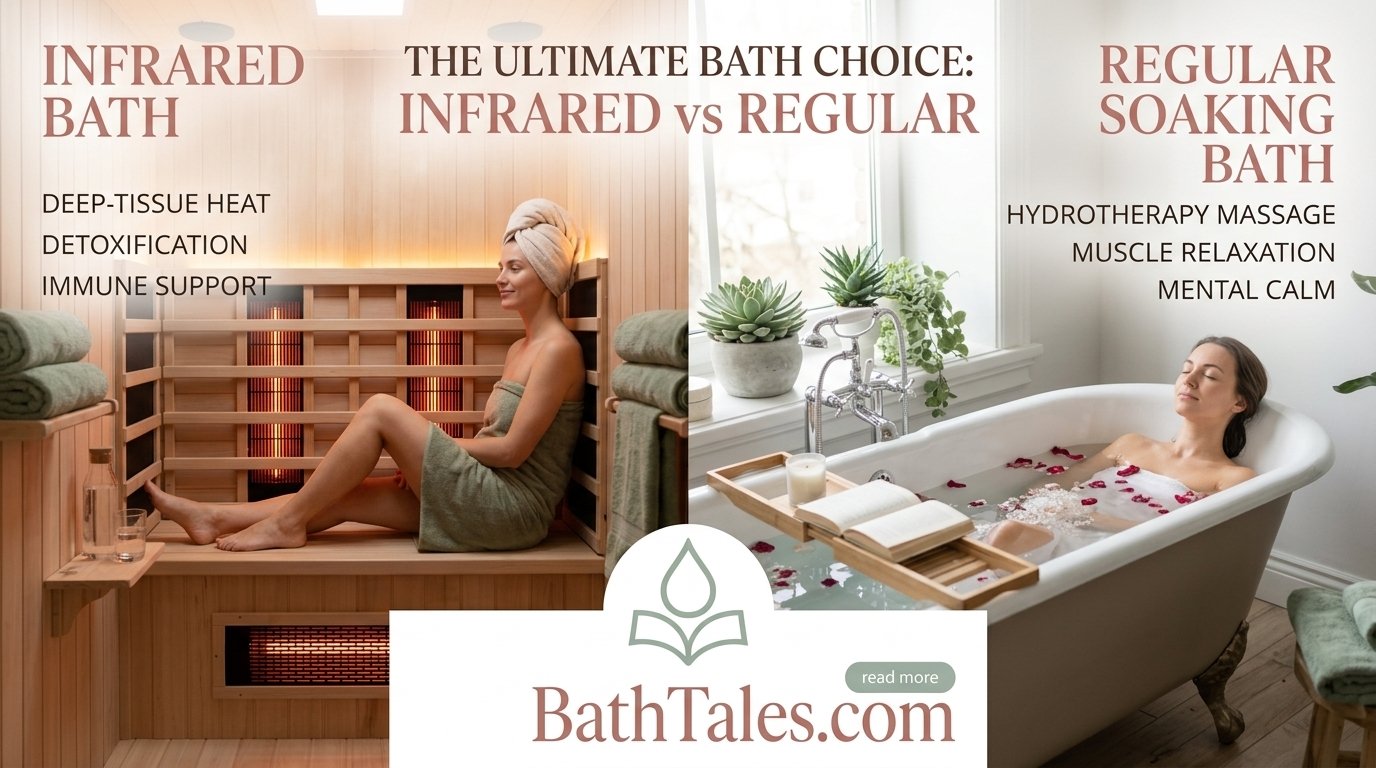
Infrared Bath vs Regular Bath: Which Soak Actually Does More for Your Body?
A deep, honest look at how infrared heat therapy stacks up against a traditional warm-water soak — for detox, muscle recovery, skin health, cost, and everyday relaxation.
If you’ve spent any time browsing wellness forums lately, you’ve probably run into the infrared bath craze — infrared sauna blankets, infrared foot spas, infrared-panel tubs, all promising deeper detox and faster muscle recovery than a plain tub of hot water ever could. But is that actually true, or is it just clever marketing wrapped around a bathtub? This guide breaks down exactly how infrared bathing works, how it compares to a regular hot-water bath on every metric that matters, and which one deserves a permanent spot in your self-care routine. Whether you’re chasing sore-muscle relief, better sleep, or simply the most relaxing thirty minutes of your day, you’ll walk away knowing exactly which soak fits your body, your budget, and your bathroom.
What Is a Regular Bath?
A regular bath is exactly what it sounds like — a tub filled with warm or hot water, sometimes enhanced with bath salts, oils, or bubbles, in which you fully or partially submerge your body. The heat source is the water itself, typically kept somewhere between 92°F and 104°F (33°C to 40°C), and warmth transfers into your body through direct contact and convection. Humans have been doing this for thousands of years, from Roman bathhouses to the modern soaker tub, because it works: warm water raises your core temperature slightly, dilates blood vessels, and creates an immediate sense of comfort and calm.
What makes a regular bath so accessible is that it requires no special equipment beyond the tub you already have. You can turn a basic soak into a genuinely therapeutic ritual by adjusting water temperature, soak duration, and additives. A well-known example is a sitz bath compared to a regular bath, where a smaller, targeted soak is used for specific healing purposes rather than full-body immersion. Similarly, people often ask how a milk bath differs from a regular bath, since additives like milk, salts, or bombs change the experience without changing the underlying mechanism — water conducting heat into the body.
The appeal of the regular bath lies in its simplicity and its sensory richness: the sound of running water, the visual of steam rising, the physical sensation of buoyancy taking weight off your joints. It’s a full-body experience that engages more than just temperature regulation — it’s part hydrotherapy, part ritual, part mental reset.
One reason the regular bath has remained so resilient as a wellness practice is its versatility. You can tailor a soak to almost any goal: muscle relaxation with mineral salts, skin nourishment with oatmeal or coconut oil, congestion relief with eucalyptus, or pure unwinding with candlelight and silence. The bathtub is, in a real sense, a blank canvas — the water is just the medium, and what you layer onto it determines the outcome. For people who want to learn how to build a proper soak from scratch, a good starting point is understanding how to take a bath correctly, including water temperature, timing, and ideal additives for your needs.
It’s also worth noting that a regular bath is one of the few wellness practices that costs virtually nothing to start. There’s no device to charge, no subscription to maintain, and no learning curve beyond turning the faucet. Whether you live in a studio apartment or a house, if you have a bathtub, you have a full hydrotherapy setup waiting to be used. Making that setup more comfortable — with a bath pillow, a tray, or even just the right lighting — can transform a quick wash into a restorative daily ritual. If that sounds appealing, our guide on how to make a bath comfortable walks through every detail.

Bamboo Bathtub Caddy Tray — expandable tray to hold your book, candle, and phone during a long soak.
Check Price on AmazonA Brief History of Bathing: From Ancient Ritual to Modern Wellness
To fully appreciate the infrared-versus-regular-bath debate, it helps to understand how deep humanity’s relationship with bathing actually runs. The practice of immersing the body in heated water or exposing it to controlled warmth is not a modern invention — it’s one of the oldest recorded wellness rituals on Earth, and its evolution directly informs why both methods exist today.
The earliest known public baths date back to around 2500 BCE in the Indus Valley, where sophisticated brick-lined bathing platforms have been uncovered by archaeologists. Ancient Egyptians took bathing further, associating it with religious purification and using mineral-rich Nile water for skin treatments. But it was the Greeks and, later, the Romans who elevated bathing from hygiene to social institution. Roman bathhouses — the famous thermae — were enormous complexes that combined hot pools (caldarium), warm rooms (tepidarium), and cold plunge pools (frigidarium) in a single visit. Citizens spent hours there, socializing, exercising, and moving through a deliberate sequence of temperature zones that we would now recognize as a primitive form of contrast therapy.
Across Asia, bathing traditions developed in parallel. Japan’s onsen culture — bathing in naturally heated volcanic mineral springs — dates back over a thousand years and remains a deeply respected daily and weekly practice. The Japanese approach emphasizes water purity, mineral content, and a specific etiquette that treats the bath as a meditative space rather than a utilitarian one. In Turkey and the broader Middle East, the hammam tradition combined steam rooms, exfoliation, and communal bathing in a ritual that served both cleansing and social functions. Finnish sauna culture, which dates back at least 2,000 years, focused entirely on dry or steam heat rather than water immersion, making it the spiritual ancestor of today’s infrared sauna movement.
The common thread across all of these traditions is that heat — whether delivered through water, steam, or hot stones — was understood intuitively to relieve pain, improve mood, and promote a sense of well-being long before anyone could explain the physiology. Modern science has since validated many of these intuitions: warm-water immersion does improve circulation and reduce cortisol; dry heat exposure does trigger cardiovascular adaptations; and the ritual of slowing down in a heated space does activate the parasympathetic nervous system in measurable ways.
Today’s infrared bath technology is, in many ways, the latest chapter in this long story. It takes the core principle — controlled heat exposure for health — and strips away the water, the steam, and the communal infrastructure, replacing them with portable electromagnetic heating elements you can use in your bedroom. The regular bath, meanwhile, remains the direct descendant of every water-based bathing tradition from Rome to Kyoto, and its enduring appeal is a testament to how fundamental the experience of warm-water immersion is to human comfort. Understanding this history doesn’t just add color to the comparison — it grounds both methods in thousands of years of cross-cultural evidence that deliberate heat exposure, in whatever form, is something the human body genuinely responds to.
What Is an Infrared Bath?
An infrared bath doesn’t necessarily involve water at all. Instead, it uses infrared light — a wavelength just beyond visible red light — to heat the body directly rather than heating the air or water around it. In practice, “infrared bathing” usually refers to one of a few setups: an infrared sauna blanket you zip yourself into, a standalone infrared sauna cabin, an infrared panel tub insert, or an infrared foot and calf spa. Each device emits far-infrared (FIR) or near-infrared (NIR) wavelengths that penetrate a few millimeters into skin tissue, gently raising your core body temperature from the inside out.
Because infrared heats your body directly instead of the surrounding air, sessions tend to feel less oppressive than a traditional steam sauna, even though your body may end up sweating just as much or more. Many people who find a standard sauna’s 180°F air unbearable can comfortably tolerate an infrared session at 120–140°F because the ambient air stays cooler while your tissue still warms up. This is the core selling point of infrared bathing brands: a deeper, gentler heat with a more tolerable environment.
It’s worth noting that “infrared bath” is a slightly loose marketing term — you’re not bathing in infrared light the way you bathe in water. You’re sitting or lying in a device that radiates heat at your skin. Understanding this distinction is the key to setting realistic expectations for what it can and can’t do compared with a standard bath or shower routine.
The infrared device market has expanded rapidly in recent years, which means there’s now a wide spectrum of options at very different price points. At the entry level, a portable infrared sauna blanket can be found for a fraction of the cost of a cabin-style unit, and it folds up for storage in a closet. Mid-range options include dedicated infrared foot spas that target the calves and feet with a combination of infrared heat and water jets — a hybrid approach that blends the radiant warmth of infrared with the soothing sensation of water. At the high end, full infrared cabin enclosures with multiple carbon-fiber heating panels offer a comprehensive, full-body session that rivals the experience of a commercial wellness spa. Understanding these tiers matters because the experience and the results can vary significantly depending on which type of device you choose.

Portable Infrared Sauna Blanket — full-body far-infrared heat you can use on any bed or floor mat.
Check Price on AmazonNear-Infrared vs Far-Infrared: Understanding Wavelength Differences
Not all infrared is the same, and understanding the difference between near-infrared (NIR) and far-infrared (FIR) is important for setting realistic expectations about what your device actually does. The electromagnetic spectrum includes a range of infrared wavelengths, and wellness devices typically operate in one of two bands: near-infrared, which sits close to visible red light at roughly 700 to 1,400 nanometers, and far-infrared, which occupies the range from about 3,000 to 100,000 nanometers. The practical difference comes down to how deeply each wavelength penetrates tissue and what kind of heating effect it produces.
Near-infrared wavelengths penetrate the skin more deeply — up to several centimeters in some studies — and are absorbed primarily by water molecules and cellular structures in the tissue. This is the type of infrared used in some photobiomodulation (light therapy) devices that claim to support cellular energy production, reduce inflammation, and accelerate wound healing. In the context of bathing, NIR is less commonly used in blanket-style devices and more commonly found in targeted panel units or specialized saunas that combine NIR with red-light LEDs.
Far-infrared, by contrast, is absorbed more superficially — within the first few millimeters of skin — but it’s exceptionally efficient at converting light energy into heat energy at the surface, which then conducts deeper through your body’s own thermal processes. This is the wavelength used in the vast majority of infrared sauna blankets, portable cabins, and foot spas on the consumer market. When someone says “infrared bath” or “infrared sauna,” they almost always mean far-infrared unless specifically stated otherwise.
| Property | Near-Infrared (NIR) | Far-Infrared (FIR) |
|---|---|---|
| Wavelength range | 700–1,400 nm | 3,000–100,000 nm |
| Penetration depth | Deeper (several cm) | Surface-level (a few mm) |
| Primary heating effect | Cellular/sub-dermal | Skin surface → conduction inward |
| Common device types | Red-light panels, targeted therapy devices | Sauna blankets, cabin saunas, foot spas |
| Sweat induction | Moderate | Significant |
| Typical price point | Higher (specialized devices) | Wide range (affordable to premium) |
| Research backing | Growing (photobiomodulation studies) | Moderate (sauna and heat therapy studies) |
Some premium devices combine both NIR and FIR in a single unit, claiming to deliver the cellular benefits of near-infrared alongside the deep-sweat efficiency of far-infrared. Whether this combination is meaningfully superior to FIR alone is still debated in the research literature, but it does offer a broader spectrum of heat delivery for people who want to cover all bases. If you’re shopping for a device and see “full-spectrum infrared” in the description, this is what it means — the unit produces both NIR and FIR wavelengths, typically through separate sets of heating elements.
For the purposes of this article, “infrared bath” primarily refers to far-infrared experiences, since that’s what the overwhelming majority of consumer devices deliver. If you’re specifically interested in near-infrared therapy, it’s worth researching dedicated photobiomodulation panels, which operate on different principles and are typically used for targeted treatment rather than full-body bathing sessions.
How the Heat Actually Works: Radiant vs Conductive
The clearest way to understand the infrared-versus-regular-bath debate is to look at the physics of heat transfer. A regular bath relies on conduction and convection — heat molecules in the water physically collide with your skin, and warmth spreads inward layer by layer. An infrared setup relies on radiant heat — electromagnetic waves that travel through air with minimal loss and are absorbed directly by your skin and the top layers of tissue, converting light energy into heat energy on contact.
| Factor | Regular Bath | Infrared Bath |
|---|---|---|
| Heat transfer method | Conduction through water | Radiant infrared absorption |
| Penetration depth | Surface-level, gradual core rise | Several millimeters into tissue |
| Ambient air temperature | Bathroom stays normal | Warm but tolerable (120–140°F) |
| Typical session length | 15–30 minutes | 20–45 minutes |
| Sweat response | Minimal to moderate | Often significant |
| Water required | Full tub, 30–70 gallons | None (dry heat) |
This difference in mechanism explains why infrared sessions often produce more visible sweating despite a lower surrounding air temperature — the heat is being absorbed directly by your tissue rather than warming you through an intermediary. Meanwhile, a regular bath’s conductive heat combined with buoyancy is what makes it so effective for reducing joint pressure and stiffness, something dry infrared heat cannot replicate.
The Science of Heat Therapy: What Happens Inside Your Body
Whether you’re sitting in a tub of hot water or lying inside an infrared blanket, your body undergoes a predictable cascade of physiological responses to heat exposure. Understanding these responses helps you choose the right method for your specific goals — and explains why certain benefits are associated more strongly with one approach than the other.
The first thing that happens is vasodilation: blood vessels near the skin’s surface widen to release heat, which is why you turn pink or red during a hot soak. This dilation redirects blood flow toward the skin and away from the core temporarily, which lowers blood pressure slightly and increases heart rate to compensate — a mild cardiovascular workout effect that researchers have compared to light aerobic exercise. A 2016 study published in Temperature found that regular hot-water immersion improved vascular function and lowered blood pressure in sedentary young adults over an eight-week period, suggesting that the cardiovascular benefits of passive heat exposure are real and measurable.
The second major response is the heat shock protein (HSP) activation. When your cells are exposed to temperatures above their normal operating range, they produce heat shock proteins — molecular chaperones that help repair damaged proteins, protect cells from oxidative stress, and support immune function. Both regular hot baths and infrared sessions can trigger HSP production, though the depth and efficiency of heat delivery may differ. Far-infrared heat, because it warms tissue more directly, may activate HSPs at slightly lower ambient temperatures, though the clinical significance of this difference in real-world bathing is still being studied.
Third, heat exposure triggers the parasympathetic nervous system — the “rest and digest” branch of your autonomic nervous system. This is why both a hot bath and an infrared session tend to produce feelings of deep relaxation and drowsiness. The body interprets the warming sensation as a signal that it’s safe to lower its guard, which reduces cortisol production, slows the heart rate slightly after the initial increase, and promotes the release of endorphins. This neurological shift is one of the most universally reported benefits of both methods and is a major reason people use either form of heat therapy for stress relief and sleep preparation.
There’s also a circulatory flushing effect worth understanding. As blood flow increases to the skin and extremities during heat exposure, waste products in muscle tissue are carried away more efficiently, and fresh, oxygen-rich blood replaces them. This is one reason athletes use both hot baths and infrared sessions for recovery — the enhanced circulation helps clear metabolic byproducts like lactic acid from fatigued muscles. The difference is that a regular bath delivers this benefit partly through hydrostatic pressure (the physical compression of tissue by water), while infrared delivers it purely through heat-induced vasodilation. If you want to maximize the mineral component of this flushing effect during a regular bath, choosing the right additive matters — our comparison of Dead Sea salt vs Epsom salt breaks down which minerals actually absorb through the skin and which claims are mostly marketing.
Finally, prolonged heat exposure affects metabolic rate. Your body works harder to maintain its core temperature when subjected to external heat, which means your metabolic rate increases modestly during both a hot bath and an infrared session. The effect is not dramatic enough to replace exercise or meaningful dietary changes, but it is a real physiological cost that your body pays. Some researchers have found that the metabolic cost of a hot bath is comparable to a 30-minute walk, though this comparison should be taken as an illustration of the body’s workload rather than a prescription for weight loss.
Health Benefits Compared, Side by Side
Both bathing styles offer real, well-documented benefits — they simply excel in different areas. A regular bath’s biggest strength is full-body immersion: buoyancy takes pressure off joints, hydrostatic pressure gently compresses tissue to reduce swelling, and warm water is exceptional for circulation and general comfort. An infrared session’s biggest strength is its ability to raise core temperature efficiently in a dry environment, which some studies link to modest cardiovascular conditioning effects, similar to light exercise, plus a strong sense of deep muscular warmth.
Regular Bath — Strengths
- Full-body buoyancy relieves joint pressure
- Easy to customize with salts, oils, and bombs
- No equipment cost beyond your existing tub
- Great for hydrating and softening skin
Regular Bath — Limitations
- Uses significant water and energy per soak
- Heat is more surface-level than infrared
- Requires a bathtub (not available everywhere)
Infrared Bath — Strengths
- No water required, more energy-efficient per session
- Deeper tissue warmth without oppressive air heat
- Compact and portable options (blankets, foot spas)
Infrared Bath — Limitations
- Upfront equipment cost, sometimes significant
- No buoyancy or hydrotherapy benefit
- Not ideal for dry or sensitive skin without hydration
If your goal leans toward pain relief tied to joints and circulation, a regular soak enhanced with muscle-soreness bath salts is hard to beat. If your goal is a dry, sweat-forward session that fits into a small apartment, infrared wins on convenience.
One important nuance is that the benefits of each method compound with consistency. A single hot bath or infrared session will leave you feeling relaxed and slightly loose, but the more meaningful effects — improved cardiovascular markers, reduced chronic pain frequency, better sleep patterns — tend to emerge after weeks of regular use. This is why the “which is better” question is ultimately less useful than “which will you actually do three or more times a week.” For many people, the answer is determined by practical factors like space, budget, and daily schedule rather than by a strict comparison of physiological outcomes.
It’s also worth mentioning that the type of additive you use in a regular bath can dramatically change its benefit profile. A plain hot-water soak provides warmth and buoyancy; add Epsom salts and you introduce magnesium sulfate, which may support muscle relaxation; add mineral-rich Himalayan salt and you get a different trace-mineral profile that some people find beneficial for skin conditions. If you want a comprehensive breakdown of which salt does what, our guide to the best bath salts for every type of soak covers the full range.

Pure Epsom Salt, Unscented — the classic addition for a deeper, more therapeutic soak.
Check Price on AmazonDetoxification: Sweat vs Soak
Detox claims are where infrared marketing gets the loudest — and where the science is the most nuanced. Sweat itself is composed mostly of water, sodium, and small amounts of other minerals; it is not a primary route for eliminating heavy metals or toxins the way your liver and kidneys are. That said, an infrared session does typically induce more visible perspiration than a regular bath, which some people find satisfying as a marker of “working hard,” even if the metabolic detox effect is modest.
A regular bath supports the body’s natural processes differently: warm water combined with detox-focused bath salts can promote relaxation, improve circulation, and support the lymphatic system indirectly through gentle hydrostatic pressure. Neither approach replaces the liver and kidneys as your body’s actual detox organs, but both can create the physiological conditions — better blood flow, lower stress hormones, improved sleep — that make it easier for your body to do that work efficiently on its own.
If detox is your main motivation, the honest answer is that both methods offer supportive, not curative, effects. Choose the one that you’ll actually do consistently, since consistency is what drives any measurable wellness benefit over time.
It’s important to understand what “detox” actually means in a clinical context versus a wellness-marketing context. In clinical medicine, detoxification refers to the metabolic processes by which the liver converts fat-soluble toxins into water-soluble compounds that the kidneys can excrete through urine. This is a continuous, highly efficient process that does not require external heat or sweating to function. In wellness marketing, “detox” is often used more loosely to describe the subjective feeling of lightness and renewal that follows a sweat session or a hot soak — a feeling that is real and enjoyable but is driven by vasodilation, endorphin release, and parasympathetic activation rather than by the literal elimination of toxins through the skin.
That said, there is some limited evidence that trace amounts of certain heavy metals and environmental chemicals can be excreted through sweat. A 2012 review in the Journal of Environmental and Public Health found that sweat can contain measurable levels of lead, mercury, cadmium, and BPA, among other compounds. However, the quantities are small relative to what the kidneys process, and the clinical significance of sweat-based toxin elimination remains a subject of debate among researchers. For practical purposes, both infrared and regular-bath enthusiasts can consider the “detox” benefit a pleasant side effect of improved circulation and relaxation rather than a primary health outcome.
Muscle Recovery & Pain Relief
For athletes and anyone dealing with chronic muscle tightness, both bathing styles are genuinely useful recovery tools, but they intervene differently. Infrared heat penetrates a few millimeters into muscle tissue, which can help loosen tight fibers and improve local blood flow to a sore area without the added water weight pressing on inflamed joints. This makes infrared sessions popular after strength training or for chronic conditions like fibromyalgia, where deep, steady warmth is soothing.
A regular hot bath, especially one dosed with the right minerals, offers a different recovery pathway: buoyancy reduces the load on joints and connective tissue almost immediately, hydrostatic pressure can reduce localized swelling, and full submersion warms muscle groups you might miss with a targeted infrared panel. Many people combine both — an infrared session the evening after a hard workout, followed by a mineral soak the next day — to hit recovery from two different angles. If you want to fine-tune your bath for recovery specifically, this guide on how much bath salt to use is a good place to start, along with knowing how long to soak in bath salts for the best effect.
Athletes in particular tend to benefit from a structured approach to heat-based recovery. Post-training, the immediate goal is to increase blood flow to fatigued muscles so that oxygen and nutrients can reach damaged fibers and metabolic waste products can be cleared. Both infrared and hot-water immersion accomplish this, but the timing matters. Most sports physiologists recommend waiting at least 20–30 minutes after intense exercise before entering a hot bath or infrared session, since jumping into high heat immediately post-workout can exacerbate inflammation that the body needs to manage on its own first. Once that initial window has passed, a 15- to 20-minute session at moderate heat (around 100–102°F for a bath, or 120–130°F for infrared) is generally considered optimal for recovery without overtaxing the cardiovascular system.
The specific mineral composition of your bath salts also plays a role in recovery outcomes. Epsom salt (magnesium sulfate) is the most commonly recommended option for post-workout soaks because magnesium plays a direct role in muscle contraction and relaxation, and transdermal absorption through a warm bath is one of the few delivery methods that many users report as effective for immediate relief. If you want to explore options beyond basic Epsom salt, our guide to the best bath salts for athletes reviews formulations specifically designed for post-training recovery, including blends with arnica, menthol, and additional trace minerals.

Infrared Foot & Calf Massage Spa — deep radiant warmth for tired legs after long days or workouts.
Check Price on AmazonChronic Pain Deep Dive: Arthritis, Back Pain, and Fibromyalgia
While the general muscle-recovery benefits of heat therapy apply broadly, chronic pain conditions present a more nuanced picture where the choice between infrared and regular bathing can make a meaningful difference in daily quality of life. Each condition responds to heat in slightly different ways, and understanding those differences helps you choose the most effective approach — or a combination of both.
Arthritis (Osteoarthritis and Rheumatoid)
For osteoarthritis — the wear-and-tear form of arthritis — a regular warm bath is often the first-line non-pharmacological recommendation from rheumatologists. The reason is straightforward: buoyancy. When you submerge a joint in water, the physical weight pressing on that joint drops dramatically. A knee submerged to the chest bears roughly 25–50% of its normal load, depending on water depth and temperature. This immediate weight relief allows inflamed joints to move more freely, and the warmth of the water increases the elasticity of the surrounding soft tissue, making gentle range-of-motion exercises more comfortable. Adding mineral salts like those found in magnesium flakes vs Epsom salt comparisons can further support muscle relaxation around arthritic joints.
Infrared heat, while lacking the buoyancy advantage, can still be beneficial for arthritis — particularly for joints in the hands, feet, and neck, where full submersion in a bathtub may not reach effectively. A targeted infrared device applied to a specific joint for 15–20 minutes can increase local blood flow, reduce stiffness, and provide temporary pain relief. For people with multiple affected joints, alternating between infrared (for specific hot spots) and a full-body bath (for overall joint relief and relaxation) can be an effective hybrid approach.
Chronic Lower Back Pain
Lower back pain is one of the most commonly cited reasons people seek out heat therapy, and both methods have evidence supporting their use. A regular bath’s hydrostatic pressure gently compresses the lumbar tissues, which can reduce swelling and provide a mild traction effect when the body is fully relaxed and floating slightly. The warmth also helps release muscle guarding — the involuntary tensing that the body uses to protect an injured area and that often perpetuates chronic pain cycles.
Infrared heat has a particular advantage for lower back pain because of its penetration depth. Far-infrared wavelengths can warm the paraspinal muscles (the deep muscles running alongside the spine) more efficiently than conductive heat from water, which must warm through several layers of skin and superficial fat before reaching deeper tissue. Many physical therapy clinics now incorporate infrared heat lamps or wraps as part of their lower-back treatment protocols for this reason.
Fibromyalgia
Fibromyalgia — a condition characterized by widespread musculoskeletal pain, fatigue, and tender points — responds particularly well to regular infrared use. Several studies, including a notable 2008 trial published in Clinical Rheumatology, found that repeated infrared sauna sessions significantly reduced pain and stiffness in fibromyalgia patients over a multi-week period, with benefits lasting well beyond the treatment period. The mechanism appears to involve a combination of deep tissue warming, gentle cardiovascular stimulation, and the modulation of pain-signaling pathways through sustained heat exposure.
A regular bath can also help manage fibromyalgia symptoms, particularly for improving sleep quality and reducing the anxiety that often accompanies chronic pain. However, some fibromyalgia patients report that the sensory stimulation of water immersion — the pressure, temperature fluctuations, and physical effort of getting in and out of the tub — can be overwhelming during flare-ups. In these cases, the enclosed, still environment of an infrared blanket or cabin may be better tolerated. There’s no universal answer; experimenting with both approaches and tracking your symptom response over a few weeks is the most reliable way to find what works for your body.
Skin Health: Hydration vs Radiant Warmth
Skin responds very differently to these two experiences. A regular bath, particularly one with oils, colloidal oatmeal, or gentle salts, actively hydrates and softens skin by keeping it in contact with moisture for an extended period. This is a major reason regular baths remain the preferred option for people managing dry skin, eczema, or general seasonal dryness — the water itself is doing hydrating work, especially when paired with something like the picks in this list of best bath salts for dry skin or best bath salts for eczema.
Infrared sessions, being dry heat, do not hydrate the skin at all — if anything, extended sessions can be mildly dehydrating unless you drink water and moisturize afterward. However, some people report that increased circulation from infrared heat gives skin a temporary warm, flushed glow, and the deep heat may help open pores before a skincare routine. If you have particularly reactive or sensitive skin, a gentle regular soak is generally the safer, more predictable choice over prolonged dry heat exposure.
The mineral content of your bath water also plays a significant role in skin outcomes. Different salts contribute different trace minerals that can interact with the skin barrier in distinct ways. Dead Sea salt, for example, is unusually rich in magnesium, calcium, potassium, and bromide — minerals that some dermatological studies have found beneficial for conditions like psoriasis and general inflammation. Himalayan pink salt offers a different profile, with over 80 trace minerals including iron oxide, which gives it its characteristic color. If you’re choosing between salt types for a skin-focused soak, our guide to the best Himalayan pink bath salt provides detailed comparisons. Similarly, for people who want to minimize synthetic additives and fragrances, switching to certified organic bath salts can reduce the risk of skin irritation while still delivering the mineral benefits of a therapeutic soak.
For infrared users concerned about skin dryness, the best countermeasure is to hydrate thoroughly before and after each session, apply a rich moisturizer or body oil immediately after exiting the device, and limit session length to 20–30 minutes. Some infrared enthusiasts also apply a light, water-based serum to their skin before entering a blanket, reasoning that the opened pores may allow better absorption — though clinical evidence for this practice is anecdotal. Regardless of method, the most important thing is to listen to your skin: if it feels tight, itchy, or unusually dry after a session, that’s a signal to shorten the duration, lower the temperature, or add more post-session hydration.
Relaxation & Stress Relief
Both experiences are genuinely relaxing, but the sensory profile is completely different. A regular bath is a multisensory ritual: warm water, the sound of the faucet, candlelight, aromatherapy, and the simple act of lying still while gravity’s pull is softened by buoyancy. It’s easy to layer in mindfulness, music, or a book, turning fifteen minutes into a full mental reset — something many people build into a nightly best bath routine for winding down before bed.
Infrared sessions offer a different kind of stillness — often more meditative and enclosed, since you’re typically lying inside a blanket or cabin with less sensory stimulation. The steady, penetrating warmth can trigger a parasympathetic (“rest and digest”) response, and many users describe a feeling similar to a heavy, warm hug. For sleep-focused relaxation, especially in cooler months, pairing a warm soak with bath salts formulated for relaxation and sleep tends to edge out infrared purely because the ritual of a bedtime bath is so deeply tied to your body’s natural wind-down cues.
Aromatherapy integration is where the regular bath has a distinct advantage. Essential oils like lavender, chamomile, bergamot, and ylang-ylang dissolve readily into bathwater, and the steam rising from a hot bath carries these aromatic compounds directly to your olfactory system — the fastest pathway to the brain’s limbic center, which governs emotion and memory. This means that a lavender-infused bath doesn’t just feel relaxing because of the warmth; the scent itself is triggering measurable neurological changes in stress-hormone production. In an infrared session, where there’s no water to carry aromatic compounds, you’d need a separate diffuser or apply diluted oils to your skin beforehand, which is less efficient and less immersive. For a full list of which oils pair best with which bath types, our guide to the best essential oils for bath salts is a useful reference.
If you’re looking to elevate the relaxation factor of either method, small environmental details matter more than most people realize. Dimming the lights (or using candles), silencing your phone, keeping the room warm enough that stepping out of the bath or infrared device isn’t jarring, and using a bath pillow or mat for comfort can each make a noticeable difference in how deeply you’re able to relax. Our detailed guide on how to make a bath more relaxing covers these environmental optimizations in depth, and many of the same principles apply to setting up a comfortable infrared session space.

Pure Lavender Essential Oil — a few drops turn any regular soak into a sleep-friendly ritual.
Check Price on AmazonMental Health Benefits: Stress, Anxiety, and Mood
Beyond simple relaxation, both infrared and regular bathing have measurable effects on mental health markers that go deeper than the immediate sensation of warmth. Research on passive heat therapy — including both hot-water immersion and infrared sauna use — has found consistent reductions in self-reported anxiety, improvements in mood scores, and decreases in salivary cortisol (the body’s primary stress hormone) following regular sessions. These findings are encouraging, though it’s important to understand the mechanisms and the limitations.
The most well-understood pathway is the cortisol-temperature relationship. Cortisol, which is released in response to perceived threats and chronic stress, drops measurably after 15–20 minutes of passive heat exposure. A 2018 study in Complementary Therapies in Medicine found that regular warm-water bathing was associated with significant reductions in cortisol and improvements in self-reported depression scores among participants who bathed five times a week for two weeks. The mechanism appears to involve heat-induced parasympathetic activation, which directly counteracts the sympathetic (fight-or-flight) nervous system overdrive that characterizes chronic anxiety.
For people dealing with generalized anxiety, the enclosed, low-stimulation environment of an infrared blanket or cabin may be particularly beneficial. The physical sensation of being enveloped in steady warmth has been compared to deep-pressure therapy — the same mechanism behind weighted blankets, which have been shown to reduce anxiety in clinical settings. An infrared session essentially combines the physiological benefits of heat with the psychological comfort of contained, consistent pressure, making it a two-pronged approach to anxiety management.
Regular baths, meanwhile, offer a broader sensory toolkit for mental health. The ritual aspect — running the water, choosing an additive, lighting a candle, and dedicating a specific time to self-care — provides structure and intentionality that can be especially valuable for people experiencing depression, where motivation and routine are often the first things to suffer. The act of deliberately carving out 20 minutes for a warm bath can serve as a low-effort, high-reward anchor in a daily routine, providing a small but consistent sense of accomplishment and comfort. Aromatherapy integration, as mentioned in the relaxation section, adds another dimension: lavender, chamomile, and rose essential oils have all demonstrated anxiolytic (anxiety-reducing) properties in controlled studies, and the bath format delivers them efficiently through both inhalation and skin contact.
It’s worth noting that neither method is a replacement for professional mental health treatment. If you’re experiencing clinical depression, severe anxiety, or other mental health conditions, a regular bath or infrared session should be viewed as a supportive complement to therapy and any prescribed treatment — not a substitute. That said, the consistency of heat-based self-care can be a meaningful addition to a broader mental health toolkit, particularly for managing day-to-day stress and maintaining a baseline of physical comfort that supports emotional resilience.
There’s also a social dimension to bathing that’s often overlooked. In cultures where communal bathing is common — Japanese onsen, Finnish saunas, Turkish hammams — the act of bathing together serves a social bonding function that has its own mental health benefits. While this doesn’t translate directly to solo infrared or home-bath use, it’s a reminder that the experience of bathing has always been about more than just physical health. It’s a practice that connects people to their bodies, to ritual, and to a sense of deliberate self-care that modern life often squeezes out.
Bathing for Better Sleep: The Science Behind Each Method
Sleep quality is one of the most commonly cited reasons people seek out heat therapy, and the science supporting both regular baths and infrared sessions as sleep aids is stronger than many people realize. The key mechanism is thermoregulation — the relationship between your core body temperature and your ability to fall and stay asleep.
Your body’s natural sleep cycle is closely tied to a drop in core temperature that begins about 1–2 hours before your normal bedtime. This temperature decline signals the pineal gland to increase melatonin production, which makes you feel drowsy and prepares your body for sleep. A hot bath or infrared session works by first raising your core temperature above its baseline, which then triggers a compensatory cooling response after you exit. If you time your soak correctly — ideally 60 to 90 minutes before bed — the post-session temperature drop aligns with your body’s natural wind-down process, amplifying the drowsiness signal and helping you fall asleep faster.
A meta-analysis published in Sleep Medicine Reviews in 2019 examined 5,322 studies and found that passive body heating (warm baths and similar methods) taken 1–2 hours before bedtime significantly improved sleep quality and reduced the time it takes to fall asleep (sleep onset latency). The optimal water temperature identified was between 104°F and 109°F (40°C–43°C), with sessions lasting 10 minutes or more. While the meta-analysis focused primarily on warm-water immersion, the underlying thermoregulatory principle applies equally to infrared sessions, since both methods raise core body temperature through different delivery mechanisms.
For people specifically pursuing better sleep, a regular bath has a slight edge over infrared for several reasons. First, the multisensory ritual of a bedtime bath — the warm water, the dim lighting, the scent of lavender — creates a consistent behavioral cue that your brain learns to associate with the onset of sleep. Over time, this conditioning effect becomes self-reinforcing: the bath itself starts to trigger drowsiness even before the temperature-related mechanism kicks in. Second, a warm bath followed by a slight drop in skin temperature as you dry off and get into bed creates a more pronounced thermoregulatory cascade than an infrared session, where the warming effect tapers off more gradually.
That said, infrared sessions can be equally effective for sleep preparation, particularly for people who don’t enjoy water-based bathing or who find the physical logistics of a bath (getting in, washing, draining the tub) too activating before bed. An infrared blanket session can be done while lying in bed, with minimal transition between the session and sleep. Some people even fall asleep inside the blanket during the cooldown phase, which, while not ideal from a safety perspective, speaks to how powerfully the warmth promotes drowsiness.
To maximize the sleep benefits of either method, consider these timing and environmental factors: begin your session 60–90 minutes before your target bedtime; keep the room cool (around 65°F/18°C) so the post-session temperature contrast is more pronounced; avoid screens during and after the session; and if using a regular bath, add a sleep-supportive salt or essential oil to compound the relaxation effect. Our roundup of the best bath salts for relaxation and sleep includes formulations specifically blended for this purpose, combining magnesium with lavender and chamomile for a targeted wind-down soak.
Cost, Equipment & Accessibility
This is where the two options diverge the most sharply. A regular bath costs essentially nothing beyond what you already pay for water and hot water heating, plus the occasional bag of salts or bottle of oil. An infrared setup, on the other hand, requires purchasing dedicated equipment — anything from an affordable portable sauna blanket to a full infrared cabin insert, with prices ranging widely depending on size and brand.
| Category | Regular Bath | Infrared Bath |
|---|---|---|
| Upfront cost | $0 (uses existing tub) | Moderate to high (equipment purchase) |
| Ongoing cost per use | Water + heating + optional salts | Electricity only |
| Space required | Standard bathroom | Small floor space or a bedroom corner |
| Portability | None — fixed to the tub | Blankets and foot spas are portable |
| Learning curve | None | Minor (settings, timers) |
If you rent, travel often, or simply don’t have a bathtub, a portable infrared blanket can be a smart one-time investment that delivers a comparable relaxation ritual anywhere you have an outlet. If you already have a good tub and enjoy the water-based ritual, there’s little financial reason to switch, especially once you’ve dialed in your ideal setup using resources like the best bath products worth owning.
One cost factor that’s easy to overlook is the ongoing expense of bath additives. While a basic hot-water soak is essentially free, many people who make bathing a regular practice end up spending $10–$30 per month on bath salts, essential oils, and specialty products. Over a year, this can approach the cost of an entry-level infrared blanket. The difference is that additive-enhanced baths offer a wider range of therapeutic customization (different salts for different goals, aromatherapy integration, skin-nourishing additives), while an infrared device delivers a consistent experience session after session with no recurring supply cost beyond electricity.
Another accessibility consideration is physical ability. Getting in and out of a bathtub requires a certain level of mobility and balance that not everyone has — older adults, people recovering from surgery, and those with mobility impairments may find the bathtub entry and exit challenging or even risky. An infrared blanket or seated infrared device can be a much more accessible option for these users, since it requires no climbing, stepping, or lowering into a tub. If this applies to you or someone in your household, an infrared setup may be the safer and more practical choice regardless of any other comparison point.
Infrared Bath vs Traditional Sauna: What’s the Difference?
Since many people encounter infrared heat therapy in the context of sauna use rather than “bathing,” it’s worth clarifying how an infrared session compares to a traditional Finnish-style sauna — because the two are often conflated despite being meaningfully different experiences.
A traditional sauna heats the air in an enclosed room to between 150°F and 195°F (65°C–90°C) using a stove with heated rocks, sometimes with water poured over the rocks to create steam (known as a wet sauna or steam sauna). The extremely hot air heats your skin surface, and your body responds by sweating profusely to cool down. Sessions are typically shorter — 10 to 15 minutes — because the ambient temperature is genuinely difficult to tolerate for longer periods, especially for beginners. The experience is intense, social (in Finnish culture, saunas are traditionally shared), and involves a rapid heat-cool cycle that many users find invigorating.
An infrared sauna or blanket, by contrast, operates at a much lower ambient air temperature — typically 120°F to 140°F — while still producing comparable or even greater sweat volume over a longer session. The lower temperature is more comfortable for most people, particularly those who find traditional saunas claustrophobic or overwhelming. The trade-off is that infrared sessions take longer (20–45 minutes vs 10–15 minutes) and lack the steam and humidity that many sauna enthusiasts consider an essential part of the experience.
| Factor | Traditional Sauna | Infrared Session |
|---|---|---|
| Air temperature | 150–195°F (65–90°C) | 120–140°F (49–60°C) |
| Session length | 10–15 minutes | 20–45 minutes |
| Heat source | Heated stove/rocks | Carbon/ceramic infrared panels |
| Humidity | Low to high (steam optional) | Very low (dry heat) |
| Sweat volume | High | Moderate to high |
| Space needed | Dedicated room or outdoor cabin | Small indoor space or blanket |
| Cost range | Higher (installation often needed) | Lower to moderate (plug-in devices) |
| Social experience | Traditionally communal | Typically solo |
From a health-benefit perspective, traditional saunas and infrared sessions produce largely overlapping outcomes — improved circulation, cardiovascular conditioning, stress reduction, and temporary pain relief. Finnish epidemiological studies, most notably a large 2015 study from the University of Eastern Finland published in JAMA Internal Medicine, found that men who used a traditional sauna 4–7 times per week had significantly lower rates of cardiovascular disease and all-cause mortality compared to those who used it once per week. While this study specifically examined traditional saunas, some researchers believe that infrared heat therapy may produce similar cardiovascular benefits at lower temperatures, though direct head-to-head comparisons in large populations are still limited.
For someone deciding between an infrared setup and a traditional sauna, the practical considerations usually make the decision for you. If you have the space, budget, and inclination for a dedicated sauna room — or access to a gym or spa with one — a traditional sauna offers a more intense, time-efficient session with a rich cultural tradition. If you live in a small apartment, want to use heat therapy at home without renovation, and prefer a gentler, longer session, an infrared blanket or portable cabin is the more practical choice. Both work; the best one is the one that fits your life.
Safety Considerations & Who Should Avoid Each
Both bathing methods are safe for most healthy adults when used sensibly, but each carries specific precautions. Regular baths that are too hot (above 104°F/40°C) can cause dizziness, drops in blood pressure, or overheating, particularly for pregnant women, older adults, and anyone with cardiovascular conditions. Long soaks can also dry out sensitive skin if not paired with the right additives — this is one reason expectant mothers are often pointed toward guidance on safe bath salts for pregnancy rather than generic products.
Infrared sessions carry their own cautions: because the heat penetrates deeper and the body may not register overheating as quickly as it would in visibly hot water, it’s easy to overstay a session. People with cardiovascular conditions, those who are pregnant, anyone prone to fainting, and people taking medications that affect sweating or blood pressure should consult a doctor before regular infrared use. Dehydration is also a real risk with repeated infrared sessions, so hydrating before and after is non-negotiable.
In both cases, start with shorter sessions (10–15 minutes), monitor how your body responds, and never bathe or use a heat device while feeling unwell, intoxicated, or excessively fatigued.
Bathing When You’re Sick
A common question is whether it’s safe or beneficial to take a hot bath or infrared session when you have a cold, flu, or mild fever. A warm (not hot) regular bath can genuinely help relieve congestion, reduce muscle aches, and promote rest when you’re sick — the steam helps loosen mucus, and the warmth provides comfort. Adding the right salts to a sick-day bath can further support relief; our guide to the best bath salts for cold and flu covers ingredients like eucalyptus, peppermint, and ginger that are commonly used for respiratory and body-ache relief during illness.
Infrared sessions when sick are more nuanced. If you have a fever, additional heat exposure is generally discouraged because it can push your core temperature higher and stress your already-taxed cardiovascular system. If you have a mild cold without fever, a brief, low-temperature infrared session may provide some comfort, but a warm bath is usually the safer and more effective choice for illness-related symptoms because it doesn’t raise core temperature as aggressively and the steam provides direct respiratory benefit.
Medications and Heat Therapy
Certain medications can alter your body’s response to heat in ways that increase risk during both regular baths and infrared sessions. Blood pressure medications (especially beta-blockers and diuretics) can impair your body’s ability to regulate temperature and may cause excessive drops in blood pressure during heat exposure. Blood thinners can increase the risk of dizziness. Some antidepressants and antihistamines impair sweating, which reduces your body’s ability to cool itself. If you take any of these medications, consult your healthcare provider before establishing a regular heat therapy routine, and start with shorter, lower-temperature sessions even if you’ve been cleared.
Children and Heat Therapy
Children can enjoy warm baths safely when the water temperature is carefully controlled (below 100°F / 38°C for young children) and an adult is always present. Infrared devices are generally not recommended for children under 12, as their thermoregulatory systems are still developing and they may not communicate discomfort effectively. Bath time for young children serves a very different purpose than adult therapeutic bathing — it’s primarily about hygiene, play, and bedtime routine — so the comparison between infrared and regular bathing doesn’t really apply to this age group in the same way.
How to Prepare for Each Session Type
Preparation makes a bigger difference than most people expect. Walking into either a hot bath or an infrared session without basic setup — hydration, environment, timing — can turn a potentially beneficial experience into an uncomfortable or even counterproductive one. Here’s a practical preparation checklist for each method.
Preparing for a Regular Bath
Hydration: Drink a full glass of water 15–20 minutes before getting in. A warm bath raises your core temperature and causes mild fluid loss through perspiration, even if you don’t feel like you’re sweating. Starting hydrated prevents the mild headache or dizziness that can follow a long soak.
Temperature: Aim for 92–102°F (33–39°C) for a standard relaxation soak, or up to 104°F (40°C) if you’re targeting muscle recovery and can tolerate it. Use a thermometer if your tub doesn’t have one — guessing the temperature by hand is unreliable, and water that feels comfortable when you first get in can feel much hotter after 10 minutes. Our guide on how to make a bath comfortable covers temperature management in more detail.
Additives: Choose your bath salts, oils, or other products before you start filling the tub. Add salts while the water is running so they dissolve evenly. If you’re making your own blends, our tutorial on how to make bath salts at home gives you full control over ingredients and concentration — useful if you have specific skin sensitivities or therapeutic goals.
Environment: Set up your space before getting in. Lay out a towel, set a glass of water within arm’s reach, and adjust the lighting. The less you have to get up mid-soak, the more relaxed you’ll stay.
Timing: If you’re bathing before bed, start your soak 60–90 minutes before your target sleep time to allow your core temperature to peak and then decline in alignment with your natural sleep-onset mechanism.
Preparing for an Infrared Session
Hydration: Even more critical than with a regular bath. Drink 16–20 ounces of water in the hour before your session, and keep a water bottle accessible throughout. Infrared sessions produce more sweat in a dry environment, and the dehydration risk is higher because there’s no water surrounding your body to offset fluid loss.
Clothing: For blanket-style devices, wear lightweight, moisture-wicking clothing (a cotton T-shirt and shorts work well) or wrap yourself in a thin towel. The fabric barrier protects your skin from direct contact with the blanket’s interior, absorbs sweat, and makes cleanup easier.
Surface: Place your infrared blanket on a waterproof mat or old towel to protect bedding or carpet from sweat. This step is easy to skip until the first time you realize how much liquid a 30-minute infrared session actually produces.
Temperature and timer: Start at the lower end of the device’s temperature range (around 120°F) and 15–20 minutes for your first few sessions. Gradually increase as your body adapts. Most devices have built-in timers and auto-shutoff features — use them rather than relying on your own sense of time, which can be distorted by the relaxing warmth.
Pre-session shower: Some infrared enthusiasts prefer to shower before a session to remove lotions and oils from the skin, reasoning that a clean surface absorbs infrared heat more efficiently. While the evidence for this is largely anecdotal, a quick rinse does ensure that sweat pores aren’t blocked, which may improve the sweat response.
Product shelf life: If you’re using any topical products (body oils, serums) before or after your infrared session, check their freshness. Bath products in particular can degrade over time, losing potency or developing bacterial growth. Our guide on whether bath salts expire covers what to look for and how long different product types typically last.
Post-Bath Routine: Maximizing the Benefits of Each Session
What you do immediately after a bath or infrared session matters almost as much as the session itself. The post-session window is when your body is most responsive to hydration, temperature regulation, and skin-care absorption — and a few simple steps can significantly extend the benefits of either method.
After a Regular Bath
When you drain the tub, your skin will be warm, hydrated, and slightly swollen from water absorption. This is the ideal time to apply a rich body moisturizer or oil, while your skin is still damp — the moisture on the surface helps the product absorb more effectively and creates a seal that prevents transepidermal water loss. Pat your skin gently with a towel rather than rubbing vigorously, which can strip the hydrated surface layer you just spent 20 minutes building up.
Drink another glass of water. Even a moderate-temperature bath causes mild dehydration through perspiration, and rehydrating immediately helps your kidneys and cardiovascular system return to baseline more smoothly. If you bathed in the evening, keep the next 60–90 minutes screen-free and low-stimulation to allow your body’s cooling process to progress naturally toward sleep readiness.
Resist the urge to take a cold shower immediately after a warm bath unless you’re deliberately practicing contrast therapy. The gradual temperature decline is part of the relaxation mechanism, and an abrupt cold shock can spike cortisol and negate some of the stress-reduction benefits you just earned.
After an Infrared Session
Exit the device, sit or lie down for a few minutes, and allow your body temperature to begin cooling naturally. You’ll likely be sweating more heavily than after a regular bath, so have a dry towel ready. Many people find it comfortable to wrap themselves in a robe and sit quietly for 5–10 minutes before showering or toweling off, giving the sweat response time to wind down.
A lukewarm (not cold) shower after an infrared session helps rinse sweat and salt residue from the skin without shocking your still-warm body. Follow immediately with a generous application of moisturizer — infrared heat doesn’t hydrate skin the way a water bath does, so post-session moisturizing is essential, not optional. If you have dry or sensitive skin, this step is especially important and should not be skipped.
Rehydration after infrared is critical. Drink at least 16–24 ounces of water within the first 30 minutes after your session, and consider adding an electrolyte supplement if your session was particularly long or intense. Pure water alone may not fully replace the sodium, potassium, and magnesium lost through heavy sweating.
Water Use & Environmental Impact
An often-overlooked comparison point is resource consumption. A standard bathtub uses roughly 30 to 70 gallons of water per fill, plus the energy required to heat that water. An infrared session, by contrast, uses no water at all — only the electricity needed to power the heating elements, which is typically lower than the energy cost of heating a full tub of water from a cold start.
If you’re bathing daily and are conscious of water usage or utility bills, infrared sessions offer a genuinely lower environmental footprint per use. That said, a regular bath used a few times a week, especially compared with long daily showers, is not an unreasonable water expense for most households, and the ritual value it provides for many people is worth the resource trade-off.
How Often Should You Bathe? Frequency Guidelines for Each Method
One of the most common questions about both bathing methods is how often you can — or should — use them. The answer depends on your health status, your goals, and your body’s individual response, but there are some general guidelines that apply to most healthy adults.
Regular Bath Frequency
For general relaxation and maintenance, 3–5 warm baths per week is a comfortable, sustainable frequency for most people. If you’re using bath salts or oils, you may want to limit mineral-heavy soaks to every other day to avoid over-drying your skin, especially in winter when humidity is already low. Daily baths are safe for most people as long as you moisturize afterward and keep the water temperature moderate — the risk of daily bathing is not the frequency itself but the cumulative effect of hot water stripping natural oils from your skin over time.
If you’re bathing for a specific therapeutic goal — post-workout recovery, sleep improvement, or chronic pain management — daily sessions can be appropriate as long as you’re monitoring your skin’s response and staying hydrated. The key signal that you’re overdoing it is skin that feels persistently dry, tight, or itchy despite moisturizing, or feeling more fatigued rather than refreshed after your soak.
Infrared Session Frequency
Most infrared device manufacturers recommend 3–4 sessions per week for general wellness, with sessions lasting 20–30 minutes. Daily use is generally considered safe for healthy adults, and some studies on infrared sauna therapy have used daily protocols over multi-week periods without adverse effects. However, daily sessions do increase dehydration risk, so consistent hydration becomes even more important at higher frequencies.
For athletic recovery, many sports practitioners use infrared sessions 4–5 times per week during heavy training periods, scaling back to 2–3 times during rest weeks. For chronic pain management, a daily 15–20 minute session at moderate temperature may provide the most consistent relief, but this should be discussed with a healthcare provider, especially if you’re managing a condition like fibromyalgia where symptom patterns can be unpredictable.
The most important frequency principle for both methods is consistency over intensity. Three moderate sessions per week sustained over months will produce more meaningful benefits than aggressive daily sessions that you burn out on after two weeks. Choose a frequency that fits your schedule naturally, and treat it as a non-negotiable part of your self-care routine rather than something you do only when you feel particularly sore or stressed.
Contrast Therapy: Alternating Heat and Cold for Maximum Benefit
One of the most effective — and increasingly popular — approaches to heat therapy isn’t about choosing between infrared and regular baths at all. It’s about combining heat exposure with deliberate cold exposure in alternating cycles, a practice known as contrast therapy. This method has been used by professional athletes for decades and is now gaining mainstream attention thanks to the growing popularity of cold plunges, ice baths, and contrast shower protocols.
The principle behind contrast therapy is simple: heat causes vasodilation (blood vessels widen), and cold causes vasostriction (blood vessels narrow). By alternating between the two, you create a “pumping” effect in the circulatory system that is thought to accelerate the removal of metabolic waste products from muscle tissue, reduce inflammation, and improve overall vascular responsiveness. The subjective experience is intense — moving from a hot environment into near-freezing water produces a powerful adrenaline and endorphin response that many people describe as euphoric and deeply energizing.
A typical contrast therapy session might involve 10–15 minutes of heat exposure (either a hot bath at 100–104°F or an infrared session at 120–130°F), followed by 1–3 minutes of cold immersion (a cold shower, ice bath at 50–60°F, or cold plunge pool), repeated for 2–3 cycles and always ending on cold. The cold ending is intentional: it reduces post-exercise inflammation and leaves you feeling alert and clear-headed rather than drowsy, which is why contrast therapy is often used earlier in the day rather than before bed.
Both infrared and regular baths work well as the heat component of contrast therapy, but each has different practical advantages. A regular bath paired with a cold shower in the same bathroom is the easiest setup — you stay in one room and simply switch between taps. An infrared blanket paired with a separate cold plunge or ice bath requires more setup but may offer deeper heat penetration during the warm phase. If you’re interested in using Himalayan salt in the warm phase of contrast therapy, some practitioners add it for the mineral content and the slight increase in water density, which can enhance the buoyancy effect; our guide to the best Himalayan pink bath salt covers quality options for this purpose.
A word of caution: contrast therapy is significantly more taxing on the cardiovascular system than either heat or cold alone. The rapid alternation between vasodilation and vasostriction puts stress on your blood vessels and heart, and the cold plunge component can trigger a gasp reflex and sharp increase in blood pressure. If you have any cardiovascular conditions, are pregnant, or are new to heat therapy entirely, build a foundation of regular hot baths or infrared sessions first before attempting contrast therapy, and always consult a healthcare provider before beginning a contrast protocol.
Which One Should You Choose?
The right choice really comes down to your specific goal, your living situation, and what you’ll actually stick with. If you want joint relief, skin hydration, and an easy, low-cost ritual you can start tonight, a regular bath — dialed in with the right salts, oils, and timing — is the clear winner. If you’re short on space, want a dry, sweat-forward session, or are managing muscle tightness that responds well to deep radiant heat, an infrared setup is worth the investment.
| Your Priority | Better Option |
|---|---|
| Joint pain and swelling relief | Regular bath |
| Dry, sweat-based detox feeling | Infrared bath |
| Skin hydration | Regular bath |
| Small living space, no bathtub | Infrared bath |
| Lowest possible cost | Regular bath |
| Lower water/energy footprint | Infrared bath |
| Bedtime wind-down ritual | Regular bath |
| Chronic pain (fibromyalgia, deep tissue) | Infrared bath |
| Athletic recovery after training | Both (hybrid approach) |
| Mental health and anxiety relief | Regular bath (ritual + aromatherapy) |
| Accessibility / limited mobility | Infrared bath |
Still torn between styles? It can help to look at how other bathing formats compare too — for instance, how a bath bomb compares to bath salt, since additive choice matters just as much as heat source when you’re building your ideal routine.
Combining Both: The Hybrid Routine
You don’t have to pick a permanent side. Many wellness routines actually benefit from combining the two: an infrared session a few times a week for deep muscular warmth and a dry sweat, paired with a mineral-rich regular bath on rest days or before bed for hydration, joint relief, and a proper wind-down ritual. This hybrid approach mirrors how spas often structure treatments — dry heat first, then a soak — because the two mechanisms complement rather than compete with each other.
If you’re building this kind of rotation, it helps to have a consistent step-by-step bathing process in place so neither session becomes an afterthought. Think of infrared as your “activation” heat and the regular bath as your “recovery and ritual” heat — used together, they cover far more ground than either one alone.
A sample hybrid weekly schedule might look like this: Monday and Thursday — 25-minute infrared session post-workout for muscle recovery and sweat. Wednesday and Saturday — 20-minute warm mineral bath before bed for joint relief, skin hydration, and sleep preparation. Sunday — contrast therapy day combining an infrared session with a cold shower for cardiovascular stimulation and mental clarity. This kind of rotation ensures you’re getting the unique benefits of each method without over-relying on either one, and it keeps the routine interesting enough to sustain long-term.

Floating Bath Thermometer — keep your regular soaks at the ideal, safe temperature every time.
Check Price on AmazonCommon Myths About Infrared Bathing — Debunked
Infrared heat therapy has attracted its share of bold claims, some grounded in science and others significantly overstated by marketing. Separating fact from fiction helps you set realistic expectations and get the most out of your sessions without being disappointed by promises the technology can’t deliver.
Myth 1: “Infrared Cures Diseases”
No form of passive heat therapy — infrared, regular bath, or traditional sauna — cures any disease. Infrared sessions can support general wellness, provide temporary pain relief, improve circulation, and promote relaxation, but framing these supportive effects as cures for cancer, chronic illness, or autoimmune conditions is irresponsible and medically inaccurate. If a manufacturer or influencer claims their infrared device treats or cures a specific disease, that’s a red flag, not a selling point.
Myth 2: “Infrared Radiation Is Dangerous”
The word “radiation” understandably raises concerns, but infrared radiation is non-ionizing — it does not carry enough energy to damage DNA or cause the cellular mutations associated with X-rays or ultraviolet radiation. Infrared heat is the same type of energy you feel when you stand near a warm stove or feel sunlight on your skin on a cool day. It is fundamentally different from the ionizing radiation produced by nuclear materials or medical imaging devices. At the power levels used in consumer wellness devices, far-infrared heat is considered safe by regulatory agencies worldwide.
Myth 3: “You Can Sweat Out Pounds of Toxins”
As covered in the detoxification section, sweat is primarily water and sodium. The “toxin elimination” effect of sweating is real but minimal compared to the liver and kidneys, which process the vast majority of metabolic waste. Any weight lost during an infrared session is water weight that is regained as soon as you rehydrate. This doesn’t mean the sessions aren’t beneficial — the improved circulation, cardiovascular stimulation, and relaxation effects are genuine — but it does mean you should be skeptical of dramatic detox claims.
Myth 4: “Regular Baths Are Just for Relaxation — They Don’t Have Real Health Benefits”
This is a misconception that the infrared industry sometimes reinforces. Regular warm-water immersion has a robust evidence base for cardiovascular health, joint pain relief, improved sleep, and stress reduction. A 2020 study in Evidence-Based Complementary and Alternative Medicine found that regular warm baths were associated with improved vascular function comparable to moderate exercise in sedentary individuals. Dismissing the regular bath as “just relaxing” ignores decades of hydrotherapy research.
Myth 5: “Hotter Is Always Better”
Whether you’re using a regular bath or an infrared device, higher temperatures do not equal better results — they equal higher risk. Water above 104°F (40°C) significantly increases the risk of dizziness, fainting, and cardiovascular stress. Infrared sessions above 150°F (66°C) can cause burns, severe dehydration, and heat exhaustion. The most effective temperature range for both methods is moderate, not extreme: 98–102°F for baths, 120–140°F for infrared. At these temperatures, your body can safely sustain a 15–30 minute session and derive the full cardiovascular, muscular, and neurological benefits without unnecessary risk.
Myth 6: “You Have to Choose One or the Other”
This false binary is perhaps the most pervasive myth in the infrared-vs-regular-bath conversation. As the hybrid routine section explains, many people get the best results by using both methods strategically throughout the week. Infrared for deep tissue warmth and sweat-forward sessions; regular baths for hydration, joint relief, and sensory-rich relaxation. They’re complementary tools, not competing products.
Myth 7: “Infrared Replaces Exercise”
Some infrared marketing suggests that a 30-minute session is equivalent to a 30-minute jog. While there is evidence that passive heat exposure increases heart rate and metabolic rate modestly, this comparison is misleading. An infrared session does not build muscle, improve endurance, burn significant calories, or provide the neurological benefits of physical movement (coordination, balance, proprioception). Infrared is a valuable supplement to an active lifestyle — particularly for recovery and stress management — but it is not a substitute for regular physical exercise.
Frequently Asked Questions
Is an infrared bath better than a regular bath for weight loss?
Neither is a true weight-loss tool. Any weight lost during a session is mostly water weight from sweating and is regained once you rehydrate. Both can be relaxing complements to a healthy lifestyle, but neither replaces diet and exercise.
Can I use an infrared blanket and a regular bath on the same day?
Yes, many people do, though it’s wise to hydrate well between sessions and avoid back-to-back intense heat exposure if you have any cardiovascular sensitivity. Spacing them out by a few hours is a comfortable, safe approach for most people.
Does an infrared bath help with detox more than a regular bath?
Infrared sessions typically produce more visible sweat, but sweat is a minor detox pathway compared to your liver and kidneys. Both methods support relaxation and circulation, which indirectly helps the body’s natural processes rather than “detoxing” in a dramatic sense.
Which is better for sore muscles after a workout?
Both help, but through different mechanisms. Infrared heat penetrates deeper into tissue without added joint pressure, while a regular bath’s buoyancy and hydrostatic pressure reduce swelling and load on joints. Combining both often gives the most complete recovery.
Is infrared heat safe to use every day?
For most healthy adults, short daily sessions (15–20 minutes) are generally considered safe, but it’s best to start with shorter, less frequent sessions and monitor how your body responds, especially regarding hydration and any pre-existing health conditions.
Do regular baths dry out skin more than infrared sessions?
Prolonged hot water exposure can strip natural oils if you don’t moisturize afterward, but adding the right salts or oils largely offsets this. Infrared heat is dry by nature and doesn’t hydrate skin at all, so both require some form of post-session moisturizing.
Which option is cheaper long-term?
A regular bath is almost always cheaper long-term since it only requires water, heating, and optional additives. Infrared devices have an upfront equipment cost but lower per-use energy costs, so the “cheaper” option depends on how frequently you plan to bathe.
Can pregnant women use infrared saunas or blankets?
Most doctors recommend caution or avoidance of high-heat infrared sessions during pregnancy due to core temperature concerns. A gentle, moderately warm regular bath is typically considered a safer option, though it’s always best to check with your own healthcare provider.
Does an infrared bath improve sleep quality?
Some people find the deep warmth relaxing before bed, similar to how a warm regular bath raises and then drops core body temperature, a pattern linked to easier sleep onset. Both can be effective, so it often comes down to personal preference and routine.
Do I need special products for an infrared session?
Not necessarily, though many people use a light towel layer for hygiene and comfort inside a sauna blanket, along with water to stay hydrated throughout. Unlike a regular bath, salts, oils, and bombs aren’t used since there’s no water involved.
Is one option more effective for arthritis or joint pain?
A regular bath tends to be preferred for arthritis because water’s buoyancy directly reduces pressure on inflamed joints, something dry infrared heat cannot replicate. Infrared heat can still help with muscular tension around affected joints, so many people use both depending on the day.
How long should a session last for best results?
A regular bath is typically most effective at 15 to 25 minutes, enough time to relax without overly softening skin. Infrared sessions commonly run 20 to 45 minutes, with beginners starting closer to 15 minutes and building tolerance gradually over time.
What’s the difference between near-infrared and far-infrared devices?
Near-infrared (NIR) uses shorter wavelengths that penetrate deeper into tissue and is associated with cellular-level photobiomodulation effects. Far-infrared (FIR) uses longer wavelengths that heat the skin surface more efficiently and is the type used in most consumer sauna blankets and cabins. “Full-spectrum” devices combine both. For most people seeking a sweat-based session, FIR is the standard and sufficient choice.
Can I take a bath or infrared session if I have a cold or mild fever?
A warm (not hot) regular bath can help relieve congestion and muscle aches when you’re mildly ill. Infrared sessions are less recommended during illness, especially if you have a fever, because the additional heat can push your core temperature higher. Always use lower temperatures and shorter durations when bathing while unwell.
How do I know if I’m overdoing it with heat therapy?
Signs of excessive heat exposure include persistent dizziness after sessions, skin that remains red or irritated for more than 30 minutes, feeling dehydrated despite drinking water, persistent fatigue rather than relaxation, and disrupted sleep patterns. If you notice any of these, reduce session frequency, lower the temperature, and shorten the duration until your body readjusts.
Is contrast therapy (alternating hot and cold) safe for beginners?
Contrast therapy is more taxing on the cardiovascular system than heat alone. If you’re new to heat therapy, spend 2–4 weeks building a foundation with regular warm baths or infrared sessions before introducing cold exposure. When you do start, use a cool (not ice-cold) shower rather than a full ice plunge, and keep the cold phase to 30–60 seconds. Always consult a healthcare provider if you have cardiovascular conditions.
Can children use infrared sauna blankets or devices?
Infrared devices are generally not recommended for children under 12, as their thermoregulatory systems are still developing and they may not communicate overheating symptoms effectively. Warm baths at appropriately lower temperatures (below 100°F / 38°C) with adult supervision are the safe option for children.
Should I shower before or after an infrared session?
A quick rinse before can help clear skin of lotions and oils for a more efficient session. A lukewarm shower afterward is recommended to rinse away sweat and salt residue, followed immediately by moisturizer to replenish the skin’s moisture barrier, which infrared heat does not provide.
Conclusion: The Right Soak Is the One You’ll Actually Use
Infrared baths and regular baths aren’t really competitors — they’re two different tools solving overlapping but distinct problems. A regular bath remains unmatched for joint relief, skin hydration, and an easy, low-cost bedtime ritual. An infrared session offers a compact, water-free way to get deep muscular warmth and a satisfying sweat, especially useful if space, water use, or portability matter to you. The smartest approach for most people isn’t picking a permanent winner, but building a simple rotation that uses each one for what it does best.
Whichever you choose, start small, stay hydrated, and pay attention to how your body actually responds rather than chasing the latest trend. If you want to build out the rest of your bathing routine with the right products and rituals, explore more of our best bath routine guides to get the most out of every soak.
Shop Infrared Bath Essentials on Amazon