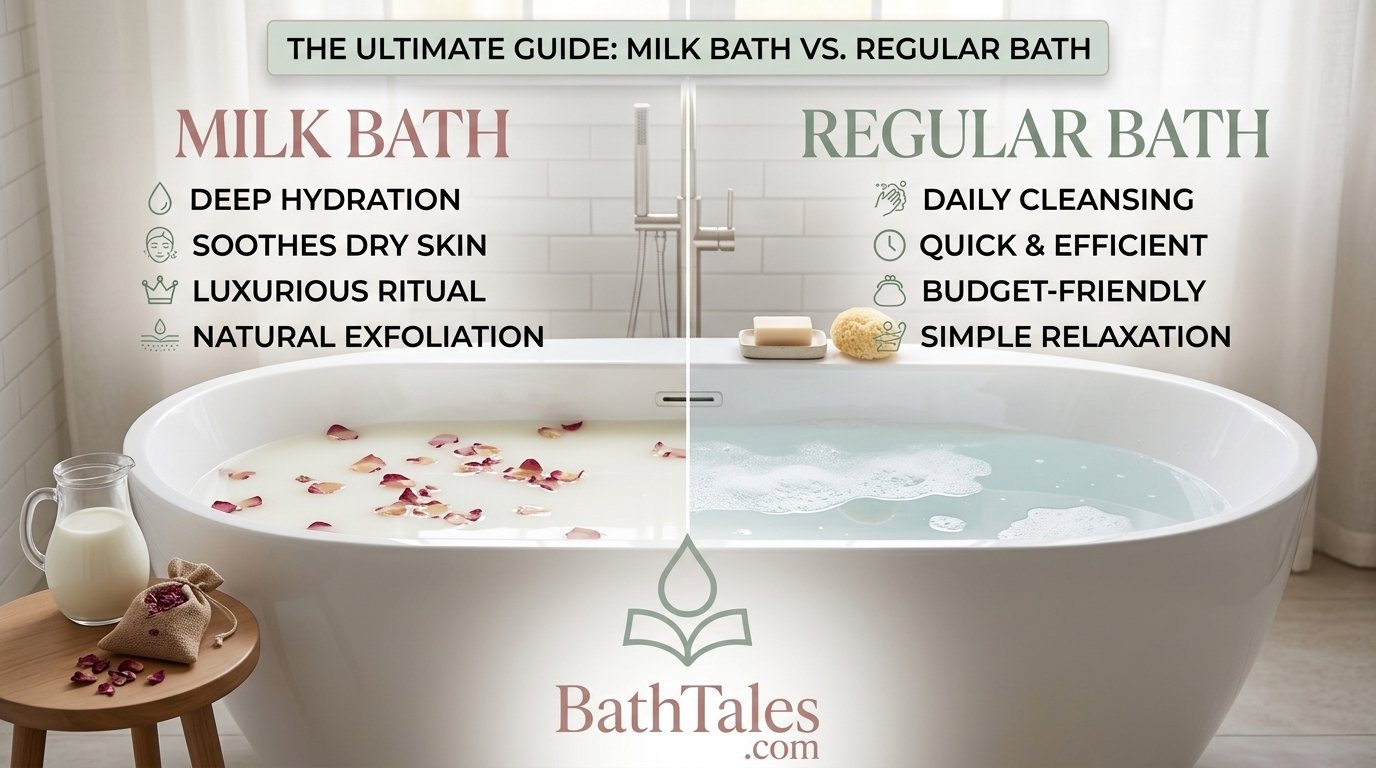
Milk Bath vs Regular Bath: Which Soak Is Actually Better for Your Skin?
Standing at the tub, staring at a jug of milk in one hand and your usual bottle of body wash in the other, you’ve probably asked yourself the same question thousands of people search every day: is a milk bath actually worth the mess, or is a regular bath with plain water and soap doing the job just fine? The honest answer is more interesting than a simple yes or no. Milk baths and regular baths solve different problems, soothe different kinds of skin, and fit into very different routines. This guide breaks down exactly how they compare, so you can decide which one belongs in your weekly self-care rotation — or whether you should be doing both.
What Is a Milk Bath?
A milk bath is exactly what it sounds like on the surface — bathwater with milk added to it — but the tradition runs much deeper than a modern wellness trend. Cleopatra is famously credited with bathing in milk (often described as donkey milk) to keep her skin soft, and versions of the ritual have shown up across Egyptian, Roman, and East Asian beauty traditions for centuries. Today, a milk bath usually means adding whole milk, powdered milk, buttermilk, goat milk, or a plant-based alternative like oat or coconut milk to warm bathwater, sometimes alongside honey, essential oils, or dried flowers.
What makes milk different from plain water is its composition. Milk contains fat, protein (casein and whey), lactic acid, vitamins A and D, and natural sugars. When these components mix with warm water, they create a slightly silky, cloudy soak that behaves very differently on skin than water alone. The lactic acid in milk is a mild alpha-hydroxy acid, which is why milk baths are frequently linked to gentle exfoliation and smoother-feeling skin after just one soak.
Unlike a quick rinse, a milk bath is typically framed as a ritual rather than a routine — something you set aside 20 to 30 minutes for, rather than a five-minute wash before bed. That distinction matters when comparing it to a regular bath, because the two aren’t always trying to accomplish the same goal.
What Is a Regular Bath?
A regular bath is the version most of us grew up with: a tub filled with warm water, maybe a squirt of body wash, bubble bath, or bath salts, and a soak that ranges anywhere from five minutes to an hour depending on how the day went. It’s the default option because it’s simple, familiar, and doesn’t require any special ingredients beyond what’s already in the bathroom cabinet.
Regular baths can still be highly effective for hygiene and relaxation. Warm water alone raises skin temperature, increases blood flow, and can loosen tense muscles. Add a cleanser, and you’re also removing dirt, sweat, and surface oils. Many people layer in extras — bath salts, bubbles, oils — which starts to blur the line between a “regular” bath and something more specialized. For the purposes of this comparison, a regular bath refers to the standard soak: water plus a basic cleansing product, without milk or dairy-based additives.
If you’re curious how a regular bath stacks up against other specialty soaks, it’s worth also reading how a sitz bath compares to a regular bath and how an infrared bath compares to a regular bath, since each specialty option targets a slightly different outcome.
Quick Comparison Table: Milk Bath vs Regular Bath
Before diving into the details, here’s a side-by-side snapshot of how these two soaking styles differ across the factors that matter most.
| Factor | Milk Bath | Regular Bath |
|---|---|---|
| Primary purpose | Skin softening, mild exfoliation, ritual relaxation | Cleansing, general relaxation |
| Key ingredient | Milk (dairy or plant-based) plus additives | Water plus soap or body wash |
| Skin feel afterward | Soft, smooth, slightly moisturized | Clean, sometimes slightly dry |
| Setup time | 5–10 minutes to prepare ingredients | Under 2 minutes |
| Average cost per soak | Moderate to higher (milk, add-ins) | Low |
| Cleanup | Slightly more (rinse tub after) | Minimal |
| Best for | Dry, irritated, or sensitive skin; self-care rituals | Daily hygiene, quick unwind |
| Frequency recommended | 1–3 times per week | Daily or as needed |
Neither option is objectively “better” in every category — the right choice depends on what you actually need from your soak that day. Someone dealing with dry winter skin will lean toward milk; someone who just wants to rinse off after the gym will reach for a regular bath every time.

Try a Ready-Made Milk Bath Soak
Skip the measuring and mess with a pre-blended milk bath powder that dissolves cleanly in warm water.
Shop Milk Bath Soaks on AmazonSkin & Health Benefits: How They Really Compare
This is usually where the milk bath vs regular bath debate gets decided for most people, because skin outcomes are the most noticeable difference between the two.
What Milk Baths Do for Skin
The lactic acid naturally present in milk works as a gentle chemical exfoliant, helping to loosen the bonds between dead skin cells so they slough off more easily. This is the same active compound found in many over-the-counter exfoliating lotions, just in a much milder concentration. The fat content in whole milk also forms a light barrier on the skin’s surface, which can help reduce water loss after you towel off, leaving skin feeling less tight than it might after a plain water soak.
People with eczema-prone, sensitive, or reactive skin often report that milk baths feel calmer than baths with heavily fragranced products, since milk itself is unscented and low-irritant when used plain. That said, anyone with a dairy allergy should avoid dairy milk baths entirely and consider an oat or coconut milk version instead.
What Regular Baths Do for Skin
A regular bath’s main skin benefit is thorough cleansing — removing sweat, environmental grime, and excess oil that builds up over the day. This is essential for preventing clogged pores and body acne, particularly after exercise or exposure to pollution. However, hot water combined with harsh soap can strip the skin’s natural oils, which is why some people notice tightness or mild dryness after a regular bath, especially in winter or in hard water areas.
If dry skin is a recurring issue no matter which bath style you choose, it’s worth exploring a roundup of the best bath salts for dry skin, which can be layered into either a milk bath or a regular bath to offset moisture loss.
There’s also a circulation and warmth angle worth mentioning. Warm water in either type of bath dilates blood vessels near the skin’s surface, which is part of why both milk baths and regular baths can leave you feeling flushed and relaxed afterward. The difference shows up more in what’s left behind on the skin once you towel off. A regular bath, particularly with a foaming cleanser, tends to leave skin feeling “squeaky clean,” which many people associate with thorough washing but which can also mean the skin’s protective oils have been washed away along with the dirt. A milk bath, by contrast, tends to leave a faint, non-greasy softness because of the fat and protein content redepositing lightly on the skin as the water cools.
It’s also worth noting that milk baths are sometimes recommended alongside — not instead of — targeted skin treatments. If you’re dealing with a specific concern like eczema flare-ups, pairing a milk soak with products designed for that purpose, such as those covered in our guide to best bath salts for eczema, tends to work better than relying on milk alone.
Relaxation & Sensory Experience
Beyond the physical skin effects, there’s a real difference in how each bath style feels psychologically. A milk bath tends to slow you down. The act of measuring milk, warming water to the right temperature, and maybe adding petals or oil creates a small ritual before you even step in. Research on sensory self-care suggests that rituals like this — repeated, intentional actions — can lower stress simply because they signal to the brain that it’s time to switch off.
Regular baths can absolutely be relaxing too, especially with the right lighting, temperature, and quiet time carved out. But because they require less preparation, they’re more often squeezed in quickly rather than treated as a dedicated wind-down period. If your goal is stress relief specifically, pairing a regular bath with calming additions can close much of this gap — see our guide on how to make a bath more relaxing for practical ideas.
The visual and tactile experience also differs. Milk turns bathwater a soft, cloudy white, which many people find more soothing to look at than clear water, similar to why bath bombs and colored salts are so popular. If you’ve ever compared a bath bomb to bath salt, you already know how much the sensory presentation of a soak affects how relaxing it feels, even before considering the ingredients themselves.
Ingredients Breakdown: What Actually Goes Into Each
Understanding the ingredients helps explain why these two baths produce such different results.
Typical Milk Bath Ingredients
- Whole milk or powdered milk: the base ingredient, providing fat, protein, and lactic acid.
- Honey: a humectant that draws moisture into the skin, often paired with milk for extra softness.
- Essential oils: lavender, chamomile, or rose are common for their calming scent profiles.
- Oats (colloidal): sometimes blended in for additional soothing, particularly for irritated skin.
- Dried flower petals: primarily aesthetic, though some (like calendula) have mild skin-soothing properties.
Typical Regular Bath Ingredients
- Water: the entire base of the soak.
- Body wash or soap: for cleansing; formulas vary widely in how gentle or drying they are.
- Bubble bath (optional): adds foam and fragrance but can be drying due to surfactants.
- Bath salts (optional): often added for muscle relief or mineral content — see the differences between Dead Sea salt and Epsom salt if you want to add minerals to a regular soak.
It’s worth noting that many people blur the two categories by adding bath salts to a milk bath, or adding a splash of milk to an otherwise regular bath. There’s no rule against combining elements — in fact, milk and Epsom salt together is a popular hybrid for people who want both skin softening and muscle relief in a single soak. If you’re not sure which mineral base to start with, our comparison of magnesium flakes vs Epsom salt is a useful next read before combining salts into a milk-based soak.
Portion sizes matter more than people expect. For a standard-sized tub, one to two cups of whole milk is usually enough to notice a difference without overdoing it, and adding more doesn’t necessarily improve results — past a certain point, extra milk mostly just increases cleanup without adding proportional skin benefits. The same logic applies to bath salts in a regular bath: a reasonable guideline, covered in more detail in how much bath salt to use, is roughly one to two cups per full tub, adjusted for tub size and skin sensitivity.
Step-by-Step: Preparing a Milk Bath
Getting a milk bath right is less about following an exact recipe and more about proportions. Here’s a simple, repeatable method.
Step 1: Choose Your Milk
Whole milk gives the richest result because of its higher fat content, but powdered milk is more economical and stores longer. For dairy-free skin types, oat milk or coconut milk are excellent substitutes that still offer a soothing, slightly silky texture.
Step 2: Warm the Water First
Run your bathwater to a comfortably warm temperature — not scalding, since very hot water can curdle the fat in dairy milk and cause it to separate unpleasantly.
Step 3: Add the Milk
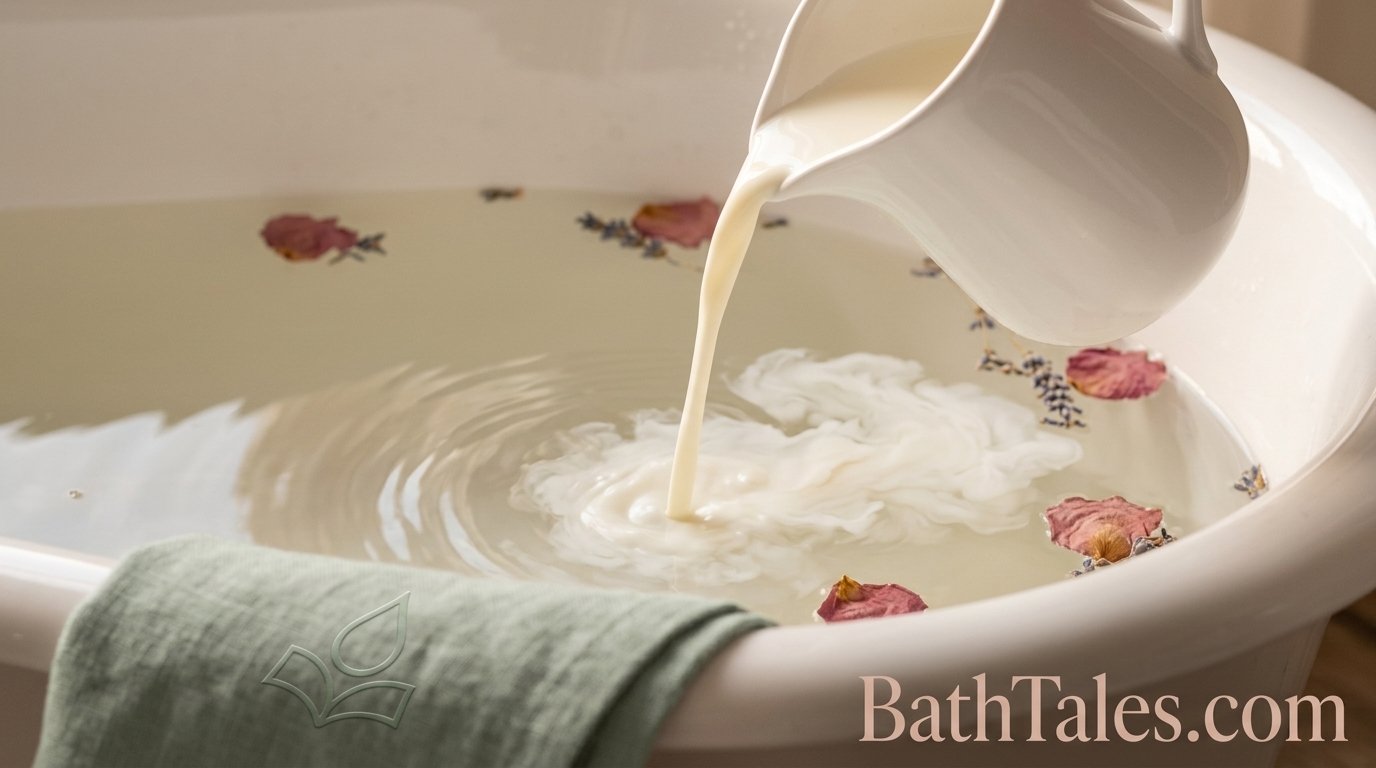
Pour in roughly one to two cups of milk for a standard tub, or two to three cups of powdered milk dissolved in a bit of warm water first to avoid clumping. Swirl the water gently to distribute it evenly.
Step 4: Add Optional Extras
A tablespoon of honey, a few drops of essential oil, or a handful of dried petals can be added at this stage. If you want inspiration for which oils pair well, our guide to the best essential oils for bath salts applies just as well to milk baths.
Step 5: Soak for 15–20 Minutes
This is roughly the sweet spot for letting lactic acid and moisturizing fats do their work without over-softening the skin.
Step 6: Rinse Lightly and Pat Dry
A quick lukewarm rinse removes any residue, and patting rather than rubbing dry helps lock in moisture.
Step-by-Step: A Better Regular Bath
If you’re sticking with a regular bath, a few small adjustments can make it noticeably more effective and enjoyable.
Step 1: Set the Right Temperature
Aim for warm, not hot — water that’s too hot strips natural oils faster and can leave skin feeling dry.
Step 2: Choose a Gentle Cleanser
Sulfate-free body washes are less likely to disrupt your skin barrier compared to heavily foaming, fragranced formulas.
Step 3: Add a Skin-Supporting Extra
Bath salts, a few drops of oil, or oatmeal can offset the drying effect of soap. Check our breakdown of the best bath salts for relaxation and sleep if evening baths are part of your wind-down routine.
Step 4: Limit Soak Time
Ten to twenty minutes is usually plenty; longer soaks in plain water can actually dehydrate skin rather than hydrate it.
Step 5: Moisturize Immediately After
Applying lotion within a few minutes of getting out helps seal in whatever moisture is still on the skin’s surface.
For a broader framework you can apply to any bath, our guide on the best bath routine walks through timing, water temperature, and product layering in more depth.
Cost, Convenience & Cleanup
Practicality is often the deciding factor once the skin benefits are understood, and this is an area where regular baths clearly win on simplicity.
A regular bath typically costs next to nothing beyond the body wash you already own, and cleanup is limited to a quick rinse of the tub. A milk bath, by contrast, requires buying milk (or bath milk powder) regularly, measuring it out, and giving the tub a more thorough rinse afterward since dairy residue can leave a film if left too long. Powdered milk bath blends reduce some of this hassle since they’re pre-measured and don’t spoil the way fresh milk can if stored incorrectly.
Time is another factor. A regular bath can be ready in under two minutes. A milk bath, especially one with multiple add-ins, often takes five to ten minutes of prep. Neither is a dealbreaker, but it does mean milk baths fit more naturally into planned self-care evenings rather than quick weekday soaks.
| Category | Milk Bath | Regular Bath |
|---|---|---|
| Prep time | 5–10 minutes | 1–2 minutes |
| Cleanup time | 5–10 minutes | 2–3 minutes |
| Ongoing cost | Moderate (milk or powder supply) | Low (existing soap/wash) |
| Shelf-stable ingredients | Only with powdered milk | Yes |

Upgrade Your Regular Bath Setup
A bamboo bath tray keeps your book, candle, and tea within reach for a longer, more relaxing soak.
Shop Bath Trays on AmazonWho Should Choose Which?
Rather than framing this as a single winner, it helps to match the bath style to your skin type, goals, and schedule.
Choose a Milk Bath If:
- You have dry, flaky, or sensitive skin that reacts to fragranced soaps.
- You’re dealing with mild irritation, sunburn, or post-shave sensitivity.
- You want a dedicated self-care ritual rather than a quick wash.
- You’re pregnant and looking for gentler soak options — though it’s worth reviewing guidance on bath salts for pregnancy alongside milk bath safety with your doctor.
Choose a Regular Bath If:
- You need to clean off sweat, dirt, or product buildup efficiently.
- You’re short on time and need a quick reset.
- You prefer a lower-cost, low-maintenance routine.
- You want to add targeted extras like Epsom salt for muscle soreness — see the best bath salts for muscle soreness for options that work well in a regular bath.
Many people end up doing both: regular baths for daily or frequent hygiene, and milk baths as a weekly or biweekly treat for the skin. If you’re weighing baths against showers in general, our comparison of bath vs shower can help you decide how often a full soak — of either kind — fits into your week.
Common Mistakes to Avoid
Milk Bath Mistakes
- Using water that’s too hot: this can cause the milk to curdle slightly, creating an unpleasant texture.
- Adding too much milk: more isn’t always better — excessive milk can leave a greasy film rather than a silky finish.
- Skipping the post-soak rinse: dairy residue left on skin or in the tub can attract bacteria if not rinsed away.
- Using milk bath ingredients despite a dairy allergy: always opt for a plant-based milk instead.
Regular Bath Mistakes
- Bathing too hot for too long: this strips natural oils and can worsen dryness over time.
- Using heavily fragranced or sulfate-heavy products daily: this can disrupt the skin barrier with repeated use.
- Skipping moisturizer afterward: water alone can actually dehydrate skin if nothing is done to seal it in post-bath.
- Not cleaning the tub regularly: soap scum and residue build up quickly — see how to remove soap scum for an easy fix.
Popular Milk Bath Variations
Not all milk baths are created equal. Here are the most common variations and how they differ.
Goat Milk Bath
Goat milk contains a fat molecule structure that’s smaller than cow’s milk, which some believe allows it to absorb into skin more easily. It’s a popular choice for people with very dry or mature skin.
Coconut Milk Bath
A dairy-free option rich in medium-chain fatty acids, coconut milk baths are popular for their tropical scent and deeply moisturizing feel, though they can leave more residue in the tub than dairy milk.
Oat Milk Bath
Gentle, hypoallergenic, and well-suited to sensitive or eczema-prone skin, oat milk is often combined with colloidal oats for an extra-soothing soak.
Buttermilk Bath
Higher in lactic acid than regular milk, buttermilk baths are favored for their mild exfoliating effect, though the smell is stronger and not everyone enjoys it.
Honey-Milk Bath
A classic pairing — honey’s humectant properties combine with milk’s fat content for one of the most moisturizing milk bath versions available.
If you’re building a rotation of soak types, it’s also worth exploring how milk baths compare to purely mineral-based soaks, like in our guide to best detox bath salts, since detox salts and milk baths target different outcomes (mineral absorption versus skin softening).
Milk Bath vs Regular Bath by Skin Type
Skin type plays a bigger role in this comparison than most people realize. What feels wonderful for one skin type can feel underwhelming — or even irritating — for another.
Dry or Mature Skin
This is where milk baths shine the most. The fat and protein content helps counteract the natural moisture loss that comes with dry or mature skin, and the mild lactic acid gently resurfaces dull, flaky patches without the harshness of a stronger exfoliating scrub.
Oily or Acne-Prone Skin
A regular bath with a gentle, non-comedogenic cleanser is often the more practical choice here, since thorough rinsing helps prevent clogged pores. Milk baths aren’t off-limits, but heavier, full-fat milk versions may feel too rich for already oily skin — a lighter option like buttermilk or a diluted milk bath tends to work better.
Sensitive or Eczema-Prone Skin
Both can work well, but for different reasons. A milk bath (especially oat milk) is calming and low-irritant, while a regular bath with a fragrance-free cleanser avoids the additives that can trigger flare-ups. Many people with eczema alternate between the two depending on how their skin is behaving that week.
Normal, Balanced Skin
This is the group with the most flexibility — either bath style works well, so the decision really comes down to time available and personal preference rather than a specific skin need.
Skin Recovering From Sun Exposure or Shaving
Milk baths tend to be gentler here, since the soothing, low-irritant nature of milk is less likely to sting freshly shaved or sunburned skin compared to a foaming cleanser in a regular bath.
Bathroom Care After Each Type of Bath
One overlooked part of the milk bath vs regular bath comparison is what each one does to your actual bathroom. A regular bath, especially with soap or bubble bath, tends to leave behind soap scum — a filmy residue that builds up on tub walls over time and can be trickier to remove the longer it sits. If this is a recurring issue, our guide on how to remove soap scum covers the fastest ways to keep your tub looking clean.
Milk baths bring a different kind of cleanup. Because milk contains fat and protein, letting bathwater sit for too long after a soak can leave a faint film along the tub’s waterline if it isn’t rinsed promptly. This isn’t difficult to manage — a quick rinse with warm water right after draining the tub is usually enough — but it does mean milk baths benefit from a slightly more immediate cleanup than a plain water soak.
Either way, regular bathroom maintenance makes a noticeable difference in how much effort each cleanup takes. Keeping grout, drains, and surfaces well-maintained between soaks — using tips like how to clean grout without scrubbing or how to clean a shower drain — means neither a milk bath nor a regular bath will feel like a chore to clean up after. If milk baths become a regular habit, it’s also worth scheduling a more thorough clean periodically using a guide like how to deep clean a bathroom, since dairy residue combined with humidity can occasionally contribute to mold if a bathroom already struggles with ventilation — something also worth checking against how to get rid of bathroom mold.
Family and Kids’ Bath Considerations
For parents, the milk bath vs regular bath decision often comes down to practicality as much as skin benefits. Regular baths remain the standard for kids’ daily hygiene simply because they’re faster, require less supervision around ingredients, and pair easily with bath toys for bath-time cooperation — whether that’s the best bath toys for 1-year-olds or cool bath toys for 3-year-olds.
That said, a mild milk bath (plain milk, no added oils or fragrance) can occasionally be a soothing option for children with dry or sensitive skin, particularly during colder months. As with adults, it’s best treated as an occasional addition rather than a daily replacement for a regular bath. Parents who do incorporate milk baths into a child’s routine should keep the same cleanup habits in mind — rinsing the tub promptly — and continue good bath-toy hygiene alongside it, since guides like how to sanitize bath toys and how to clean mold from bath toys become even more relevant when milk residue is introduced into bathwater regularly.
Pros and Cons Side-by-Side
Milk Bath — Pros
- Softens and smooths skin
- Mild natural exfoliation from lactic acid
- Calming, low-irritant for sensitive skin
- Feels like a dedicated self-care ritual
- Customizable with honey, oils, or oats
Milk Bath — Cons
- Higher ongoing cost
- Requires more prep and cleanup
- Not suitable for dairy allergies (unless plant-based)
- Can curdle if water is too hot
Regular Bath — Pros
- Quick and low-effort
- Inexpensive with everyday products
- Effective for cleansing sweat and dirt
- Easy to customize with salts or oils
Regular Bath — Cons
- Can dry out skin, especially with harsh soap
- Less of a dedicated relaxation ritual by default
- No natural exfoliating or moisturizing boost from water alone
Final Verdict: Which Should You Choose?
If you’re asking which bath is “better” in an absolute sense, the honest answer is that they’re built for different jobs. A regular bath is the reliable, low-cost workhorse for everyday cleansing — fast, simple, and effective for most hygiene needs. A milk bath is the specialty treatment: slower, a bit more expensive, and noticeably better for skin softness, mild exfoliation, and a sense of ritual relaxation.
The most practical approach for most people is a hybrid routine: regular baths (or showers) for daily or frequent cleansing, with a milk bath worked in once or twice a week as a dedicated skin-care and stress-relief ritual. This way, you get the convenience of a regular bath without giving up the tangible skin benefits that milk provides.

Build Your Own Milk Bath Kit
Stock up on colloidal oats, raw honey, and a milk bath powder blend to mix and match your ideal soak.
Shop Milk Bath Kits on AmazonFrequently Asked Questions
Is a milk bath better than a regular bath for dry skin?
Generally, yes. The fat and lactic acid in milk help soften skin and reduce moisture loss more than plain water does, making milk baths a better fit for chronically dry or flaky skin.
Can I take a milk bath every day?
It’s not necessary and can get expensive. Most people get the best results soaking in milk two to three times per week, using a regular bath or shower on other days for basic hygiene.
Does a milk bath actually clean your skin?
Milk offers mild cleansing but isn’t a substitute for soap when it comes to removing heavy dirt, sweat, or oil. It’s better thought of as a skin-softening treatment layered on top of general cleanliness.
What type of milk is best for a milk bath?
Whole milk offers the richest moisturizing effect due to its fat content, while powdered milk is a convenient, shelf-stable alternative. Those avoiding dairy often choose oat or coconut milk instead.
Will a milk bath clog my drain?
Used in reasonable amounts, milk baths shouldn’t clog drains, but rinsing the tub thoroughly afterward prevents residue buildup that could otherwise contribute to grime over time.
Is milk bath safe during pregnancy?
Plain milk baths are generally considered gentle, but any added essential oils should be checked for pregnancy safety first, and it’s always a good idea to confirm with a healthcare provider.
How long should you soak in a milk bath?
Fifteen to twenty minutes is typically enough to get the skin-softening benefits without over-soaking, which can start to feel counterproductive for very sensitive skin.
Can I combine milk with bath salts?
Yes, milk and bath salts (like Epsom salt) are commonly combined for a soak that both softens skin and helps relieve muscle tension.
Why does my skin feel silky after a milk bath but tight after a regular bath?
This comes down to fat content. Milk leaves a very light lipid layer on skin that helps retain moisture, while plain water and soap can strip natural oils, leading to that tighter, drier feeling.
Is a milk bath the same as a colloidal oatmeal bath?
They’re similar in that both are soothing, low-irritant soaks, but colloidal oatmeal is specifically known for calming itchy or inflamed skin, while milk baths focus more on softening and mild exfoliation.
Do I need to rinse off after a milk bath?
A light lukewarm rinse is recommended to remove any residue, especially if you added honey or oils, so the tub and your skin don’t feel sticky afterward.
Which is cheaper: milk baths or regular baths?
Regular baths are almost always cheaper since they rely on products most people already own. Milk baths involve an ongoing ingredient cost, though powdered milk bath blends help keep it manageable.
Can a milk bath help with acne?
Milk baths aren’t a targeted acne treatment, and full-fat milk can feel too rich for very oily or breakout-prone skin. A regular bath with a gentle, non-comedogenic cleanser is usually the more reliable option for acne-prone skin.
Does a milk bath leave a residue in the tub?
It can if the tub isn’t rinsed soon after draining, since the fat and protein in milk may leave a faint film along the waterline. A prompt rinse with warm water after your soak prevents this from building up.
Conclusion: Making the Right Choice for Your Routine
Milk baths and regular baths aren’t really competing for the same title — one is a specialty ritual for skin softening and relaxation, and the other is the dependable everyday option for cleansing and quick unwinding. Rather than picking a single winner, the smartest approach is to let your skin type, schedule, and mood decide which one you reach for on a given day. If your skin has been feeling dry, tight, or in need of a reset, a milk bath is worth the extra few minutes of prep. If you just need to rinse off and relax quickly, a regular bath will always get the job done.
Whichever you choose, small upgrades — the right water temperature, a gentle cleanser, or a calming add-in — can make either bath feel more like a treat than a chore. For more ideas on building out your ideal soak, explore our guides on the best bath products and how to make a bath more comfortable.

Ready to Try a Milk Bath Tonight?
Grab a milk bath soak or the ingredients to make your own, and turn your next bath into a real ritual.
Shop Milk Bath Essentials on Amazon
Pingback: Infrared Bath vs Regular Bath: Which Does More?