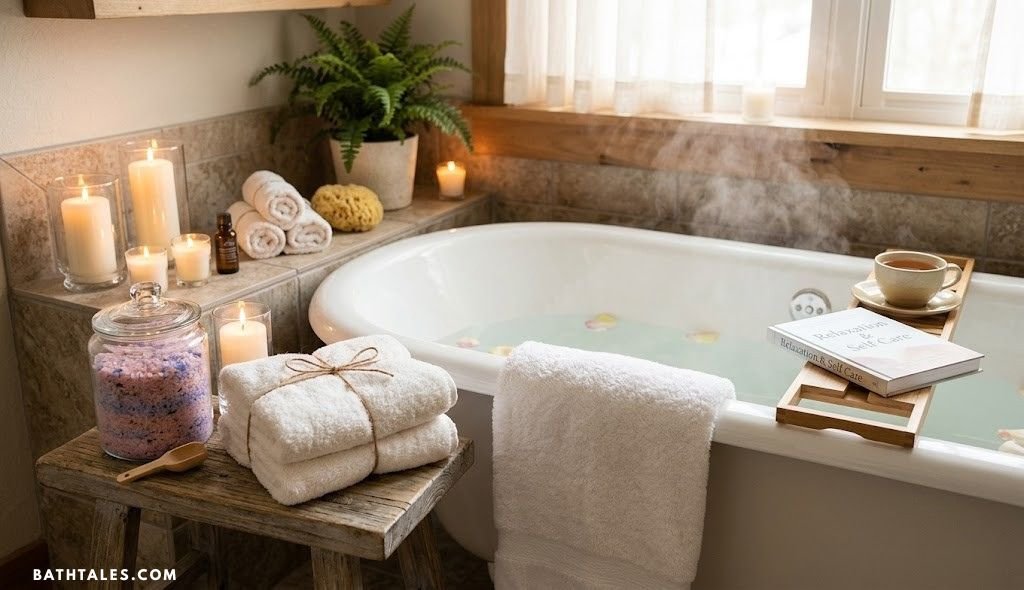
The Real Buyer’s Guide to the Best Bath Products (Salts, Bombs, Oils & More)
Everything worth knowing before you fill the tub — what actually works, what’s mostly marketing, and how to build a soak that fits your skin, your budget, and your evening.
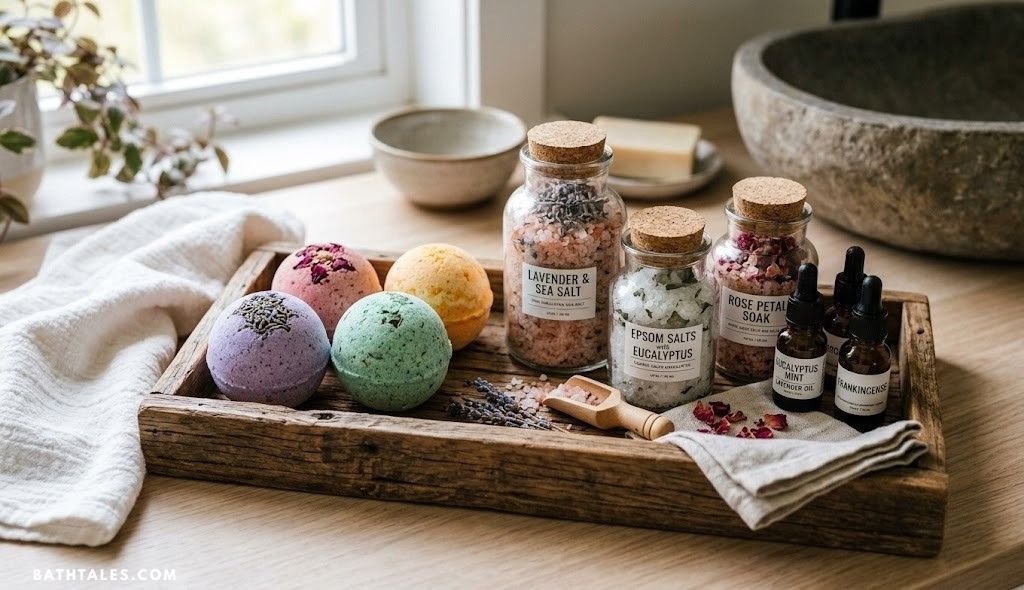
A bath can be fifteen minutes of hot water and not much else, or it can be the best part of your day. The difference almost always comes down to what you put in the tub. Walk down any bath aisle, or scroll any retailer’s “self-care” category, and you’ll find dozens of products promising relaxation, detox, glowing skin, and better sleep — most of it in nearly identical packaging with nearly identical claims.
This guide cuts through that. We’re going category by category — salts, bombs, bubble bath, oils, teas, and the tools that make a soak actually comfortable — and looking at what each one is genuinely good for, what it isn’t, and how to pick the right one instead of the prettiest one. If you already have a favorite routine, our guide to building a best bath routine is worth a look too, since the products below work best inside a routine rather than as a one-off treat.
What Actually Makes a Bath Product Worth Buying
Before comparing specific categories, it helps to know what separates a genuinely good bath product from one that just smells nice in the store. Four things matter more than packaging or brand name.
1. What it’s actually made of
Mineral-based products (Epsom salt, Dead Sea salt, Himalayan salt) work through the minerals themselves — magnesium, sodium, potassium — which is why concentration matters more than scent. A bag that’s mostly fragrance and dye with a token amount of salt won’t do much for sore muscles, no matter how it’s marketed.
2. Skin compatibility
Sensitive or eczema-prone skin reacts badly to strong synthetic fragrance and harsh surfactants, which is a major factor in bubble baths and some bath bombs. If your skin tends to react, our breakdown of the best bath salts for sensitive skin and the best bath salts for eczema is a safer starting point than a generic bath bomb.
3. What problem you’re solving
“Relaxing” is not a specific enough goal. Are you dealing with sore muscles after a workout, trouble falling asleep, dry winter skin, or a head cold? Each of those points to a different product, which is exactly what the “products for specific needs” section further down covers in detail.
4. Tub and plumbing compatibility
Oil-heavy products can leave a residue on acrylic tubs and clog older plumbing if used constantly. Salts and water-soluble bath teas are gentler on both. It’s a small detail, but it affects how often you can reasonably use a product without extra cleaning afterward.

New to building a bath routine? A well-balanced starter set (salt + oil + one scent) is the easiest way to figure out what you actually like.
Check Bath Starter Sets on AmazonBath Salts — The Foundation of a Great Soak
If you only ever buy one type of bath product, make it a good bath salt. Unlike bombs or bubbles, salts are functional first and decorative second — the minerals dissolve into the water and go to work on tired muscles, skin, and, for a lot of people, the nervous system too.
Epsom salt (magnesium sulfate) is the most common and the most researched for muscle relief. Dead Sea salt carries a broader mineral profile — magnesium, potassium, calcium, bromide — and is favored for skin conditions. Himalayan pink salt is milder and prized more for its trace minerals and gentle exfoliation than for therapeutic strength. If you’re unsure which is right for you, the comparison in Dead Sea salt vs Epsom salt and magnesium flakes vs Epsom salt lays out the practical differences.
How much to use
Most adults use one to two cups per full bath, though this varies by salt type and tub size. Using too little is the most common mistake — a light sprinkle mostly just scents the water rather than delivering any mineral benefit. Our detailed guide on how much bath salt to use breaks this down by salt type and goal.
Choosing salt by goal
- General everyday soak: our overview of bath salts for every type of soak
- Post-workout or physically demanding day: bath salts for muscle soreness
- Winding down before bed: bath salts for relaxation and sleep
- Feeling run down or bloated: detox bath salts
- Coming down with something: bath salts for cold and flu
- Dry, flaky, or tight-feeling skin: bath salts for dry skin
- Endurance athletes and heavy training blocks: bath salts for athletes
- Pregnancy-safe options: bath salts for pregnancy
If you’d rather skip pre-mixed blends, making your own is genuinely simple and lets you control the scent and mineral ratio exactly. See how to make bath salts at home for a straightforward method. And if a bag has been sitting in your cabinet for a while, it’s worth checking do bath salts expire before you use it.
Pros
- Functional, not just decorative
- Long shelf life
- Easy to customize with oils
- Gentle on plumbing
Cons
- Less visually dramatic than bombs
- Can irritate broken or very sensitive skin
- Cheap blends are mostly fragrance

A large bag of unscented Epsom or Dead Sea salt is the most cost-effective bath product you can own — you control the scent yourself with essential oils.
Shop Bath Salts on AmazonBath Bombs — Fizz, Scent, and Spectacle
Bath bombs are the most visually fun bath product on the market, and there’s nothing wrong with buying one purely for the show. The fizzing reaction comes from citric acid meeting baking soda in water, and most of the “benefit” comes from whatever oils, butters, and fragrance are packed around that core.
Where bath bombs fall short of salts is therapeutic strength — the mineral content is usually much lower per bath, and a lot of the ingredient list is dedicated to color and fizz rather than skin or muscle benefit. That doesn’t make them bad; it just means they’re better thought of as a mood product than a recovery product.
What to look for on the label
Cheaper bath bombs lean on synthetic dye, which can stain grout and acrylic tubs over repeated use, and on strong artificial fragrance, which is more likely to bother sensitive skin. Better formulations use cocoa or shea butter for a moisturizing finish, natural colorants like beet or spirulina powder, and essential oils instead of fragrance oils.
Who bath bombs are best for
Kids’ bath time, gift sets, date nights, and anyone who wants the ritual of a bath to feel like an event. They pair especially well with a relaxing bath setup — dim lighting, music, a warm towel waiting — since the bomb itself is doing more for atmosphere than for your muscles.

Gift-set bath bombs with shea or cocoa butter cores leave skin feeling noticeably softer than the cheaper dye-heavy versions.
Browse Bath Bomb Sets on AmazonBubble Bath — The Classic Comfort Product
Bubble bath is the product most people grew up with, and it’s still one of the best options for pure comfort — warm water, a thick layer of bubbles, nothing complicated. The trade-off is that the surfactants that create bubbles (usually some form of sulfate or a milder sulfate-free alternative) can be drying or irritating with frequent use, especially for sensitive skin or younger kids.
Sulfate vs sulfate-free
Traditional sulfate-based formulas foam the most but strip natural oils fastest. Sulfate-free and “tear-free” formulations foam less dramatically but are noticeably gentler, which matters if you’re bathing daily or bathing children. If dryness is already a concern, it’s worth pairing a gentle bubble bath with an oil afterward rather than relying on the bubble bath alone.
Where bubble bath fits into a routine
It’s a strong choice for a purely comforting, low-effort soak, but it isn’t a substitute for a mineral-based product if your actual goal is muscle recovery or skin therapy. Many people combine a small amount of bubble bath with a light hand of Epsom salt for both comfort and function — just introduce new combinations gradually to make sure your skin tolerates the mix.
| Formula Type | Foam Level | Best For | Watch Out For |
|---|---|---|---|
| Sulfate-based | High | Occasional indulgent soaks | Dryness with frequent use |
| Sulfate-free | Moderate | Daily or kids’ baths | Slightly less dramatic foam |
| Fragrance-free | Varies | Sensitive/reactive skin | Less “spa” scent experience |

Sulfate-free bubble bath formulas hold up well for both adults with sensitive skin and kids who bathe most nights.
Shop Bubble Bath on AmazonBath Oils — Serious Moisture for Dry Skin
If salts are the functional backbone of a bath and bombs are the fun, oils are the finishing touch — and for genuinely dry or flaky skin, they can be the most important product of the three. A bath oil sits on the surface of the water and coats the skin as you get out, which is why timing matters: apply or add it toward the end of a soak rather than the beginning, so it isn’t rinsed away before it can do its job.
Carrier oils commonly used
Sweet almond, jojoba, sunflower, and fractionated coconut oil are common bases because they’re lightweight and unlikely to clog pores. Heavier oils like olive oil work but can feel greasy on some skin types. Many bath oils blend a carrier oil with a small percentage of essential oil for scent — see our guide to the best essential oils for bath salts for combinations that also transfer well to oils.
A quick caution
Oil makes tub surfaces slippery, so rinse the tub after use, and go easy on quantity — a teaspoon to a tablespoon is usually plenty for a full bath. More isn’t better here; it just means more residue to clean.

A lightweight jojoba or almond oil bath blend is one of the simplest fixes for winter skin that feels tight after every soak.
Shop Bath Oils on AmazonBath Teas & Herbal Soaks
Bath teas — dried herbs and flowers bundled in a muslin bag, steeped in the tub the same way you’d steep a cup of tea — are the quietest category on this list, but they’re worth knowing about. Lavender, chamomile, calendula, and oat straw are common choices, each contributing a mild scent and, in the case of oats, a genuinely soothing effect on irritated skin.
They’re a good option for anyone who wants a gentler alternative to strongly fragranced products, and they layer easily with a mineral salt for both scent and function in the same bath.

Oat and chamomile bath tea bags are a gentle option worth keeping on hand for skin that reacts to stronger fragranced products.
Shop Bath Teas on AmazonEssential Oils for the Tub
Essential oils are less a standalone product and more the ingredient that ties everything above together — they’re what turns a plain bag of Epsom salt into a lavender-scented sleep aid, or a jojoba oil into a eucalyptus-scented cold-season soak. The key rule: essential oils are not water-soluble, so dropping them directly into bathwater leaves them floating on the surface where they can concentrate against skin. Mixing them first into a carrier (a salt, an oil, or even a splash of milk) disperses them properly.
Lavender and chamomile are the most common choices for sleep and relaxation, eucalyptus and peppermint for congestion, and citrus oils for an energizing morning soak. Our full breakdown in best essential oils for bath salts covers ratios and combinations in more depth.

A small starter set of lavender, eucalyptus, and citrus essential oils covers most bath scenarios without committing to a dozen bottles.
Shop Essential Oil Sets on AmazonSalts vs Bombs vs Bubble Bath: Which Should You Actually Buy?
There’s no single “best” bath product — the right pick depends on what you’re actually trying to get out of the bath. Here’s how the three most popular categories stack up side by side.
| Product | Best For | Therapeutic Strength | Skin Sensitivity Risk | Tub Cleanup |
|---|---|---|---|---|
| Bath Salts | Muscle recovery, minerals, sleep | High | Low–Medium | Easy |
| Bath Bombs | Mood, fun, gifting | Low–Medium | Medium | Medium (dye residue) |
| Bubble Bath | Comfort, daily use | Low | Medium–High | Easy |
| Bath Oils | Dry skin, deep moisture | Medium | Low | Harder (slippery residue) |
If you’re only going to buy one product to start, a good bath salt gives the most functional value per dollar. If you’re buying for pure enjoyment or as a gift, bath bombs and bubble bath win on experience. Most well-stocked bath cabinets end up with a mix of two or three categories rather than just one.
Bath Tools & Accessories Worth Having
Products aren’t the whole picture — the right tools change how comfortable and practical a bath actually is, especially if you’re taking one regularly rather than as an occasional treat.
Bath pillow
A cushioned bath pillow that suction-cups to the tub wall supports your neck and lower back, which matters more than it sounds for anyone taking a longer soak. It’s a small purchase that noticeably extends how long you can comfortably stay in the water.
Bath tray or caddy
A tub-spanning tray keeps a book, a drink, or a phone within reach without balancing anything on the tub edge. Look for one with a wine-glass slot and a non-slip base if you plan to use it regularly.
Bath brush or exfoliating mitt
Useful for circulation and gentle exfoliation before or during a soak, particularly if you’re using a mineral salt that benefits from some skin stimulation to help absorption.
Bath thermometer
A small, often-overlooked tool — water that’s too hot can actually work against relaxation by spiking heart rate, and it’s especially worth using during pregnancy, when water temperature needs closer attention (more on that in the pregnancy-safe bath salts guide).

A suction-cup bath pillow is one of the cheapest upgrades that makes the biggest difference in a longer soak.
Shop Bath Pillows on AmazonProducts for Specific Needs
Rather than shopping by category, it’s often easier to shop by problem. Here’s a quick reference for common goals.
| Goal | Recommended Guide |
|---|---|
| Sore or fatigued muscles | Bath salts for muscle soreness |
| Trouble sleeping | Bath salts for relaxation and sleep |
| Feeling sluggish or bloated | Detox bath salts |
| Cold or flu symptoms | Bath salts for cold and flu |
| Dry, flaky skin | Bath salts for dry skin |
| Eczema-prone skin | Bath salts for eczema |
| Sensitive, reactive skin | Bath salts for sensitive skin |
| Heavy training or athletic recovery | Bath salts for athletes |
| Pregnancy | Bath salts for pregnancy |
| Preference for organic ingredients | Organic bath salts |
| Wanting a specific mineral type | Himalayan pink bath salt |
Choosing the Right Bath Product by Skin Type
Normal skin
Most products work fine — this is the easiest skin type to shop for, so personal preference on scent and texture can lead.
Dry or mature skin
Lean toward oils and mineral-rich salts, and go lighter on foaming bubble baths, which can leave already-dry skin feeling tighter afterward.
Oily or acne-prone skin
Lighter, non-comedogenic oils in small amounts, and mineral salts, tend to work better than heavy butters, which can feel occlusive on body acne-prone areas like the back and chest.
Sensitive or reactive skin
Fragrance-free or lightly scented options are safer, and it’s worth patch-testing a new product on a small area before a full soak. The sensitive-skin and eczema guides linked above go into this in more detail.
For a broader look at whether a bath is even the better choice over a shower on a given day, see bath vs shower, and for the basics of a proper soak from start to finish, how do you take a bath and how to bath as a woman both cover practical step-by-step routines.
Safety, Storage & Shelf Life
Bath products are low-risk overall, but a few habits keep them working well and prevent irritation.
- Store salts and teas somewhere dry. Humidity clumps salt and can encourage mold in herbal bath teas over time.
- Keep bath bombs in an airtight container. Open air causes the citric acid reaction to trigger slowly, which “deflates” the fizz before you ever use it.
- Patch-test new essential oil blends. A small amount on the inner forearm, left for a few hours, is enough to catch most reactions before a full bath.
- Check expiration on oil-based products. Carrier oils can go rancid; salts generally don’t expire but can lose potency or absorb odors over time. See do bath salts expire for specifics.
- Rinse the tub after oil-heavy soaks to avoid a slippery surface for the next person.
Once you’ve settled on products that suit your skin, the last piece is the setup itself — water temperature, lighting, and timing all affect how much benefit you actually get. Our guides on how to make a bath comfortable and how to make a bath more relaxing cover that side of things in full.

Airtight glass jars keep salts dry and bath bombs from fizzling out early — a small investment that protects everything else on this list.
Shop Storage Jars on AmazonFrequently Asked Questions
What is the single best bath product for a beginner to buy first?
An unscented Epsom or Dead Sea salt is the most versatile starting point, since it’s functional on its own and can be customized later with essential oils.
Can I mix bath salts and bath bombs in the same soak?
Yes, generally. Add the salt first so it dissolves, then drop in the bath bomb closer to when you get in, so the fizz and scent are still fresh.
Are bath bombs safe for sensitive skin?
Some are. Look for ones with natural colorants and essential oils rather than synthetic dye and fragrance oil, and patch-test if you have a history of reactions.
How often can I safely use bath salts?
Most people can use a mineral salt bath two to four times a week without issue. Daily use is fine for many but worth easing into, especially with stronger salts like Dead Sea salt.
Do bath products actually help with sore muscles, or is that just marketing?
Warm water alone helps circulation and muscle relaxation, and mineral salts like Epsom salt add to that effect for many people. It’s a genuine complement to recovery, not a replacement for rest or proper training load management.
What’s the difference between a bath oil and a body oil?
Bath oils are formulated to disperse (or float) in bathwater and coat skin as you exit the tub. Body oils are meant to be applied directly to dry or damp skin outside the bath and aren’t designed with bathwater in mind.
Is bubble bath bad for skin?
Not inherently, but sulfate-based formulas can be drying with frequent use. Sulfate-free formulas are a gentler alternative for regular use.
Can pregnant women use bath salts or bath bombs?
Many mineral salts are considered fine in moderation, but water temperature and certain essential oils need extra caution during pregnancy. See our dedicated guide on bath salts for pregnancy before choosing a product.
Why do some bath salts turn my bathwater cloudy?
This is usually from added oils, milk powder, or botanical additives in the blend rather than the mineral salt itself, and it’s typically harmless.
How much bath salt should I use per bath?
A general starting point is one to two cups for a full-sized tub, adjusted based on the specific salt’s strength. Our full breakdown is in how much bath salt to use.
Do bath salts expire?
Pure mineral salts don’t spoil, but they can lose potency, absorb ambient odors, or clump if stored somewhere humid. Blends with added oils or botanicals have a shorter practical shelf life. Details are in do bath salts expire.
What’s a good alternative if I don’t like the smell of Epsom salt?
Many people find plain Epsom salt’s natural smell mild to unnoticeable once dissolved, but if you’re sensitive to it, a scented Dead Sea salt or a plain unscented salt paired with your own essential oil blend solves it easily.
The Bottom Line
There isn’t one “best” bath product — there’s the best product for what you’re actually trying to fix that evening. Sore muscles call for a strong mineral salt. Dry skin calls for an oil. A rough day calls for whatever combination makes you actually want to get in the tub. Start with one good, unscented salt as your base, layer in a bath oil or essential oil blend to match your mood, and save bath bombs and bubble bath for when the experience itself is the point.
Once your product cabinet is sorted, the rest is routine — worth reading through our best bath routine guide to put it all together.
Shop Top-Rated Bath Products on Amazon