The Science-Backed Guide to Bath Salt Durations: How Long to Soak for Best Results
Sinking into a warm bath laced with premium bath salts is one of life’s most profound simple pleasures. Whether you are looking to melt away muscle tension after an intense training session, soothe inflamed skin, or quiet a frantic mind before sleep, the humble bath salt remains an unparalleled therapeutic ally. However, an elegant bath ritual requires more than just tossing a handful of crystals into running water and staying submerged until your skin wrinkles completely.
The time you spend immersed in a mineral-rich bath alters how your body processes heat, transfers minerals across the skin barrier, and shifts its autonomic nervous system from sympathetic “fight-or-flight” to parasympathetic “rest-and-digest.” Staying in too long can deplete your skin’s protective lipid layers, while cutting the soak short prevents the minerals from executing their therapeutic potential. This definitive guide unpacks the precise temporal architecture of the perfect soak.
1. The Biological Sweet Spot: Why Time Matters
When you submerge your body in water infused with therapeutic minerals, you trigger a complex physiological sequence. The primary timeline recommendation from dermatologists and balneotherapy experts settles squarely between 15 and 30 minutes, with 20 minutes serving as the universal biological sweet spot. Understanding the two distinct phases that occur during this window explains why this timeframe is highly optimized:
- The Detoxification Phase (First 10–12 Minutes): As your body acclimates to the hydrostatic pressure and elevated temperature of the bath water, peripheral blood vessels dilate (vasodilation). This increases blood flow to the skin’s surface and induces sweating. The initial phase allows the body to release superficial impurities and metabolic waste, prepping the skin surface.
- The Mineral Absorption Phase (Remaining 10–15 Minutes): Once the skin’s pores are relaxed and surface impurities are cleared, your body shifts into absorption mode. High-quality minerals cross the skin barrier via transdermal pathways, moving from an area of higher concentration (the mineral bath) toward an area of lower concentration (your interstitial tissues).
Exceeding the 30-minute threshold frequently triggers a state of diminishing returns. The water cools, causing blood vessels to contract, and the prolonged exposure to wet heat begins to macerate the stratum corneum (the outermost skin layer), stripping vital sebum and disrupting natural moisture factors. For a truly tailored approach, look into the best bath salts for every type of soak to understand how different formulations affect your time in the tub.

Epsoak Pure Epsom Salt (19.5 lbs)
The gold standard for general mineral soaking, muscle relief, and metabolic recovery. Dissolves rapidly and matches the 20-minute therapeutic profile perfectly.
Check Price on Amazon2. Duration by Crystal Type: Tuning the Clock
Not all bath salts are created equal, and their underlying molecular structures require specific exposure periods to offer maximum benefits without compromising skin integrity. Choosing your compound dictates your exact timeline.
| Salt Category | Optimal Duration | Primary Compound | Main Therapeutic Focus |
|---|---|---|---|
| Epsom Salt | 15–20 Minutes | Magnesium Sulfate | Muscle soreness, lactic acid reduction, inflammation |
| Dead Sea Salt | 20–25 Minutes | Magnesium, Calcium, Potassium Cl | Skin barrier repair, eczema, deep hydration |
| Himalayan Pink Salt | 20–30 Minutes | Sodium Chloride + 84 Trace Minerals | Systemic detoxification, energetic grounding |
| Magnesium Flakes | 15–20 Minutes | Magnesium Chloride | Deep cellular magnesium replenishment, insomnia |
Epsom salt, comprised of magnesium sulfate, interacts quickly with muscle tissues. If you are focused on optimizing physical recovery, utilizing specialized combinations like the best bath salts for muscle soreness ensures that your 20-minute window yields maximum relief. Alternatively, if your goals involve long-term skin health, understanding the distinctions outlined in Dead Sea salt vs Epsom salt will help you select the compound that thrives during slightly longer, deeply hydrating submersions.

Minera Natural Dead Sea Salt
100% pure, unrefined mineral crystals harvested directly from the Dead Sea. Ideal for extended 25-minute skin-soothing rituals.
Check Price on Amazon3. Step-by-Step Soaking Ritual: Execution with Precision
To extract the utmost therapeutic value from your bath salt routine, follow this meticulously structured step-by-step methodology. Each phase is timed and managed to safeguard your skin barrier while maximizing mineral delivery.
Step 1: Selecting and Measuring Your Salt Blend
Before introducing any water, precisely measure your salt volume. Throwing a random amount into the tub can cause under-dosing or over-concentration, which can pull moisture out of the skin. Check our guidelines on how much bath salt to use to calibrate your standard cup measurements based on your water volume.
Step 2: Preparing the Water Temperature
Begin filling your tub with warm water. Avoid scalding temperatures, which cause significant systemic stress, sudden heart rate increases, and premature skin drying. Keep the temperature within a safe, warm zone.
Step 3: Agitating and Dissolving the Crystals
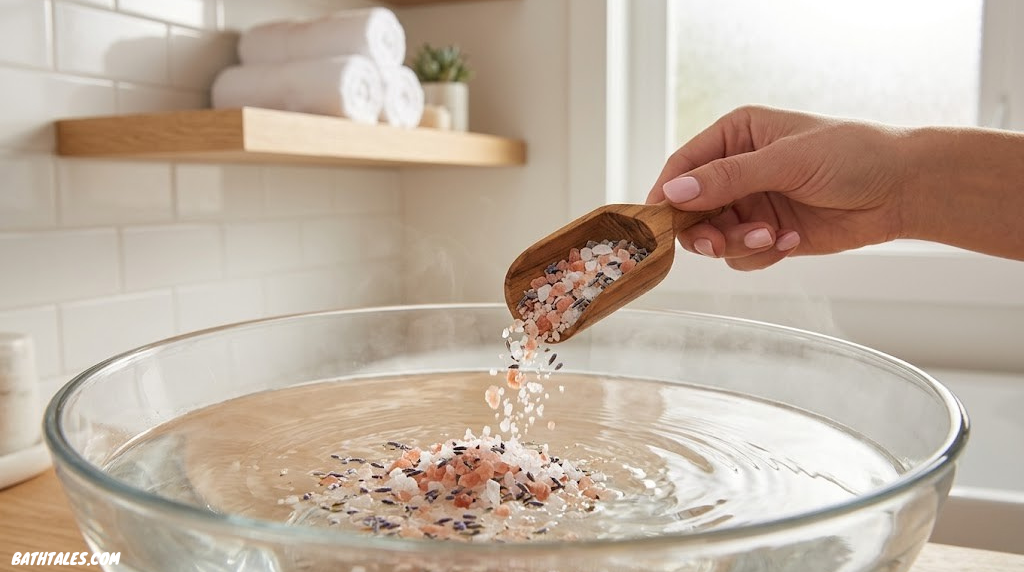
Pour your calculated bath salts into the stream of warm running water. Use your hand to actively agitate the water, facilitating an even dissolution. Ensuring the bath salts are completely dissolved prevents painful friction against undissolved crystals at the bottom of the tub.
Step 4: Entering and Settling into the Tub
Slowly step into the bath, allowing your nervous system to adjust safely to the thermal environment. Avoid sudden submersions. Ensure your lower back, shoulders, and major muscle groups are comfortably aligned for deep relaxation.
Step 5: Active Soaking and Mindfulness
Set a gentle alarm for your 20-minute target window. Close your eyes, practice long diaphragmatic breathing, and let transdermal pathways exchange ions. Avoid reading phones or devices to keep stress responses at a minimum.
Step 6: Post-Soak Rinsing and Hydration Lock
Carefully step out of the tub. Rinse under a lukewarm shower if you used concentrated salts or essential oils, pat your skin dry with a soft towel, and instantly apply a nourishing lotion to lock in moisture.
Pro Tip: If you prefer crafting your own blends rather than buying pre-packaged salts, reviewing our step-by-step masterclass on how to make bath salts at home lets you customize mineral ratios and ensure clean dissolving actions.

Ancient Minerals Magnesium Flakes
Pure magnesium chloride flakes derived from the ancient Zechstein Seabed. Exceptional for transdermal magnesium delivery in rapid 15–20 minute sessions.
Check Price on Amazon4. Thermal Dynamics & Water Temp: Safeguarding Your Body
The time you spend in a bath salt soak cannot be decoupled from water temperature. The relationship between immersion time and water temperature forms the core foundation of thermal balneotherapy safety. Your body regulates its internal core temperature by distributing heat via the bloodstream to your skin, where it is released through radiation and sweating.
When you submerge yourself past your waist in hot water, your body loses its primary cooling mechanism: sweat evaporation. If your water temperature pushes past 40°C (104°F), your internal temperature climbs continuously. Limiting baths to 10–15 minutes at higher temperatures prevents heat exhaustion, dizziness, or a sudden drops in blood pressure (orthostatic hypotension).
For a highly restorative 20-to-30-minute soak, keep your water temperature between 37°C and 39°C (98.6°F – 102.2°F). This gentle thermal window provides all the muscle-relaxing benefits of heat therapy without placing excessive cardiovascular demands on your system.

Floating Digital Water Thermometer
Provides constant, instantaneous digital readouts of your bath water temperature, helping you maintain a safe thermal window.
Check Price on Amazon5. Cellular Osmosis & Absorption: What Happens Under the Surface
To understand why a bath salt soak requires a 20-minute window, it helps to examine basic cellular mechanics. When bath salts dissolve, they separate into their respective ions—for instance, Epsom salt splits into free magnesium and sulfate ions. This creates a temporary hypertonic solution outside your skin cells.
Through transdermal absorption, these mineral ions navigate the lipid-rich extracellular pathways of your stratum corneum. This process requires time to build momentum. During the first few minutes, the warm water removes surface skin blockages and hydrates the keratin structures, making them more permeable. True ion transport picks up between minutes 10 and 20. Cutting your soak short at 5 or 10 minutes means exiting the bath right when this ion transfer reaches its peak efficiency.
If you find yourself debating between different magnesium sources, reading our breakdown on magnesium flakes vs Epsom salt will clarify how varying cellular structures and dissolution rates alter this transdermal path.

Sherpa Pink Himalayan Salt (2 lbs Coarse)
100% authentic mineral-dense Himalayan salt. Exceptional for systemic mineral absorption and maintaining structural skin integrity.
Check Price on Amazon6. Tailoring for Specific Conditions: Custom Timelines
Your ideal immersion time should shift based on your physical goals. Tailoring your timeline to your body’s changing needs avoids overexposure while targeting specific health benefits:
- Athletes & Muscle Recovery: If you are treating severe muscle soreness or treating post-workout tightness, stick to a disciplined 15–20 minute window with high-concentration magnesium. Spending too much time in warm water can increase localized muscle inflammation. Utilizing targeted options like the best bath salts for athletes provides excellent results within this strategic timeframe.
- Stress Alleviation & Sleep Induction: To calm a hyperactive sympathetic nervous system, aim for a full 20–25 minute immersion. This longer window gives your heart rate time to slow and helps lower systemic cortisol levels. Choosing a blend from the best bath salts for relaxation and sleep amplifies these calming effects.
- Detoxification Routines: If you are using specialized blends like the best detox bath salts to encourage heavy sweating and surface oil removal, keep your soak to 20 minutes max. Make sure to drink a glass of pure water before and during the soak to stay well hydrated.

Dr Teal’s Sleep Blend with Melatonin & Essential Oils
Combines classic Epsom salt with relaxing essential oils to promote a restful night’s sleep. Best enjoyed during a quiet 20-minute evening soak.
Check Price on Amazon7. Special Profiles & Skin Barriers: Safety First
Certain health profiles require shorter soaking timelines to prevent irritation or physiological strain. If your skin barrier is compromised, adjustments are key:
- Eczema and Psoriasis: Prolonged water exposure can deplete the skin’s structural lipid layers, leaving it vulnerable to environmental irritants. Keep bath times under 15 minutes, use warm water rather than hot, and look for gentle formulas like the best bath salts for eczema. Always lock in moisture with a rich emollient immediately after patting dry.
- Pregnancy Considerations: Pregnancy alters maternal vascular dynamics, making expectant mothers more prone to dizziness from heat. Limit baths to 15 minutes max, keep the water under 38°C (100°F), and choose blends from the best bath salts for pregnancy that omit strong botanical contrindications.
- Hypersensitive or Dry Skin: For delicate skin types, keeping soaks to 12–15 minutes prevents over-maceration. Opt for calming formulas like the best bath salts for sensitive skin or the best bath salts for dry skin to soothe tissues without stripping natural oils.

San Francisco Salt Co. Unscented Clean Sea Salt
Free from all artificial fragrances, dyes, and essential oils. Formulated explicitly for hyper-sensitive skin profiles requiring shorter therapeutic windows.
Check Price on Amazon8. Aromatherapy & Essential Oils: Protecting the Skin Over Time
When bath salts are infused with pure volatile essential oils, time management becomes even more critical. Undiluted essential oils do not dissolve seamlessly in water; instead, they float on the surface, creating concentrated droplets that touch sensitive skin directly. High-quality bath salts solve this by acting as natural carriers that distribute these aromatic extracts evenly.
However, prolonged exposure to these active botanical elements can trigger contact dermatitis if left on the skin too long. Keeping your aromatic salt soaks under 20 minutes minimizes the risk of sensitization. If you plan on mixing your own batches, choosing options from the best essential oils for bath salts ensures you pick skin-safe oils with reliable, predictable evaporation rates.

Aura Cacia Organic Lavender Essential Oil
100% pure therapeutic grade lavender oil. Perfectly suited for blending into home bath salt concoctions to maximize calming effects.
Check Price on Amazon9. Common Mistakes to Evade During Your Bath Ritual
Even seasoned bath enthusiasts can slip into habits that compromise their soaking experience. Watch out for these frequent missteps:
- Staying in a Cold Tub: Waiting around until the water turns cold reverses the muscle-relaxing benefits of the bath, as cold temperatures cause blood vessels to tighten and muscles to contract.
- Using Expired Salt Blends: Crystalline minerals are highly stable, but older batches with added oils can degrade over time. Check out do bath salts expire to ensure your mineral base remains fully active and safe for your skin.
- Neglecting Post-Bath Hydration: Skipping moisturizer after a long soak allows water to evaporate from the skin quickly, leaving your skin drier than it was before you stepped into the tub.

Aveeno Daily Moisturizing Body Lotion with Oat
The ultimate post-soak moisturizer. Formulated with soothing prebiotic oat to instantly lock in hydration within your post-bath window.
Check Price on Amazon10. Post-Soak Recovery Window: Locking in the Benefits
The therapeutic journey doesn’t end the moment you step out of the water. In fact, what you do during the first ten minutes after your bath plays a major role in sealing in the minerals you just absorbed. Your skin pores are relaxed, making it the perfect time to lock in moisture.
Skip the rigorous towel scrubbing; instead, gently pat your body with a soft towel, leaving a light hint of dampness on the surface. Within three minutes, apply a clean, non-comedogenic oil or cream to create a protective barrier. Relax in a soft bathrobe for another twenty minutes to let your cardiovascular system ease back down to its resting baseline.

Burt’s Bees 100% Natural Body Oil
Infused with lemon and vitamin E, this light body oil seals in moisture instantly when applied directly to damp skin after your mineral soak.
Check Price on Amazon11. Bathtales Contributor Circle: Join Our Wellness Community
Are you a passionate wellness advocate, dermatologist, balneotherapy expert, or self-care enthusiast with insights to share? Contributing to Bathtales offers a wonderful platform to share your voice with an engaged audience dedicated to mindful living and science-backed hydrotherapy. Sharing your unique perspectives helps our readers elevate their daily wellness rituals.
What Kind of Topics Do We Accept?
We are always on the look-out for original, well-researched perspectives on several key wellness topics:
- Deep dives into mineral profiles and innovative hydrotherapy methods
- Holistic skin care routines and skin barrier defense strategies
- Aromatherapy guidelines, botanical sourcing, and DIY recipes
- Sustainable self-care practices and stress management strategies
Content Requirements & Image Guidelines
To maintain our editorial standards, all submissions must meet our content guidelines:
- Content Depth: Submissions should provide comprehensive, actionable advice, backed by scientific research or clear professional expertise.
- Formatting Structure: Organize your thoughts using clear headings, concise paragraphs, and helpful bullet points to ensure your article is easy to read.
- Image Integrity: Include original, high-resolution photographs or clear data visualizations. We do not accept copyrighted images or generic stock photos.
Submission, Editing, and Ownership Policies
Once you submit your draft through our portal, our editorial team will review it within two business days. We may make minor adjustments to optimize readability and formatting. Upon publication, the content becomes part of our digital library, and you receive an author bio with links to your professional website or social channels.
Contributor Pro Tip: The best articles combine personal stories with science-backed facts. Our readers love data-backed insights balanced with an authentic, human voice.
If you have an insightful topic idea or a complete draft ready to share, please reach out via our contributor portal. We can’t wait to collaborate and explore new self-care insights together!

Viva Naturals Organic Extra Virgin Coconut Oil
An exceptional natural base for creating custom body scrubs or locking in deep hydration after a bath salt session.
Check Price on Amazon12. Final Thoughts & Next Steps: Mastering Your Soak
An amazing bath salt ritual balances precise timing, correct mineral amounts, and mindful relaxation. By keeping your soaks within the science-backed 15-to-30-minute window, you enjoy all the muscle-soothing and skin-softening benefits of the minerals while keeping your skin barrier safe and healthy.
The next time you fill your tub, set a gentle 20-minute timer, check your water temperature, and let your mind drift. Elevating your bath routine from a simple wash to an intentional wellness ritual is a wonderful way to honor your body’s need for deep, restorative rest.
Ready to Elevate Your Bathing Experience?
Explore our carefully curated collection of premium organic mineral salts to find the perfect blend for your next 20-minute ritual.
Browse Best Organic Bath Salts