Muscle Recovery & Bath Care
The Best Bath Salts for Sore, Tired Muscles (and How to Actually Use Them)
A practical, no-fluff guide to choosing the right Epsom, Dead Sea, Himalayan, or magnesium soak for sore muscles — plus the real science behind why a warm soak helps in the first place.
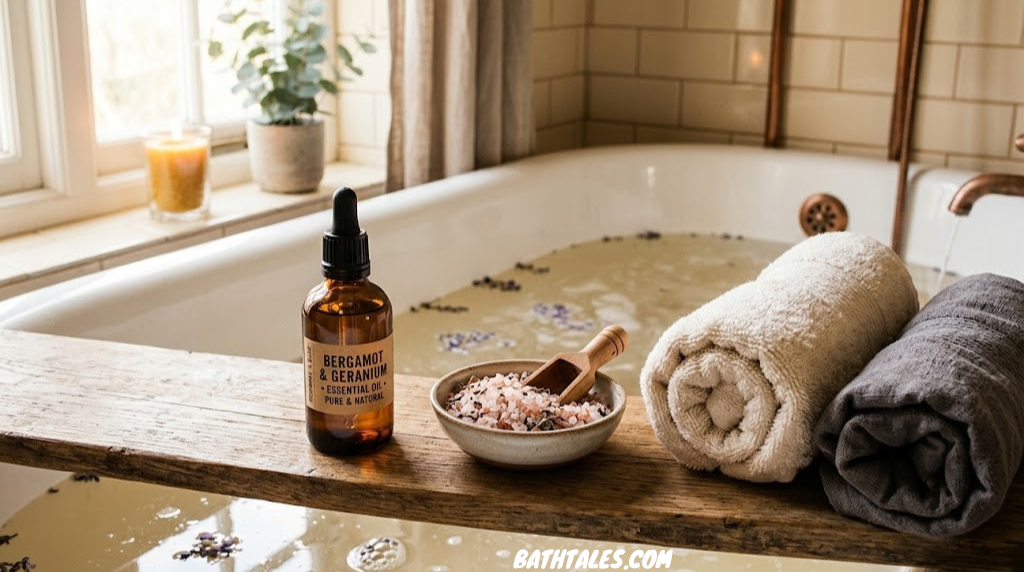
There’s a particular kind of tired that settles into your legs after leg day, your shoulders after a weekend of yard work, or your whole body after a hike you weren’t quite ready for. It’s not an injury, exactly — it’s just soreness, the kind that makes stairs feel personal for a day or two. A warm soak with the right bath salt is one of the oldest, simplest tools for taking the edge off that feeling, and it’s stuck around for centuries for good reason.
But “bath salts” isn’t one single thing. Epsom salt, Dead Sea salt, Himalayan pink salt, and magnesium chloride flakes all get marketed as muscle-soreness solutions, and they’re genuinely not interchangeable — they differ in mineral content, texture, price, and what they actually do once they hit warm water. This guide walks through what’s really happening in sore muscles, what soaking does (and doesn’t) do about it, how the major salt types compare, and which specific products are worth buying, before getting into the practical details of how much to use, how long to soak, and what to avoid.
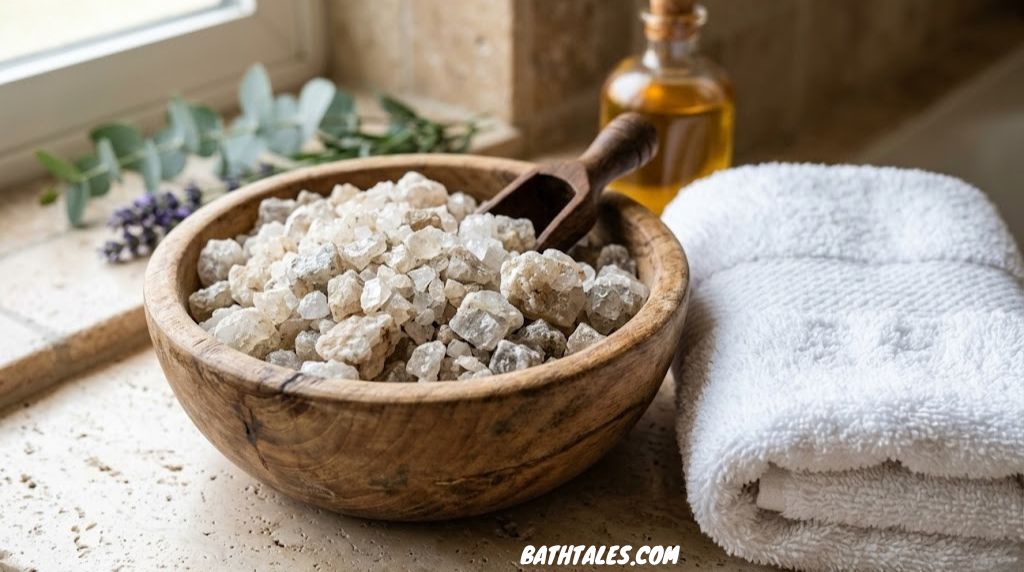
The Science of Soreness
What’s Really Happening in Sore Muscles
Before getting into bath salts at all, it helps to know what soreness actually is — because that determines what’s realistic to expect from any remedy, including a soak. The dull, stiff, tender feeling that shows up a day or two after unfamiliar or intense exercise has a clinical name: Delayed Onset Muscle Soreness, or DOMS. It typically peaks somewhere between 24 and 72 hours after activity, which is exactly why the day after a hard workout often hurts more than the day of.
DOMS tends to follow specific kinds of movement, especially eccentric contractions — the lengthening phase of a muscle under load, like the slow lowering portion of a squat, the downhill leg of a hike, or the eccentric phase of a bicep curl. These movements create microscopic tears in muscle fibers and the surrounding connective tissue. That sounds alarming, but it’s a completely normal part of how muscle adapts to new or increased demand. In response to that micro-damage, the body sends in an inflammatory response: immune cells and fluid move into the tissue to begin repair, and that local swelling and chemical activity is what sensitizes nearby nerve endings, producing the tenderness and stiffness you actually feel.
Soreness from a single bout of activity usually rises, peaks, and resolves on its own within about a week.
One persistent myth worth clearing up: it’s not lactic acid. Lactate produced during exercise is largely cleared from the muscle within roughly an hour of finishing, long before soreness even starts. DOMS is a separate, slower process tied to tissue repair and inflammation, not a buildup of exercise byproducts sitting in your legs for two days.
There’s also a meaningful difference between acute fatigue-related soreness — the burning, heavy feeling during or immediately after a tough set — and the delayed soreness that shows up later. They’re driven by different mechanisms, even though both can feel like “my muscles hurt.” Most DOMS resolves on its own within three to seven days, and interestingly, the same muscle group tends to feel less sore after the next similar bout of activity — a phenomenon researchers call the repeated bout effect, which is part of how the body adapts and gets more resilient over time.
Typical DOMS is dull, diffuse, and roughly symmetric across the muscles you used. Sharp, localized, one-sided pain, joint instability, or soreness that gets worse instead of better after a few days isn’t typical DOMS — that’s worth a conversation with a doctor or physical therapist rather than just a longer soak.
So where does a warm bath salt soak actually fit into this picture? It’s not going to repair muscle tissue any faster than rest and time will, but it can meaningfully change how the process feels while it’s happening — and that’s a legitimate, worthwhile benefit on its own. The next section breaks down exactly what’s doing the work when you sink into that water.

The Science of Soreness
Why a Warm Soak Actually Helps (and Where the Science Gets Murky)
Three separate things happen the moment you lower yourself into a warm, salted bath, and only one of them is genuinely up for scientific debate. Understanding all three helps set realistic expectations for what a soak can do.
1. Heat increases blood flow
Warm water causes vasodilation — the widening of blood vessels near the skin and in the underlying tissue. That increased local blood flow helps deliver oxygen and nutrients to fatigued muscle and supports the body’s own process of clearing inflammatory byproducts from the area. It’s the same basic mechanism behind a heating pad or a hot shower after a workout, just applied to the whole body at once instead of one spot.
2. Water pressure reduces the feeling of heaviness
Submerged tissue experiences gentle, even hydrostatic pressure from the surrounding water. This can help reduce the sensation of swelling and heaviness in tired limbs, and the buoyancy of the water takes load off joints that have been working hard — which is part of why a bath often feels more restorative than simply lying down on a couch.
3. The relaxation response is real, and it matters
Warm water lowers stress hormones and shifts the body toward a parasympathetic, “rest and recover” state. This isn’t just a pleasant side effect — pain perception is genuinely influenced by stress and nervous system state, so feeling calmer can make the same level of physical soreness register as less unpleasant.
Heat, hydrostatic pressure, and nervous-system relaxation are the three well-documented mechanisms behind a soothing soak.
So what about the magnesium?
This is where things get genuinely murky, and a good guide should say so plainly instead of overselling it. The theory behind Epsom salt specifically is that magnesium sulfate dissolves in warm water and that magnesium and sulfate ions are absorbed through the skin and into the body, helping restore magnesium levels and easing muscle tension from the inside. It’s a tidy story — but the evidence is mixed.
A small, frequently cited study out of the University of Birmingham found that a group of volunteers showed measurable increases in blood and urinary magnesium after a series of Epsom salt baths, which is genuinely interesting early evidence that minerals can cross the skin barrier under the right conditions. However, that research was never published in a peer-reviewed journal, and larger health and dermatology sources have been more skeptical, generally concluding that there isn’t definitive, high-quality clinical evidence showing humans absorb a clinically meaningful amount of magnesium this way. Skin, after all, is built to be a barrier.
The benefits of heat, water pressure, and relaxation are well-established and don’t depend on any mineral absorption at all. The magnesium-replenishment claim is plausible and has some early support, but it isn’t proven science yet. Either way, you’re not wasting your time with a soak — you’re just not guaranteed a measurable magnesium boost on top of the parts that are already well-documented.
This is also a reasonable moment for a quick disclaimer: a bath, however well-salted, isn’t a substitute for medical care. If soreness is severe, one-sided, doesn’t improve after a week, or comes with swelling, numbness, or visible bruising beyond what you’d expect, that calls for a healthcare provider, not just a longer soak.

Types & Minerals
Epsom, Dead Sea, Himalayan, or Magnesium Flakes? Bath Salt Types Compared
“Bath salts” is a catch-all term covering several genuinely different minerals, and the differences aren’t just marketing. Each type has a distinct chemical makeup, dissolves differently, and tends to get recommended for slightly different reasons. Here’s what’s actually in the bag.
Epsom salt (magnesium sulfate)
This is the default choice for muscle soreness, and for good reason — it’s inexpensive, dissolves completely in warm water, and has the longest track record of being studied (however imperfectly) for muscle and joint relief. It’s mined and processed into fine, white crystals that disappear into the bath within a minute or two of stirring. If you’re trying bath salts for soreness for the first time, plain Epsom salt is the lowest-risk, lowest-cost starting point.
Dead Sea salt
Harvested from (or formulated to mirror) the mineral-dense waters of the Dead Sea, this type is naturally lower in ordinary sodium chloride than table salt but considerably richer in magnesium, potassium, calcium, and bromide. That broader mineral spectrum is why Dead Sea salt tends to get marketed as much for skin and detox benefits as for muscle relief — it’s less a single-mineral product and more a mineral cocktail. If you’re curious how it stacks up directly against the more common option, this Dead Sea salt vs. Epsom salt comparison breaks it down further, and our guide to the best detox bath salts covers the skin-and-wellness side of things.
Himalayan pink salt
Mined as rock salt, Himalayan pink salt is mostly ordinary sodium chloride, with the trace minerals (including iron oxide, which gives it that signature pink color) making up a small fraction of the total. It doesn’t dissolve as quickly or completely as Epsom or Dead Sea salt, and it isn’t a concentrated magnesium source on its own — which is exactly why most muscle-recovery products blend it with Epsom salt rather than selling it alone for this purpose. It earns its place in a soak more for its mineral-rich reputation and the ritual, spa-like feel of the coarse pink crystals than for any single targeted benefit. Our full breakdown of the best Himalayan pink bath salt picks covers this in more depth.
Magnesium chloride flakes
Chemically distinct from Epsom salt’s magnesium sulfate, magnesium chloride flakes (sometimes labeled “bath flakes” rather than salt) are popular with people who find Epsom salt drying or who simply prefer a clean, single-ingredient, unscented option. Brands frequently describe magnesium chloride as dissolving faster and feeling silkier in the water, and it’s the form most often used in topical magnesium products outside the bath too. See magnesium flakes vs. Epsom salt for a direct side-by-side.
| Salt Type | Primary Mineral | Solubility | Typical Texture | Best Known For |
|---|---|---|---|---|
| Epsom Salt | Magnesium sulfate | Dissolves fully, fast | Fine white crystals | General muscle & joint soreness |
| Dead Sea Salt | Magnesium chloride + broad mineral mix | Dissolves fully | Fine to medium crystals | Skin health & detox-style soaks |
| Himalayan Pink Salt | Sodium chloride + trace minerals | Partial, slower | Coarse pink crystals | Ritual soaks, often blended with Epsom |
| Magnesium Chloride Flakes | Magnesium chloride | Dissolves very fast | Light, snowy flakes | Sensitive skin, fragrance-free routines |
None of these is universally “the best” — the right pick depends on your skin sensitivity, scent preference, budget, and whether magnesium content specifically is what you’re after, or whether a broader mineral profile matters more to you. If your goals go beyond soreness alone, it’s also worth browsing bath salts for every type of soak and, if clean-label ingredients are a priority, the roundup of best organic bath salts.
Buying Guide
The Best Bath Salts for Muscle Soreness: Top Picks Reviewed
To narrow this down, the focus stayed on products genuinely formulated with muscle recovery in mind rather than generic “relaxing soak” marketing, with attention to ingredient transparency, mineral variety, and how much usable product you actually get per dollar. Here are five worth considering, each suited to a slightly different need.
| Product | Salt Type | Size | Best For | Price Range |
|---|---|---|---|---|
| Dr Teal’s Arnica Body Relief | Epsom + Arnica/Menthol | 3 lb | Best Overall | $ |
| Dr Teal’s Pre & Post Workout | Epsom + Menthol | 3 lb | Best for Athletes | $ |
| Ancient Minerals Bath Flakes | Magnesium Chloride | 8 lb | Best for Sensitive Skin | $$ |
| Yareli Magnesium Flakes | Dead Sea Magnesium Chloride | 15 lb | Best Value / Bulk | $$ |
| HYLAR Himalayan Muscle Relief | Himalayan + Herbs | 19 oz | Best Himalayan Pick | $ |
Dr Teal’s Arnica Body Relief Epsom Salt Magnesium Soak
Type: Epsom salt (magnesium sulfate) • Add-ins: Arnica, menthol, eucalyptus • Size: 3 lb
This is the most directly purpose-built option on the list. Arnica has a long history as a topical remedy for bruising and soreness, and pairing it with cooling menthol and eucalyptus on top of pure Epsom salt gives this soak a noticeably different feel from a plain, unscented bag — there’s an immediate cooling sensation that many people associate with active muscle relief, similar to a topical analgesic gel. It’s dermatologist-tested, paraben- and phthalate-free, vegan, and widely available, which keeps it an easy default recommendation.
Pros
- Purpose-formulated for muscle recovery, not just generic relaxation
- Noticeable cooling sensation from menthol
- Widely stocked and affordably priced
- Vegan, cruelty-free, paraben- and phthalate-free
Cons
- Contains fragrance, which may not suit very reactive skin
- Epsom-only — no broader mineral blend
- Menthol’s cooling tingle isn’t for everyone

Dr Teal’s Epsom Salt Magnesium Soak, Pre & Post Workout
Type: Epsom salt (magnesium sulfate) • Add-ins: Menthol, essential oils • Size: 3 lb
Built specifically around the training cycle rather than general everyday soreness, this formula leans on the same Epsom-plus-menthol combination but is marketed and scented toward people actively training for performance rather than recovering from a one-off strenuous weekend. It works equally well used the night before a hard session or the evening after one, which makes it a flexible pick for anyone with a regular workout schedule rather than occasional soreness.
Pros
- Fits naturally into a regular training routine
- Cooling menthol sensation for tired legs and shoulders
- Budget-friendly price per ounce
- Easy to find in most drugstores and supermarkets
Cons
- Same fragrance/essential oil considerations as other Dr Teal’s blends
- 3 lb bag empties quickly with frequent use
- Epsom-only formula, no broader mineral profile
Ancient Minerals Magnesium Bath Flakes
Type: Magnesium chloride (Zechstein) • Add-ins: None — unscented • Size: 8 lb
Magnesium chloride is chemically different from the magnesium sulfate in Epsom salt, and fans of this category describe it as dissolving faster and feeling noticeably softer on skin. This particular brand sources its flakes from a Zechstein seabed deposit and skips fragrance and added extras entirely, which makes it a sensible choice for anyone whose skin reacts to essential oils or who simply prefers the simplest possible ingredient list. The large 8 lb bag also means a lower cost per soak if you bathe regularly.
Pros
- Fragrance-free — gentle option for reactive or sensitive skin
- Dissolves quickly, even in cooler water
- Large bag delivers strong value per soak
- Doubles easily as a foot soak
Cons
- Higher upfront cost than a basic Epsom salt bag
- No aromatherapy element for those who want one
- Still subject to the same open questions around transdermal magnesium absorption

Yareli Magnesium Flakes, Dead Sea Bath & Foot Soak
Type: Dead Sea magnesium chloride • Add-ins: Varies by scent option • Size: 15 lb
For households that go through bath salts quickly — multiple soakers, frequent baths, or use as both a tub soak and a foot soak — this 15 lb bag is hard to beat on cost per use. Sourced from the Dead Sea, it carries a broader mineral profile than a single-mineral Epsom product while still being magnesium chloride at its core, so it dissolves fast and feels similar in the water to other flake-style products on this list.
Pros
- Excellent cost per soak thanks to the bulk size
- Works as both a full bath soak and a foot soak
- Dead Sea sourcing means a broader mineral mix, not just magnesium
Cons
- 15 lb bag takes up real storage space
- Scent and packaging can vary between batches
- Less explicitly marketed toward soreness specifically than Dr Teal’s options

HYLAR Muscle Relief with Himalayan Pink Salt
Type: Himalayan pink salt • Add-ins: Six natural herbs • Size: 19 oz
For anyone drawn to the mineral-rich reputation and ritual feel of pink Himalayan salt specifically, this option builds a six-herb blend around it rather than leaving it unblended, which adds an aromatherapy layer that plain rock salt alone doesn’t offer. It’s positioned for use as either a full bath soak or a foot soak, and the smaller jar size makes it a reasonable way to try the Himalayan category without committing to a multi-pound bag.
Pros
- Herbal blend adds an aromatherapy element beyond minerals alone
- Good entry point for trying Himalayan salt without a large commitment
- Works well as a foot soak for restless or tired legs
Cons
- 19 oz runs out faster than the bulk options on this list
- Higher price per ounce than Epsom-based picks
- Less peer-reviewed research exists on Himalayan salt specifically versus Epsom
If it’s still not obvious which to start with: a healthy adult with no particular skin sensitivity who wants the most direct, purpose-built option should start with the Dr Teal’s Arnica Body Relief soak. Anyone with reactive or very dry skin is generally better served starting with the unscented Ancient Minerals flakes instead.
Practical How-To
How to Use Bath Salts for Muscle Relief: Dosage, Temperature & Timing
Knowing which salt to buy is half the equation. The other half is actually using it correctly — and there’s more variation here than most people expect. The amount of salt, the temperature of the water, how long you stay in, and even when you schedule the soak relative to your workout all make a real difference in how effective the experience feels. Here’s a practical, step-by-step breakdown that removes the guesswork.
How much bath salt should you use?
The most commonly cited guideline for a standard full-size bathtub (roughly 60 to 80 gallons when filled to a comfortable soaking level) is 1 to 2 cups of Epsom salt or magnesium flakes per bath. For Dead Sea salt, which has a denser mineral concentration, the recommendation often drops to about half a cup to one cup. Himalayan pink salt, being mostly sodium chloride with only trace minerals, can be used at similar volumes to Epsom salt without concern, though the benefits are less targeted.
A few factors nudge the dosage up or down:
- Smaller tubs or soaking tubs that hold less water need proportionally less salt. If you’re using a Japanese-style deep soaking tub or a smaller apartment bathtub that holds 40 gallons or less, start with half a cup and work up from there.
- Foot soaks use a fraction of the salt — typically a quarter cup dissolved in a basin or large bowl of warm water. Foot soaks are a genuinely useful option for people who don’t have a full bathtub or who want targeted lower-leg relief without the time commitment of a full bath. For a detailed comparison of tub options, see sitz bath vs. regular bath.
- First-time users should start at the lower end of the range and increase on subsequent soaks if desired. More salt doesn’t necessarily mean more relief — once the water is mineral-saturated enough to feel different from plain warm water, there’s a point of diminishing returns.
- Dissolving before getting in matters more than exact dosage. Dumping salt crystals into a full tub and sitting on them before they dissolve can create uncomfortable pressure points against the skin. Always stir or swirl until the salt is visibly gone before getting in.
For a much deeper dive into the dosing question, including weight-based recommendations for different body sizes and tub types, see our full guide on how much bath salt to use.
What temperature should the water be?
The sweet spot for a sore-muscle soak is warm to comfortably hot — roughly 92°F to 100°F (33°C to 38°C). This is warm enough to trigger vasodilation and the relaxation response, but not so hot that it becomes stressful on the cardiovascular system or causes dizziness. A few practical benchmarks:
- If the water feels “nice and hot” when you first lower yourself in but becomes comfortable within 30 seconds, you’re in the right zone.
- If you feel flushed, lightheaded, or your heart is racing within the first two minutes, the water is too hot — add cool water or get out briefly and let it cool.
- Water that’s merely lukewarm will still be pleasant, but it won’t drive the same degree of vasodilation, which is the primary mechanism behind the muscle-relief benefit.
People with low blood pressure, cardiovascular conditions, or who are pregnant should lean toward the lower end of the range and consult a healthcare provider if they’re unsure about hot-water exposure. A warm (not hot) soak is still beneficial even at lower temperatures — the difference is one of degree, not kind.
How long should you soak?
Fifteen to twenty minutes is the most commonly recommended soaking time for muscle relief, and it lines up well with what most people find comfortable and practical. There’s some benefit to going as long as 30 minutes, but staying in significantly beyond that point doesn’t add much — and for some people, prolonged soaking can start to dry the skin or cause the body to overheat, especially in very hot water.
A few timing considerations worth noting:
- The first 5 minutes are when you’ll feel the most noticeable shift — that’s the transition from the ambient world to the warm water, and it’s when the initial wave of relaxation hits. If you’re tempted to cut the soak short because you’re restless, try to stay in past the five-minute mark; the experience usually deepens noticeably after that.
- Minutes 10 through 20 are where the deeper muscular relaxation tends to happen. Your heart rate will typically settle, your breathing will slow, and the water’s heat will have penetrated into the larger muscle groups. This is the core window of the soak.
- Beyond 20 minutes, the returns taper. You won’t harm yourself at 25 or 30 minutes in normal circumstances, but the additional benefit is modest compared to the first 20 minutes. If you’re in the bath purely for relaxation rather than targeted soreness, longer is fine — but if your goal is muscle recovery specifically, 15 to 20 minutes is the efficient range.
For a more detailed breakdown of soaking duration by goal (relaxation, soreness, skin health, sleep preparation), see our dedicated guide to how long to soak in bath salts.
When should you soak relative to a workout?
Timing matters more than people expect. There are three common windows, and each serves a slightly different purpose:
- Immediately after a workout (within 30 to 60 minutes): This is the most intuitive window, and it works well for acute fatigue — the heavy, burning feeling in muscles that have just been pushed. The warm water helps shift the body from a sympathetic (fight-or-flight) state to a parasympathetic (rest-and-recover) state, which can support the beginning of the recovery process. One caveat: if you’ve done an intense endurance workout and are significantly dehydrated or overheated, rehydrate and cool down first before climbing into a hot bath.
- That evening, before bed: This is arguably the most effective timing for DOMS specifically, because the soreness hasn’t peaked yet, and the soak’s relaxation effect doubles as a sleep-quality boost. Getting high-quality sleep is one of the most powerful recovery tools the body has, so anything that improves sleep timing and depth indirectly supports muscle repair. This pairs especially well with the recovery ritual approach described later in this guide.
- The next morning or during the peak-soreness window (24 to 72 hours post-exercise): Soaking during peak DOMS addresses the symptom more than the cause — the soreness is already happening, and the bath is managing how it feels rather than preventing it. This is still worthwhile, but it’s more about comfort and maintaining mobility than accelerating tissue repair.
There’s no strong evidence that one timing window is dramatically better than the others for everyone. The best timing is the one you’ll actually do consistently. If the only time you have 20 minutes of quiet is at 6 AM before the rest of the house wakes up, that’s your best soak window — it doesn’t need to be textbook-perfect to be effective.
Should you rinse off afterward?
There’s no medical requirement to rinse after a salt bath, but many people find that a brief cool rinse (a quick shower spray, not an ice-cold blast) feels good and helps remove any residual salt film that could otherwise dry on the skin. If you’ve used a heavily scented product or have sensitive skin, a rinse is more important — leftover fragrance and salt residue can cause mild irritation for some people as the skin dries. Pat the skin dry rather than rubbing aggressively, and apply a moisturizer within a few minutes while the skin is still slightly damp to lock in hydration.
How often can you take salt baths?
For most healthy adults, three to five times per week is a reasonable frequency for Epsom salt or magnesium chloride soaks. Daily use is generally fine for short periods (during a particularly sore training block, for example), but over time the salt can be mildly drying to the skin, so alternating with plain warm baths or skipping a day here and there helps keep the skin barrier in good shape. If you notice your skin becoming itchy, tight, or flaky, scale back the frequency and increase moisturizing — that’s your skin telling you it’s been over-salted.
People with certain skin conditions (eczema, psoriasis, very dry skin) may need to be more conservative. Our guides to bath salts for eczema and bath salts for dry skin have specific guidance for those situations.
Aromatherapy & Enhancements
Essential Oils & Add-Ins That Actually Help Sore Muscles
Plain Epsom salt in plain warm water works — the heat and the salt are doing the heavy lifting on their own. But adding the right essential oil or complementary ingredient can layer in an aromatherapy dimension and, in some cases, a genuinely noticeable physical sensation (cooling, warming, or tingling) that enhances the overall experience. Here’s what’s worth adding, what to skip, and how to do it safely.
Essential oils with evidence behind them for soreness
Not all essential oils are equal in this context. Some have actual research (however preliminary) supporting their use for pain or inflammation; others are purely pleasant-smelling and don’t contribute anything beyond scent. The ones with the most relevant support include:
- Peppermint oil: Contains menthol, which activates cold-sensitive receptors in the skin (TRPM8 channels), producing a cooling sensation that can temporarily override pain signals. This is the same mechanism behind commercial muscle rubs and mentholated creams. Two to four drops in a full bath is enough — more than that can feel harsh on the skin.
- Eucalyptus oil: Frequently paired with peppermint in muscle-relief products. Eucalyptus has demonstrated anti-inflammatory properties in laboratory studies, and its strong, camphoraceous scent is associated in many people’s experience with a sense of respiratory opening and alertness. Three to five drops in a bath; it blends well with peppermint.
- Lavender oil: The most-studied essential oil for relaxation and sleep quality. It won’t directly reduce inflammation or soreness, but if the goal of the soak is partly to improve sleep quality (which is itself one of the best recovery tools available), lavender is the most evidence-backed choice for that. Three to five drops, and it blends well with almost everything.
- Rosemary oil: Has shown analgesic and anti-inflammatory effects in some animal and small human studies, and it has a warm, herbaceous scent that pairs well with eucalyptus. Two to three drops; it’s potent and can be mildly warming on the skin at higher concentrations.
- Arnica-infused oil (not essential oil): Arnica is available as a macerated or homeopathic preparation rather than a true essential oil, and it has a long track record in topical use for bruising and soreness. It’s the active ingredient in several commercial muscle-soak products and can also be added as a few drops of arnica oil to a homemade blend.
Oils to approach with caution or skip
- Cinnamon, clove, and oregano oils are “hot” oils — they can cause genuine skin irritation and burning, especially in a warm bath where pores are open. They’re not appropriate for bath use unless heavily diluted in a carrier, and even then they offer no particular advantage over the gentler options listed above.
- Citrus oils (lemon, orange, bergamot) are pleasant but can cause photosensitivity if skin is exposed to sunlight afterward. If you bathe in the morning and plan to be outside, these are a poor choice for the bath specifically.
- Tea tree oil is antimicrobial and useful in many contexts, but it has no particular relevance for muscle soreness and can be drying at bath concentrations.
How to add essential oils to a salt bath
Essential oils don’t dissolve in water — they float on the surface in tiny concentrated droplets, which means dumping them directly into a full tub can result in undiluted oil contacting your skin and causing irritation, particularly in sensitive areas. The safest approach is to mix the essential oil into your bath salt before adding either to the water. The salt acts as a carrier, dispersing the oil more evenly. Here’s the method:
- Measure your salt into a bowl or large cup.
- Add your essential oil drops to the salt (not the water).
- Stir or shake the salt to distribute the oil. The salt will absorb the oil slightly and help it disperse in the water.
- Add the scented salt to the running bath water and stir again.
Alternatively, you can mix essential oils with a tablespoon of a carrier oil (coconut, jojoba, sweet almond) before adding to the bath. The carrier oil helps the essential oil disperse in the water and has the added benefit of leaving a light moisturizing film on the skin. This is especially useful if you find salt baths drying.
Other add-ins worth knowing about
- Dried herbs and botanicals: Chamomile flowers, dried rosemary, or dried lavender buds can be added to the bath either loose or in a muslin bag or clean sock. They contribute a subtle scent and the ritual feel of a more elaborate soak, though they don’t have a significant pharmacological effect at bath-water concentrations. Using a muslin bag keeps the cleanup manageable — loose botanicals can clog drains.
- Baking soda (sodium bicarbonate): Adding a quarter cup of baking soda to a salt bath can soften the water and leave skin feeling smoother. It also slightly raises the pH of the water, which some people find reduces the “pruning” effect during longer soaks. There’s no strong evidence that it enhances the muscle-relief benefit specifically, but it’s harmless and inexpensive.
- Apple cider vinegar: A half cup added to a salt bath is a popular folk remedy. The acetic acid can help balance the skin’s pH and has mild antimicrobial properties. The smell is strong, though, and the evidence for its muscle-relief benefits specifically is largely anecdotal.
- Oat milk or colloidal oatmeal: For people with dry or sensitive skin who want to salt-bathe regularly, adding a cup of colloidal oatmeal (or a cup of plain oat milk) helps counteract the drying effects of the salt. Colloidal oatmeal is well-studied for skin barrier support and is a mainstay in dermatology recommendations for eczema and dry-skin management.
If you’re unsure about essential oil sensitivity, do a patch test first: mix one drop of the oil with a half teaspoon of carrier oil, apply to the inside of your forearm, and wait 24 hours. No reaction means you’re safe to use it in the bath at normal dilutions. If you see redness, itching, or bumps, skip that oil.
For a complete guide to which essential oils work best with which salt types and soaking goals, see our dedicated best essential oils for bath salts guide.
Comparisons
Bath Salts vs. Other Muscle-Recovery Remedies
A salt soak is one tool among many. It’s not the only thing that helps sore muscles, and it’s worth understanding how it stacks up against the other common options so you can build a recovery approach that uses the right tool for the right situation, rather than assuming any single method is a cure-all.
Bath salts vs. foam rolling
Foam rolling (self-myofascial release) works through a different mechanism entirely: direct mechanical pressure on the muscle tissue, which research suggests can temporarily increase range of motion and reduce the subjective perception of soreness. It’s more targeted than a bath — you can focus on the exact muscle group that’s complaining — and it takes less time. The downside is that it can be uncomfortable during the process, especially on acutely sore muscles, and it requires some technique to do effectively without just grinding on a joint or bony prominence.
These two tools are genuinely complementary rather than competing. Foam rolling addresses the muscle tissue directly; a warm salt bath addresses the nervous system and overall relaxation state. Using foam rolling before a warm bath (while the muscles are warm from light movement) can be particularly effective — the rolling loosens the tissue, and the bath calms the nervous system afterward.
Bath salts vs. heating pads
A heating pad provides the same basic vasodilation benefit as a warm bath, but it’s localized to one area and doesn’t include hydrostatic pressure, buoyancy, or the full-body relaxation component. For a single sore spot (a tight shoulder, a stiff lower back), a heating pad may be more practical and equally effective. For whole-body soreness after a full workout or a long day on your feet, the bath wins on coverage. The main advantage of a heating pad is convenience — you can use it on the couch, in bed, or at a desk without undressing and committing 20 minutes to a bath.
Bath salts vs. ice baths
Ice baths and warm salt baths sit at opposite ends of the temperature spectrum, and they work through very different mechanisms. Cold-water immersion causes vasoconstriction (narrowing of blood vessels), which can reduce acute inflammation and swelling immediately after intense exercise. Some athletes and trainers prefer cold for the acute phase (the first hour post-exercise) and warm for the recovery phase (that evening or the next day). The research on ice baths is actually more extensive than the research on warm salt baths for muscle recovery, though the results are mixed — some studies show modest benefits for perceived recovery, while others find no significant effect on actual tissue repair timelines.
The honest takeaway: there’s no single temperature that’s universally “better” for recovery. Cold tends to be more useful for acute, high-inflammation situations (like immediately after a competition or very intense session), while warm tends to be more useful for general soreness, stiffness, and the relaxation component. If you have access to both, alternating can feel great — but if you’re choosing one, warm is more comfortable, more accessible, and has the advantage of the aromatherapy and ritual components that cold doesn’t offer.
Bath salts vs. massage
Professional massage provides direct manual manipulation of soft tissue, which has more robust research support for pain reduction and range-of-motion improvement than bath soaks. However, it’s significantly more expensive, requires scheduling and access to a practitioner, and can be uncomfortable during the session for acutely sore muscles. A warm salt bath can be seen as a budget-friendly, daily-accessible complement to periodic professional massage — the bath handles the day-to-day soreness management, and the massage addresses the deeper tissue work that a passive soak can’t replicate.
Bath salts vs. topical analgesics (creams, gels, patches)
Products containing menthol, capsaicin, lidocaine, or NSAID compounds (like diclofenac gel) work through direct skin-level mechanisms — either creating a counter-irritant sensation (menthol, capsaicin) or delivering anti-inflammatory medication directly to the tissue. They’re more targeted than a bath (you apply them exactly where it hurts) and they’re portable — you can use them at work, in transit, or anywhere. The downside is that they don’t include the relaxation, hydrostatic-pressure, or whole-body-heat benefits of a soak. For someone who only has one sore area and no time for a bath, a topical analgesic is a reasonable alternative. For whole-body soreness and the stress-relief component, the bath is the better choice.
| Remedy | Mechanism | Coverage | Cost | Best For |
|---|---|---|---|---|
| Warm Salt Bath | Heat, hydrostatic pressure, relaxation | Full body | Low | General soreness + relaxation |
| Foam Rolling | Mechanical pressure on tissue | Targeted | Low (one-time) | Specific muscle groups, range of motion |
| Heating Pad | Localized heat / vasodilation | Single area | Low | One specific sore spot |
| Ice Bath | Cold / vasoconstriction | Full body | Low | Acute inflammation post-intense exercise |
| Professional Massage | Manual tissue manipulation | Targeted / full body | High | Deep tissue work, chronic tension |
| Topical Analgesics | Counter-irritant or anti-inflammatory | Single area | Low–Medium | Portable, targeted relief |
The most effective approach for someone who trains regularly isn’t choosing one of these — it’s layering them intelligently. A foam rolling session before a warm salt bath, with a topical analgesic available for mid-day flare-ups and a professional massage every few weeks, covers more ground than any single method alone. For athletes looking to build this kind of layered approach, our guide to bath salts for athletes has more detailed scheduling recommendations.
Targeted Approaches
Targeted Relief: Back Pain, Leg Soreness, Neck & Shoulder Tension
While a full-body soak affects everything at once, certain types of soreness benefit from specific adjustments to how you position yourself in the water, how long you soak, and which add-ins you prioritize. Here’s how to tailor the experience to the most common soreness zones.
Lower back soreness
Lower-back tightness and soreness — from sitting at a desk all day, deadlifts, yard work, or long drives — responds well to warm-water immersion because the lumbar muscles (erector spinae, quadratus lumborum) are superficial enough that the heat penetrates effectively. To maximize relief:
- Lie back in the tub so that the water covers your lower back completely. If your tub is too short to submerge the lumbar region while lying flat, bend your knees and plant your feet on the end of the tub, letting your hips drop slightly so the water covers the lower spine.
- Add Epsom salt or magnesium flakes at the full recommended dose (1 to 2 cups). The lower back is a large muscle group that benefits from the full mineral concentration.
- Consider adding 3 drops of rosemary essential oil mixed into the salt before adding to the water. Rosemary has a warming quality and has been studied for mild analgesic effects.
- Stay in for the full 20 minutes. Lower-back muscles are deep and take longer for the heat to penetrate than smaller surface muscles.
A bath alone won’t address structural back issues (herniated discs, spinal stenosis, etc.), and sharp, shooting pain radiating down the legs is a red flag for nerve involvement that warrants medical evaluation rather than home treatment.
Quad, hamstring, and calf soreness
Leg soreness after squats, lunges, running, cycling, or hiking is the most common reason people reach for bath salts, and for good reason — the legs contain the largest muscle groups in the body, and warm-water immersion covers all of them simultaneously in a way that a heating pad or topical cream simply can’t. Tips for maximizing leg relief:
- If your tub is long enough, extend your legs fully so the water covers everything from the hips to the toes. For shorter tubs, alternate between bending the knees (to cover the hamstrings and glutes) and extending the legs (to cover the quads and calves).
- A mentholated soak (like the Dr Teal’s Arnica or Pre & Post Workout options) adds a cooling layer on top of the heat, which many people find particularly effective for heavy, burning leg fatigue.
- After the soak, gentle stretching while the muscles are still warm and relaxed can extend the benefit. The tissue is more pliable in the minutes immediately after a warm soak, making this an ideal window for light quad stretches, hamstring stretches, or calf stretches against the wall.
Neck and shoulder tension
Neck and shoulder tightness from desk work, stress, overhead lifting, or carrying heavy loads is tricky in a standard bathtub because the neck and shoulders are often above the waterline. Solutions:
- Use a bath pillow or rolled towel behind your neck so you can lean back comfortably and let the water rise higher on your shoulders and upper trapezius.
- If your tub allows it, slide down until the water reaches your earlobes — this submerges the entire shoulder girdle. Only do this if you’re comfortable and the tub shape supports it safely.
- For targeted upper-body soaking without a full bath, a basin soak or contrast approach works: dissolve salt in a large basin of warm water, drape a towel soaked in the salt water over your shoulders and upper back, and re-soak the towel as it cools. This isn’t as immersive as a full bath, but it delivers warm, mineralized water directly to the area that needs it.
- Eucalyptus and lavender (3 drops each, mixed into salt) is the classic combination for neck-and-shoulder tension — the eucalyptus creates a mild opening sensation and the lavender supports the relaxation response.
Whole-body soreness after a full day of physical work
When everything hurts — the kind of all-over soreness after moving day, a long hike, a full day of manual labor, or your first week back at the gym — the bath salt soak is at its most effective, because the full-body immersion addresses everything at once in a way that no targeted remedy can match. Use the full 2-cup dose of Epsom salt, the full 20 minutes, and keep the add-ins simple (lavender for relaxation, or a mentholated blend if you want the cooling effect). This is the scenario where the soak shines most, and where the combination of heat, buoyancy, and nervous-system calming has the most noticeable impact on how you feel afterward.
Targeted Approaches
Foot Soaks: Tired Legs Without a Full Bath
Not everyone has a bathtub, and not everyone with a bathtub wants the full production of filling it, salting it, and soaking for 20 minutes every time their legs ache. A foot soak in a basin or large bowl is a legitimate alternative that’s faster, uses less salt and water, and still delivers the core benefits of warmth and mineral contact to the lower legs and feet. For runners, hikers, retail workers, nurses, teachers — anyone who spends long hours on their feet — a nightly foot soak can be a more practical habit than a full bath.
How to do it properly
- Use a basin, large bowl, or dedicated foot spa that’s deep enough to cover your feet and ankles — ideally up to mid-calf if possible. The deeper the water, the more of the lower leg benefits from the hydrostatic pressure and warmth.
- Dissolve a quarter cup of Epsom salt, magnesium flakes, or Dead Sea salt in warm water (around 95°F to 100°F). Stir until fully dissolved.
- Soak for 15 to 20 minutes. This is long enough for the heat to penetrate the small muscles and connective tissue of the feet and lower legs.
- Add 1 to 2 drops of peppermint essential oil (mixed into the salt first) for a cooling sensation that many people find particularly refreshing on tired feet.
- After the soak, dry the feet thoroughly — especially between the toes — and apply a moisturizer. The skin on the feet is thick and responds well to a richer cream or balm after soaking.
When a foot soak is better than a full bath
If your soreness is concentrated below the knees, a foot soak delivers the same benefits to that area without the time, water, and salt required for a full bath. It’s also more practical for people who share a bathroom and can’t monopolize the tub, for those with mobility issues that make getting in and out of a bathtub difficult, or for anyone who wants a quick recovery ritual on a weeknight without the full ceremony. Think of it as the express version — not as enveloping as a full bath, but genuinely effective for lower-leg fatigue and a meaningful upgrade over doing nothing at all.
For Active Lifestyles
Bath Salts for Athletes: Working Soaks Into a Training Cycle
Athletes and regular exercisers have a different relationship with muscle soreness than the general population — it’s not an occasional inconvenience but a recurring, expected part of the training process. That changes how you think about bath salts. It’s less about the one-off “I’m sore, what do I do?” response and more about building a consistent, repeatable recovery routine that supports a training schedule over weeks and months.
Periodizing your soaks
In the same way that training itself is periodized (heavy weeks followed by lighter weeks, build phases followed by deload phases), your recovery approach can be periodized too. During heavy training blocks where soreness is expected to be higher, increasing salt bath frequency from twice a week to four or five times a week is reasonable. During deload weeks or rest weeks, when soreness is lower, scaling back to once or twice a week or using plain warm baths instead avoids over-drying the skin and keeps the practice from feeling like a chore.
Pre-competition considerations
The night before a race, game, or competition, a warm (not hot) Epsom salt bath can help with relaxation and sleep quality, which are both valuable before an event. Avoid very hot water the night before competition, as it can be mildly dehydrating and may interfere with sleep if it raises core body temperature too close to bedtime. A comfortably warm 15-minute soak with lavender is the safest pre-event choice.
Avoid salt baths in the two to three hours immediately before a competition. The vasodilation and blood-pressure-lowering effects of hot water can cause lightheadedness or sluggishness when you need to be at peak alertness and power output.
Combining salt baths with other recovery modalities
For athletes who use multiple recovery tools, the optimal sequencing often looks like this:
- Immediately post-workout: Cool down with light movement, rehydrate, eat a recovery meal or snack.
- 30 to 60 minutes post-workout: Foam rolling or massage gun on the primary muscle groups. The muscles are still warm from activity and respond well to direct mechanical pressure.
- That evening (1 to 4 hours post-workout): Warm Epsom salt bath for 15 to 20 minutes with your preferred essential oil blend. This is where the nervous-system shift from sympathetic to parasympathetic happens, supporting both recovery and sleep onset.
- The next morning: If significant soreness has developed, a brief morning shower (warm, not hot) with gentle movement can help. A second salt bath that day is fine if the soreness warrants it.
This layered approach addresses the muscle tissue (foam rolling), the nervous system (warm bath), and sleep quality (evening soak) — all three of which contribute to how quickly and comfortably you recover between sessions. For a deeper look at athlete-specific bath salt products and routines, see our full guide to the best bath salts for athletes.
Special Populations
Bath Salts During Pregnancy: What’s Safe and What to Avoid
Pregnancy brings a unique combination of muscle aches, swollen feet, lower-back strain, and general physical discomfort that makes a warm bath genuinely appealing — and many pregnant people find that a soak is one of the few things that reliably provides relief. The good news is that warm (not hot) baths with plain Epsom salt are generally considered safe during pregnancy for most people with uncomplicated pregnancies. The nuances matter, though.
What’s generally considered safe
- Plain, unscented Epsom salt in warm water (below 100°F / 38°C) is the safest choice. It’s a simple mineral compound that’s been used for centuries, and there’s no evidence that it poses a risk at normal bath concentrations when the water temperature is appropriate.
- Magnesium chloride flakes (unscented) are similarly low-risk and are sometimes preferred by pregnant people who find that Epsom salt dries their skin (pregnancy can change skin sensitivity).
- Limiting soak time to 15 minutes is a more conservative approach during pregnancy and helps avoid overheating, which is the primary concern during pregnancy rather than the salt itself.
What to be cautious about
- Water temperature above 100°F (38°C): Elevated core body temperature, especially in the first trimester, has been associated with neural tube defects. While a warm bath is unlikely to raise core temperature to dangerous levels if kept below 100°F, hot tubs, very hot baths, and prolonged soaking in hot water should be avoided.
- Essential oils: Some essential oils are contraindicated during pregnancy. Clary sage, rosemary (in high concentrations), juniper, cinnamon, clove, and thyme are among those most commonly cited as oils to avoid. Lavender, chamomile (Roman), and ylang-ylang are generally considered safer options at low dilutions, but it’s always best to check with a healthcare provider before using any essential oil during pregnancy.
- Fragranced commercial bath salts: Products with undisclosed “fragrance” or “parfum” in the ingredient list may contain phthalates or other compounds that pregnant people may prefer to avoid. Choosing products with transparent ingredient lists or making your own (see the DIY section below) gives you full control.
- Getting in and out of the tub: Balance and coordination change during pregnancy, particularly in the third trimester. A non-slip mat in the tub and a grab bar or sturdy towel rack near the tub can prevent falls.
Every pregnancy is different. If you have a high-risk pregnancy, a history of preterm labor, preeclampsia, or any condition that your OB-GYN has flagged as requiring caution, check with your provider before starting any new bathing routine. The guidance above is for uncomplicated pregnancies only and doesn’t replace individualized medical advice.
For a comprehensive guide specifically focused on pregnancy-safe bath products and practices, see our full guide to the best bath salts for pregnancy.
Skin Considerations
Bath Salts for Different Skin Types: Sensitive, Dry, Eczema-Prone & Normal
Not everyone’s skin responds to a salt bath the same way. What feels soothing and restorative for one person can leave another feeling tight, itchy, or irritated — and the difference usually comes down to skin type, the specific salt used, and what else is in the water. Here’s how to tailor your soak to your skin.
Normal or resilient skin
If your skin doesn’t typically react to products, fragrances, or environmental changes, you have the widest range of options. Any salt type, scented or unscented, at standard concentrations will likely be fine. This is the skin type that can use the mentholated Dr Teal’s products, add essential oils freely, and bathe three to five times a week without noticing dryness. The only precaution is a basic one: moisturize after every bath, since even resilient skin can dry out with repeated salt exposure over time.
Dry skin
Dry skin tends to feel tight, flaky, or rough, especially after bathing — and salt baths can make this worse if you’re not careful. The salt draws some moisture out of the skin through osmosis, which is the opposite of what dry skin needs. Strategies to make salt baths work for dry skin:
- Choose magnesium chloride flakes over Epsom salt. Magnesium chloride is often described as less drying than magnesium sulfate, though this is based more on user reports than clinical studies.
- Add a carrier oil (coconut oil, sweet almond oil, or jojoba oil — a tablespoon or two) to the bath along with the salt. The oil creates a thin moisturizing film on the skin that counteracts the drying effect.
- Add a cup of colloidal oatmeal to the bath. This is a dermatologist-recommended approach for dry skin in general, and it works well alongside bath salts to keep the skin barrier intact.
- Reduce soak time to 10 to 15 minutes instead of the full 20.
- Moisturize immediately after patting dry — within 2 to 3 minutes, while the skin is still damp. A thicker cream or body butter works better than a light lotion for post-bath dryness.
For more detailed product recommendations and routines, see our guide to the best bath salts for dry skin.
Sensitive or reactive skin
Sensitive skin reacts more readily than average — to fragrances, to new products, to environmental stressors. If this is your skin type, the two most important rules are: no fragrance and simple ingredient lists. Choose unscented magnesium chloride flakes or plain Epsom salt with no added essential oils, fragrances, or botanical extracts. Test any new salt product with a single short soak (10 minutes, low concentration — half a cup) before committing to a full-strength bath.
Avoid Dead Sea salt blends that include undisclosed fragrance, and avoid Himalayan salt blends that combine multiple herbal ingredients — each additional ingredient is a potential irritant. The best bath salts for sensitive skin guide covers the most gentle options available.
Eczema-prone skin
Eczema adds a layer of complexity because the skin barrier is already compromised, and salt water can either help or hurt depending on the severity of the current flare and the specific product used. During an active eczema flare (open sores, weeping skin, cracked patches), salt baths may sting and should be approached very cautiously or avoided until the flare subsides. Between flares, when the skin is dry but intact, a diluted Epsom salt soak (half to one cup in a full tub) followed by immediate moisturizing can be beneficial — the magnesium has mild anti-inflammatory properties and the warm water can help hydrate the outer skin layers.
The key with eczema is moderation: shorter soaks (10 minutes), lower salt concentrations, no fragrances or essential oils, and aggressive moisturizing afterward. Colloidal oatmeal added to the bath is especially helpful here. Our dedicated bath salts for eczema guide has more nuanced recommendations based on severity and eczema type.
Post-shave or post-hair-removal skin
If you’ve recently shaved your legs, bikini area, or any other part of your body, a salt bath can sting — sometimes intensely. Salt on freshly shaved skin is an open simple fix is to either shave after the bath (not before) or wait at least 12 to 24 hours after shaving before taking a salt bath. If you can’t avoid it, reducing the salt concentration and skipping essential oils will minimize the sting.
Comparisons
Bath Salts vs. Bath Bombs: Which Is Better for Sore Muscles?
Bath bombs and bath salts are often shelved next to each other and marketed with similar language, but they’re fundamentally different products with different compositions, different effects, and very different levels of relevance for muscle soreness.
What’s actually in a bath bomb
A typical bath bomb is a compressed mixture of baking soda (sodium bicarbonate) and citric acid, which react when they hit water to produce the fizzing effect. Beyond those two base ingredients, most bath bombs contain some combination of fragrance invitation to discomfort. The oils, colorants, moisturizers (like shea butter or coconut oil), and sometimes glitter, flower petals, or other decorative elements. Very few bath bombs contain any meaningful concentration of Epsom salt, magnesium chloride, or Dead Sea salt — even when the marketing suggests otherwise. If a bath bomb lists “magnesium” or “Epsom salt” in its ingredients, it’s typically one minor component among many, present at a fraction of the concentration you’d get from adding a cup of plain Epsom salt to the bath yourself.
The direct comparison
| Feature | Bath Salts | Bath Bombs |
|---|---|---|
| Mineral content | High — the primary ingredient is the mineral itself | Low — minerals are a minor ingredient if present at all |
| Customizability | High — you control concentration, scent, add-ins | Low — what’s in the bomb is what you get |
| Cost per soak | Low — plain Epsom salt costs pennies per bath | Medium to high — individual bombs range from $3 to $12+ |
| Skin moisturizing | Mild to none (can be drying without carrier oil) | Often includes butters and oils that moisturize |
| Experience / fun factor | Minimal — dissolves invisibly | High — fizzing, color, fragrance, visual spectacle |
| Muscle relief specifically | Direct — high mineral concentration + heat | Indirect — mostly from the warm water, not the bomb |
| Ingredient transparency | Usually high — single or few ingredients | Variable — many brands don’t fully disclose fragrance components |
The verdict
If your primary goal is muscle soreness relief, bath salts win clearly. The mineral concentration matters, and a cup of Epsom salt or magnesium flakes delivers orders-of-magnitude more of the active mineral than a bath bomb that lists it as the eighth ingredient. Bath bombs are an enjoyable, sensory-rich bathing experience — they smell great, they look fun, and the moisturizing oils can leave skin feeling soft — but they’re fundamentally an experience product, not a recovery tool.
That said, there’s nothing wrong with using both. A bath bomb for a Friday-night treat-yourself soak and Epsom salt for the post-workout recovery soak on Tuesday can coexist happily in the same bathroom cabinet. They serve different purposes, and recognizing that distinction lets you use each one where it actually shines.
For a more detailed side-by-side comparison, see our full article on bath bombs vs. bath salts.
Care & Maintenance
Storage, Shelf Life & Getting the Most From Your Salts
Bath salts don’t exactly “go bad” in the way that food does, but how you store them affects how well they perform over time. Clumping, moisture absorption, and (for scented products) fragrance degradation are the main concerns — and they’re all preventable with basic care.
Do bath salts expire?
Plain, unscented Epsom salt, magnesium chloride flakes, Dead Sea salt, and Himalayan pink salt are stable minerals that don’t decompose, rot, or become unsafe over time. A bag of plain Epsom salt stored in a dry closet will be just as effective five years from now as it is today. The mineral composition doesn’t change.
Where expiration becomes relevant is in scented or blended products. Essential oils degrade over time — they oxidize, lose potency, and their scent changes. A lavender-scented Epsom salt blend that smelled strongly of lavender when you bought it may smell faint or stale after two years, even if the Epsom salt itself is fine. Added carrier oils can go rancid. Botanical inclusions (dried flowers, herbs) can grow mold if they were exposed to moisture. Check the manufacturer’s expiration or best-by date on blended products, and use your nose — if a scented product smells off or different from when you opened it, the fragrance component has degraded even if the salt itself is still usable.
How to store bath salts properly
- Keep them dry. Moisture is the enemy. Bath salts are hygroscopic — they absorb moisture from the air — which causes clumping and, in extreme cases, premature dissolution. Store salts in an airtight container (a sealed jar, a zip-top bag with the air pressed out, or the original bag clipped shut) in a dry area away from the bathroom if possible. The bathroom itself is often the most humid room in the house, which is ironic but real.
- Keep them sealed. If you buy a large bag (like the 15 lb Yareli or the 8 lb Ancient Minerals), transfer what you’re not using immediately into a sealed bin or container and keep a smaller working amount in a separate, easy-access container near the bath. Repeatedly opening and closing the large bag introduces moisture every time.
- Keep them out of direct sunlight if they contain essential oils or botanical additions. UV light accelerates the oxidation of essential oils and can fade the color of Himalayan pink salt over time.
- Use a dry scoop. If you keep salts in a jar near the tub, make sure the scoop or cup you use to measure them is dry before dipping it in. Introducing even a small amount of water into the container can start a clumping cascade that affects the whole jar.
When to replace your salts
Plain, unscented salts: essentially never, as long as they’ve been kept dry. Scented or blended salts: within 12 to 18 months of opening for best fragrance quality, or by the manufacturer’s printed date. If clumping has occurred, the salt is still usable — just break up the clumps or dissolve them in warm water. The mineral content is unaffected by clumping; it’s just less convenient to measure.
For a more detailed breakdown, our article on whether bath salts expire covers the specifics for each salt type and common blend formats.
Safety & Precautions
Safety: Who Should Be Careful (and Who Should Skip Salt Baths)
Warm salt baths are low-risk for the vast majority of healthy adults, but “low-risk” isn’t “no-risk,” and there are specific populations and conditions where caution is warranted. This section covers the most important safety considerations — not to scare anyone away from a beneficial practice, but to help you make an informed decision about whether and how to modify the approach for your situation.
Cardiovascular conditions
Hot water causes vasodilation, which lowers blood pressure and increases heart rate. For someone with well-controlled hypertension, this is generally fine and may even be mildly beneficial (some research suggests regular warm bathing is associated with lower cardiovascular risk). However, for people with uncontrolled high blood pressure, heart failure, arrhythmias, or recent cardiac events, hot baths can place additional stress on the cardiovascular system. The recommendation for these individuals is to use warm (not hot) water — staying below 98°F (37°C) — and to get in and out of the tub slowly to avoid blood-pressure drops that can cause dizziness or fainting. If you’re under a cardiologist’s care, ask them directly about hot-water immersion before starting a bath routine.
Diabetes and peripheral neuropathy
People with diabetes, especially those with peripheral neuropathy (reduced sensation in the feet and lower legs), may not accurately feel how hot the water is. This is a genuine burn risk. If you have reduced sensation in your extremities, test the water temperature with your elbow or a thermometer rather than your feet, and err on the side of cooler water. A warm (not hot) salt bath is still fine for most people with well-controlled diabetes — the key is temperature awareness.
Open wounds, surgical incisions, or skin infections
Salt water on an open wound or fresh surgical incision is painful and can introduce bacteria. Wait until any cuts, scrapes, or incisions are fully closed and healed before taking a salt bath. Similarly, if you have an active skin infection (cellulitis, infected ingrown hair, impetugo), the bath can spread the infection or introduce contaminants. Wait until the infection has resolved or been treated.
Low blood pressure or orthostatic hypotension
If you regularly feel dizzy when standing up quickly, a hot bath can worsen that effect. The vasodilation from the heat lowers blood pressure further, and standing up from a hot bath can cause a significant, rapid drop in blood pressure that leads to lightheadedness or fainting. The fix: get out of the bath slowly, sit on the edge of the tub for a moment before standing, and keep the water at the lower end of the comfortable range.
Children
Salt baths for children (for general relaxation or minor muscle soreness after sports) are generally fine with adjustments: use half the adult salt concentration, keep the water warm rather than hot (around 90°F to 95°F / 32°C to 35°C), reduce the soak time to 10 to 15 minutes, and skip essential oils unless they’ve been specifically cleared for children’s use (many essential oils are not recommended for young children). Always supervise children in the bath, naturally.
Older adults
Older adults can benefit significantly from warm salt baths — the warmth helps with stiff joints, the buoyancy reduces load on arthritic joints, and the relaxation effect supports sleep. The main concerns are the same as for cardiovascular conditions (lower temperatures, slow transitions in and out of the tub) and fall risk (non-slip mats, grab bars). If mobility makes getting in and out of a standard bathtub difficult, a foot soak or a shower stool with a hand-held showerhead and a basin for the feet may be a more practical alternative.
A salt bath is not medical treatment. If your muscle pain is severe, sudden, one-sided, accompanied by significant swelling, follows a fall or impact, doesn’t improve after a week, or comes with systemic symptoms (fever, dark urine, extreme fatigue beyond what the activity would explain), see a healthcare provider. These can be signs of a muscle strain, tear, rhabdomyolysis, or another condition that needs diagnosis and treatment beyond home remedies.
Homemade Blends
DIY Bath Salt Recipes for Muscle Soreness
Making your own bath salt blend is simple, inexpensive, and gives you complete control over what goes in — no mystery fragrances, no undisclosed ingredients, and the ability to customize the scent and mineral profile to your exact preferences. Here are five recipes designed for different soreness scenarios, each using ingredients that are widely available online or in natural-food stores.
Recipe 1: Basic Muscle-Relief Soak
The simplest, most reliable starting point — just Epsom salt and two essential oils with documented relevance for soreness and relaxation.
- 2 cups Epsom salt
- 4 drops peppermint essential oil
- 3 drops eucalyptus essential oil
Mix the essential oils into the salt in a bowl, stir well, and add to a warm bath. This blend gives you the cooling menthol sensation from the peppermint and the camphoraceous opening quality of the eucalyptus on top of the Epsom salt base. It’s the closest homemade equivalent to the commercially scented muscle-relief products.
Recipe 2: Deep Relaxation & Sleep Prep Soak
For nights when soreness and restlessness are both competing for your attention — this blend prioritizes the nervous-system-calming effect.
- 2 cups Epsom salt
- 5 drops lavender essential oil
- 2 drops Roman chamomile essential oil
- 1 tablespoon carrier oil (sweet almond or jojoba)
Mix the essential oils into the carrier oil first, then combine with the Epsom salt and stir. The carrier oil helps the essential oils disperse in the water and leaves a light moisturizing layer on the skin. This is the ideal pre-bedtime soak — use it 30 to 60 minutes before you want to fall asleep.
Recipe 3: Post-Hard-Workout Recovery Soak
For the kind of deep, all-over muscle fatigue that follows a heavy training session, this blend combines the strongest cooling and warming essential oils at a concentration that’s noticeable without being overwhelming.
- 1 cup Epsom salt
- 1 cup magnesium chloride flakes
- 3 drops peppermint essential oil
- 3 drops rosemary essential oil
- 2 drops eucalyptus essential oil
The combination of Epsom salt and magnesium chloride gives you both magnesium sulfate and magnesium chloride in the same soak, which covers both bases if you’re unsure which form you prefer. The rosemary adds a warming layer that complements the cooling peppermint.
Recipe 4: Gentle Soak for Sensitive Skin
For people who want the muscle-relief benefit but can’t tolerate fragrances or essential oils, this blend uses the simplest possible ingredients.
- 1 cup magnesium chloride flakes (unscented)
- ½ cup colloidal oatmeal
- 1 tablespoon coconut oil (melted)
The colloidal oatmeal protects and soothes the skin barrier, and the coconut oil adds moisture. No essential oils, no fragrance — just minerals and skin support. The magnesium chloride flakes dissolve quickly even in moderately warm water, which makes this blend suitable for people who prefer lower bath temperatures.
Recipe 5: Foot-Soak Concentrate
A small-batch blend specifically for the foot-soak basin — scaled down for a much smaller volume of water.
- ¼ cup Epsom salt
- 2 drops peppermint essential oil
- 1 drop tea tree essential oil (optional — for its antimicrobial properties on feet)
Mix into the salt, dissolve in a basin of warm water, and soak for 15 minutes. This is the nightly foot-soak version of the basic muscle-relief recipe, and it’s particularly good after a long day of standing or walking.
Batch mixing and gifting
All of these recipes scale up easily. If you want to pre-mix a larger batch for personal use or as a homemade gift, multiply the salt and oil quantities proportionally, mix thoroughly in a large bowl, and store in a sealed glass jar. Label the jar with the recipe name, the date, and the ingredients — especially important if you’re gifting it, so the recipient knows exactly what’s in it and can check for any sensitivities. Pre-mixed batches stay potent for about 6 to 12 months if stored properly (sealed, dry, away from sunlight).
For more detailed instructions on making bath salts at home, including troubleshooting tips (what to do if the salt clumps, how to get even oil distribution, how to make layered or colored salts), see our complete guide on how to make bath salts at home.
Habit Building
Building a Recovery Ritual: Before, During & After the Soak
A bath salt soak on its own is effective. A soak embedded in a deliberate, repeatable ritual is more effective — not because the salt works differently, but because the surrounding habits (hydration, stretching, environment, wind-down timing) compound the benefit and make the whole experience something you look forward to rather than something you do only when you’re already in pain.
Before the soak: setting the stage
- Hydrate. Drink a full glass of water in the 15 to 30 minutes before getting in. Warm-water immersion causes sweating (even if you don’t notice it in the tub), and starting the soak well-hydrated prevents the mild dehydration that can make you feel sluggish or headachy afterward. This is especially important after a workout, when you’ve already lost fluid through exercise sweat.
- Dim the lights or use candles. This sounds like a luxury touch, but it’s actually functional: reducing bright-light exposure in the 60 to 90 minutes before bed supports melatonin production and sleep timing. If your evening soak is part of your wind-down routine, lower lighting signals to your brain that the day is ending. This is a well-established element of sleep hygiene.
- Set a phone-free boundary. The parasympathetic shift that makes the soak effective for stress reduction is undermined if you’re scrolling through work emails or news in the tub. Even 15 minutes away from the screen supports the nervous-system benefit. Leave the phone outside the bathroom or face-down on the counter.
- Prepare your post-bath essentials in advance. Have a towel, robe, moisturizer, and a glass of water within arm’s reach of the tub. Getting out of a warm bath into a cold bathroom and scrambling for a towel interrupts the relaxation state you just spent 20 minutes building.
During the soak: maximizing the 15 to 20 minutes
- The first 2 to 3 minutes: Lower yourself in gradually. Start with your feet and legs, then ease your torso in. This gives your cardiovascular system time to adjust to the temperature change rather than shocking it all at once.
- Minutes 3 through 10: Close your eyes and focus on slow, deep breathing — inhale through the nose for 4 counts, hold for 2, exhale through the mouth for 6 counts. This breathing pattern activates the parasympathetic nervous system and deepens the relaxation response beyond what the warm water achieves alone. It’s a simple technique borrowed from yoga and meditation practices, and it works well in the bath because you have no other demands on your attention.
- Minutes 10 through 20: If you’d like, use this window for gentle in-water stretching — slow neck rolls, shoulder shrugs, ankle circles, or pulling your knees to your chest. The warm water makes the muscles more pliable, and gentle movement can help relieve stiffness without the discomfort that stretching on dry land sometimes causes when you’re acutely sore.
After the soak: extending the benefit
- Pat dry, don’t rub. Aggressive towel-drying can irritate skin that’s been softened by the salt water. Pat gently, leaving the skin slightly damp.
- Moisturize within 3 minutes. This is when the skin absorbs moisturizer most effectively — the outer layer is hydrated from the bath, and a good cream or body oil locks that hydration in. If you’ve added carrier oil to the bath, you may need less moisturizer than usual.
- Light stretching or foam rolling. The 10 to 15 minutes immediately after a warm soak is the ideal window for gentle stretching or foam rolling, because the muscles are warm, relaxed, and more receptive to lengthening. Keep it gentle — the goal is to maintain or extend the range of motion you gained in the bath, not to push into painful territory.
- Go to bed. If you’re doing an evening soak, take advantage of the drowsy, relaxed state. The body’s core temperature drops after exiting a warm bath, which is one of the physiological signals that promotes sleep onset. Going to bed within 30 to 60 minutes of the soak captures this effect at its strongest.
The ritual doesn’t need to be elaborate or time-consuming. A glass of water, 15 minutes in the tub with salt and oil, a quick moisturize, and lights-out is a complete recovery practice that takes less than 30 minutes from start to finish. Consistency matters more than complexity — doing this three or four nights a week will outperform an elaborate monthly spa session by a wide margin. For more ideas on building a complete bath routine, see our guide to the best bath routine and tips on how to make your bath more relaxing.
Pitfalls to Avoid
Common Mistakes to Avoid When Using Bath Salts for Soreness
Most people who try bath salts for muscle soreness get the basics right — salt, warm water, soak. But a handful of common mistakes can reduce the effectiveness of the soak, cause mild discomfort, or create problems that didn’t need to exist. Here are the ones worth knowing about before they happen.
1. Using too much salt
More isn’t always better. A cup or two of Epsom salt in a standard tub is enough to create a mineral-rich soak. Dumping in four or five cups because “more salt = more magnesium” doesn’t meaningfully increase the benefit — the water can only dissolve and hold so much — and it can cause skin dryness and irritation, especially with repeated use. If you’re using the soak multiple times a week, staying within the recommended range protects your skin barrier while still delivering the full warmth-and-mineral experience.
2. Water that’s too hot
This is the most common mistake and the one with the most immediate consequences. Very hot water (above 104°F / 40°C) feels dramatic when you first get in, but it stresses the cardiovascular system, can cause dizziness or nausea, dries the skin more aggressively, and can even be counterproductive for soreness — excessively hot water can increase inflammation in acutely injured tissue rather than reducing it. The “comfortably hot” range of 92°F to 100°F (33°C to 38°C) is where the benefits are optimized. If the water makes you gasp when you lower yourself in, it’s too hot.
3. Not dissolving the salt before getting in
Undissolved salt crystals sitting at the bottom of the tub create concentrated pressure points against your skin, especially when you’re sitting or lying on them. This can cause mild irritation or simply be uncomfortable. Always add the salt while the water is running and stir or swirl until the crystals are visibly dissolved before getting in. Epsom salt and magnesium flakes dissolve quickly in warm water; Himalayan pink salt takes longer and may need more stirring.
4. Soaking for too long
A 45-minute or hour-long soak isn’t twice as effective as a 20-minute one — the benefits plateau after about 20 minutes, and beyond that point, the main risks increase: skin drying, overheating, dehydration, and the pruney, waterlogged feeling that makes the last 20 minutes less pleasant than the first 20. Set a timer if you tend to lose track of time in the bath. Fifteen to twenty minutes is the sweet spot for most people.
5. Skipping hydration
You sweat in a hot bath even if it doesn’t feel like it. Starting a soak dehydrated (especially after a workout) and not drinking water during or after can leave you feeling headachy, tired, or dizzy — symptoms that are easily preventable. Drink water before the bath and keep a glass nearby during the soak.
6. Using bath salts as the only recovery tool
A salt soak is one piece of the recovery puzzle, not the whole thing. If you’re training hard and your only recovery strategy is “I take a bath sometimes,” you’re leaving significant gains on the table. Nutrition, sleep quality, hydration, stretching or mobility work, and managing training volume are all more impactful than any single recovery modality. The bath is the cherry on top — a genuinely beneficial one — not the sundae itself.
7. Ignoring skin reactions
If your skin is consistently itchy, red, dry, or irritated after salt baths, that’s your skin telling you something needs to change — either the salt type, the concentration, the frequency, or the presence of fragrances and essential oils. Don’t push through persistent skin irritation hoping it’ll resolve. Reduce the concentration, switch to a gentler salt (magnesium chloride flakes are often better tolerated than Epsom salt for sensitive skin), add a moisturizing element, or reduce frequency. If irritation persists, the bath salt format may not be for you, and topical magnesium lotion or spray is a reasonable alternative.
8. Dropping essential oils directly into the bath water
Essential oils are not water-soluble. Adding drops directly to a full tub means those drops float on the surface in concentrated form, and when your skin contacts them, you get an undiluted hit that can cause burning, stinging, or irritation — particularly on sensitive areas. Always mix essential oils into the salt or into a carrier oil before adding to the water. This was covered in the essential oils section above, but it’s worth repeating because it’s the single most common essential-oil mistake in bath use.
9. Taking a salt bath right before intense activity
The relaxation effect of a warm salt bath is a feature, not a bug — but it means you’ll feel drowsy and loose afterward, which isn’t the state you want to be in for heavy lifting, sprinting, or competitive sports. Use salt baths in the evening or after activity, not as a pre-workout warm-up. If you want to warm up your muscles before exercise, dynamic stretching and light cardio are more appropriate.
10. Expecting the salt to do all the work
This is the meta-mistake — the one that underlies many of the others. Bath salts are a supportive tool, not a cure. They change how soreness feels while it’s happening, support the relaxation response, and create a recovery-friendly environment. They don’t speed tissue repair, replace rest, or compensate for poor nutrition or chronic sleep deprivation. Setting realistic expectations for what a soak can and can’t do makes it easier to appreciate the genuine benefits without being disappointed by the limitations.
Environment & Comfort
The Complete Bath Setup: Making Your Tub a Recovery Space
The salt is the active ingredient, but the environment around the bath shapes how effective the overall experience is. A cramped, cold bathroom with harsh lighting and no towel within reach undermines the relaxation benefit even if you’ve used the perfect salt blend. Conversely, a few inexpensive upgrades to the physical setup can turn a basic bathtub into a recovery space that rivals a spa — and most of them cost very little.
Temperature and ventilation
A cold bathroom makes getting into and out of the bath an unpleasant shock, which is the opposite of what a recovery soak should feel like. If your bathroom tends to be cold (especially in winter), run the shower on hot for two to three minutes before starting the bath to warm the room, or use a small space heater placed safely away from water. The goal is a room temperature that feels comfortable when you’re wet and undressed — roughly 75°F to 80°F (24°C to 27°C). A warm room also means the bath water cools more slowly, which extends the effective soaking window.
At the same time, some ventilation prevents the room from becoming oppressively steamy. A cracked window, a bathroom fan, or even the door slightly ajar keeps air moving without cooling the room significantly.
Lighting
Bright overhead bathroom lighting is functional for getting ready in the morning and antithetical to relaxation in the evening. If you’re doing an evening recovery soak, turn off the main light and use a small lamp, battery-operated LED candles, or actual candles placed safely on a stable surface away from the tub and anything flammable. The lower light level supports the nervous-system shift toward parasympathetic mode and, if your soak is close to bedtime, supports melatonin production.
Comfort and support
- A bath pillow — even a basic inflatable one — makes a significant difference in how long you can comfortably stay in the tub. Without neck support, most people start shifting uncomfortably after 10 minutes, which undermines the relaxation component. A suction-cup bath pillow that supports the head and neck lets you lean back and stay put for the full 20 minutes.
- A non-slip mat or adhesive treads on the tub floor prevent slipping when getting in and out, especially when the tub is wet and soapy from the salt. This is a safety item, not a luxury — falls in the bathtub are a common household injury.
- A bath tray or caddy that spans the tub keeps a glass of water, a book, or your phone (if you must) within easy reach without stretching or leaning dangerously.
Sound and atmosphere
Some people prefer silence during a soak; others find that music, a podcast, or ambient sound deepens the experience. There’s no right answer — it’s purely preference. If you do choose music, slower-tempo instrumental tracks or nature sounds tend to support the relaxation state better than high-energy playlists. A small Bluetooth speaker placed outside the splash zone (on the counter, on a shelf) works better than your phone balanced on the tub edge, which is one slip away from an expensive accident.
Post-bath comfort
A warm, dry towel or robe waiting for you when you step out of the tub is a small thing that makes a disproportionately large difference in the overall experience. If your bathroom is cold, hang the towel on a nearby radiator or towel warmer so it’s warm when you reach for it. Slippers for the walk from the bathroom to wherever you’re heading next keep the post-bath comfort going.
For more tips on creating a comfortable, restorative bath environment, see our guides on how to make a bath more comfortable and how to make your bath more relaxing.
Decision Framework
How to Choose the Right Bath Salt: A Practical Decision Tree
With four main salt types, dozens of blended products, and variations in scent, texture, and price, choosing the right bath salt can feel more complicated than it needs to be. Here’s a streamlined decision framework that gets you to the right product in three or four questions.
Question 1: Is muscle soreness your primary goal?
- Yes — muscle soreness is the main reason I’m buying this. Start with Epsom salt or a purpose-formulated Epsom blend (like the Dr Teal’s Arnica or Pre & Post Workout). Epsom salt is the most targeted, most affordable, and most widely available option for soreness specifically.
- No — I also care about skin health, relaxation, or general wellness. Consider Dead Sea salt (for the broader mineral profile and skin benefits) or magnesium chloride flakes (for a gentler, silkier soak). These serve the broader wellness goal better than a single-mineral Epsom product.
Question 2: Do you have sensitive or reactive skin?
- Yes. Choose an unscented, single-ingredient product — plain Epsom salt, plain magnesium chloride flakes, or plain Dead Sea salt with no added fragrance. Avoid any product that lists “fragrance,” “parfum,” or essential oils you haven’t patch-tested.
- No — my skin handles most products fine. You have the widest range of options. Scented blends, essential-oil-infused products, and herbal additions are all fair game.
Question 3: How often do you plan to soak?
- Once or twice a week. A standard 3 lb bag of Epsom salt (like the Dr Teal’s products) will last several weeks at this frequency — no need to buy bulk.
- Three to five times a week or more. Buy in bulk. The 8 lb Ancient Minerals bag or the 15 lb Yareli bag brings the per-soak cost down significantly and avoids running out mid-week. If you’re buying bulk Epsom salt, store most of it in a sealed container and keep a smaller working amount near the tub.
Question 4: Do you want scent or not?
- I want a noticeable scent / aromatherapy element. Choose a blended product (Dr Teal’s Arnica, Pre & Post Workout, or HYLAR Himalayan) or make your own blend with essential oils using the DIY recipes above.
- I want unscented or very mildly scented. Choose plain Epsom salt, plain magnesium chloride flakes, or plain Dead Sea salt. You can always add a single drop of lavender to the salt for a subtle scent without committing to a heavily fragranced product.
If you don’t want to think about it too hard: a healthy adult with normal skin buying their first muscle-soreness bath salt should start with a 3 lb bag of Dr Teal’s Arnica Body Relief. If it works for you, great — keep buying it. If the scent is too strong or your skin reacts, switch to plain, unscented Epsom salt or magnesium chloride flakes. That’s the whole decision tree in two sentences.
For readers whose needs go beyond soreness — dry skin, eczema, pregnancy, or general wellness — our broader guide to bath salts for every type of soak covers product recommendations across all these categories.
Questions & Answers
Frequently Asked Questions
These are the questions that come up most often about using bath salts for muscle soreness — the practical, real-world ones that people actually ask, not the ones that sound good in a keyword tool.
The warm water is well-established for muscle relief — it increases blood flow, reduces the perception of heaviness through hydrostatic pressure, and shifts the nervous system toward a rest-and-recover state. The Epsom salt itself contributes dissolved magnesium and sulfate to the water, and while there’s some early evidence suggesting transdermal magnesium absorption is possible, the clinical evidence isn’t definitive. Practically speaking, most people feel noticeably better after an Epsom salt bath compared to a plain warm bath, and the combination of heat plus mineral water is the most likely explanation. It’s not a placebo — it’s just that the water temperature may be doing more of the heavy lifting than the magnesium.
For a standard full-size bathtub, use 1 to 2 cups of Epsom salt. Start with 1 cup if you’re new to salt baths or have sensitive skin, and increase to 2 cups on subsequent soaks if you want a stronger mineral concentration. For smaller tubs or soaking tubs, reduce proportionally — about half a cup for a 40-gallon tub. For foot soaks, a quarter cup in a basin of warm water is sufficient. Always dissolve the salt completely before getting in.
Fifteen to twenty minutes is the ideal range. The first five minutes are when your body adjusts to the temperature and the initial wave of relaxation hits. Minutes 10 through 20 are when the deeper muscular relaxation occurs. Beyond 20 minutes, the benefits plateau and the risks of skin dryness and overheating increase. If you’re comfortable and enjoying it, going to 25 or 30 minutes won’t hurt you, but it won’t add much benefit either. A timer helps if you tend to lose track of time in the bath.
They’re chemically different (magnesium sulfate vs. magnesium chloride) and each has its advocates. Epsom salt is cheaper, more widely available, and has a longer track record of use for soreness. Magnesium chloride flakes are often described as dissolving faster and feeling silkier on the skin, and they’re generally preferred by people with sensitive or dry skin. Neither has a clear, proven advantage over the other for muscle soreness specifically — the warm water is doing most of the work either way. If you have no preference, start with whichever is more convenient or affordable, and switch if you’re not satisfied.
Table salt (sodium chloride) is a different mineral from Epsom salt (magnesium sulfate) or magnesium chloride. It will dissolve in warm water and you’ll get the warmth and buoyancy benefits of the bath, but you won’t get the magnesium content or the broader mineral profile that Epsom, Dead Sea, or magnesium chloride salts provide. Table salt is also much more finely processed and often contains anti-caking agents that aren’t intended for bath use. It’s not harmful, but it’s not a substitute — use the right mineral for the job. Himalayan pink salt, which is mostly sodium chloride with trace minerals, is closer to table salt in composition than to Epsom salt, which is worth keeping in mind if you’re choosing Himalayan specifically for the magnesium benefit.
For most healthy adults, daily Epsom salt baths are safe for short periods (a particularly sore training week, for example). For ongoing, long-term use, three to five times a week is a more sustainable frequency that gives the skin time to recover between soaks. Salt can be mildly drying, and daily use without adequate moisturizing can lead to dry, tight, or itchy skin over time. If you notice these signs, reduce frequency and moisturize more aggressively after each bath. Alternating between salt baths and plain warm baths is a good strategy for daily bathers.
There’s no medical requirement to rinse, but many people find that a quick, brief shower spray afterward removes the salt film and feels cleaner. If you’ve used a scented product, a rinse is more important — residual fragrance can irritate some skin types as it dries. If you have sensitive skin, rinse with lukewarm (not hot) water to avoid re-stripping the skin. Pat dry gently and apply moisturizer within a few minutes while the skin is still slightly damp.
Plain, unscented mineral salts (Epsom salt, magnesium chloride flakes, Dead Sea salt, Himalayan salt) are chemically stable and don’t expire in any meaningful sense. They can clump if exposed to moisture, but clumped salt is still usable — just break it up or dissolve it. Scented or blended products have a shorter useful life because essential oils and fragrances degrade over time. Use scented blends within 12 to 18 months of opening for best quality, and check the manufacturer’s best-by date. Store all salts in a sealed container in a dry location away from the bathroom if possible, since bathrooms tend to be the most humid rooms in the house.
Plain, unscented Epsom salt in warm (not hot — below 100°F / 38°C) water is generally considered safe during uncomplicated pregnancies. Limit soak time to 15 minutes and avoid essential oils that are contraindicated during pregnancy (clary sage, rosemary in high concentrations, cinnamon, clove, thyme). Avoid very hot water, especially in the first trimester, due to the risk of elevated core temperature. If you have a high-risk pregnancy, a history of preterm labor, or any condition flagged by your OB-GYN, check with your provider before starting a bath salt routine. For detailed recommendations, see our guide to bath salts during pregnancy.
92°F to 100°F (33°C to 38°C) is the target range. This is warm enough to trigger vasodilation and the relaxation response without placing excessive stress on the cardiovascular system. If the water makes you gasp when you get in, it’s too hot. If it feels tepid or you don’t notice any warmth effect within the first few minutes, it’s too cool. Use a bath thermometer if you want precision, or use the “comfortably hot” test: the water should feel warm-to-hot when you first lower yourself in, then become comfortable within 30 seconds.
For muscular back pain (tightness, soreness, stiffness from overuse, poor posture, or exercise), a warm salt bath can help. The heat penetrates the superficial back muscles effectively, and the buoyancy takes load off the spine. To maximize the benefit, lie back in the tub so the water fully covers your lower back — bend your knees and plant your feet on the tub’s end if the tub is too short to submerge the lumbar region while flat. Stay in for the full 20 minutes, since back muscles are large and take longer for heat to penetrate. However, sharp, shooting pain, pain radiating down the legs, numbness, or weakness are signs of nerve involvement (sciatica, disc issues) and warrant a medical evaluation rather than just a longer soak.
No. After a 15- to 20-minute soak, the water contains sweat, dead skin cells, and any body-care products that were on your skin when you got in. The mineral concentration is also diluted compared to fresh water. Drain the tub after each soak and start fresh next time. The salt is inexpensive enough that reusing the water isn’t worth the hygienic or effectiveness trade-off.
A foot soak in a basin or large bowl is the most practical alternative. Use a quarter cup of Epsom salt or magnesium flakes in warm water and soak your feet and lower legs for 15 to 20 minutes. You’ll get the warmth, mineral-contact, and relaxation benefits for the lower body. For upper-body soreness without a tub, soak a towel in warm salt water, wring it slightly, and drape it over the sore area (shoulders, upper back, neck) for 15 minutes, re-soaking the towel as it cools. It’s not as immersive as a full bath, but it’s a meaningful step up from doing nothing.
No — completely different things with an unfortunate naming overlap. The bath salts discussed in this article are mineral compounds (Epsom salt, Dead Sea salt, Himalayan salt, magnesium chloride) used in warm-water soaking for relaxation and muscle relief. The other “bath salts” were synthetic cathinones — dangerous, illegal stimulant drugs that were misleadingly marketed under that name years ago. There is zero connection between the two. The mineral bath salts sold at drugstores, grocery stores, and online retailers are safe, legal, and have been used for centuries.
After, or that evening before bed. The relaxation and vasodilation effects of a warm salt bath make it a poor choice immediately before intense exercise — you’ll feel loose and drowsy, which is the opposite of what you need for performance. Used after a workout (or several hours later that evening), the bath supports the recovery process by promoting blood flow to fatigued muscles, shifting the nervous system into rest-and-recover mode, and improving sleep quality. For athletes who train in the morning, an evening salt bath that night is the most common and effective timing.
Wrapping Up
Final Take
The bottom line on bath salts for sore muscles
A warm bath salt soak is a genuinely useful, low-cost, low-risk tool for managing muscle soreness — not because it’s a miracle cure, but because it combines three well-documented mechanisms (heat, hydrostatic pressure, and nervous-system relaxation) into a single 15-to-20-minute practice that most people find both effective and enjoyable. The mineral content — whether Epsom salt, magnesium chloride, Dead Sea salt, or Himalayan pink salt — adds a plausible but not yet proven magnesium-absorption benefit on top of the parts that are already well-established.
For most healthy adults wanting the most direct, purpose-built option for muscle soreness, Epsom salt in the form of a product like Dr Teal’s Arnica Body Relief is the strongest starting point. It’s inexpensive, widely available, dissolves easily, and has the longest track record. For sensitive skin, unscented magnesium chloride flakes are the gentler alternative. For anyone who wants to go deeper — blending their own salts, timing soaks to training cycles, building a complete recovery ritual — the practical details in this guide provide everything needed to do that well.
A soak won’t replace rest, nutrition, or sleep. But used consistently as part of a broader recovery approach, it’s one of those rare things that costs almost nothing, takes 20 minutes, requires no special equipment, and makes a real difference in how your body feels. That’s worth keeping a bag of salt in the bathroom for.
Disclaimer: This article is for informational purposes only and is not a substitute for professional medical advice, diagnosis, or treatment. If you have a medical condition, are pregnant, or have concerns about using bath salts, consult a qualified healthcare provider before starting any new bathing routine. Product availability and pricing are accurate at the time of writing and may change. This article contains affiliate links — if you purchase through these links, we may earn a commission at no additional cost to you.