How Long After a Tattoo Can You Take a Bath? A Complete Healing Timeline
If you just walked out of the studio with fresh ink, chances are the first question rattling around your head — right after “does it look as good as I pictured?” — is whether you can still enjoy a relaxing soak in the tub. It’s a fair question, and honestly, one that trips up more new tattoo owners than you’d expect. Showers get a lot of attention in aftercare instructions, but baths are a different story entirely, and treating them the same way can genuinely slow down your healing or invite an infection you really don’t want to deal with.
In this guide, we’re going to walk through exactly why baths and fresh tattoos don’t mix well in the early days, how long you actually need to wait before submerging your skin, what the healing timeline looks like week by week, and how to make that first post-tattoo bath as safe and enjoyable as possible. We’ll also cover special situations — hot tubs, pools, bath salts, sensitive skin, and more — so that by the end you’ll know precisely where you stand no matter what stage of healing you’re in.
1. Why Baths Are Different From Showers When You Have a New Tattoo
It’s tempting to lump baths and showers into the same “getting wet” category, but from a healing standpoint they behave in completely different ways. A shower involves brief, moving contact with water — you rinse, you’re done, and the water drains away immediately. A bath, on the other hand, means your skin sits stationary in standing water for anywhere from ten to forty-five minutes. That single difference changes everything about how your tattoo interacts with its environment during that time.
Fresh tattoos are, in the most literal sense, open wounds. The tattooing process punctures the skin thousands of times per minute to deposit ink into the dermis, and that process leaves behind a surface that is raw, inflamed, and actively working to rebuild itself. Submerging an open wound in standing water — no matter how clean that water looks — exposes it to bacteria, soap residue, skin cells, and other contaminants that build up and linger in the tub rather than washing away.
There’s also the matter of water absorption. Skin, especially damaged skin, is remarkably good at soaking up moisture when it’s submerged for extended periods. This is why your fingertips prune after a long bath. For a healing tattoo, that kind of prolonged saturation can cause the scabbing layer to soften prematurely, loosen, and in some cases pull away before it’s ready. When a scab is pulled off too early, it can take ink along with it, leaving behind faded patches, uneven color, or scarring that a tattoo artist can’t simply touch up.
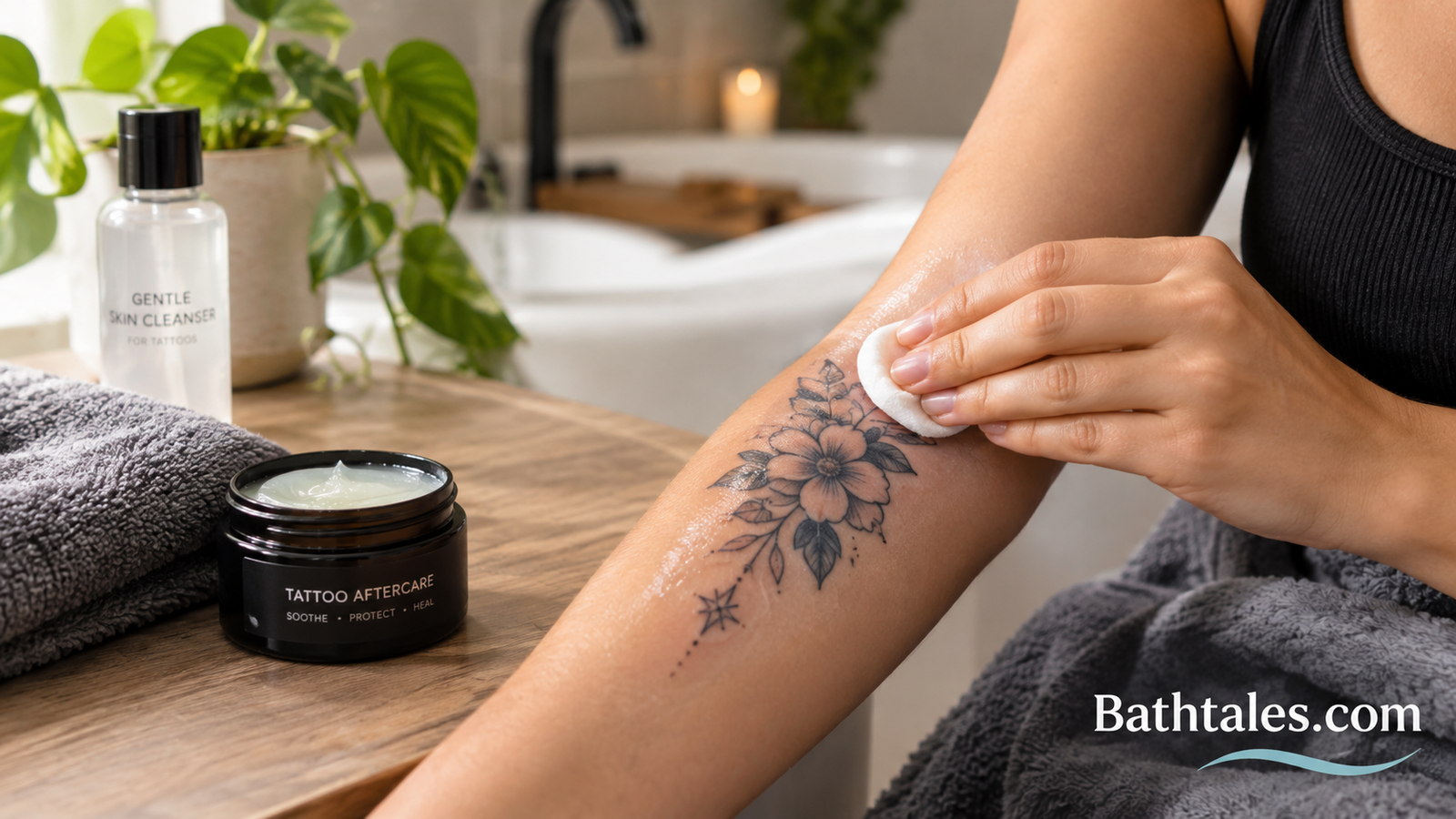
A gentle, fragrance-free aftercare balm can help protect your tattoo between showers while you wait out the no-bath window.
Check Aftercare Balms on Amazon2. The Short Answer: How Long Should You Actually Wait?
Most tattoo artists and dermatologists land on a similar recommendation: avoid baths, pools, hot tubs, and any form of prolonged water submersion for at least two to three weeks after getting tattooed. For many people, especially those with larger or more detailed pieces, waiting the full three to four weeks is the safer bet.
This range exists because healing isn’t identical for everyone. A small, simple line-work tattoo on the forearm might reach a “safe enough” surface healing point faster than a large, heavily shaded back piece. Skin type, aftercare consistency, immune health, and even the placement of the tattoo all play a role in how quickly the outer healing stage wraps up.
As a simple rule of thumb: if your tattoo still has any scabbing, flaking, shine from ointment, tenderness to the touch, or visible redness around the edges, it is not ready for a bath yet. Once the surface looks fully smooth, matte, and behaves just like the surrounding skin, you’re generally in the clear.
| Tattoo Size / Type | Minimum Wait Before Baths | Ideal Wait Time |
|---|---|---|
| Small, simple line work | 10–14 days | 2–3 weeks |
| Medium, moderate detail | 14–18 days | 3 weeks |
| Large or heavily shaded piece | 18–21 days | 3–4 weeks |
| Tattoo on a high-friction area (hands, feet) | 21+ days | 4 weeks |
3. Understanding the Tattoo Healing Stages
Knowing when your tattoo is bath-ready is much easier when you understand what’s actually happening underneath the surface at each stage. Tattoo healing generally unfolds in three overlapping phases, and each one carries its own water-related risks.
Stage One: The Inflammatory Phase (Days 1–6)
This is the rawest stage. Your tattoo will likely be swollen, tender, oozing small amounts of plasma and excess ink, and covered in a thin, shiny film once ointment is applied. This is the stage where infection risk is highest, and it’s also when the idea of a bath should be completely off the table.
Stage Two: The Peeling and Flaking Phase (Days 6–14)
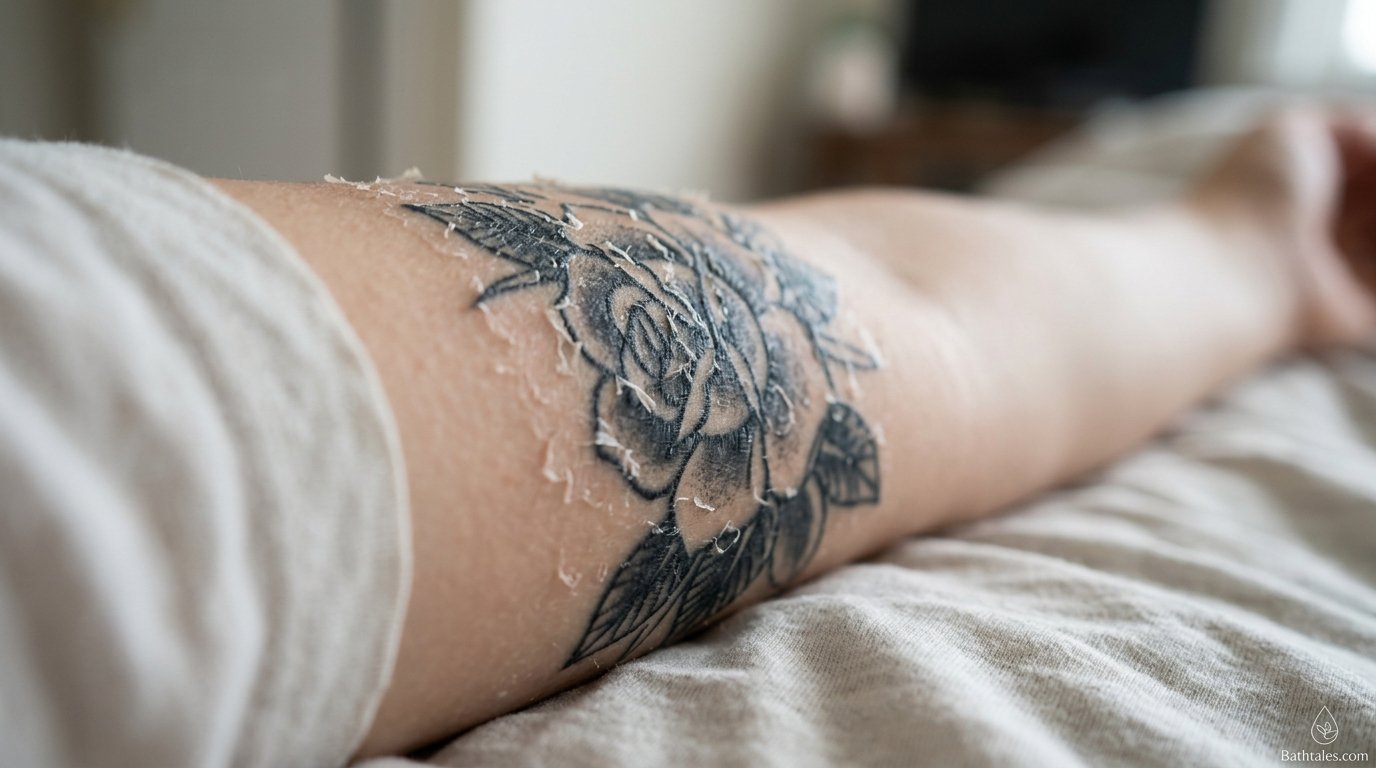
Around the end of the first week, the surface starts to flake and peel, similar to a sunburn. This is a normal and necessary part of the process — do not pick at it. The skin underneath is still fragile and vulnerable, even though it may look “mostly healed” to the eye.
Stage Three: The Deep Healing Phase (Days 14–30+)
The surface layer typically looks calm by this point, but the deeper layers of skin are still repairing themselves for several more weeks. This is the phase where a bath becomes reasonable, provided the surface is fully closed, smooth, and free of any scabbing.
Stick with a gentle, unscented cleanser through every healing stage — it’s one of the simplest ways to avoid irritation.
Browse Gentle Cleansers4. Week-by-Week Bathing Guide
If you’d rather follow a simple calendar than track symptoms day-to-day, here’s a general week-by-week breakdown of what’s appropriate.
- Week 1: Showers only, kept brief. No baths, no soaking of any kind. Pat dry, never rub.
- Week 2: Continue showers. Most scabbing should be resolving. Still avoid baths even if things look better.
- Week 3: If the tattoo looks fully smooth with no scabbing, shine, or open areas, a short, shallow bath is often reasonable — check with your artist if unsure.
- Week 4 and beyond: For most tattoos, standard baths, along with light bath products, are safe as long as the skin looks and feels completely normal.
Remember that this timeline is a guideline, not a guarantee. Two people who got the same tattoo on the same day can heal at noticeably different speeds depending on their skin, immune response, and how well they followed aftercare instructions.
5. Why Soaking Specifically Poses a Risk
It helps to understand the mechanics of why soaking is the real danger, rather than water in general. Three main issues come into play whenever a new tattoo sits in standing water for an extended period.
Bacterial Exposure
Bathtubs — even ones that look spotless — carry bacteria from skin, hair, soap film, and whatever surfaces the tub touches. A healthy immune system can typically handle brief exposure, but an open, healing wound is far more vulnerable, and bacteria sitting against broken skin for many minutes at a time raises infection risk substantially.
Scab Softening and Premature Removal
Water softens scab tissue. A scab that’s ready to fall off naturally will do so cleanly, leaving healthy skin and ink underneath. A scab that’s forced off early — because it absorbed water and loosened — can tear away unevenly, pulling pigment with it and leaving patchy color.
Product and Ointment Dilution
Aftercare balms and moisturizers create a protective barrier. Long water exposure washes that barrier away faster than a quick shower would, leaving the tattoo more exposed right when it needs protection most.
Showering (Safe Early On)
- Brief water contact
- Water drains away immediately
- Easy to control water pressure and temperature
- Doesn’t oversaturate scab tissue
Bathing (Risky Early On)
- Prolonged standing water contact
- Bacteria and residue linger in the tub
- Softens and can dislodge scabs
- Strips protective ointment layer
6. How to Shower Safely While You Wait
Since you’ll likely be relying on showers for at least two to three weeks, it’s worth doing them properly. Keep showers short — five to ten minutes is plenty — and use lukewarm rather than hot water, since heat can increase swelling and open pores unnecessarily.
Turn your back to the direct spray if possible, letting water run over the tattoo gently rather than blasting it head-on. Use a mild, fragrance-free cleanser, applied with just your fingertips rather than a washcloth or loofah, which can be too abrasive for healing skin. Once you’re done, pat — never rub — the area dry with a clean paper towel or soft cloth reserved just for that purpose.
A softer, adjustable shower head can make it easier to keep water pressure gentle around a new tattoo.
See Adjustable Shower Heads7. Your First Bath After a Tattoo: How to Do It Right
Once you’ve reached the point where your tattoo looks and feels fully healed on the surface, your first bath doesn’t need to be a big production, but a little extra care goes a long way toward protecting all the healing progress you’ve made.
- Clean the tub first. Give it a quick wipe-down with a mild cleaner and rinse thoroughly before filling it.
- Keep the water lukewarm. Very hot water can still irritate newer skin and cause unnecessary redness.
- Skip bubble baths and bath bombs for this first soak. Save scented products for a session or two later, once you know how your skin responds.
- Limit soak time to 15–20 minutes. There’s no need to rush the reintroduction, but there’s also no need to linger for an hour on your first attempt.
- Pat dry gently afterward and follow up with a light, unscented moisturizer if your tattoo feels tight or dry.
A simple floating thermometer takes the guesswork out of keeping bathwater at a skin-friendly temperature.
Find a Bath Thermometer8. What About Bath Salts, Bombs, and Other Add-Ins?
Once your tattoo has genuinely healed — not just on the surface, but for several weeks beyond that — many bath products are perfectly fine to enjoy. That said, a few categories deserve a closer look before you toss them into the tub.
Epsom Salts and Mineral Salts
These are generally gentle, but strong concentrations can be drying. If you have a healed tattoo you’re soaking near, keep concentrations light and moisturize afterward. If you’re curious about the differences between salt types, our comparison of Dead Sea salt versus Epsom salt breaks down which is gentler on skin.
Bath Bombs and Heavily Fragranced Products
These often contain dyes, glitter, and strong fragrance oils that can irritate sensitive or newly healed skin. It’s worth waiting a little longer after full healing before introducing these, and patch-testing on unaffected skin first.
Essential Oil Blends
Certain essential oils are more skin-friendly than others. If you enjoy scented soaks, our guide to the best essential oils for bath salts can help you pick options less likely to cause a reaction.
If your interest in bath salts extends beyond just tattoo healing, resources like our breakdowns on bath salts for relaxation and sleep and bath salts for sensitive skin are worth a look once you’re fully in the clear.
When you’re ready to add salts back into your routine, an unscented, dye-free formula is the gentlest place to start.
Shop Unscented Bath Salts9. Pools, Hot Tubs, Lakes, and the Ocean
Standing bathwater is one thing, but shared or natural water sources raise the stakes considerably. Pools are treated with chlorine, which can dry out and irritate healing skin, while hot tubs run warm and are a well-known breeding ground for bacteria if not properly maintained. Natural bodies of water — lakes, rivers, oceans — carry unpredictable bacteria levels that make them one of the riskier environments for an open or partially healed tattoo.
As a general guideline, wait at least as long for pools and hot tubs as you would for a home bath — ideally longer, closer to four weeks — before fully submerging a new tattoo in any of these environments. If you must be near water sooner than that, a waterproof adhesive bandage made specifically for tattoos can offer short-term protection, though it’s not a substitute for simply waiting.
Quick tip: If you’re unsure whether your tattoo is ready for a pool or hot tub, treat it the same way you’d treat a bath decision — full surface healing, no scabbing, no shine, no tenderness.
10. Signs Your Tattoo Isn’t Ready for a Bath Yet
Before hopping in the tub, run through this quick mental checklist. If any of these apply, hold off a little longer.
- Visible scabbing or flaking still present
- Skin feels warm, tender, or swollen to the touch
- Any oozing, whether clear plasma or colored discharge
- Shiny appearance from ointment sitting on an unhealed surface
- Redness extending noticeably beyond the tattoo’s outline
- Itching that’s severe rather than mild
It’s also worth knowing the difference between normal healing symptoms and signs of infection, which include spreading redness, red streaking, fever, pus with a foul odor, and increasing pain rather than gradual improvement. If you notice any of these, skip the bath entirely and consult a healthcare provider.
A gentle, non-irritating moisturizer can support the final stretch of healing while you wait for full closure.
Browse Sensitive-Skin Moisturizers11. Factors That Can Shorten or Extend Your Personal Timeline
No two healing journeys look exactly alike. A handful of factors tend to make the biggest difference in how quickly you’ll be ready for a bath.
Tattoo Size and Placement
Smaller, simpler tattoos in low-friction areas tend to close up faster than large, heavily worked pieces or tattoos placed on joints, hands, or feet, where movement and friction slow healing.
Skin Type and Sensitivity
Naturally dry or sensitive skin may take a little longer to fully seal and can be more reactive to prolonged water exposure once baths resume.
Aftercare Consistency
Sticking closely to your artist’s aftercare instructions — proper cleaning, appropriate moisturizing, avoiding sun exposure — tends to shorten the overall healing window noticeably compared to inconsistent care.
Overall Health and Immune Function
General health, sleep, hydration, and any underlying conditions that affect wound healing can all shift your personal timeline slightly longer or shorter than the averages listed earlier.
12. Final Thoughts: Patience Pays Off
Waiting a few extra weeks before sinking into a warm bath might feel like a minor inconvenience compared to how excited you probably are about your new tattoo, but that patience protects the investment you just made — both financially and in terms of how the artwork will look for years to come. Stick with quick, gentle showers early on, watch for the specific signs that your skin has fully closed and calmed down, and ease back into baths slowly rather than all at once.
Once you’re cleared to soak again, there’s no reason not to enjoy it fully — just choose gentle products, keep the water temperature reasonable, and pay attention to how your skin responds the first few times. Healing well now means years of enjoying your tattoo exactly the way you pictured it.
Ready to ease back into bath time? Start with gentle, tattoo-friendly products designed for sensitive, healing skin.
Shop Gentle Bath EssentialsFrequently Asked Questions
Can I take a bath the same day I get a tattoo?
No. Fresh tattoos should avoid any soaking for at least the first one to two weeks. A quick, gentle shower is fine the same day, but skip the tub entirely.
What happens if I accidentally soak my new tattoo too early?
A single brief exposure usually isn’t catastrophic, but keep an eye out for increased redness, softened scabbing, or signs of infection over the following days, and moisturize gently once the area is dry.
Is a shower with the tattoo directly under the water stream okay?
It’s better to let water flow over the area gently rather than blasting it directly with high pressure, especially in the first week or two.
Can I take a bath if I cover the tattoo with plastic wrap?
Covering it can reduce direct water exposure, but it’s not fully waterproof and can trap moisture and bacteria against the skin, which isn’t ideal either. It’s better to simply wait.
How do I know if my tattoo is fully healed on the surface?
Look for smooth, matte skin with no scabbing, flaking, shine, tenderness, or redness beyond the tattoo’s outline. It should feel and look just like the surrounding skin.
Are bubble baths worse than plain water baths for healing tattoos?
Generally yes — added fragrances, dyes, and surfactants in bubble baths can irritate healing or sensitive skin more than plain water would.
Can I use bath salts on a tattoo that’s only two weeks old?
It’s best to wait until the tattoo is fully healed, generally three to four weeks, before introducing bath salts, since concentrated minerals can dry or irritate healing skin.
Does tattoo placement affect how long I should wait before bathing?
Yes. Tattoos on hands, feet, or joints tend to heal more slowly due to friction and movement, so it’s wise to wait on the longer end of the recommended timeline for those areas.
Is it safe to take a bath during hot weather if my tattoo isn’t fully healed?
Heat and sweat can already irritate a healing tattoo, so it’s best to stick with brief, cool showers rather than baths until the area has fully closed, regardless of the weather.
What should I do if my tattoo looks healed but still feels itchy in the bath?
Mild itchiness during healing is normal, but if it intensifies specifically after bathing, consider it a sign to step back to showers a bit longer and reintroduce baths more gradually.
Can I take a bath before a touch-up appointment?
As long as the tattoo is fully healed, a bath beforehand is fine. Just avoid heavy exfoliation or harsh products right before your appointment.