How to Store Bath Toys the Smart Way (Without Mold, Mess, or Clutter)
A room-by-room, method-by-method guide to keeping bath toys dry, organized, and mildew-free — even in tiny bathrooms.
Why Proper Storage Matters
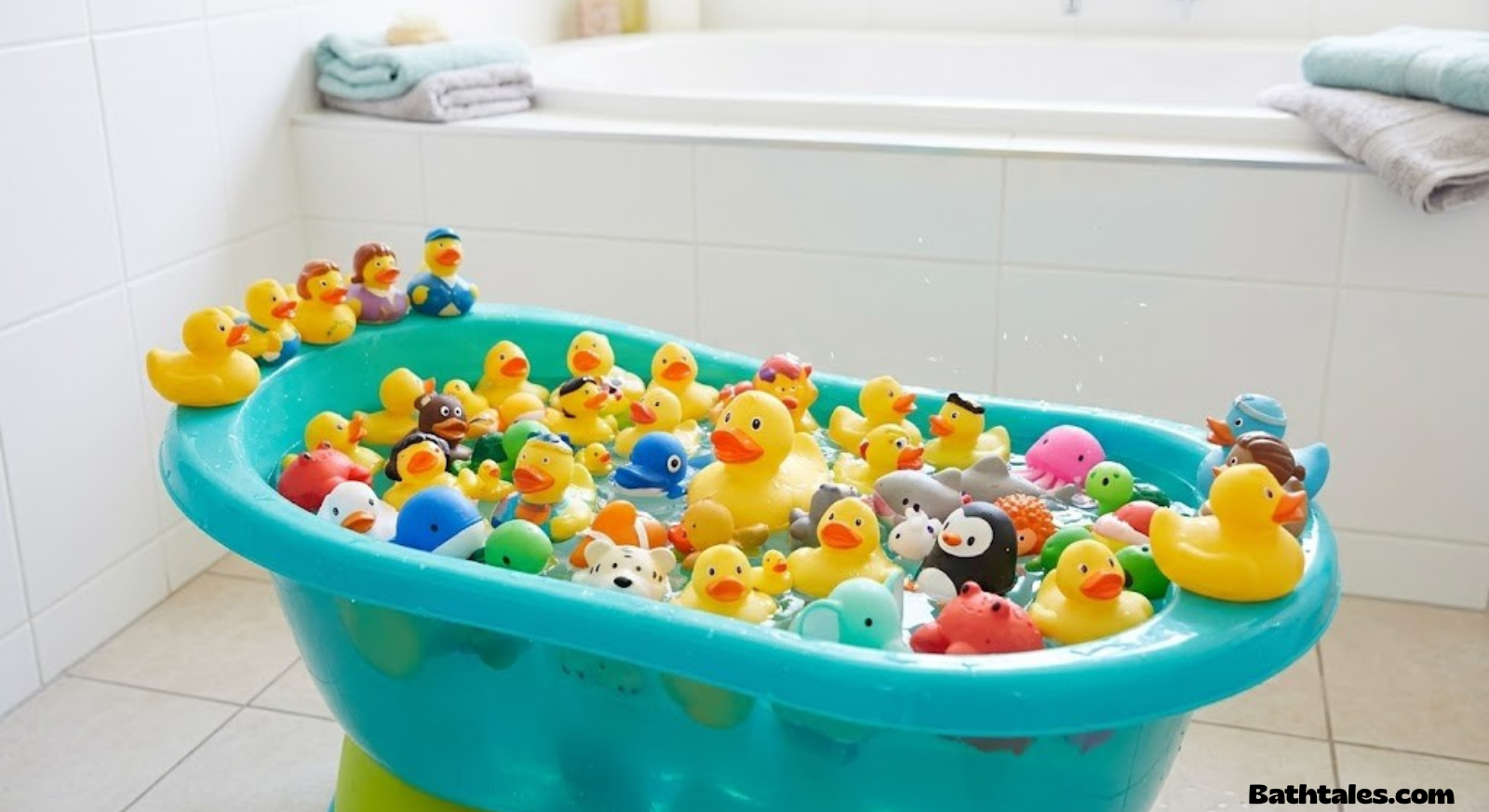
Bath time is one of the most joyful parts of a young child’s day, but the toys that make it so fun can quickly become a source of frustration for parents. Squirt guns, foam letters, stacking cups, and rubber ducks pile up along the tub edge, roll onto the floor, and — worst of all — trap water inside their little bodies where bacteria and mold love to grow. Storing bath toys properly isn’t just about tidiness; it’s about hygiene, safety, and making bath time genuinely relaxing instead of a slippery obstacle course.
When toys are left sitting in standing water or piled in a wet heap on the tub floor, moisture gets trapped between them. This creates the perfect breeding ground for mildew, black mold specks, and bacterial film — the slimy residue many parents notice inside squeeze toys after just a few weeks of ownership. Good storage solves this at the source by keeping toys elevated, ventilated, and draining freely between uses.
There’s also a safety angle that’s easy to overlook. Loose toys scattered on a wet bathroom floor are a slipping hazard for both children and adults. A toddler standing up in the tub to reach a floating boat can lose balance on a pile of slick plastic. A well-designed storage system keeps the tub and floor clear, reduces trip hazards, and gives children an easy, repeatable habit: toys go in the tub, toys come out and go into the basket.
Finally, storage affects how long toys last. Toys that dry out fully between baths resist cracking, discoloration, and the buildup of soap scum that makes plastic look dingy over time. If you’ve invested in higher-quality toys — like the picks in our guide to the best bath toys for 1-year-olds — proper storage is what protects that investment and keeps toys looking and functioning like new for years.

Quick-drying, wall-mounted, and easy to install without drilling.
Check Price on AmazonThe Mold & Mildew Problem (And Why Storage Is the Real Fix)
Most parents discover the mold problem the hard way: they squeeze a favorite duck and a puff of black-flecked water shoots out. That’s mold and bacterial buildup that has been quietly growing inside the toy’s air holes for weeks. The culprit isn’t dirty bathwater alone — it’s storage. Toys that are tossed into a closed bin, left in a puddle on the tub ledge, or stacked wet against each other never get the airflow they need to dry.
Squeeze toys with small air holes are the worst offenders because water gets trapped inside the hollow body and has nowhere to evaporate. Foam toys are a close second, since foam is porous and holds moisture like a sponge. Solid plastic toys are the safest bet if mold is a recurring issue in your house, but even they need to dry fully to prevent soap-scum buildup.
The good news is that almost all mold problems can be prevented — not cured after the fact — with the right storage setup. A few principles make the biggest difference:
- Elevate, don’t pile. Toys stacked in a heap trap moisture between layers.
- Ventilate, don’t seal. Mesh and open-weave containers let air circulate; solid, closed bins do not.
- Drain, don’t pool. Any storage solution should let water drip out and away rather than collecting at the bottom.
- Dry before you store, when possible. A quick shake-out or towel wipe before toys go into storage cuts drying time dramatically.
If mold has already taken hold, storage changes alone won’t undo existing contamination — you’ll want to follow a deep-cleaning routine first. Our detailed walkthrough on how to clean mold from bath toys covers vinegar soaks, bleach-safe methods, and which toys are beyond saving. Once toys are clean, the storage steps below will keep them that way.
Step-by-Step: How to Store Bath Toys the Right Way
Below is a repeatable system you can set up once and use every single bath time. Each step includes a simple visual so you can picture exactly how airflow and drainage come together.
Step 1: Drain Each Toy Before Storing
Before toys leave the tub, give squirt toys and hollow toys a firm squeeze to push out trapped bathwater. This single habit removes most of the standing water that would otherwise sit inside the toy overnight.
Step 2: Shake Off Excess Water
Hold each toy over the tub and give it a light shake to remove surface water clinging to crevices, textures, or foam edges. This reduces drip time once toys are in the storage container.
Step 3: Choose a Ventilated Container
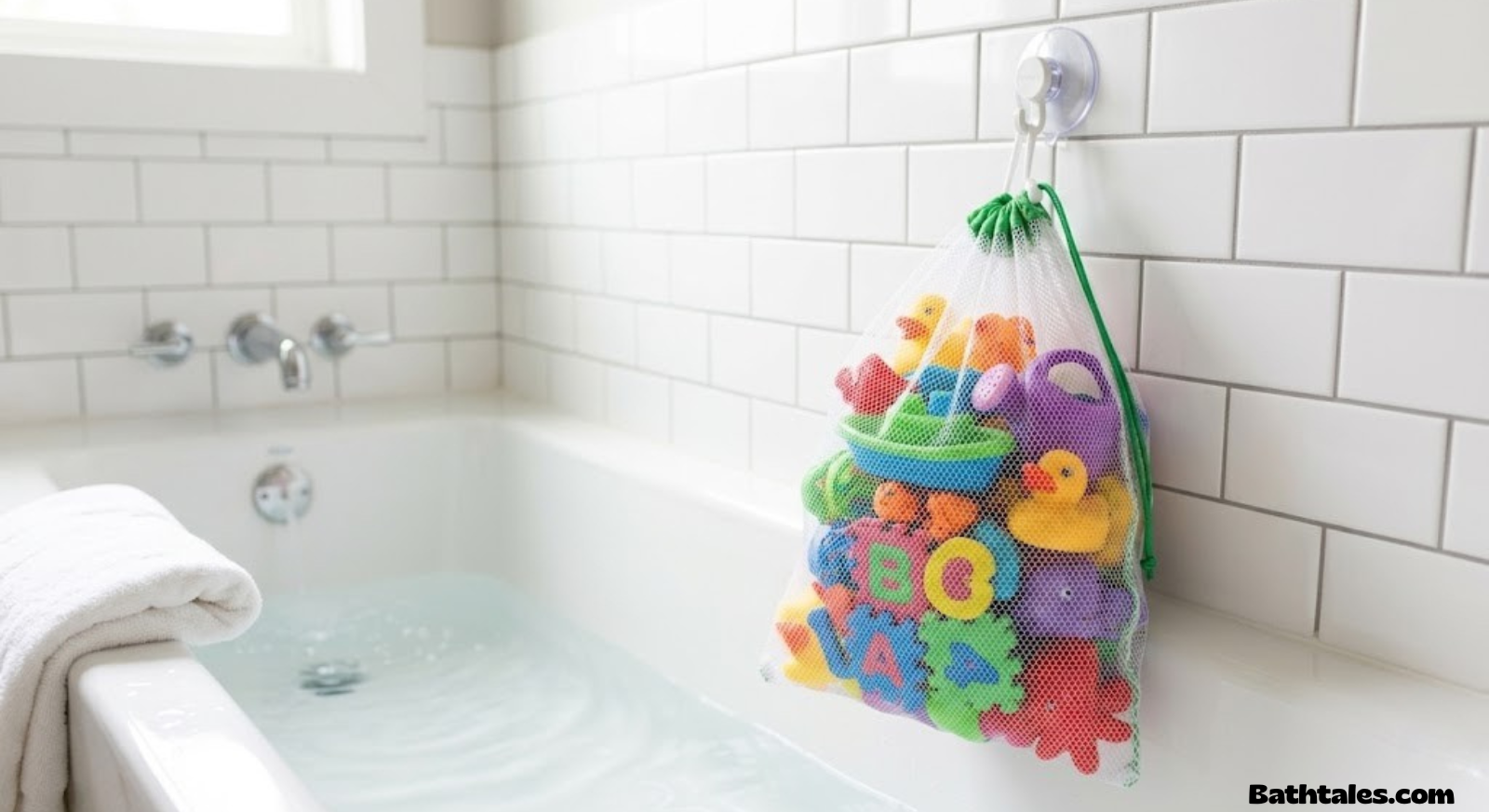
Place toys into a mesh bag, wire basket, or slotted caddy — never a sealed plastic tub. Ventilation is the single biggest factor in preventing mold, so this step matters more than the container’s price or design.
Step 4: Mount or Position for Drainage
Hang the container above the tub, over the faucet, or on a suction hook against the tile — anywhere water can drip straight down into the tub rather than pooling on a shelf or windowsill.
Step 5: Let Toys Air Dry Fully Between Baths
Leave at least a few hours — ideally overnight — before storing toys in a closed space like a cabinet or toy box. Rushing this step is the most common reason mold returns even after a good cleaning.
Step 6: Do a Weekly Deep Check
Once a week, empty the storage container completely, inspect each toy for early mold spots, and wipe down the container itself — mesh bags and baskets collect soap residue too.
Types of Bath Toy Storage (And Which One Fits Your Bathroom)
There’s no single “best” storage solution for every household — the right choice depends on tub layout, wall material, number of toys, and how much floor or counter space you have. Here’s a closer look at the main categories.
Hanging Mesh Bags
The most popular option for good reason: mesh bags maximize airflow, drain instantly, and take up almost no space. Suction-cup or hook-mounted versions work on tile, glass, or acrylic tub surrounds without any drilling.
Wire or Plastic Baskets
Baskets with drainage holes sit on the tub edge or a nearby shelf. They’re sturdy and easy for toddlers to use independently, though they don’t drain quite as fast as hanging mesh.
Suction-Cup Toy Racks
Rigid shelves or trays that stick directly to tile above the tub. Great for larger toys like boats and pouring cups that don’t fit well in a mesh bag.
Floating Storage Bins
Bins designed to float on the water’s surface during bath time, then get lifted out and drained afterward. Fun for kids, though they still need a secondary drying spot once removed from the tub.
Over-the-Tub Caddies
Caddies that span the width of the tub double as toy storage and a shelf for soap and shampoo. Useful in small bathrooms where wall space is limited.

Sticks to tile without drilling; sturdy shelf for boats and pouring cups.
Check Price on AmazonBath Toy Storage Options Compared
| Storage Type | Drainage | Space Needed | Best For | Price Range |
|---|---|---|---|---|
| Hanging Mesh Bag | Excellent | Minimal (wall-mounted) | Small toys, squirt toys | $ |
| Wire Basket | Good | Tub edge or shelf | Mixed toy sizes | $$ |
| Suction Rack | Good | Wall space | Larger, rigid toys | $$ |
| Floating Bin | Fair (needs drying after) | In-tub during bath | Toy sorting during play | $ |
| Over-Tub Caddy | Fair | Spans the tub | Small bathrooms, dual-purpose | $$$ |
Pros of Mesh Storage
- Fastest drying time
- Cheapest option
- No drilling required
- Easy for kids to use
Cons of Mesh Storage
- Can look cluttered if overstuffed
- Suction hooks may loosen on textured tile
- Not ideal for very large toys
Storing Bath Toys in Small or Shared Bathrooms
Tiny bathrooms and shared family baths present a unique challenge: there’s rarely a spare shelf, and toys need to disappear quickly when the bathroom doubles as an adult space. The trick is to think vertically and go removable.
Wall-mounted mesh bags remain the top choice here because they occupy zero floor space and can be taken down in seconds if guests are visiting. A second option is a slim over-the-door organizer hung on the inside of the bathroom door — completely invisible when the door is closed, and easy for toddlers to reach when it’s open.
If your household includes multiple age groups, consider color-coding storage by child using our age-specific picks, like the sturdier styles featured in our best bath toys for 2-year-olds guide and the more advanced options in our cool bath toys for 3-year-olds roundup. Separate bags per child cut down on morning arguments over whose duck is whose.
DIY Bath Toy Storage Ideas (Budget-Friendly)
You don’t need to buy a dedicated product to solve the storage problem. Several household items convert into effective, ventilated toy storage in minutes.
- Repurposed produce bags: Mesh bags from citrus or onions, washed and hung with a suction hook, work almost identically to store-bought versions.
- Dish drying racks: A small wire dish rack suctioned or set on a non-slip mat drains toys efficiently and costs very little.
- Shower caddy with holes drilled: An old plastic caddy with a few extra drainage holes added becomes a serviceable toy bin.
- Command hook + laundry bag: A drawstring mesh laundry bag hung from an adhesive hook creates an instant, removable storage pouch.
Whichever DIY route you choose, keep the ventilation and drainage principles from Step 3 in mind — the material matters more than whether it was purchased or repurposed.
Bath Toy Storage by Child’s Age
Storage needs shift as children grow, both because toy types change and because kids become capable of helping with cleanup themselves.
Infants and 1-Year-Olds
Toys at this stage tend to be soft, textured, and simple — think stacking cups and floating rings, like those featured in our best bath toys for 1-year-olds guide. A small mesh bag mounted low enough for a caregiver (not the baby) to reach is ideal, since independent cleanup isn’t realistic yet.
Toddlers (2–3 Years)
This is when toy collections often explode in size, and it’s also when kids can start participating in cleanup. Mount storage at a height toddlers can reach themselves, and consider a two-bin system: one for cleanup, one for “toys drying” that stays out of reach until fully dry.
Preschoolers (4+ Years)
Older kids can manage more complex toys — pouring sets, building toys, and bath crayons like those in our best bath toys for 4-year-olds guide. At this age, a labeled multi-compartment caddy helps teach organization skills alongside cleanup.
Building a Cleaning Routine Around Storage
Storage and cleaning work together, not separately. A toy that’s stored well but never cleaned will still eventually develop odor or discoloration from mineral buildup and soap scum. Pair your storage system with a simple recurring routine:
| Frequency | Task |
|---|---|
| After every bath | Squeeze out water, shake off excess, place in ventilated storage |
| Weekly | Wipe down storage container, inspect toys for mold spots |
| Bi-weekly | Vinegar or diluted bleach soak for high-use toys |
| Monthly | Deep sanitize all toys, retire any beyond cleaning |
For the full step-by-step on the bi-weekly and monthly tasks, see our guides on how to sanitize bath toys and how to clean mold from bath toys. Storage keeps toys from getting dirty again quickly — but periodic sanitizing is what actually removes existing bacteria and mold.
Toy Rotation: Reduce Clutter and Extend Toy Life
Not every toy needs to live in the bathroom permanently. Rotating a subset of toys in and out every couple of weeks keeps the storage container from overflowing and makes bath time feel fresh and novel for kids, similar to how toy rotation works in playrooms.
Keep a small “reserve” bin in a linen closet or under-sink cabinet, fully dried and sealed loosely (not airtight) to prevent dust buildup. Swap a handful of toys every one to two weeks. This also makes it far easier to spot when a toy needs replacing or deep cleaning, since you’re handling the full collection regularly rather than letting toys pile up unchecked for months.
Common Bath Toy Storage Mistakes to Avoid
- Using a sealed, solid bin. No matter how good it looks, if it doesn’t drain and ventilate, mold will follow.
- Overstuffing a mesh bag. Airflow drops dramatically once a bag is packed tight — thin out the collection instead.
- Storing toys while still wet in a cabinet. This traps moisture in an enclosed, dark space — the worst combination for mold growth.
- Skipping the weekly check. Small mold spots are easy to clean; established colonies inside a toy often mean the toy has to be thrown out.
- Mounting storage too low or too high. Either kids can’t participate in cleanup, or the container becomes an afterthought no one uses consistently.
Buying Guide: What to Look for in Bath Toy Storage
If you’re shopping for a dedicated storage product rather than a DIY solution, a few features separate genuinely useful options from ones that will frustrate you within a month.
Look For
- Open mesh or slotted design for airflow
- Strong suction cups or non-marking hooks
- Machine-washable fabric (for mesh bags)
- Wide opening for easy one-handed loading
- Mold-resistant materials (nylon mesh, coated wire)
Avoid
- Fully enclosed plastic bins with no holes
- Adhesive-only mounts on textured or damp tile
- Thick canvas or fabric that stays damp
- Extremely small openings that make loading toys awkward

Spans the tub width and doubles as a shelf plus toy storage.
Check Price on AmazonFrequently Asked Questions
How do I stop mold from growing inside squirt toys?
Squeeze out trapped water after every use, dry toys in a ventilated mesh bag, and do a vinegar or diluted bleach soak every couple of weeks to kill any bacteria before it turns into visible mold.
Is a mesh bag really better than a plastic bin?
Yes, in almost every case. Mesh allows continuous airflow and instant drainage, while solid bins trap residual moisture against the toys, creating the damp, dark conditions mold needs to grow.
Where’s the best place to hang a bath toy storage bag?
Directly above the tub, ideally near the faucet end, so drips fall straight into the tub rather than onto the floor or a windowsill.
Can I store bath toys without suction cups or drilling?
Yes — adhesive hooks rated for bathroom humidity, over-the-door organizers, or freestanding wire baskets on a shelf all work without any wall damage.
How often should I clean the storage container itself?
Wipe it down weekly. Soap scum and mineral deposits build up on mesh and wire just as they do on toys, and a dirty container can reintroduce grime to freshly cleaned toys.
Should toys be completely dry before going into a closed cabinet?
Yes. Toys should air dry for at least several hours, ideally overnight, before being placed in any enclosed, low-airflow space like a cabinet or drawer.
What’s the best storage option for a shared family bathroom?
A removable hanging mesh bag or an over-the-door organizer works best, since both can be taken down quickly and don’t leave a permanent visual footprint.
How many bath toys should I actually keep out at once?
Enough to fill roughly half of your storage container. Overstuffing reduces airflow and makes cleanup harder, so rotate extras in and out from a separate reserve bin instead.
Are floating storage bins a good primary storage solution?
They’re great during bath time for sorting toys as kids play, but toys still need a secondary ventilated space to dry afterward — a floating bin alone isn’t enough long-term.
Can toddlers help with bath toy storage themselves?
Yes, and it’s worth encouraging. Mount storage at toddler height so cleanup becomes a simple, repeatable habit rather than a task only adults handle.
Do foam bath toys need different storage than plastic ones?
Foam holds moisture more than solid plastic, so it benefits even more from open, high-airflow storage like mesh bags, and should be checked for mildew more frequently.
What should I do with a toy that already has mold inside it?
Try a deep vinegar or diluted bleach soak first, following a full cleaning guide such as our how to clean mold from bath toys walkthrough — but if mold persists after cleaning, especially inside a squeeze toy with no way to fully rinse the interior, it’s safest to replace it.
Conclusion: A Simple System Beats a Fancy Product
Storing bath toys well isn’t about buying the most expensive organizer on the market — it’s about building a small, consistent routine around drainage and airflow. Squeeze out water, shake off the excess, use a ventilated container, mount it where drips fall harmlessly into the tub, and give toys real time to dry before they’re tucked away. Add a weekly check and an occasional deep clean, and mold simply won’t have the conditions it needs to take hold.
Whether you go with a store-bought mesh bag, a suction-cup rack, or a repurposed produce bag and command hook, the principles are the same. Pick a system, stick with it for a few weeks until it becomes automatic, and bath time cleanup will stop being a chore and start being a thirty-second habit for the whole family.

Start with a quick-drying mesh organizer — the easiest upgrade for mold-free bath toys.
Shop Bath Toy Storage on Amazon